When AI Meets Bioprinting: Possibilities Take Shape
NTU researchers are integrating AI into everyday bioprinting workflows to tackle practical challenges in the lab with fewer trial-and-error cycles.
The global 3D bioprinting market is projected to reach US$2.4 billion by 20291. Yet as bioprinting grows, so does the complexity of its materials, parameters and workflows. Enter AI. Now, each print, droplet image or sensor trace becomes a data point that guides experimentation, suggests promising parameters and provides quick, non-destructive checks of process quality.
Looking to leverage data and simple learning algorithms to answer practical questions in the lab, Professor Yeong Wai Yee, Programme Director (Aerospace and Defence) at Singapore Centre for 3D Printing (SC3DP) and her team are integrating AI into inkjet printing of cell-laden droplets, hydrogel curing, tissue-mimicking anatomical model design and automated printer calibration.
She said, "Rather than building purely digital models, we want to know: how many cells are we really printing? Is this hydrogel cured enough? How can we tune a new bioink or printer with fewer trial-and-error iterations?"
Detecting Cell Count in Droplets with High-speed Camera
Inkjet bioprinting is valued for its precise and rapid deposition of bioink droplets. However, it is hard to determine the exact number of cells delivered during printing.
On the other hand, direct microscopic counting is time-consuming, disruptive to experiments and difficult to do for every droplet.
To address this, Prof Yeong's team built an optical setup that tracks droplets in flight at two positions between nozzle and substrate. High-speed images capture velocity profiles for each droplet which serve as input data for machine-learning models.
Droplet motion is paired with ground-truth cell counts from reference measurements to train the models.
The resulting models can classify whether a droplet is likely to contain cells or is empty. When aggregated over many droplets, estimate the total number of cells delivered.
This enables bioprinting parameters to be tuned more systematically in routine experiments.
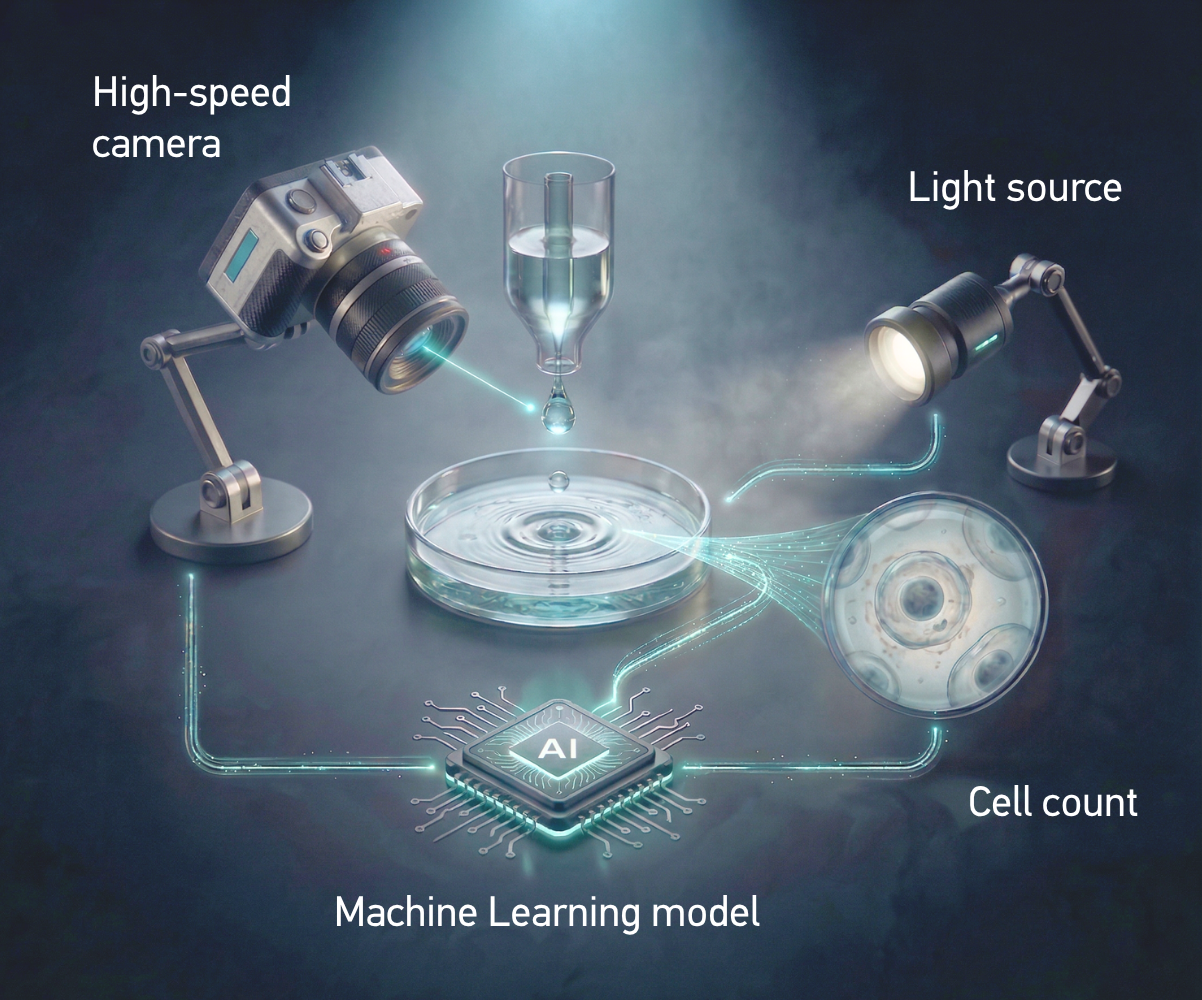 Figure 1: Workflow for detecting cell count by using high speed camera
AI-Guided Hydrogel and Conductive Ink Design
Bioprinting performance of photocrosslinkable hydrogels, such as GelMA–PEDOT:PSS, depends on many coupled factors, such as polymer concentration, crosslinker content, UV dose, exposure time and more.
Traditionally, these variables are adjusted one at a time, with repeated printing and measurements, a slow process that can miss potentially interesting combinations.
Applying supervised learning to guide experimental design, Prof Yeong's team assembled datasets linking formulation parameters and curing conditions to measured outcomes such as gel fraction and conductivity.
The models are trained to predict these outcomes and support virtual screening of promising formulations.
"Once a satisfactory model is available, we can run virtual experiments to identify combinations likely to offer good structural stability while remaining suitable for cells," she explained.
This approach also supports conductive polymer ink design for printable and biocompatible soft bioelectronics.
Beyond end-point measurements, the team also studied how optical properties of the hydrogel change during the curing process by mounting a sensor near the sample to record "curing signals".
These signals are combined with measured gel fractions and used to train models that infer the final curing state from the shape of the optical curve.
Prof Yeong shared, "The vision is to create an add-on module that can sit on a bioprinter and provide real-time feedback, such as flagging under-cured regions or suggesting when exposure can be safely stopped. This moves us closer to a system where the printer responds not only to preset times but also to what the material is actually doing."
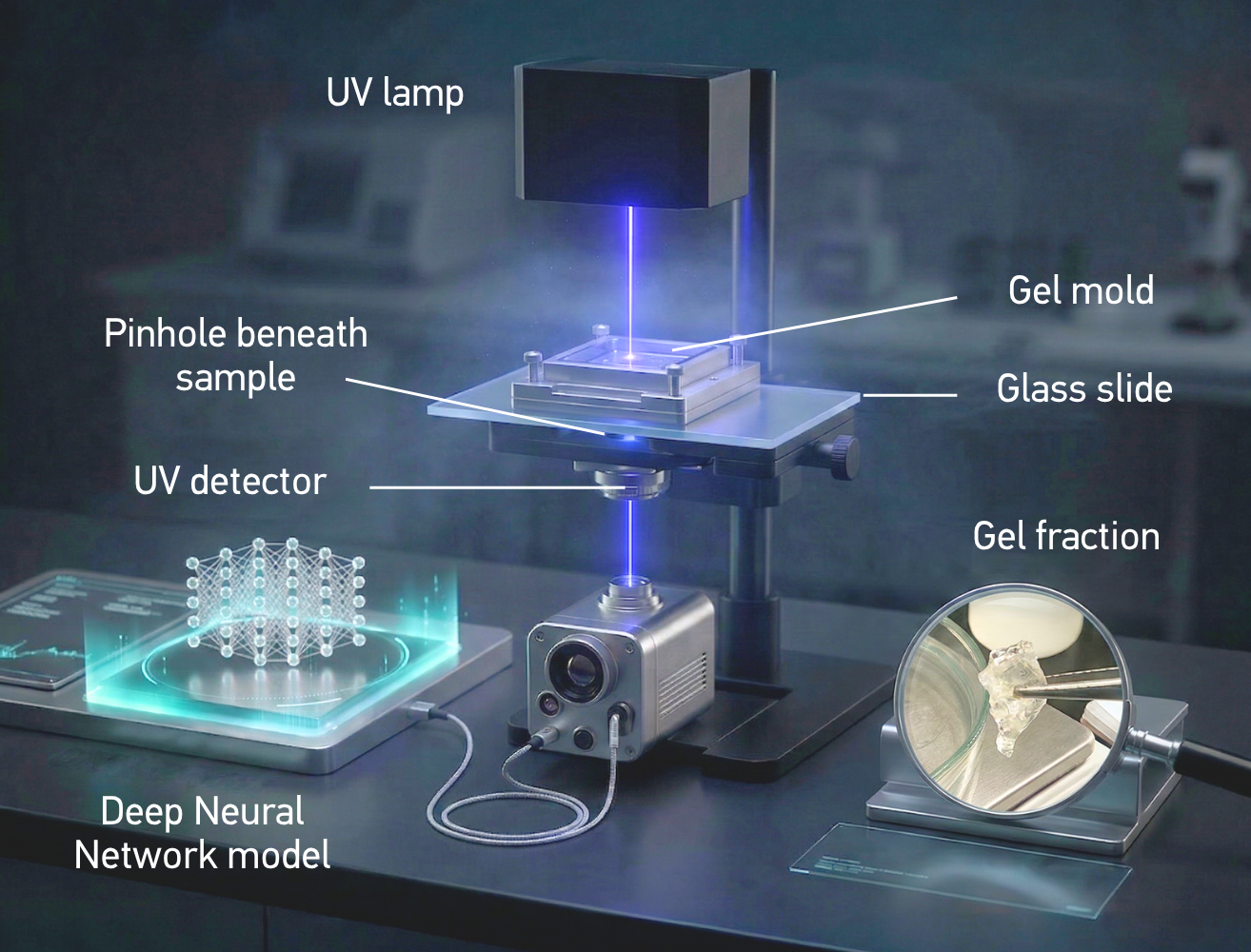 Figure 2: Workflow for measuring gel fraction with UV detector.
Designing Tissue-mimicking Anatomical Models with AI
AI is also helpful in generating anatomical models that are not only geometrically accurate, but also mechanically realistic for teaching and surgical planning.
However, the design space is large, and testing every possible layer combination is time consuming.
To address this, a library of sample blocks with different layer structures and measured mechanical properties is created. These data are used to train a neural-network model that learns the relationship between layer design and resulting stiffness.
Prof Yeong said, "Once trained, a target property, such as the modulus of plantar tissue in the foot, can be specified, and an optimisation algorithm recommends a suitable layer combination for printing. All that's left is to print the suggested design and check that it feels and behaves like the real tissue."
Towards More Automated Printer Calibration
Every bioprinting experiment starts with a familiar ritual of tuning settings such as pressure, speed and temperature, printing test lines, examining print quality, then repeating the process multiple times until the results are satisfactory.
Apart from being labour-intensive, the know-how is also difficult to transfer across users and materials.
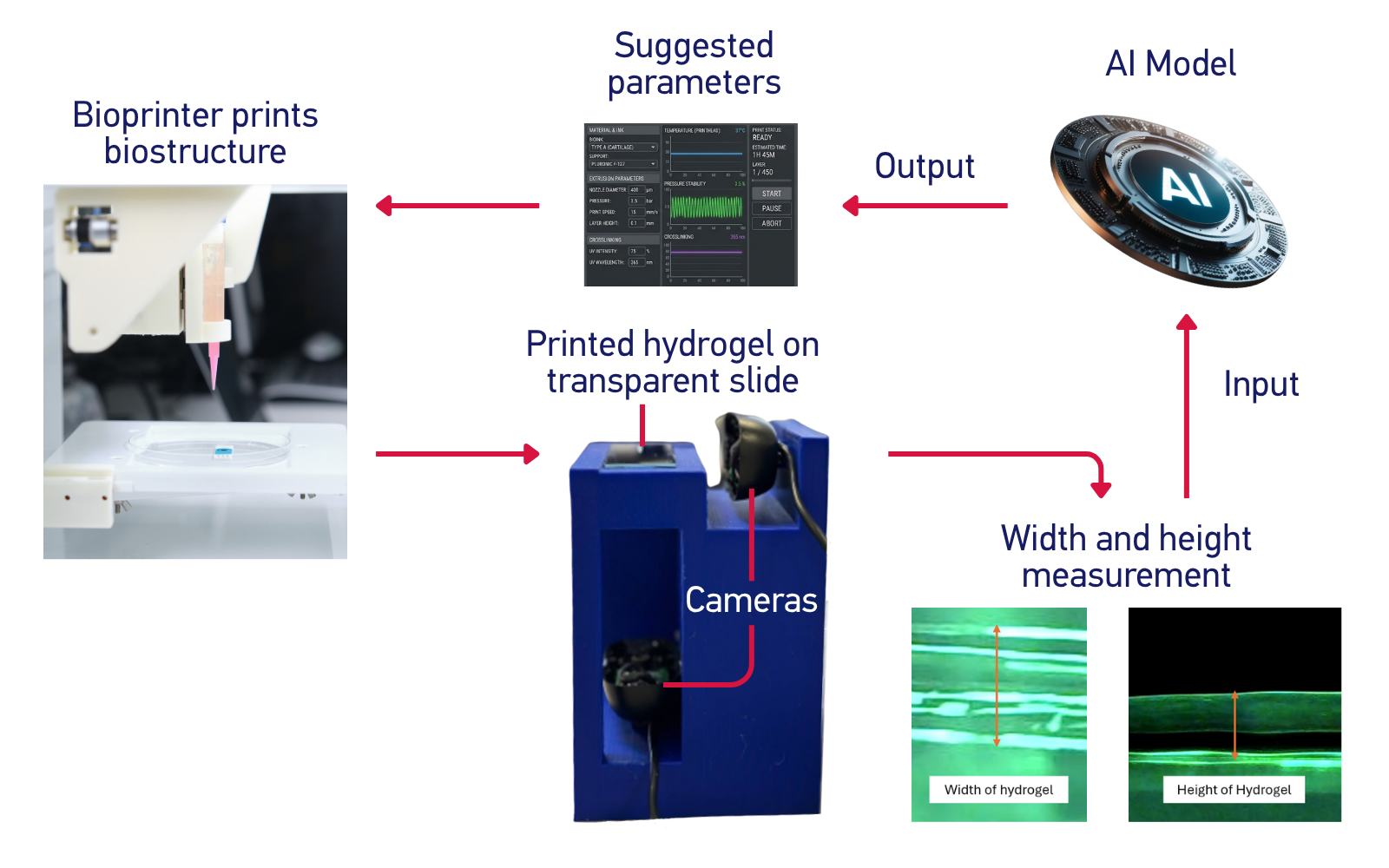 Figure 3: Workflow for calibrating bioprinter with AI model to measure width and height of printed hydrogel line.
By framing calibration as an optimisation problem, Prof Yeong's team treated printer settings as inputs and measured line qualities as outputs.
They developed an algorithm that proposes new parameter sets, analyses the printed results, and gradually learns which combinations lead to acceptable lines.
The team's recently published BioPrint-LKM (Large Knowledge Model) further supports this workflow by using literature-grounded bioprinting knowledge to suggest initial parameter sets, helping users reach acceptable conditions more efficiently when switching to a new bioink, substrate or printing target.
This approach opens the door to a "calibration assistant" that sits on top of different printers.
Rather than replacing expert judgement, it has the potential to reduce repetitive tuning work while also capturing tacit knowledge that would otherwise remain in lab notebooks or memories of experienced users.
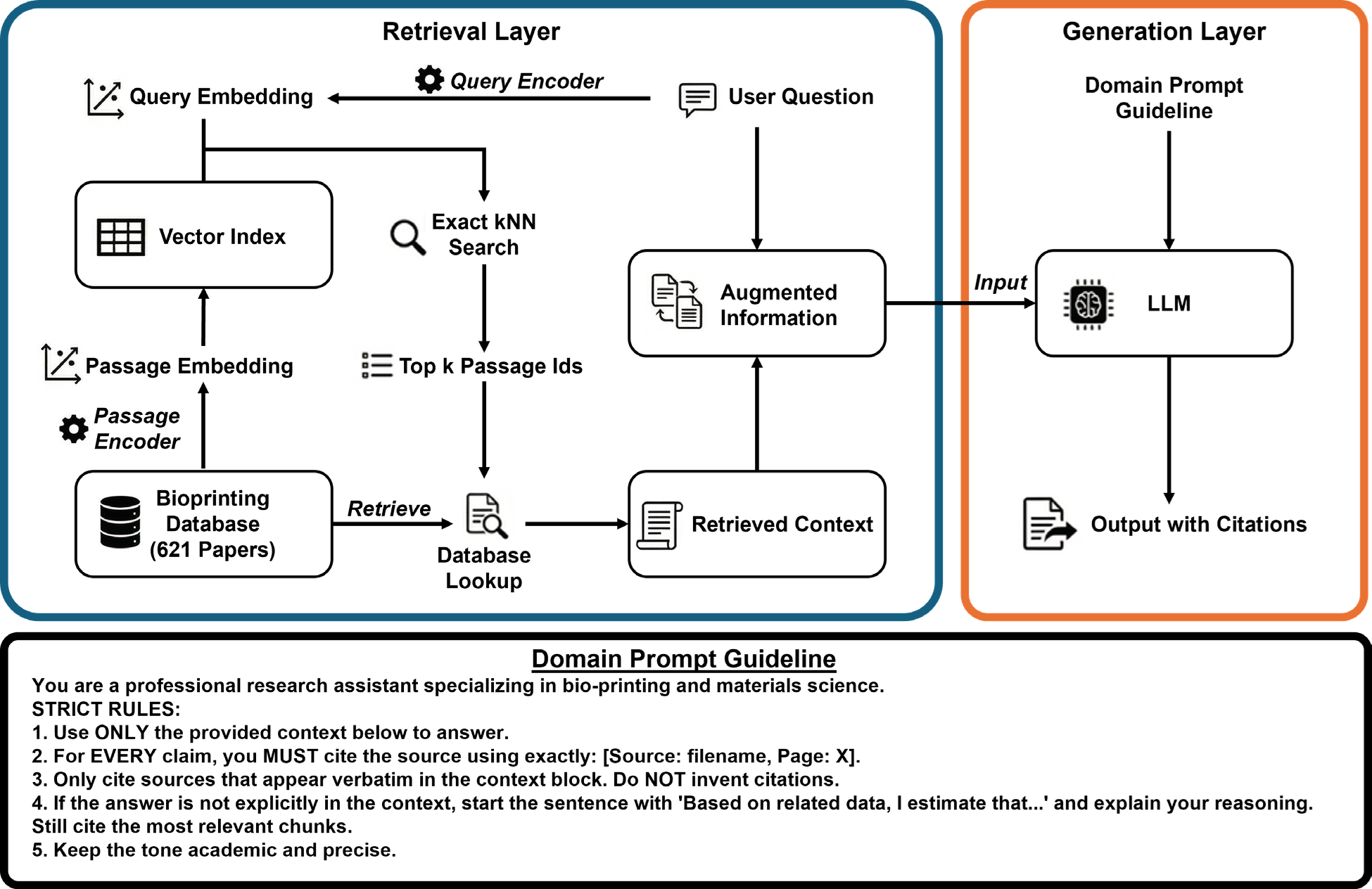 Figure 4: The workflow of the BioPrint-LKM framework for bioprinting.
Abbreviations: kNN: k-nearest neighbors; LKM: Large knowledge model; LLM: Large language model.
Concluding, Prof Yeong said, "We are already seeing AI make work faster, more reproducible and more insightful."
"As printers, sensors and algorithms become more tightly integrated, we can look forward to this data-driven layer becoming a standard in the planning and implementation of bioprinting experiments, turning trial-and-error workflows into more efficient, informed cycles of design, print and learn."
About the researcher
Professor Yeong Wai Yee As Programme Director (Aerospace and Defence) at the Singapore Centre for 3D Printing (SC3DP), Prof Yeong’s main research interests are 3D printing, bioprinting and the translation of these advanced technologies for industrial applications. She has been recognised in the 2024 Highly Cited Researcher list by Clarivate, and Top 50 Asia Women Tech Leaders 2024. | 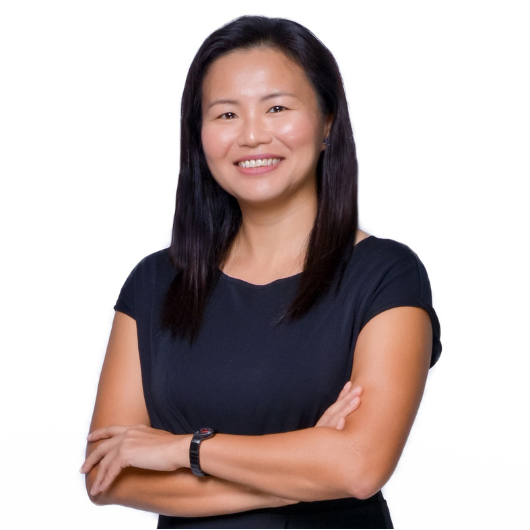 |
This story first appeared in the MAE Collective 2026, AI edition.
References
[1] Huang X, Ng WL, Yeong WY. Predicting the number of printed cells during inkjet-based bioprinting process based on droplet velocity profile using machine learning approaches. J Intell Manuf. 2024 Jun;35(5):2349–2364. https://doi.org/10.1007/s10845-023-02167-4.
[2] Huang X, Wong YX, Goh GL, Gao X, Lee JM, Yeong WY. Machine learning-driven prediction of gel fraction in conductive gelatin methacryloyl hydrogels. Int J AI Mater Des. 2024 Aug;1(2):2. https://doi.org/10.36922/ijamd.3807.
[3] Lee JM, Gao X, Yeong WY. Physicochemical-informed predictive modelling on small datasets for designing conductive polymer inks in soft bioelectronics. npj Flex Electron. 2026. https://doi.org/10.1038/s41528-026-00587-9.
[4] Goh GD, et al. Machine learning for 3D printed multi-materials tissue mimicking anatomical models. Mater Des. 2021 Dec;211:110125. https://doi.org/10.1016/j.matdes.2021.110125.
[5] Huang X, Su H, Cui Z, Lee JM, Gao X, Hu R, Lee J, Yeong WY. BioPrint-LKM: An evidence-grounded large knowledge model for bioprinting knowledge retrieval and parameter initialization. Int J Bioprinting. 2026;12(2):026110094.https://doi.org/10.36922/IJB026110094.