Beyond the Lab: Three Researchers Abroad
Three NTU MAE PhD researchers joined peers from nine universities to tackle a shared challenge. Working across fields, and across borders, changed how they approach their research.
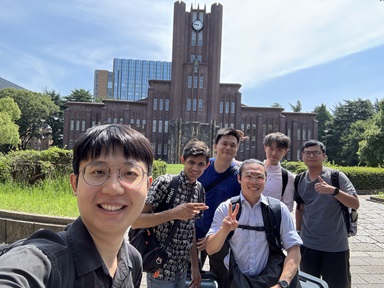
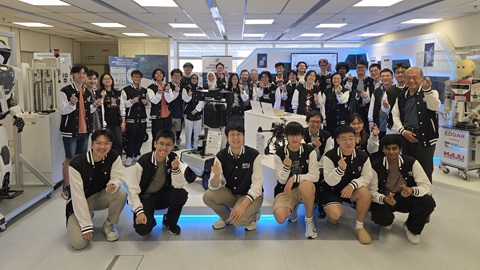
In July 2026, Kho Wei Zhou, Deng Beifang and Wang Xinrui, led by Assistant Professor Yi Wei Daniel Tay, joined the University of Tokyo Summer Camp, run under the GMSI and WINGS programmes.
The PhD students worked alongside international peers, drawn from mechanical engineering, aerospace, materials, civil engineering and beyond, towards one theme, "An innovative device for future factories".
What they brought home had less to do with the devices than with the setting, working shoulder to shoulder with researchers from different fields, universities and research traditions.
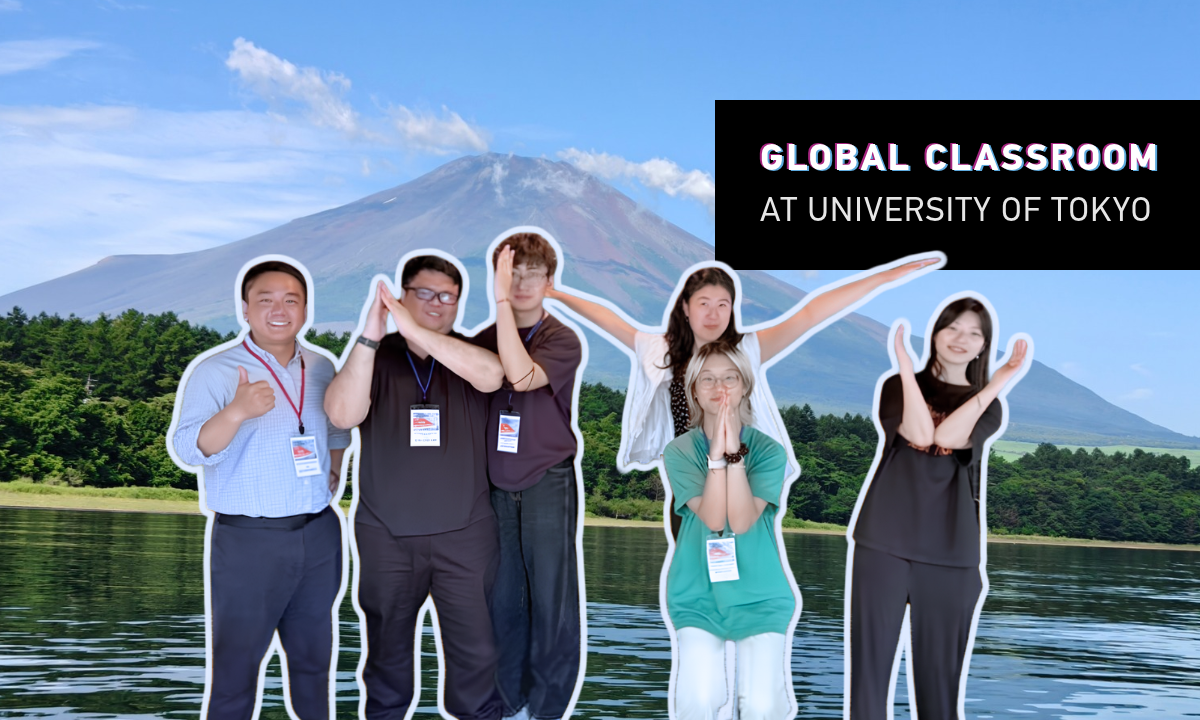 Prof Daniel Tay (left) and the students at Lake Yamanaka.
Making research shareable
The PhD students found themselves in multidisciplinary teams where members had to communicate their specialised backgrounds to each other.
While they came from distinct fields, they bridged those boundaries and found common ground in how they analysed complex systems.
Wang Xinrui’s team wanted to rethink how heavy industry assigns work. They drew inspiration from human-centred manufacturing, where a worker’s well-being matters alongside productivity.
“In heavy industries, workers may experience changing levels of fatigue, stress, physical workload and environmental exposure during a shift. However, conventional task allocation is often based on fixed schedules, worker qualifications and supervisors’ experience,” Xinrui explained. It does not always account for a worker’s changing physical condition.
Their project, a single integrated system combining smart workwear and human centric task-assignment, aims to address this gap.
Workers would wear smart clothing fitted with sensors that monitor indicators such as heart rate, body temperature, movement, posture and sweat level.
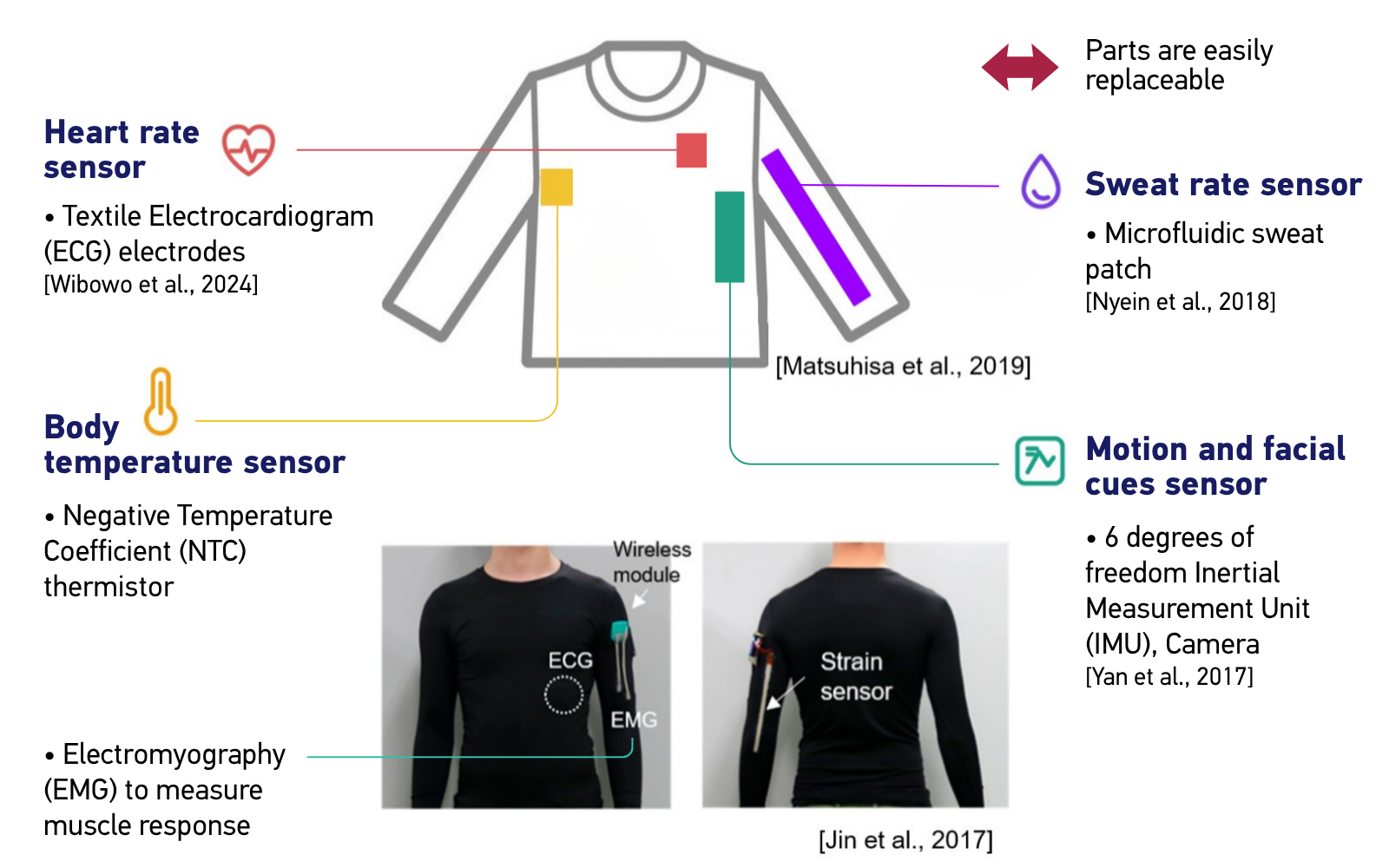 Figure 1: Conceptual design of the wearable system.
Combined with information on the working environment, worker preferences and task requirements, the system assesses each worker's condition and uses it to support task scheduling.
“The aim is not to replace supervisors, but to provide them with data-driven recommendations so that they can make safer and more efficient task-assignment decisions,” Xinrui said, adding that it avoids unnecessarily exposing workers’ personal health information.
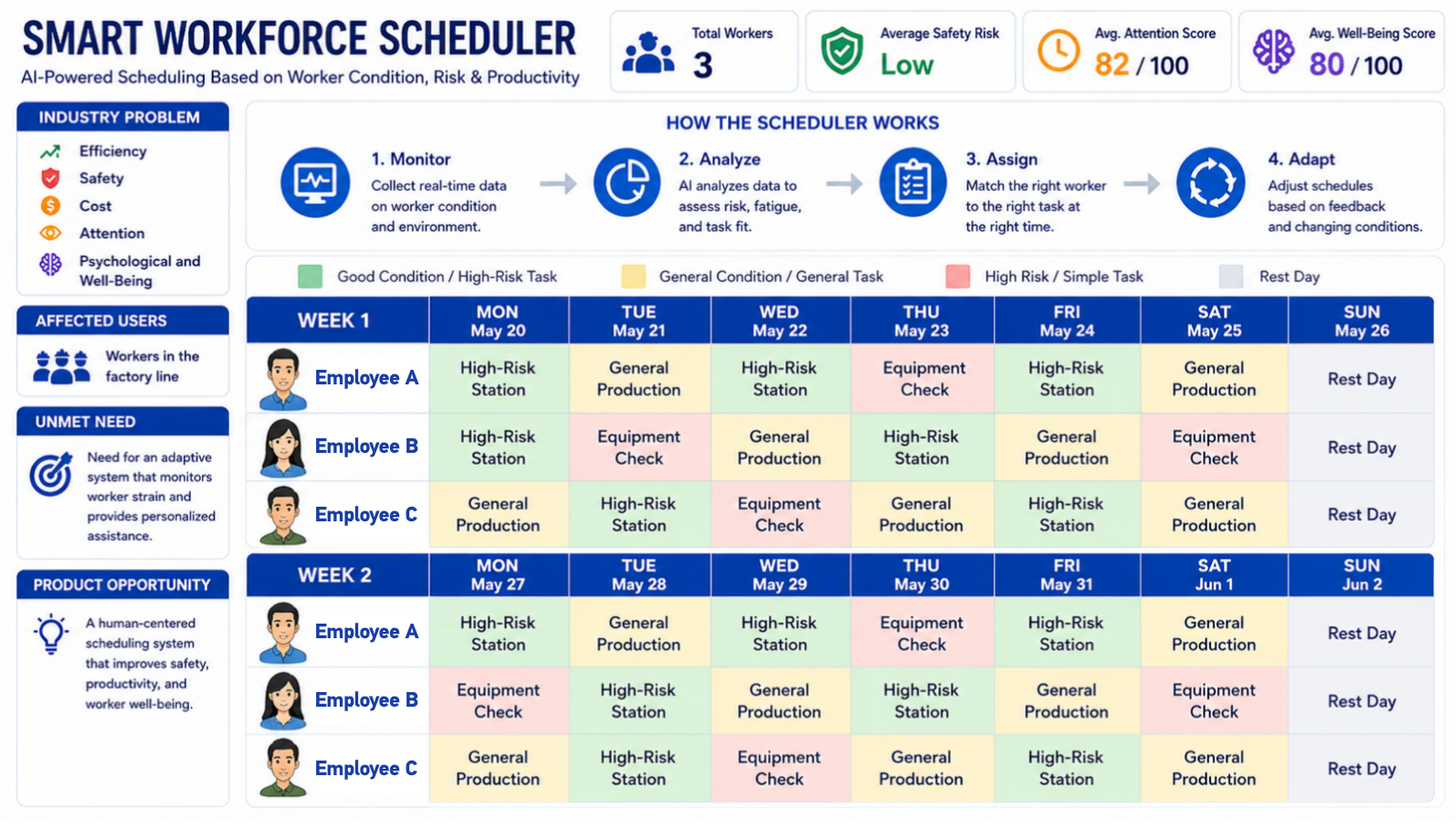 Figure 2: Example concept of the workforce scheduling dashboard.
By linking sensing to scheduling in one pipeline, the concept connects three elements usually kept separate today: worker monitoring, risk assessment and workforce scheduling.
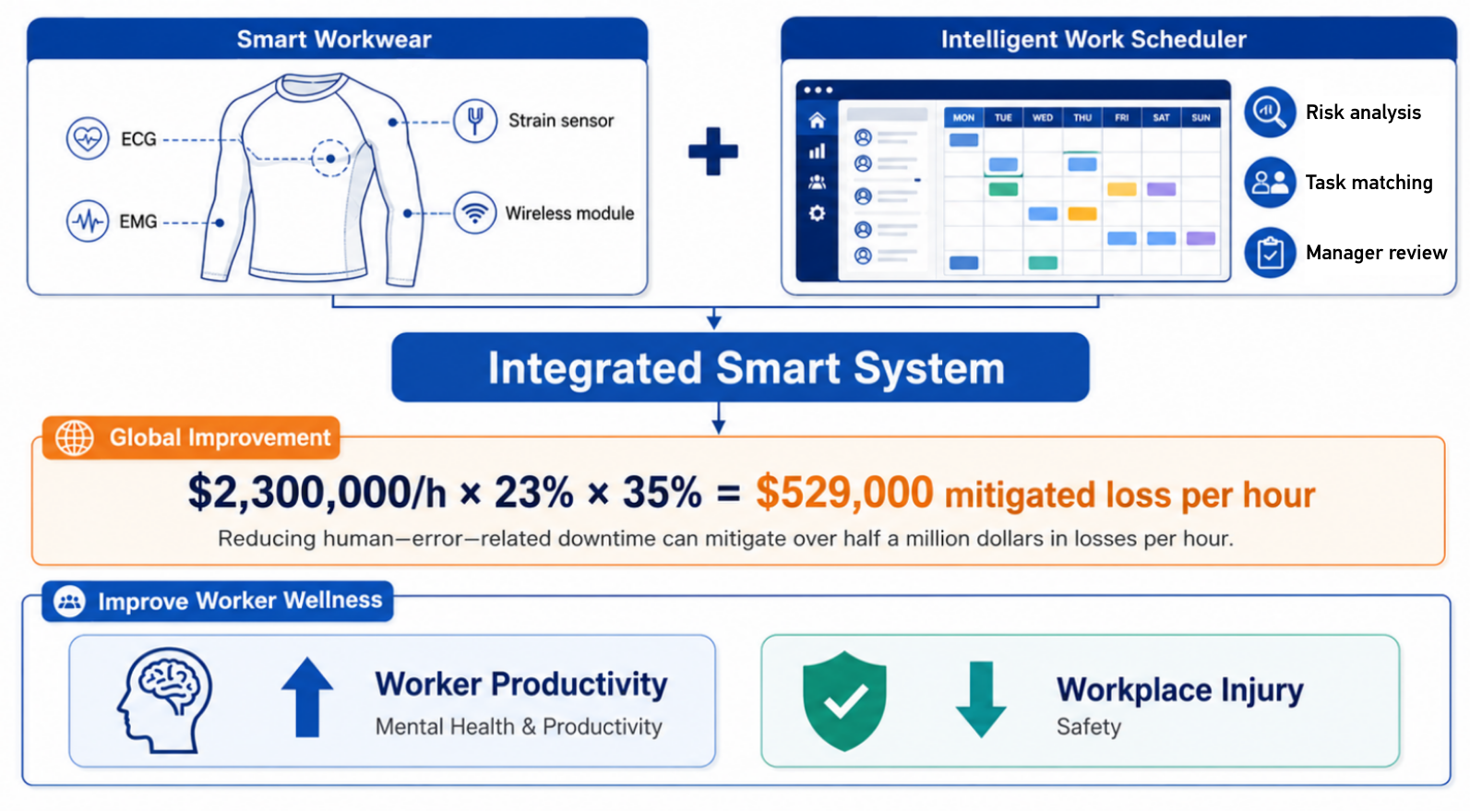 Figure 3: Simplified integrated system architecture connecting sensing and scheduling.
The question at the heart of the project, as Xinrui put it, was “how can we assign the right task to the right worker at the right time, while improving safety, productivity and worker well-being?”
With the system in place, workers would have their safety and condition factored into scheduling that normally overlooks them.
At the factory level, it aims to cut the downtime caused by human error and distribute work more evenly, giving supervisors real information to draw on, rather than predefined schedules.
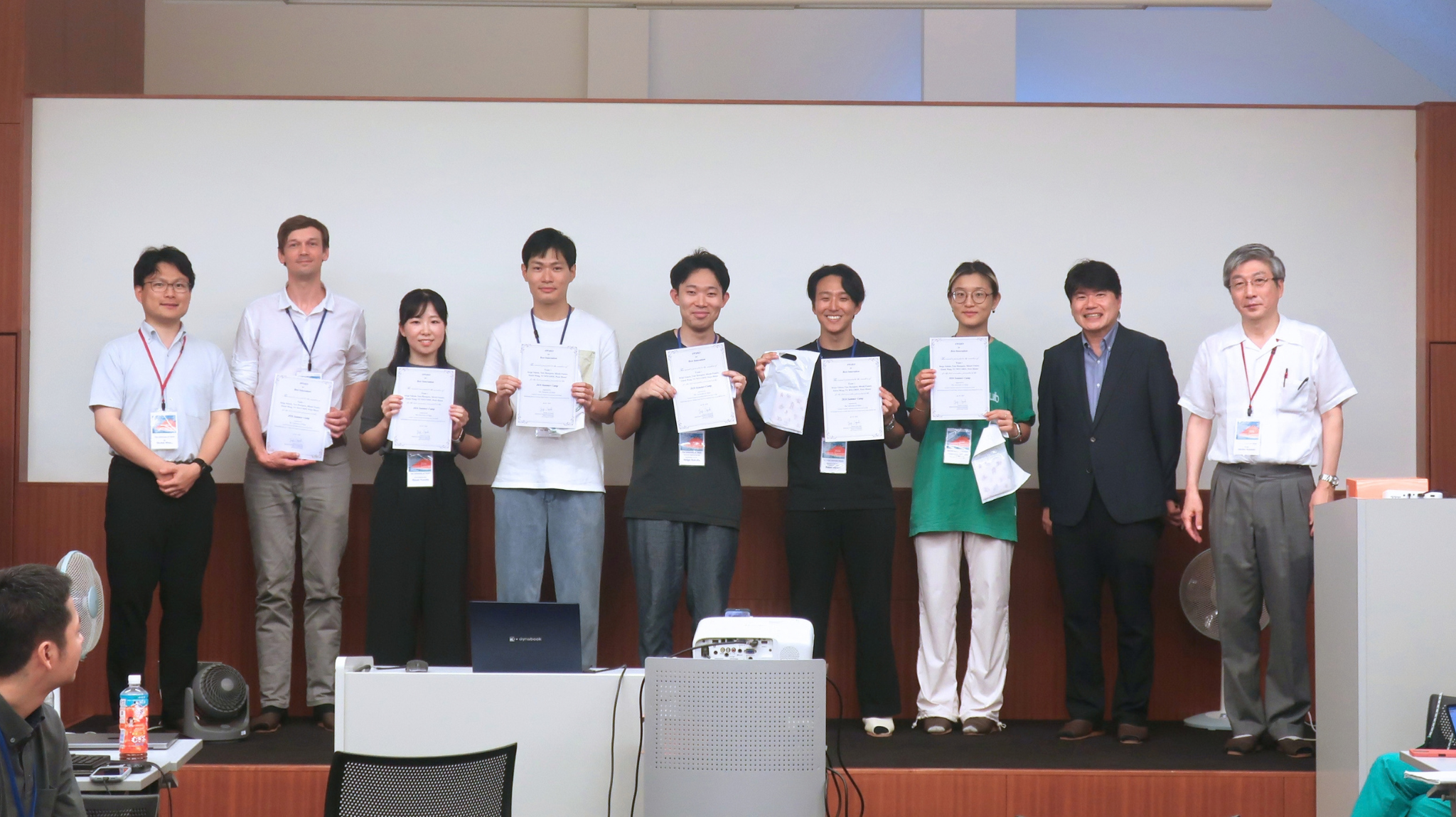 Xinrui (third from right) and her team receiving the Best Innovation Award.
Beifang’s team found that no single discipline could solve the problem alone.
Their concept for automated architectural production was already well formed, so the team worked on integrating the specialised strengths of each member.
“Rather than altering the automated pipeline itself, the challenge was architecting modular interfaces so each discipline had a distinct, high-impact role,” he said.
His teammates in architecture shaped the spatial design and factory modelling, those in materials science worked on surface finishing, and others in instrumentation built structural self-sensing into the design.
Wei Zhou’s team came up with a ubiquitous factory sensor, designed to give workers real-time information on the factory floor.
For a petroleum plant application, the sensor could detect early signs of gas leaks in blind spots and help map safer evacuation routes, an approach that could extend to other hazards.
The range of backgrounds, social medicine and agricultural logistics alongside materials science and robotics, pushed them to weigh both STEM and non-STEM perspectives as they planned.
What makes research real
The camp took the students to FANUC, one of the world’s leading industrial robotics manufacturers.
What stood out was the company's self-sufficiency in core components and tight control of its production lines.
Beifang, whose own research is in construction robotics, the visit added an industry lens to how he saw his research.
"In academia, we often celebrate novel prototypes without scrutinising the supply chain," he reflected.
Getting research out of the lab and into a product, he realised, depends on cost control and self-reliance in critical parts as much as on the idea itself.
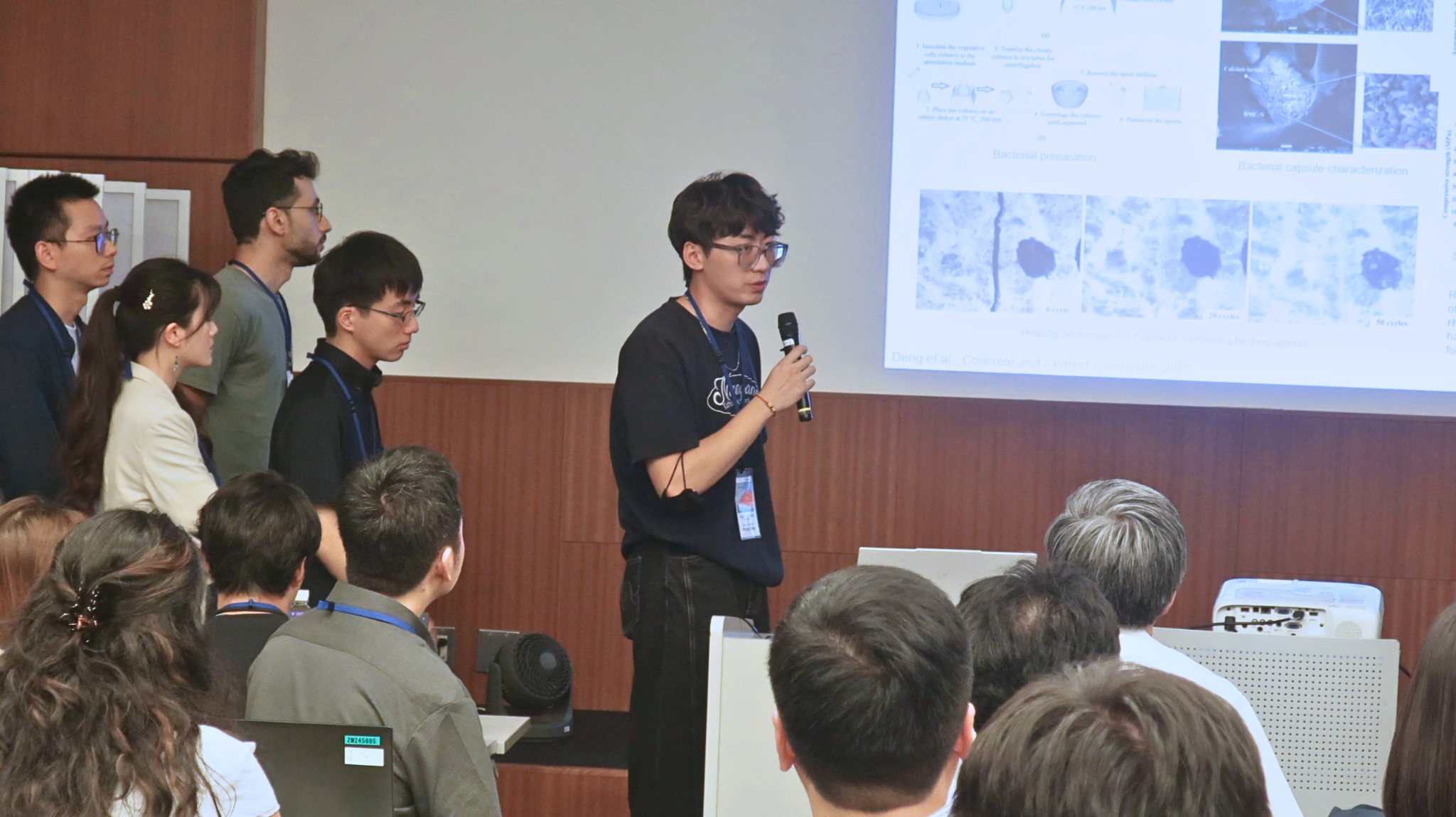 Beifang (holding microphone) presenting with his team on their proposal.
Wei Zhou also gained more clarity on the gap between a good idea and a deployable product.
"Technical innovation is one aspect in translating research," he said. "There is a greater need to consider practicality and reliability with additional real-world user needs."
Xinrui’s project took the same practical approach, designed to work under real factory conditions, providing data-driven recommendations that help supervisors assign work more safely.
The programme also offered a tour of the University of Tokyo's laboratories, some of which spoke to the students' individual research.
While visiting a lab working on thin-film sensors, Wei Zhou saw a direct connection to his own robotics work. The visit raised questions he was keen to explore further.
“I am working on dexterous manipulation in robotics and was considering how to apply such thin-film sensors in data collection,” he mentioned.
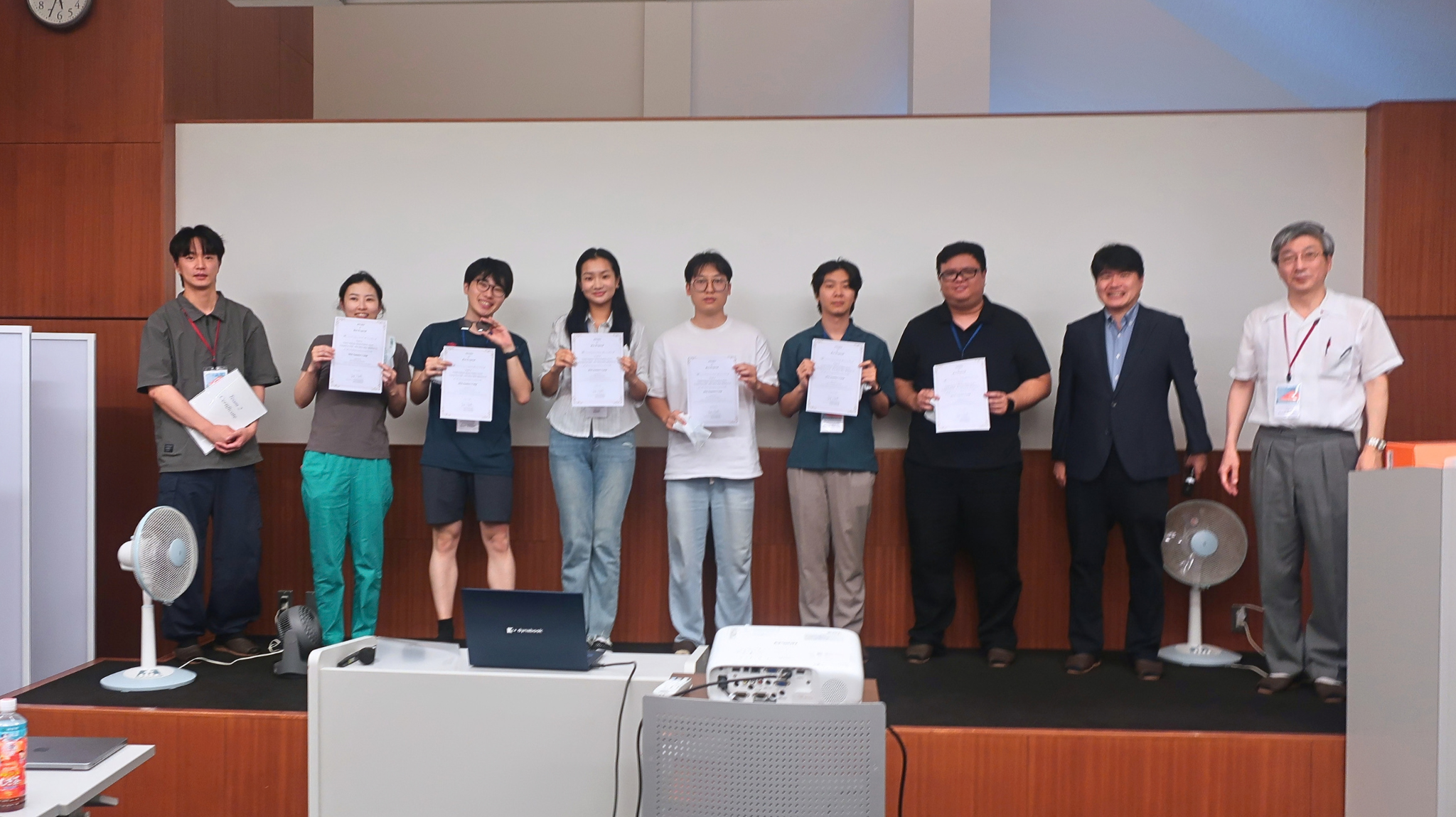 Wei Zhou (third from right) and his team receiving the Best Proposal Award.
Two research cultures, side by side
Working in another setting also gave the students a new vantage point on their research culture.
What caught Beifang’s attention was a site where modern structural engineering was being used to restore the University of Tokyo’s historic Red Gate (Akamon). It shifted his perspective on civil engineering and automation.
“Cutting-edge technology and cultural preservation can reinforce each other,” he said, which left him wanting to design automation that respects the physical and historical settings it enters.
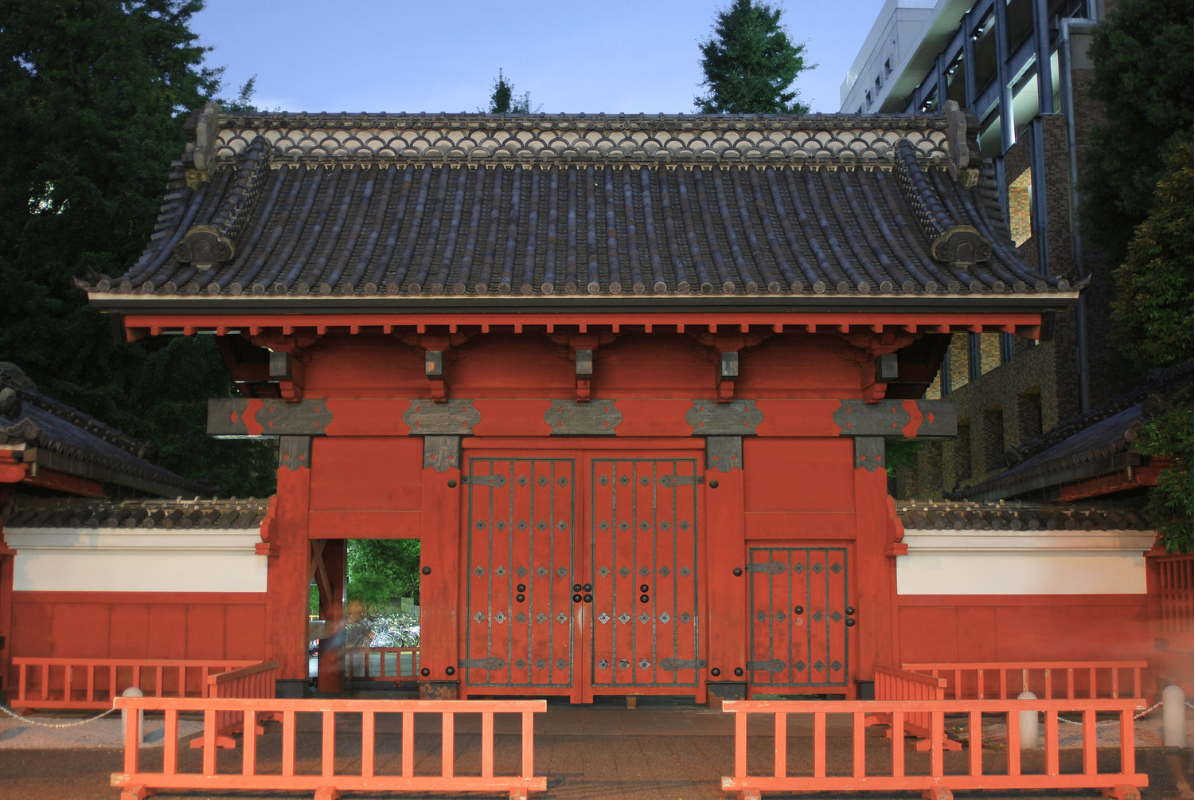 Red Gate (Akamon) located in The University of Tokyo. (Source: Canva)
The students also noticed a difference in the research environments. In Japan, there is a greater emphasis on long-term exploration of research directions, while NTU’s strength lies in practical, translational outcomes.
Beifang came to know the Japanese approach as shokunin kishitsu, the craftsman’s spirit, a willingness to sit with hard, long-term problems rather than reach for quick fixes.
Bringing that patience back to NTU, alongside the school's velocity and global ambition, could help build research with more depth and lasting impact.
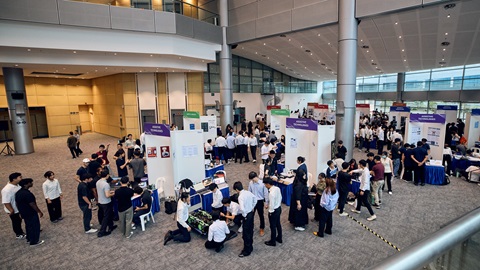
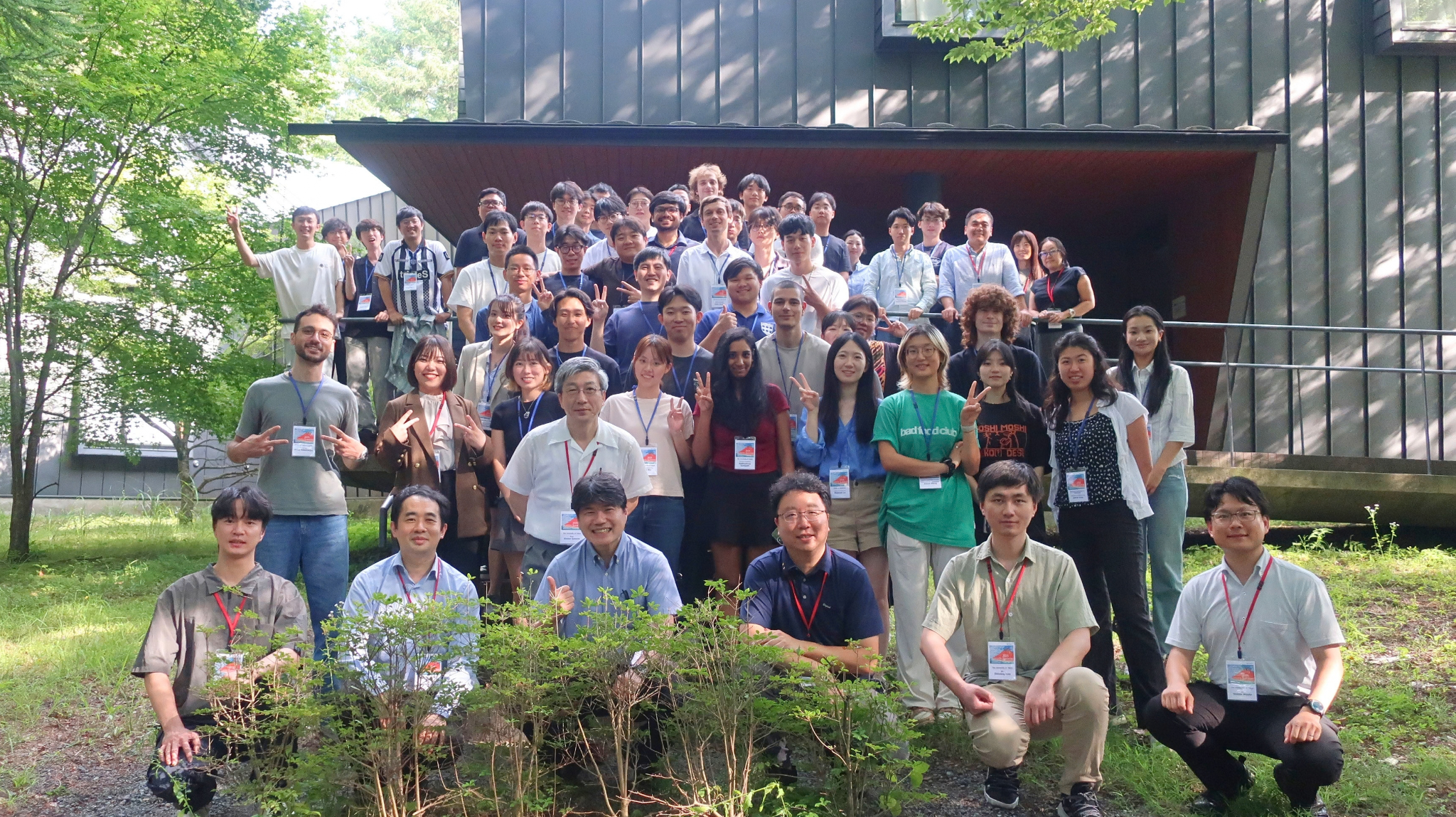 The University of Tokyo Summer Camp organisers and participants at YAMANAKA RYO Naito Seminar House at Lake Yamanaka.
Edited by Regine Ng and Karen Chai, NTU MAE Communications