A global investor’s view on where technologies go next
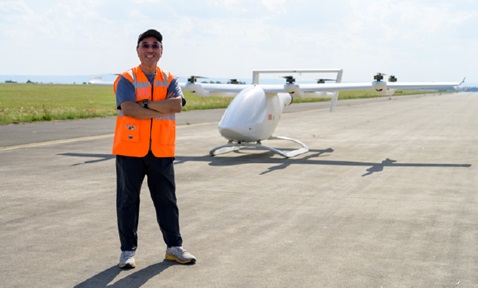
Mr David Su, founding managing partner at Matrix Partners China and Chair of the NTU I&E Advisory Board, reflects on investing in companies at scale and what the next decade means for innovators and universities.

For over two decades, Mr David Su has backed companies that grew alongside China’s economic rise, from mobility platforms to electric vehicles and enterprise software — ventures shaped as much by market realities as by technical ambition.
Also a member of the NTU Board of Trustees and the chair of NTU I&E’s Advisory Board, Mr Su brings that global investor lens to his alma mater. His reflections offer a grounded view of what enables companies to scale and what universities like NTU must prioritise as technology, geopolitics and markets shift.
What successful companies tend to get right
Looking across investments such as XPeng, Didi Chuxing and Baidu, Mr Su reckons there is no single “silver bullet” for success. Instead, he points to an alignment between market strength and technical capability.
Many of the companies he backed were built for China first. That focus mattered. The scale and pace of growth in the Chinese economy over the past 25 years created room for experimentation, iteration and rapid expansion. “Rising tides helped,” he noted, but only for teams able to execute.
Execution, in turn, came from strong engineering cultures. Many founders, with strong technical roots, were deeply involved in building products. This mattered not just for speed, but for resilience. As global competition intensified, these teams could move from serving domestic demand to competing internationally.
The broader lesson, Mr Su said, is contextual. Venture outcomes depend heavily on the strengths of the environment a company operates in, whether it’s market size, talent depth or institutional support. Crucially, what works in China may not translate directly to other regions. The discipline lies in recognising local advantages and building from there, rather than importing models wholesale.
Looking to the next decade
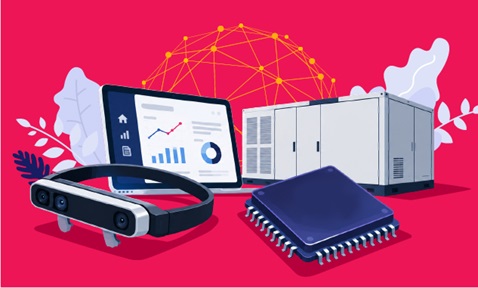
From Mr Su’s vantage point, AI will remain the organising theme of the coming decade, but its centre of gravity is shifting. The conversation is moving beyond models and chat interfaces towards infrastructure, physical systems and scientific discovery.
At the foundation is computing capacity: chips, cloud platforms and the engineering talent needed to build them. Above that are applications that reshape workflows, productivity and decision-making — changes that will affect the workforce and require societies to rethink how work is organised.
A second wave is already emerging: the integration of AI with the physical world. Robotics, intelligent manufacturing and assistive technologies for ageing populations are moving from demonstrations to early deployment. These systems will be specialised rather than general-purpose, but their impact will be tangible.
Alongside AI, Mr Su sees an injection of momentum in energy, materials sciences and life sciences. Advances in computation are beginning to influence how new materials are designed, how energy is stored and how drugs are discovered. This has implications for smaller, research-intensive economies like Singapore. Better modelling and simulation could reduce reliance on trial-and-error processes such as lab work, allowing universities and startups to push further before partnering with large corporates.
For NTU, as well as Singapore, this convergence creates opportunity. Mr Su believes the country’s openness is a strategic advantage. Positioned between major economies, Singapore can act as a connector: a place where global firms test ideas, form partnerships and build regional operations.
But he is also clear that this role requires a “global-first” mindset. Startups and researchers cannot afford to think only in terms of local or even regional markets — scaling must be part of the conversation from the outset.
Universities play a decisive role here. Beyond technical prowess, Mr Su advocates for stronger cross-disciplinary and systems thinking. Innovations increasingly sit at the intersections — between AI and physics, engineering and medicine, computation and biology, and more. Encouraging students and researchers to move across disciplinary boundaries, spend time with industry and engage with real-world constraints gives universities a strategic advantage.
Universities, he adds, are in a unique position. They can take the long view and pursue fundamental questions, yet they also serve a public mission. Translating research into products, services or startups and spin-offs is one way that impact becomes tangible and meaningful.
“If people are willing to use what you build, and even pay for it, that is often a sign the research is making a real difference. Over the next decade, it is important is to keep that connection between deep research and real-world systems firmly in view,” he said.
Read the full newsletter or subscribe to NTU I&E for the latest updates, events and programmes.