A fireside chat with Mr David Shem Tov
NTU I&E’s new Associate Vice President (AVP) for Technology Transfer and Head of NTUitive reflects on deep-tech translation, global innovation networks and NTU I&E’s role as a bridge between research and real-world impact.
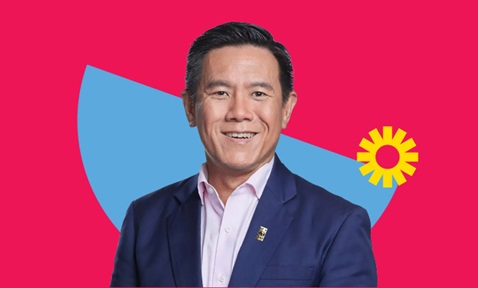
.jpg?sfvrsn=4751cf60_1) Mr David Shem Tov joined NTU I&E in November 2025 as AVP for Technology Transfer and Head of NTUitive. With more than two decades of experience spanning technology transfer, research management, startup creation and global innovation partnerships, he brings a broad perspective shaped by roles at the Technion – Israel Institute of Technology, Deloitte Israel and as a co-founder of EIT Food, the world’s largest agri-food innovation community.
Mr David Shem Tov joined NTU I&E in November 2025 as AVP for Technology Transfer and Head of NTUitive. With more than two decades of experience spanning technology transfer, research management, startup creation and global innovation partnerships, he brings a broad perspective shaped by roles at the Technion – Israel Institute of Technology, Deloitte Israel and as a co-founder of EIT Food, the world’s largest agri-food innovation community.
As NTU I&E continues to strengthen its mission of translating research into impact, we speak with Mr Shem Tov about what drew him to NTU, lessons from global innovation ecosystems and his priorities for advancing tech transfer and entrepreneurship at the university.
Thank you! What drew me most strongly was NTU’s world-class research and the scale of impact that can be achieved by translating this research into real-world applications through technology transfer and commercialisation.
I was equally inspired by the university’s leadership — Professor Ho Teck Hua, President of NTU and Professor Louis Phee, VP of Innovation & Entrepreneurship — and their vision for excellence in science, education and societal impact. NTU has tremendous potential to further strengthen its position in the global innovation landscape, and that was an opportunity worth travelling across the world for.
You spent many years shaping tech-transfer and innovation programmes — what perspectives from those environments do you find most relevant for NTU today?
One important lesson from Technion and Europe’s innovation ecosystems is the value of global innovation networks. These networks expose universities to real market needs and emerging trends, enable collaboration with stakeholders ranging from multinational companies to venture capital firms and create clear pathways for translating discoveries into societal and economic value. Given Singapore’s position as Asia’s innovation hub and its strong national commitment to R&D commercialisation, this networked and collaborative approach is especially relevant for NTU.
What principles or practices have you found most effective in moving research from the lab towards viable products or startups?
A key principle is engaging researchers early, even when technologies are still at low readiness levels. At that stage, gently exposing them to market needs, trends and scalability considerations can add value to their research direction without detracting from scientific rigour.
This must be supported by strong enabling structures — streamlined processes, coordinated innovation resources across campus, appropriate funding and meaningful incentives. When early market insight is combined with institutional support, it becomes much easier for promising lab discoveries to move towards real-world application.
In your view, what makes an innovation ecosystem truly effective, and where does NTU have the greatest opportunity to differentiate itself?
An effective innovation ecosystem combines an open and collaborative culture, strong institutional and ecosystem support, a global outlook and entrepreneurial talent.
Innovation today is inherently international, and for Singapore-based startups, thinking globally from day one is not optional. NTU’s opportunity lies in connecting these elements at scale. With its strong research base, interdisciplinary strengths and global partnerships, NTU can act as a bridge between academia, industry and global markets, turning research into ventures with international ambition and impact.
As you lead NTUitive and oversee tech transfer, what are your early priorities? Are there areas where you see near-term opportunities to strengthen impact?
My immediate priorities focus on three areas. First, strengthening how NTU connects with Singapore’s innovation ecosystem, so researchers can engage earlier and more easily with industry, investors and startups.
Second, helping faculty and students better understand emerging market needs, allowing research to be shaped towards scalable, high-impact applications. Third, supporting teams that want to build deep-tech startups by streamlining processes, consolidating resources and ensuring the right funding and incentives are available at each stage.
Alongside this, we will continue to strengthen our IP strategy, expand international partnerships and develop entrepreneurial talent — drawing on proven practices from global innovation leaders while adapting them to Singapore’s context.
What guidance would you give NTU faculty and students who are curious about translation, entrepreneurship or working with industry but are unsure where to begin?
I would encourage them to reconnect with why they entered science in the first place: curiosity and the desire to solve meaningful problems.
Translation and entrepreneurship are not departures from science — they are natural extensions of it. The journey does involve uncertainty, but seeing your work make a difference beyond the lab is deeply rewarding. And you are not alone in this process. Whether you are exploring IP, industry partnerships, or a startup idea, I encourage you to reach out to us. Let us start a conversation about how your research can create the impact you envision!
Read the full newsletter or subscribe to NTU I&E for the latest updates, events and programmes.