In AI's Fast Lane, Chung Zhi Xuan Never Lost Sight of the Fundamentals
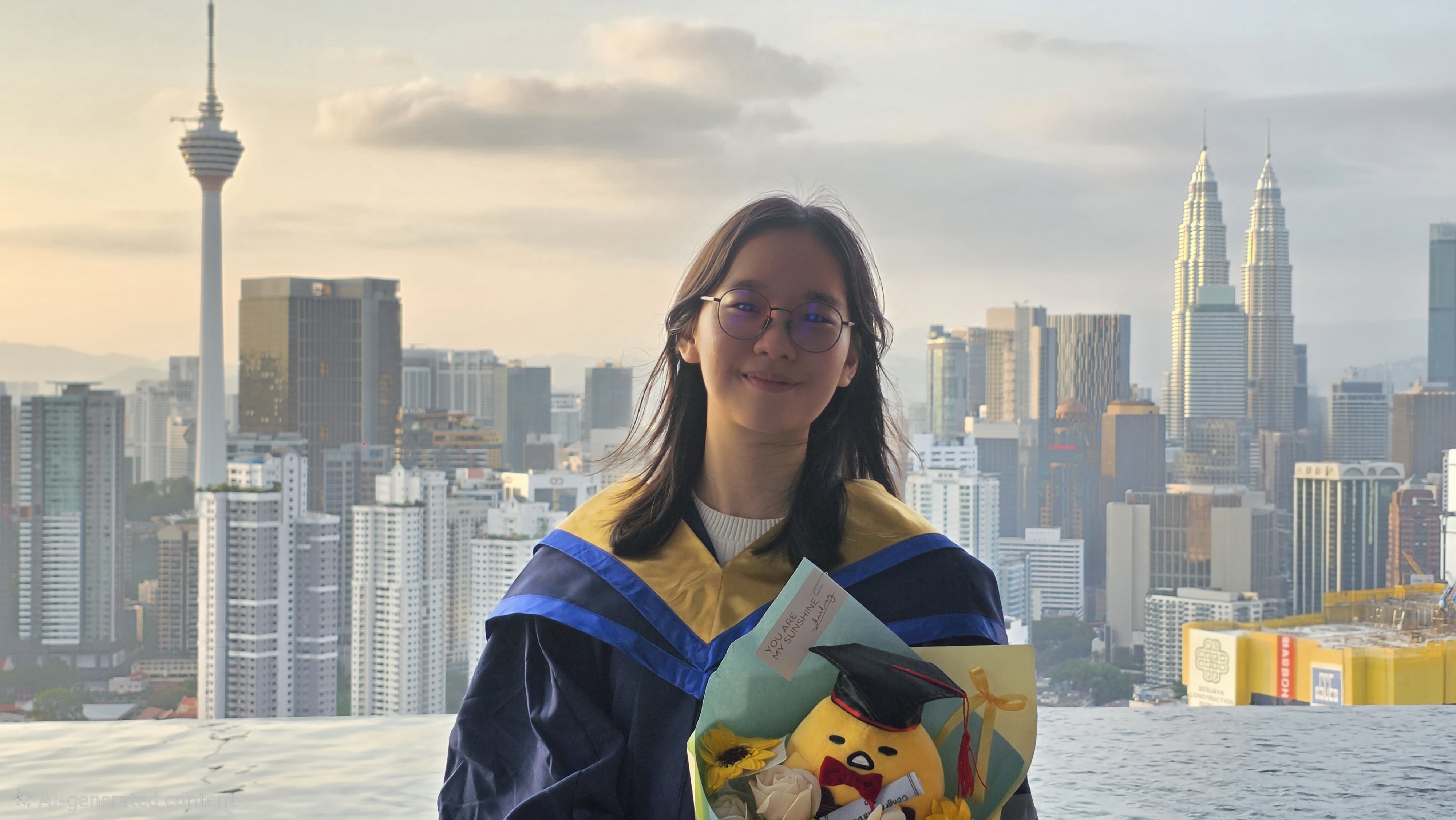
Artificial intelligence may be evolving at breakneck speed, but for Chung Zhi Xuan, success has never been about chasing the latest breakthrough.
Instead, the Data Science and Artificial Intelligence (DSAI) graduate has built her university journey around something far more enduring – learning how to keep learning.
Awarded both the Lee Kuan Yew Gold Medal and the Yoozoo Gold Medal, Zhi Xuan credits her success not to natural talent alone, but to the consistency, curiosity and discipline that shaped her four years at the College of Computing and Data Science (CCDS).
"When I found out I had received the awards, I was surprised and incredibly grateful," she said. "Looking back, I feel that the effort I put into my studies over the past four years has been recognised. These awards represent not only academic achievement, but also the consistency and curiosity that have guided my learning journey."
When Zhi Xuan first enrolled in DSAI, she was drawn to its combination of computing and mathematics. As her studies progressed, however, she discovered that artificial intelligence demanded much more than technical skills.
"I realised that DSAI is much more than just building models or writing code," she said. "It requires critical thinking and domain knowledge."
That shift in perspective reinforced her appreciation for lifelong learning in a field that continues to evolve at remarkable speed.
One of the defining experiences of her time at CCDS was her Final Year Project on multimodal emotion analysis of social media content. The project challenged her to balance accuracy, efficiency and cost while designing and testing different approaches.
More importantly, it changed the way she thought about research.
"I learned that research is often an iterative process, where setbacks are opportunities to refine ideas rather than signs of failure."
The same mindset helped her navigate one of the most demanding periods of her undergraduate journey.
During her third year, Zhi Xuan took six modules – five of which included both assignments and final examinations – while remaining actively involved in co-curricular activities. Balancing competing demands required careful planning, consistent study habits and self-discipline.
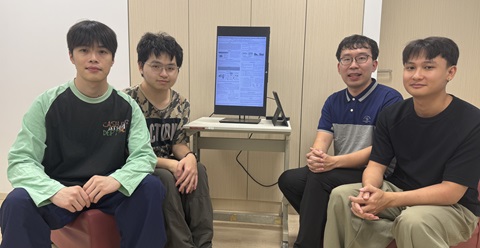
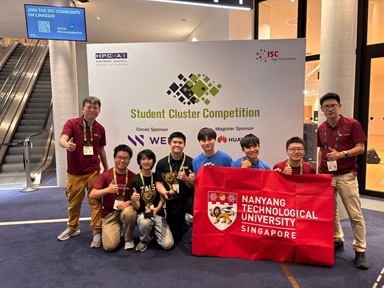
"My friends played a significant role in shaping my journey at CCDS," she said. "We studied together, exchanged ideas, and supported one another through challenging assignments and examinations. Their encouragement reminded me that learning is not a competition but a collaborative process."
As she prepares to graduate, Zhi Xuan remains excited by the opportunities AI presents, particularly the chance to contribute to technologies that can improve people's lives. At the same time, she believes graduates should avoid becoming preoccupied with the latest trends.
"Stay curious and focus on building a strong foundation rather than chasing the latest trends," she advised. "Technologies will continue to evolve, especially in AI, but the ability to think critically, learn continuously, and solve problems will always remain valuable."
In August, Zhi Xuan will begin her career as an AI Algorithm Engineer at MediaTek, where she looks forward to applying what she learned at CCDS while continuing to grow alongside experienced engineers.
For Zhi Xuan, the future of AI will undoubtedly bring new tools, new challenges and new possibilities. But the lesson that has guided her own journey remains unchanged – the best preparation for tomorrow is learning how to keep learning.