Contact CCDS
CCDS on Social Media
Visit CCDS
College of Computing and Data Science
50 Nanyang Avenue, Singapore 639798
50 Nanyang Avenue, Singapore 639798
Inside CCDS

Turing AI Scholars learn directly from leading researchers whose work has shaped artificial intelligence, computing and related fields. Each masterclass brings specialist expertise into the programme, giving scholars the opportunity to examine important ideas with the people advancing them.
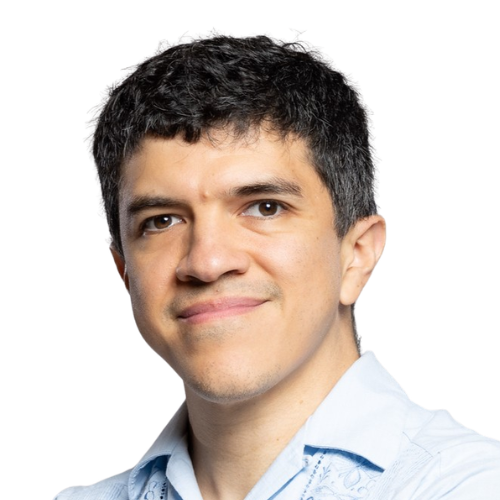
Distinguished Professor of Computing
Associate Director and COO, MIT CSAIL
Professor Armando Solar Lezama leads MIT's Computer Assisted Programming Group and researches program synthesis, programming systems and artificial intelligence. His work explores how computers can generate reliable programs from human intent and advances neurosymbolic approaches that combine formal reasoning with modern machine learning.
SC5404 Introduction to Program Synthesis
Professor Solar Lezama explored how search, learning, large language models and formal verification can be used to generate programs. Students compared major synthesis approaches and considered when symbolic, learning-based or hybrid techniques are best suited to a problem.
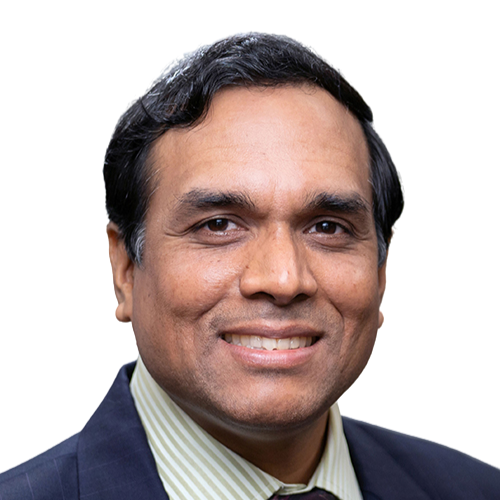
Cadence Founders Chair Professor
Electrical Engineering and Computer Sciences
Professor Sanjit A Seshia is a leading researcher in formal methods, artificial intelligence and dependable computing. His work combines mathematical verification, program synthesis and machine learning to create safer, more reliable intelligent systems. He has made pioneering contributions to SMT-based verification and inductive program synthesis and is a Fellow of ACM and IEEE.
SC5403 Formal Methods and Artificial Intelligence
Professor Seshia showed how formal specification, verification and synthesis can strengthen the safety and reliability of AI-enabled systems. Students encountered core techniques such as SAT and SMT solving, temporal logic and model checking, alongside their application to autonomous and data-driven systems.
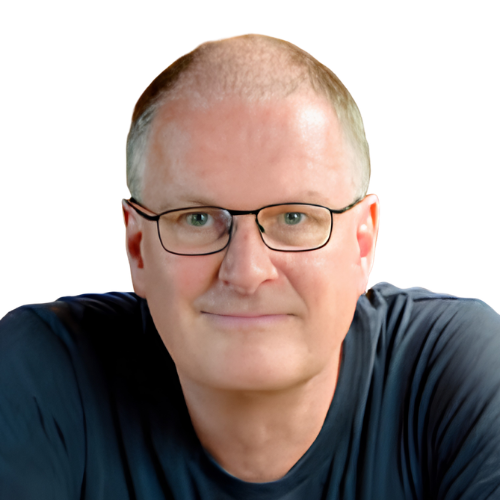
Ashall Professor of the Foundations of Artificial Intelligence
Senior Research Fellow, Hertford College
Professor Michael Wooldridge is a leading authority on artificial intelligence with more than three decades of research and teaching experience. His work spans intelligent agents, multi-agent systems and the foundations of AI. He is a Fellow of the Royal Society and has held major leadership roles across the international AI research community.
SC1315 Artificial Intelligence
Professor Wooldridge introduced the foundations of modern AI, including intelligent agents, search, logical reasoning, planning, decision-making under uncertainty and machine learning. Students explored how these approaches work together and how to select appropriate methods for different AI problems.
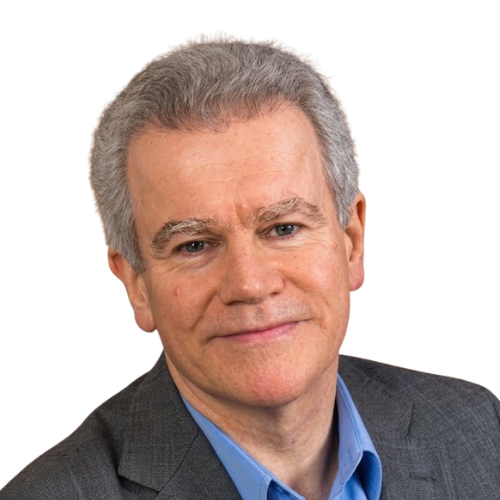
Gilbert Ryle Fellow and Professor of Philosophy
Head of Education and Outreach, Institute for Ethics in AI
Professor Peter Millican works across philosophy, computer science and artificial intelligence. He helped establish Oxford's Computer Science and Philosophy degree and is widely known for his teaching and scholarship on Alan Turing, computability and machine intelligence. His work connects the logical foundations of computing with enduring philosophical questions about what machines can do.
SC5401 Turing on Computability and Intelligence
Professor Millican led students through the ideas that shaped modern computing and AI, from formal logic and Turing machines to the 1936 computability paper and the Turing Test. The masterclass also examined continuing debates about machine intelligence and the possible limits of AI.