NTU CCDS Seniors Secure $200,000 in Startup Funding for Crator Labs
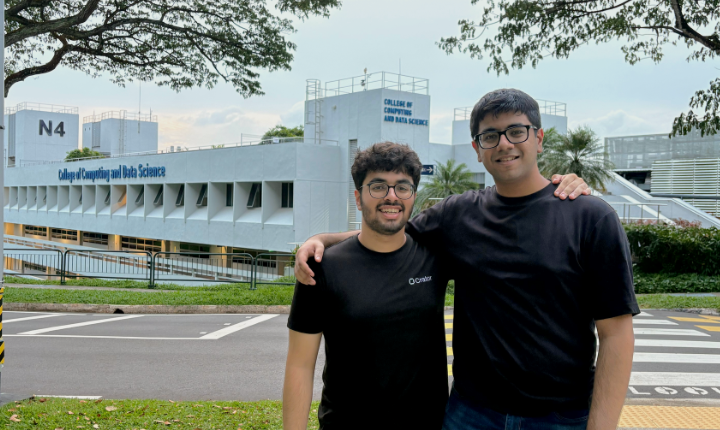
Crator Labs, a startup co-founded by NTU College of Computing and Data Science seniors Yajat Gulati and Shrivardhan Goenka, has secured US$200,000 in funding from gradCapital, an early-stage investment firm that focuses on student entrepreneurs.
“We are proud that something which began as a problem we encountered while working with businesses has grown into a venture-backed company with real customers,” said Gulati.
Crator uses AI agents to set up enterprise resource planning (ERP) systems for small- to medium-sized enterprises (SMEs). ERPs are systems that can handle central business functions such as inventory, bookkeeping, and personnel management all in one place. Examples of big-name ERPs are Workday, Oracle, and SAP. There are also more economical alternatives, such as ERPnext, an open-source ERP popular with SMEs across India, the Middle East and Africa.
However, ERPs cannot be used out of the box. Businesses typically hire “system integrator” consultants to customise the ERP for the business and train the staff. ERP systems integration is an estimated US$80 billion industry, and a single integration project can take months. Many smaller businesses cannot afford the cost or the time.
In contrast, Crator describes itself as an AI-native systems integrator: a self-serve platform that helps business owners implement their own ERPnext installation. If the implementation is relatively complex, Crator’s team can step in to deliver an ERP using internal AI systems.
“We think that every software implementation, and eventually every service like it, will be done by AI agents in the future,” Gulati said. “ERP is where we’re starting to build that foundation ourselves.”
Gulati and Goenka had the idea to build Crator after several years of building apps in the AI agent space.
In 2024, the two were part of the Student Entrepreneurship Program at the CCDS Innovation Lab. There, they built Yar, a small wearable pendant that uses AI to help visually impaired people understand their surroundings, read text, navigate and live more independently in their daily life. Yar was a runner-up for the James Dyson Award that year.
In 2025, they began building an AI legal application with a major Indian law firm, for which they were awarded NTU’s Multidisciplinary Team (MDT) Fund.
Crator began taking its current form when Gulati and Goenka were building AI agents for businesses. They found that AI agents needed access to reliable business data, but many businesses did not have ERPs or used them ineffectively, leaving data scattered across spreadsheets and disconnected tools.
“We set out to build AI agents, but kept running into the same problem: the ERP had to be set up properly first. We realised that this setup work was a far bigger opportunity, and that AI agents could do it,” said Gulati.
The team’s hunch was proven correct. Since their launch in September 2026, Crator has had 10+ customers in countries including India, Singapore, and the US.
Crator’s current priority is productising what it learns from each implementation and building it into its AI systems.
“Right now, a lot of the know-how in an implementation still sits with our team,” Gulati said. “Every project teaches us something new, and we build that back into our AI systems. The more implementations we do, the more our agents can handle on their own.”