
The College of Computing and Data Science (CCDS) at NTU Singapore brings together a diverse community of faculty whose work spans computing, data science, and artificial intelligence. Together, they shape how computing is understood, taught, and applied – advancing both research and education in an AI-shaped world.
At CCDS, our faculty shape how computing is understood, taught, and applied in an AI-shaped world. We seek individuals with strong disciplinary foundations who are able to think across systems, domains, and real-world contexts.
As artificial intelligence becomes embedded in how work is done, the role of computing education must evolve. Our faculty play a central role in this – advancing research while guiding how students learn to reason, build, and make sound judgements, both with and without AI.
This page reflects the growing community of scholars contributing to that mission.
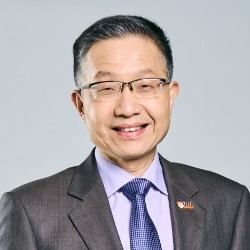
Prof Luke Ong
Dean, CCDS
Recent Appointments
CCDS continues to grow its faculty with new appointments and named professorships that strengthen the College's research capabilities and academic leadership. These reflect our ongoing commitment to depth, rigour, and real-world impact.
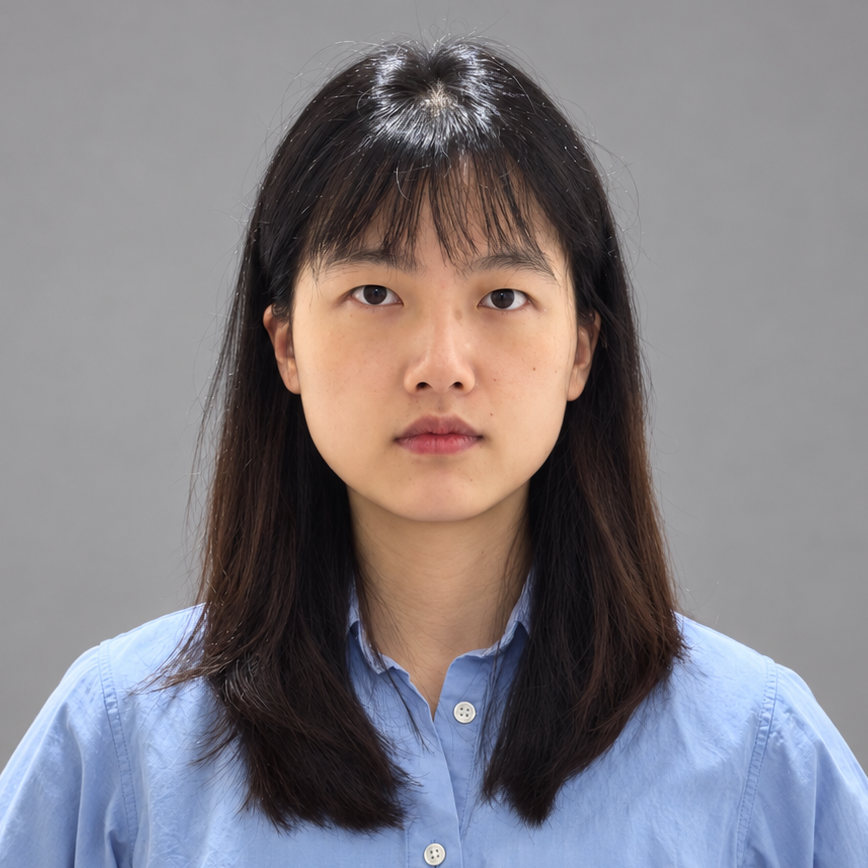
Gong Tiantian
Computing
Research Focus
- Secure multi-party computation
- Collusion-resistant privacy in private information retrieval and verifiable secret sharing
- Recovering Byzantine fault-tolerant consensus beyond fault thresholds
- Mechanism design for fairness
- Deterring collusion in secure multi-party computation
- Universally composable frameworks under excessive faults
- Coercion-resistant Internet voting
- Privacy-preserving content delivery networks
- New cryptographic models and primitives for computation under weak trust assumptions
Research Interests
Education
- PhD (Purdue University, 2024, Computer Science)
- MSc (Purdue University, 2022, Computer Science)
- BSc (Renmin University of China, 2017, Finance)
Postdoctoral Experience
- Post-doctoral Fellowship (Technion – Israel Institute of Technology)
- Post-doctoral Fellowship (Yale University)
Notable Awards
- Lady Davis Fellowship for postdoctoral studies
I am very open to collaborations across the school, particularly with colleagues whose expertise complements my work in cryptography and secure distributed computing. I am currently developing a grant proposal on collusion in multi-agent systems that could benefit from collaboration with researchers in AI and related areas. If this sounds relevant to your interests, I would be very happy to chat.

Cheng Yu
Artificial Intelligence
- Efficient and sparse architectures – model compression techniques that shrink large models without sacrificing performance, key to scaling generative AI systems
- Multimodal learning – models that reason jointly across text, image, and video, reflected in delivered systems like Hailuo Video and Skyreels
- Large language model productization – led teams at Microsoft Research Redmond that turned core research into shipped products powering Copilot, DALL-E 2, ChatGPT, and GPT-4
- PhD (Northwestern University, 2016, Computer Science and Engineering)
- BSc (Tsinghua University, 2006, Bachelor in Automation)
- IEEE 2024 SPS Young Author Best Paper Award
- Outstanding Paper Award in NeurIPS 2023

- Vulnerability discovery – static and dynamic analysis techniques uncovering critical vulnerabilities in web/cloud applications, OS kernels, device drivers, and distributed systems
- Automated vulnerability detection – combining symbolic program analysis with neural reasoning for patch/regression analysis and root-cause diagnosis
- Securing AI systems – unsafe ML model deserialization and the attack surface opened by AI coding tools and LLM agents
- PhD – Chinese University of Hong Kong, 2023, Computer Science and Engineering
- BSc – University of Chinese Academy of Sciences, China, 2019, Computer Science and Technology
- Post-doctoral Fellowship – Columbia University, USA, with Prof. Junfeng Yang, 2026
- ACM CCS Distinguished Artifact Award, 2025
- ACM CCS Distinguished Paper Award, 2024
Faculty Positions
CCDS is committed to building a strong and forward-looking faculty community. We seek individuals who combine deep disciplinary expertise with the ability to engage across domains and contribute to both research and education.
Opportunities are available across a range of academic tracks, including tenure-track, teaching-focused, and research positions.
Meet Our Faculty
Discover the full breadth of faculty across the College of Computing and Data Science, including their research interests and areas of expertise.
Cross Appointments, Adjunct & Visiting Faculty, Emeritus Professorship
In addition to its core faculty, CCDS works closely with cross-appointed faculty, adjunct and visiting academics, and emeritus professors who contribute to the College's teaching, research, and broader academic community.
50 Nanyang Avenue, Singapore 639798