CCDS Undergrads Build forge, a Test Prep App for Pre-Interview Assessments
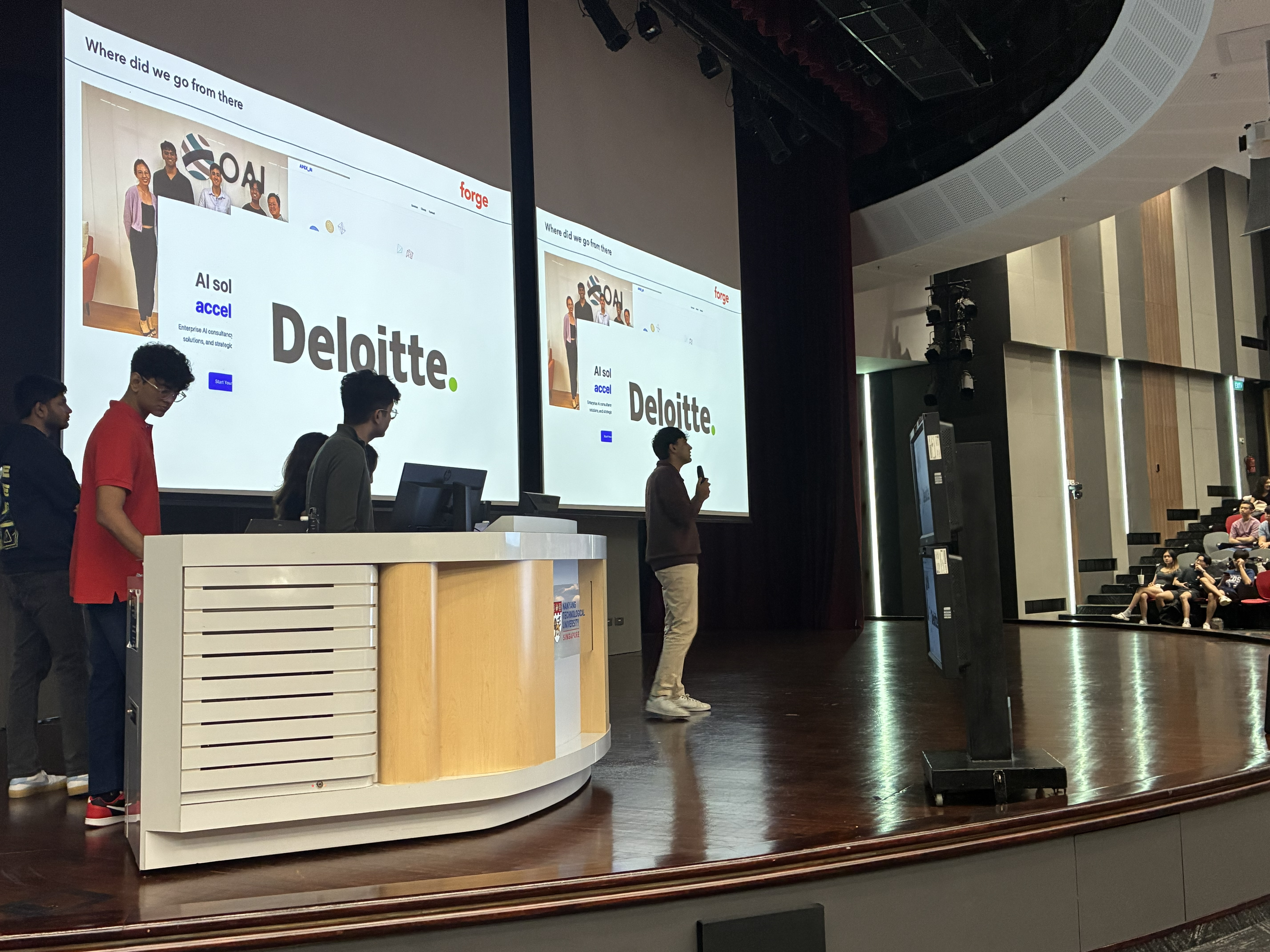
It was December 2025, and Pratham Ranjan and his friends Alok Aashish Vernekar, Aditya Anand Pramod, and Amitbikram Jain had submitted a collective total of about 4,000 applications for jobs and internships. Before they even got the chance to interview, however, they kept encountering tests: SHL assessments, AON (aka cut-e) assessments, aptitude tests, numerical reasoning tests, logical reasoning tests, and more.
“Although these assessments could determine whether an applicant progressed to an interview, the available preparation resources were often fragmented, outdated, expensive or simply not representative of the real tests,” Pratham said. The four friends decided to make a better product. That’s how forge, a platform that lets anyone practice taking the tests used by employers such as McKinsey, was born.
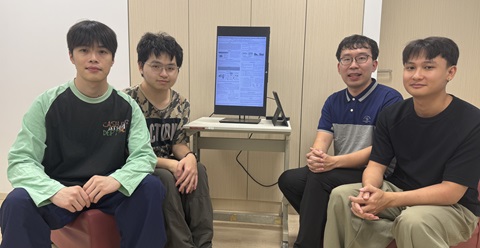
Pratham served as founder, overseeing the entire picture including technology, product, marketing and overall strategy, while Vernekar, Pramod, and Jain served as founding engineers, building the technical foundations of the product.
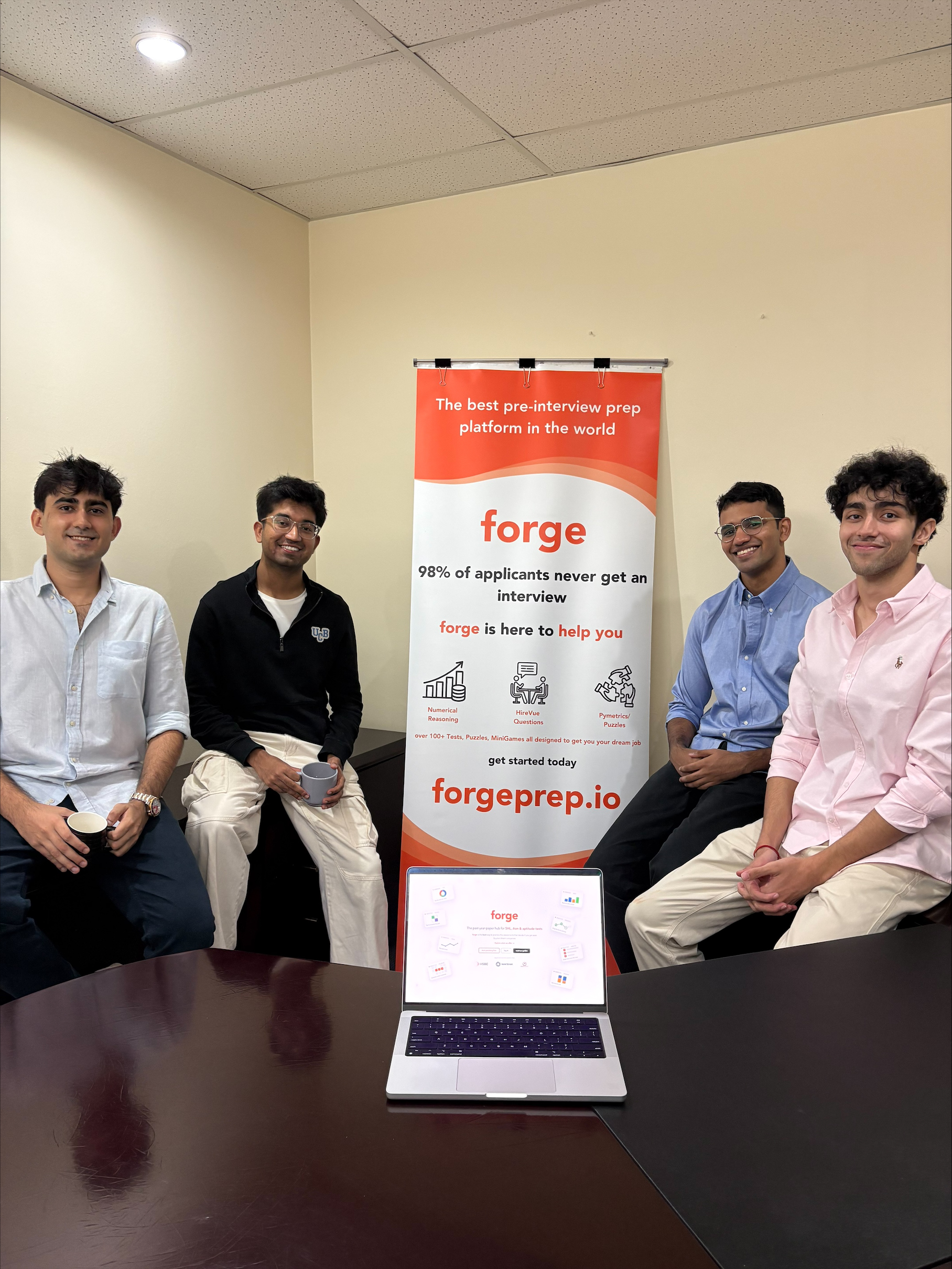
The four started working on forge in December 2025. Today, forge has over 700 weekly active users across the globe in 63 countries, including Singapore, India, Europe, and North America.
“Everyone knows about interview prep, but no one talks about how to increase the chances of actually getting interviews,” Pratham said. “That’s the gap that forge addresses.”
The forge platform is aimed primarily at undergraduate students aiming to work at Fortune 500 and similar companies, which often require these tests before a candidate even reaches the interview process.
Unlike many test preparation services, forge goes beyond only providing sample questions; it explains the different types of tests, how tactics differ for each test family, what employers are typically looking for, and more. Users also have access to analyses of their weak areas, where they have made improvements, instant critiques, guides for test taking, and more. Most recently, forge has also added a resume reviewer. In coming months, the teams plans to add a Quant Practice hub and expand the library of cognitive assessment tests.
In addition, many of the services, such as test guides and sample questions, are free of charge. And forge, at $2.99 for 5 practice tests, has a lower price tag than comparable platforms.
“We are more than 99% cheaper than any competitor,” Pratham said. “This is because the end goal isn’t to make money off people. It’s about democratising something that should not be hidden behind expensive paywalls. In fact, my goal is for people to never use forge again, after they’ve used it once.”
Pratham and his team credit NTU and CCDS for supporting them in this journey.
“CCDS Dean Luke Ong has been very supportive,” Pratham said. “We were also enabled by the I-Lab to do a lot of testing and infrastructure, which allowed us to actually build this app.”
Pratham also thanked Teo Choo Eng and Jian Xin Lim, who are the lab manager and lab in-charge, respectively, of the I-Lab.
Pratham says the experience of developing forge challenged him to develop his skills in multiple areas.
“As a Computer Science and Business double-degree student, forge became an opportunity to apply the different parts of my education to one real product,” Pratham said. “My computer science classes influenced how I approached the platform’s architecture, software development and technical problem-solving. At the same time, my business modules gave me frameworks for thinking about marketing, consumer behaviour, strategy and how to position forge within the graduate recruitment market.”
Pratham said that although the experience could be exhausting, it was also one of the best parts of his NTU experience.
“Rather than seeing forge as something entirely separate from school, I saw it as the place where everything I was learning could come together,” Pratham said. “It allowed me to combine technology, business, design, sales and storytelling while building something that real students could use.”
In 2026, Pratham and most of his team graduated from NTU and moved on to new careers, but the plan is for forge to continue and even grow in their absence.
“We mean for forge to be sustainable,” Pratham said. “Over the summer, I wrote articles and made many YouTube videos, tutorials, and articles, which will slowly accumulate views and grow our audience.”
Pratham encourages other interested students to follow his example.
“CCDS and the broader NTU ecosystem is extremely conducive to experiments like forge,” Pratham says. “I am always open for a conversation with students looking to start something of their own, and to provide mentorship and guidance.”