Great Research Starts with Bigger Questions
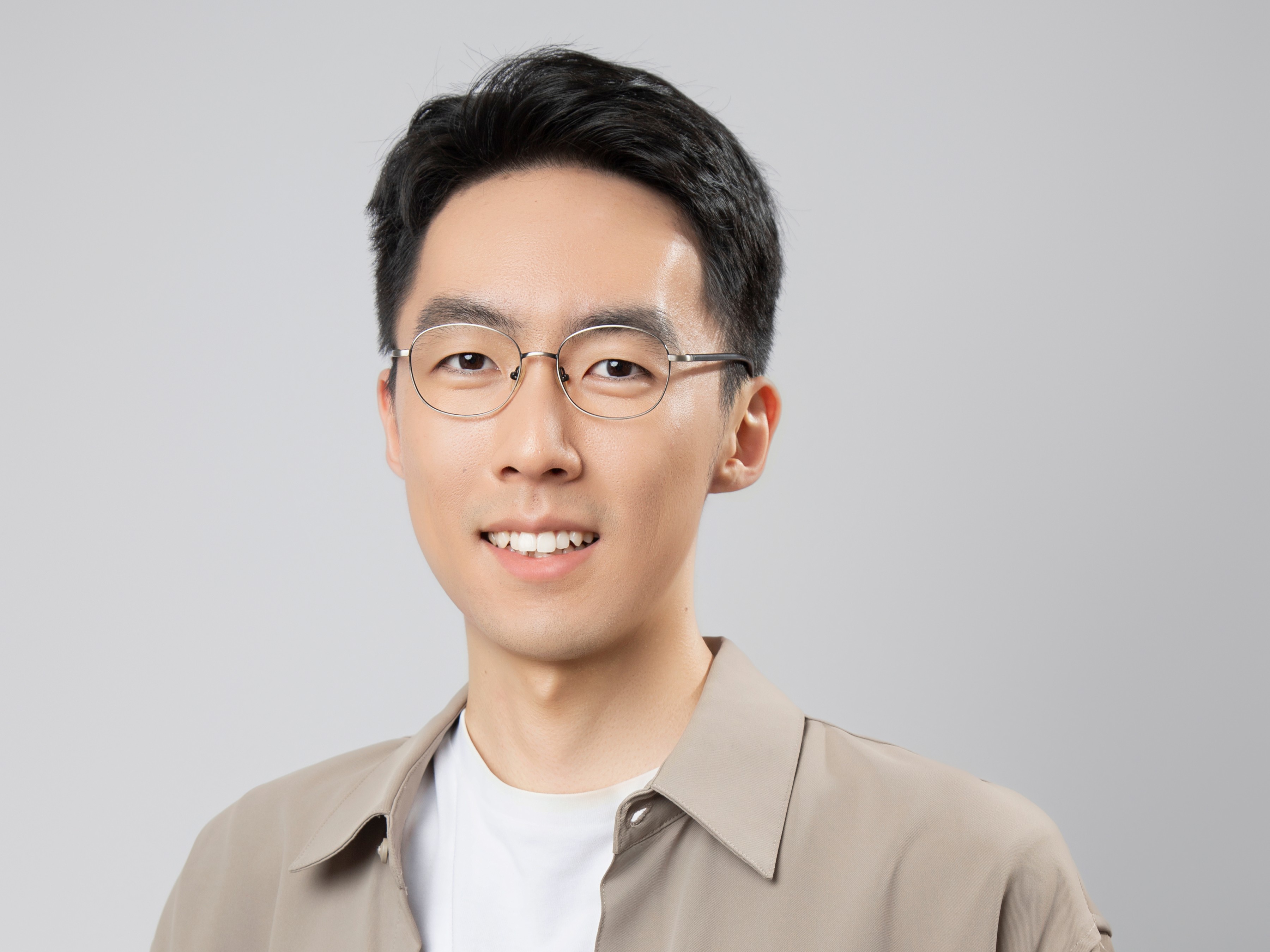
The most important part of Dr Chen Zhaoxi's research wasn't the technology he built. It was the way he learnt to think.
Each answer led to another question, every experiment challenged an assumption, and every setback became an opportunity to see the problem differently. Over time, that mindset shaped not only his research, but also his vision for the future of artificial intelligence.
That way of thinking began during his undergraduate studies at Tsinghua University, where he became fascinated by the possibility of teaching machines not simply to process information, but to reconstruct, generate and interact with three-dimensional worlds. It was a curiosity that eventually brought him to the College of Computing and Data Science (CCDS) at NTU, where he joined Professor Liu Ziwei 's S-Lab to pursue research at the intersection of computer vision, computer graphics and artificial intelligence.
His doctoral research focused on making high-quality 3D content easier to create.
Traditional 3D production demands specialised software, artistic expertise and significant manual effort. Zhaoxi explored how text, images, sketches and other visual signals could be used to generate realistic 3D objects, environments, lighting and materials. But creating convincing images was only part of the challenge. The real test was ensuring those digital assets remained consistent, editable and physically realistic from every perspective.
That complexity meant there was rarely a single breakthrough.
Ideas that succeeded in early experiments often failed when applied to more diverse objects and scenes. Rather than becoming discouraged, Zhaoxi learnt to tackle the problem one piece at a time. Each project focused on a different missing component, gradually building towards a much larger picture. More importantly, every unsuccessful experiment became an opportunity to refine the next question rather than abandon the problem altogether.
Regular discussions with his supervisor and collaborators also helped him reassess his ideas and continue making progress when the path forward was unclear.
As his research evolved, so too did his perspective on artificial intelligence.
For Zhaoxi, the future of AI extends well beyond digital environments. As intelligent systems increasingly move into homes, factories and other physical settings, they will need to understand not only language and images, but also space, physical interactions and human behaviour. That broader vision inspired him to co-found Ropedia, an NTU spin-off developing real-world data infrastructure for robotics, world models and embodied intelligence.
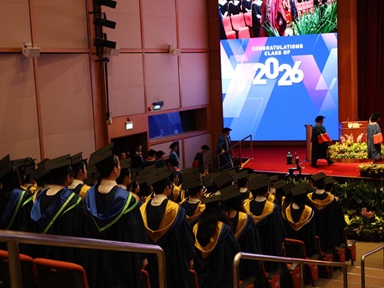
Receiving the NTU PhD Medal of Honour gave him an opportunity to reflect on the journey.
"My first reaction was a mixture of surprise, gratitude and reflection," he said. "A PhD is a long journey involving many experiments that do not work, ideas that need to be reconsidered, and periods when progress is difficult to measure."
For him, the award represents not only years of research, but also the persistence and curiosity that sustained it, reaffirming his belief that fundamental research can create meaningful impact beyond academia.
Looking back, the advice he offers future students reflects the philosophy that shaped his own journey.
Choose problems that genuinely matter to you, and be prepared to stay with them longer than expected. Innovation rarely progresses in a straight line, and unsuccessful experiments often reveal more than immediate success.
Just as importantly, do not work in isolation. Seek feedback early. Collaborate with people who think differently. Learn to communicate your ideas clearly.
Technical ability will always matter. But, as Zhaoxi discovered, curiosity, resilience and the willingness to learn from others are what ultimately determine how far your ideas can go.