Bioengineer by day, philosopher by night
NTU CCEB alumnus bridges the gap between science and the humanities
🎓 Find out more about CCEB's undergraduate programmes here.
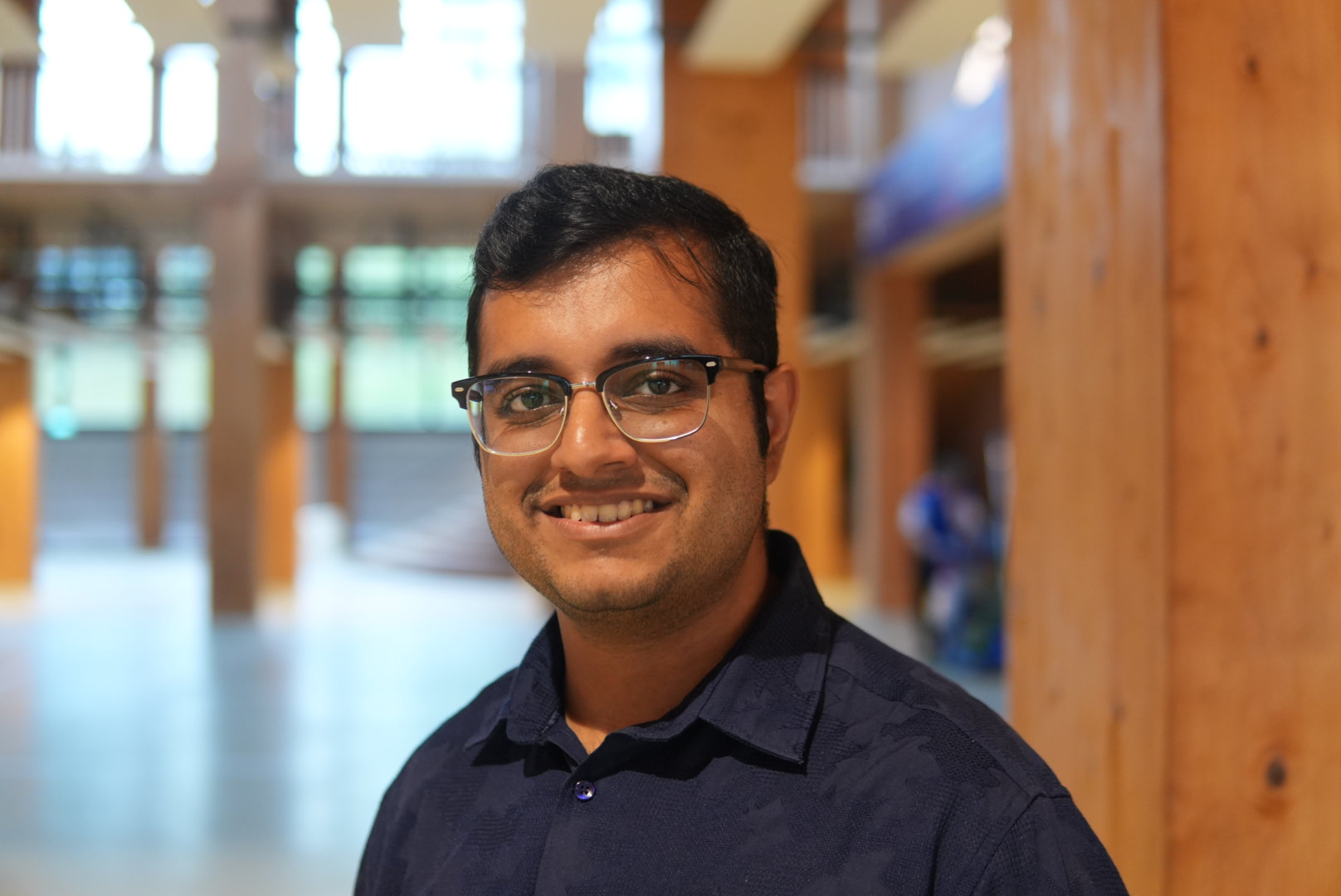 Sarvagya Bhatnagar
2026 Regional Winner for Philosophy, Global Undergraduate Awards
Bioengineering, NTU School of Chemistry, Chemical Engineering and Biotechnology (CCEB)
Demonstrating exceptional academic versatility, CCEB's bioengineering alumnus, Sarvagya Bhatnagar, earned a top spot as Regional Winner for the subject of Philosophy at the 2026 Global Undergraduate Awards. His award-winning work highlights how interdisciplinary perspectives can be applied to rigorous philosophical inquiry beyond the lab.
You are a Bioengineering undergraduate who spends your days in high-tech labs dealing with biological systems and advanced engineering principles. What was the reaction of your classmates and professors when they found out you submitted a paper to—and won—the top regional award in Philosophy?
Many of my classmates were surprised because philosophy seemed quite disconnected from my academic work in bioengineering. A friend asked me, "Why philosophy?" I actually began working on the thesis before I even knew the competition existed and was refining the argument in my free time simply because I found the topic fascinating. I only entered it once I realized there was a possibility to test whether my work could hold up on a global stage.
Dr. Kwok Sai Hang from the School of Humanities, who graciously spent time mentoring me as I developed my arguments, was pleased to see the work recognized and described the final draft as innovative and insightful. His guidance was instrumental to the development of my paper, and I am deeply grateful for his support.
The humanities value the same qualities that the sciences value: letting curiosity lead, questioning assumptions, and developing and defending a claim with precision. Academic interests do not have to fit neatly into a single discipline. We should give them room to grow.
In today's world, STEM and the humanities are often treated as completely separate paths. How has your deep engagement with philosophical thinking influenced the way you approach complex, real-world bioengineering problems or biotechnology ethics?
In bioengineering, it is easy to focus on whether something can be designed. Philosophy encourages us to ask whether it should be done, for whom it should be done, and under what conditions is it appropriate. A technically successful project may still raise pertinent questions about safety, consent, and unequal access to treatment. Philosophy strengthens my approach to complex problems by encouraging me to distinguish facts from values. Scientific evidence can help us understand the likely consequences of a decision, but questions about fairness, dignity, responsibility, and acceptable risk also require ethical reasoning.
As you look back on your undergraduate journey at CCEB, what is a philosophical thought or scientific mindset you have developed that you would most like to pass down to your juniors?
Active curiosity is the deliberate practice of asking questions and seeking out information about topics or experiences that you do not immediately find interesting. It is a conscious habit to seek to step outside your comfort zone, to try to learn a lesson or two from the people around you and the circumstances you find yourself in, and to question the validity of your own starting assumptions. It is essential to research, but I believe it is essential to daily life too. It involves practicing patience when understanding difficult concepts and practicing humility in prioritizing the desire to learn over the desire to be “right”. Not only does an active curiosity and a love for learning help us find bridges between disciplines where none seem obvious, but it is also a rewarding mental exercise.
Many students feel confined to the boundaries of their major, but you stepped entirely out of your academic home to submit your work under Philosophy. How did you navigate the process of structuring, writing, and submitting an entry for a humanities category, and what gave you the confidence to let your philosophical ideas compete on a global stage?️
There are many connections to be made between disciplines, and they can and should be made by constantly engaging in an intentional practice of curiosity. I spent time reading the works of authors in philosophy, Homeric philology, modern linguistics, cultural theory, ecology, and neuroscience. Reading laterally across these fields, I began to develop my thesis when I noticed certain cultural and perspectival differences between the enactivist language used to describe lived experiences in Homeric texts, and the cognitivist language biology uses to describe consciousness and the mind. Enactivism and cognitivism are diametrically opposed, so shifting the frame of reference of modern biology from the language of cognitivism to enactivism profoundly impacts the interpretation of medical data neurobiologists use to study the structure of experience. To express my line of critique in this particular formulation of philosophy (neurophenomenology) precisely and defend it against some serious objections, I developed and formalized my own paradigm. In this way, the engineering and philosophical mindset both teach you to formulate an initial model, stress-test it with edge cases, re-formulate it and refine as necessary.
I structured my core argument by defining my own terms to suspend any assumptions in existing language that did not fit what I was trying to express, and to address competing interpretations. In my appendices, I formalized my frameworks of logic and showed how they treat the edge cases that could potentially undermine my thesis. The initial feedback was difficult, but I used each criticism to refine my argument. My confidence grew only as my thesis survived successive rounds of criticism and revisions. I submitted my work once I was confident that my paradigm is logically coherent and defensible for interpreting neuroscience and experience, and that it was ready to be evaluated on a global stage.
What other creative outlets or passions do you pursue to unwind and recharge outside of your academic life?
I love making music. The two instruments I play the most are the piano and the sitar. I am trying to learn jazz on the piano and am experimenting with ways to bring it into conversation with Indian classical music. I also spend time messing around in a digital audio workstation. I love to read, too; I am currently reading the Pevear and Volokhonsky translation of The Brothers Karamazov.
You’ve proven that you can excel at the highest level in both the sciences and the humanities. As you look toward graduation and your future career, what’s next for you?
I hope to continue developing at the intersection of biomedical engineering, research, and translational medicine. My undergraduate experiences have strengthened my interest in understanding biological systems and translating that understanding into biomedical technologies capable of addressing meaningful clinical problems. I am particularly interested in cancer and atherosclerotic biology, cardiovascular engineering, and biomedical device development. I am considering postgraduate research in these areas. I hope to retain the interdisciplinary approach to learning that has been so meaningful in shaping my undergraduate experience throughout the rest of my career.
💬 Stay connected! Follow CCEB on LinkedIn, Instagram, and Facebook to keep up with our latest research highlights, student stories, and campus happenings.
Story by Sumita Thiagarajan, NTU CCEB