Rethinking Sustainability: The Business of Building Better Systems
UOB’s Eric Lim on scaling impact, staying grounded, and leading with purpose
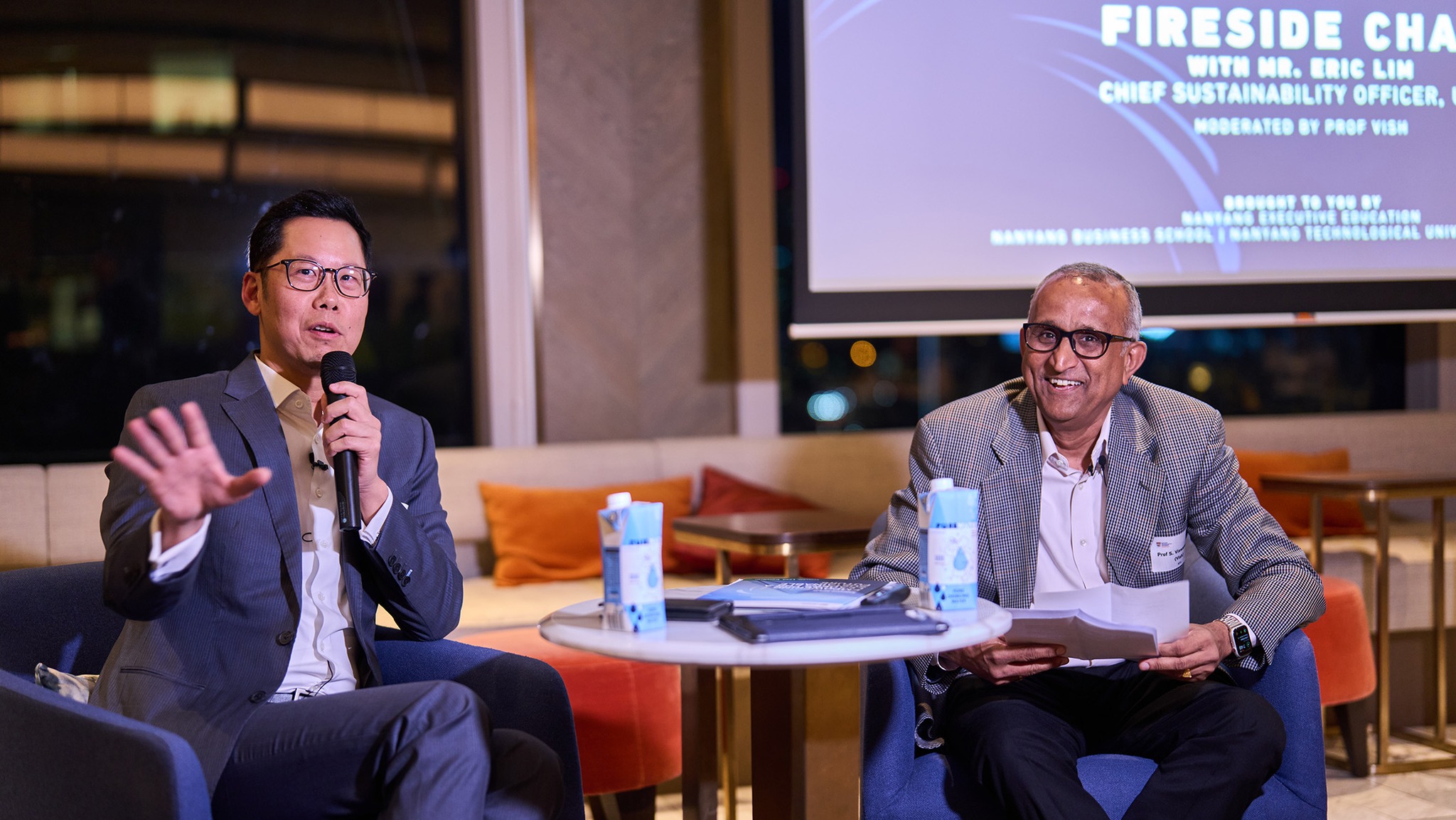
Eric Lim, Chief Sustainability Officer (CSO) at UOB and an alumnus of Nanyang Business School (left) speaking at the NBS “Sustainability Leadership: Navigating the Challenges and Opportunities” event on 21 February, moderated by NBS Prof. S. Viswanathan (right)
In 2016, Eric Lim found himself handed an unusual task. As a senior finance executive at UOB, he was asked to “look into sustainability.” There was no defined brief, no roadmap, and certainly no precedent. But there was a feeling, that business could do better, and that he could help make that happen.
“I didn’t know what I was getting into,” he says with a laugh. “Back then, sustainability wasn’t on most companies’ radars. There were no playbooks.”
What started as an undefined project would go on to define his career. Today, Eric is the Chief Sustainability Officer at UOB. He is the first person to hold the title at the bank and a key figure helping shape how the financial sector drives Asia’s low-carbon transition.
But Eric didn’t become a sustainability leader by chasing buzzwords or trends. In fact, he’s the first to question them.
“We like to romanticise sustainability, but it’s not about planting trees and making speeches,” he says. “It’s about economics, risk, systems, and doing what’s right in a way that lasts.”
A Systems Mindset
Eric’s approach is refreshingly grounded. He sees sustainability not as a cause but as a capability that must be embedded across business lines, operations, and financing decisions.
This means asking hard questions. Can a solution scale? Is it commercially viable? Does it work in the local context?
“Take solar,” he explains. “It’s proven, cost-effective, and ready. So we finance it broadly. But technologies like direct air capture? They’re exciting, but not yet bankable. We need to be honest about that.”
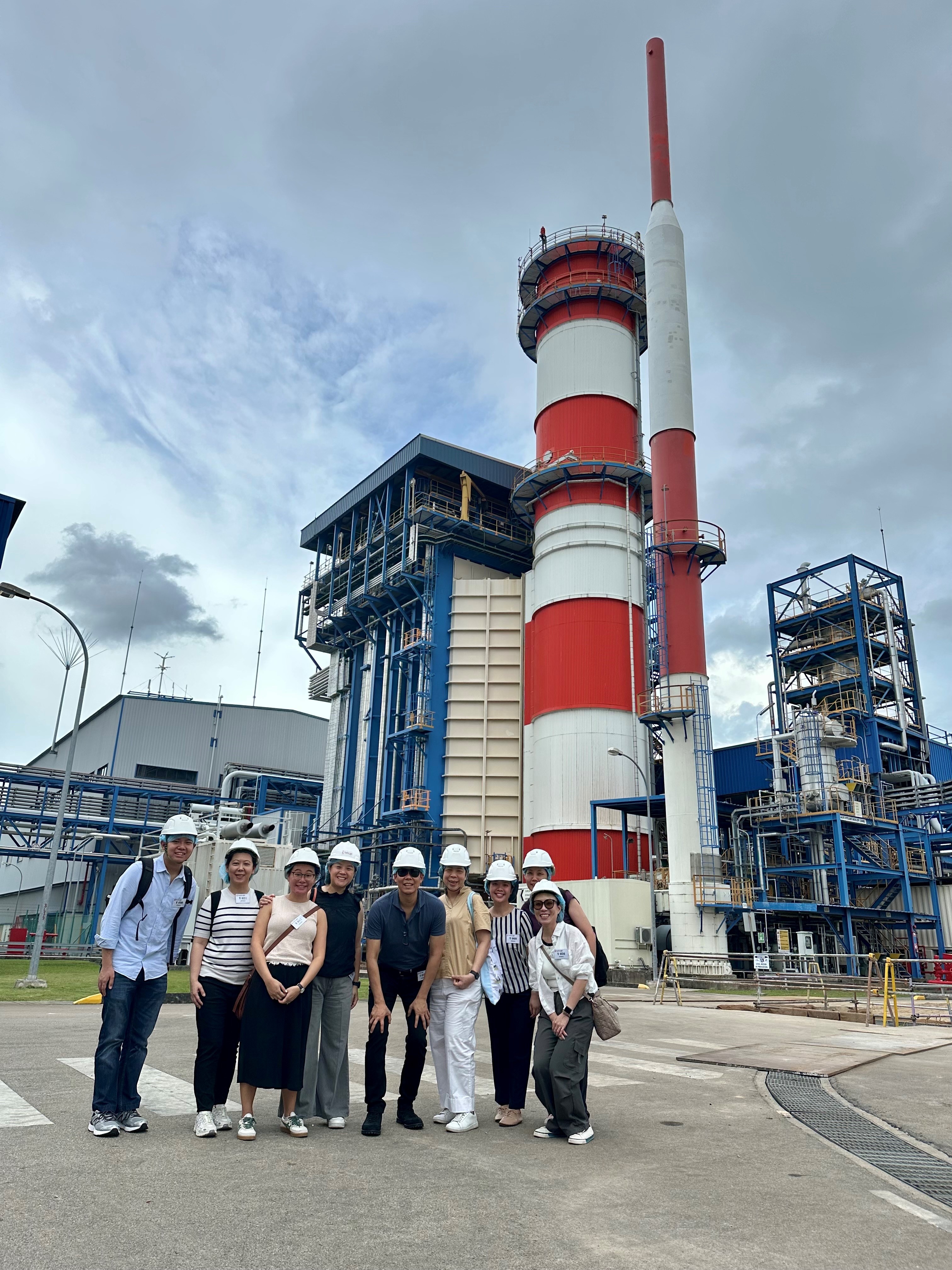
UOB Group Corporate Sustainability Office’s learning journey to PacificLight’s power plant in 2024
This clear-eyed pragmatism reflects not only his training in finance, but also the influence of his early education at Nanyang Business School (NBS), where he was encouraged to think systemically about how policy, people, and markets interconnect. There, Eric also learned to value progress over perfection, and to stay open to where the journey might lead.
“At NBS, it wasn’t just about chasing the best grades or internships,” Eric reflects. “It was about learning wherever you could, and trusting that your path would reveal itself over time. That mindset has shaped how I navigate everything today.”
The Role of Finance in Transition
Eric is well aware that banks sit at the fulcrum of transformation. Through capital allocation, they can accelerate or hinder sustainable progress.
But instead of pushing clients toward prescriptive solutions, UOB under Eric’s guidance focuses on supporting a “just transition.” This means aligning decarbonisation goals with the social and economic realities of Southeast Asia.
“You can’t import solutions wholesale,” he says. “We’ve seen frameworks designed for Europe or the US fall flat here. We need solutions that account for local readiness, including infrastructure, policy, and jobs.”
This ethos is visible in UOB’s sector-specific sustainable financing frameworks, built not just for compliance, but to help clients move meaningfully toward transition and decarbonisation in a way that protects livelihoods.
The work is not always headline-grabbing, and that’s by design.
“Sustainability isn’t a trophy you win. It’s a responsibility you carry every day, in every deal, with every dollar,” Eric says.
Quiet Leadership, Collective Impact
Eric is a vocal advocate of not being the loudest in the room. He leads by listening, aligning, and amplifying the efforts of others, from frontline bankers to regulators to industry peers.
“The worst thing you can have in this space is a big ego,” he says. “Real change happens when people feel safe to speak, to challenge, and to collaborate.”
That spirit of humility extends to his team culture. When UOB closes a significant sustainable finance deal, Eric ensures the recognition goes to the business units who made it happen.
“It’s not about me. It’s about building the muscle across the organisation,” he says.
And that muscle is expanding. Beyond climate, Eric is now turning attention to nature and biodiversity — complex, underfunded, and urgently in need of financial innovation.
No Title Required
To the next generation, Eric offers practical advice, not idealism.
“You don’t need a sustainability title to make a difference,” he says. “Whatever your skill, finance, engineering, design, bring a systems mindset. Bring curiosity. That’s how you stay relevant and useful.”
And don’t be afraid to start before you're ready.
“I didn’t have a plan. I just said yes to a difficult, undefined task,” he reflects. “That’s how it often starts, with uncertainty. But if you stay open and ask the right questions, you’ll find your way.”