
|
|
90% SkillsFuture Funding
Significantly lowers financial barriers, making elite postgraduate education accessible and low-risk.
Postgraduate analytics curriculum
Builds immediate, job-relevant capabilities in AI, finance, and business decision-making.
Stackable MSc credits
Protects long-term ROI by allowing learners to progress seamlessly into a full Master’s degree.
Flexible format
Enables working professionals to upskill without quitting their jobs or disrupting careers.
Industry-aligned modules
Ensures skills are applicable to real business, finance, and digital transformation challenges.
Peer & alumni exposure
Expands professional perspective and career opportunities through cross-industry learning.
For more information on the intake dates, trainers and programme fee, please click here.
| Module | Objective |
|---|---|
 AI and Analytics Technologies in Enterprise | Analytics, machine learning, and Artificial Intelligence (AI) are critical building blocks in value creation for any organization or industry, yet managing them is a complex endeavour. This presents huge opportunities to harness the power of analytics and machine learning, explore and exploit business problems, and turn them into solutions. This course introduces the concept of analytics with machine learning and how a business can embed and embrace them in its operations. Learning Outcomes:
|
 AI and Analytics in Finance, Credit and Related Risks | In today’s fast-changing financial landscape, businesses must navigate growing risks while leveraging data-driven insights for smarter decision-making. This program equips professionals with the knowledge and tools to assess, mitigate, and manage financial and credit risks effectively, integrating AI-powered analytics to enhance decision-making and operational efficiency. Participants will deeply explore financial and credit risk landscapes, from market volatility, regulatory compliance, and stress testing to credit scoring models and portfolio strategies. The course emphasizes real-world applications, helping professionals apply quantitative techniques, AI-driven insights, and automation to streamline risk assessment and improve financial resilience. As the course progresses, participants will dive into AI-driven analytics, machine learning applications, and generative AI in finance. Through hands-on workshops, they will gain practical experience with AI and machine learning software tools for financial modeling, such as predictive risk assessment, credit evaluation, customer profiling, data synthesis, and simulation. These interactive exercises will equip participants with the skills to effectively integrate AI-driven innovations into financial decision-making and risk management. Learning Outcomes
|
 Data Management and Visualization | Data has become integral to businesses and organisations. This course is built to bridge the gap between market talent demand and talent availability, specifically in business data management and business visualisation. The course serves dual roles of presenting the importance of data on business decision-making and of demonstrating ways that visualisation can effectively augment business decisions. Learning Outcomes
|
 Design Thinking, Blockchain Technology Management and Cybersecurity | Design thinking has become increasingly popular in the world of business, with small and medium-sized firms, as well as large ones like P&G and SAP using and advocating it. Design thinking, emphasising human-centred design and empathy-driven solutions, has been promoted widely by design firms like IDEO and Stanford University’s D School. It has now become a must-know tool for companies that are keen to grow and flourish through continuous innovation. The course will introduce you to the key principles of design thinking, utilising relevant case studies. It is also crucial for you to appreciate the core technical aspects of blockchain, especially when it promises to disrupt the current business landscape through consensus-driven decentralisation of the traditional computing fabric. Concepts of blockchain will be discussed, examining the blockchain using cases and challenges related to its implementation. With the proliferation of information and communication technology products and services, it is of paramount importance for everyone to understand the role of security and privacy in practice. Financial technology, data analytics, and digital transformation of businesses have immensely amplified the value of data, thereby demanding the appreciation of cybersecurity threats and privacy issues in every sphere of business. Learning Outcomes
|
The next intake for this programme will be in July 2026 (apply here).
If an intake is fully enrolled, your application will be considered for the next available intake.
Updates on your application status will be sent to you at least 6 weeks before the programme commences.
As seats are limited, please send in your application early to avoid disappointment.
| Module |
Class Dates |
|---|---|
| AI and Analytics Technologies in Enterprise | 4 Jul, 11 Jul, 18 Jul, 25 Jul 2026 |
| Data Management and Visualization | 15 Aug, 22 Aug, 29 Aug, 5 Sep 2026 |
| Design Thinking, Blockchain Technology Management and Cybersecurity | 19 Sep, 26 Sep, 3 Oct, 10 Oct 2026 |
| AI and Analytics in Finance, Credit and Related Risks |
24 Oct, 31 Oct, 14 Nov, 21 Nov 2026 |
Programme Attendance
- Successfully admitted participants have to commit to the published schedule.
- The course duration is 24 weeks, with four Saturday classes per module.
- All classes are held in-person only, from 8.30am to 5.30pm at the Lifelong Learning Institute (near Paya Lebar MRT) and the last day of class will be held at NTU Nanyang Business School.
- No make-up classes for absentees.
- Mandatory attendance is required for programme info session and details will be provided upon successful admittance into the programme.
- Nanyang Technological University reserves the right to change the date, time, venue, and mode of delivery of classes due to unforeseen circumstances or prevailing government advisories.
Course fee revisions are made to align to corresponding Master’s programme fees.
Course fee revisions are pending final approval from SkillsFuture Singapore (SSG).
| Full Programme Course Fees in SGD (fees and funding quoted below are subject to revision) |
||
|---|---|---|
| Fees BEFORE funding & GST |
Fees AFTER funding & 9% GST |
|
| Singapore Citizens (aged 21-39) / PR (aged ≥21) Up to 70% SSG Funding |
$25,001.00 | $8,175.33 |
| Singapore Citizens (aged ≥40) MCES1 - Up to 90% SSG Funding |
$25,001.00 | $3,175.13 |
| SME-sponsored Singapore Citizens / PR ETSS2 - Up to 90% SSG Funding |
$25,001.00 | $3,175.13 |
| NTU Alumni Fee payable after 70% SSG Funding and use of $1,600 **NTU Alumni Course Credits |
$25,001.00 | $7,652.13 |
2. Enhanced Training Support for Small & Medium Enterprises (ETSS) Scheme
Funding/Programme Requirements
- You must achieve a minimum of 75% attendance for each module.
- You must complete and pass all assessment components.
You do not need to contact SkillsFuture Singapore (SSG) to apply for the above funding. Upon your successful admission to the programme, NTU will handle the funding administrative for all applicants. Billing is by module on the nett amount after funding and GST. Full payment is to be made before the start of module.
SSG funding is limited in duration and subject to the prevailing conditions of the funding agencies.
SkillsFuture Credit
Singapore Citizens, aged 25 and above, and self-sponsored, may use their SkillsFuture Credit to defray full or part of the nett course fee.
Singapore Citizens, aged 40 and above, and self-sponsored, may use their NEW Top-up of $4,000 SkillsFuture Credit (Mid-Career) to defray full or part of the nett course fee.
You may check your SkillsFuture Credit balance by logging into MySkillsFuture.sg.
All self-sponsored NTU/NIE alumni may utilise their Alumni Course Credits (ACCs) as direct discounts on the course fee before any applicable eligible funding is applied.
For more info on ACCs, please click here.

From Bioengineer to AI-Driven Innovator
"The FlexiMasters broadened my perspective beyond technical expertise, showing me how data and AI can drive smarter business decisions. It strengthened my confidence to bridge technology with strategy and lead meaningful digital transformation initiatives."
— IT Consultant and Sales Lead, Nive Narayanasamy
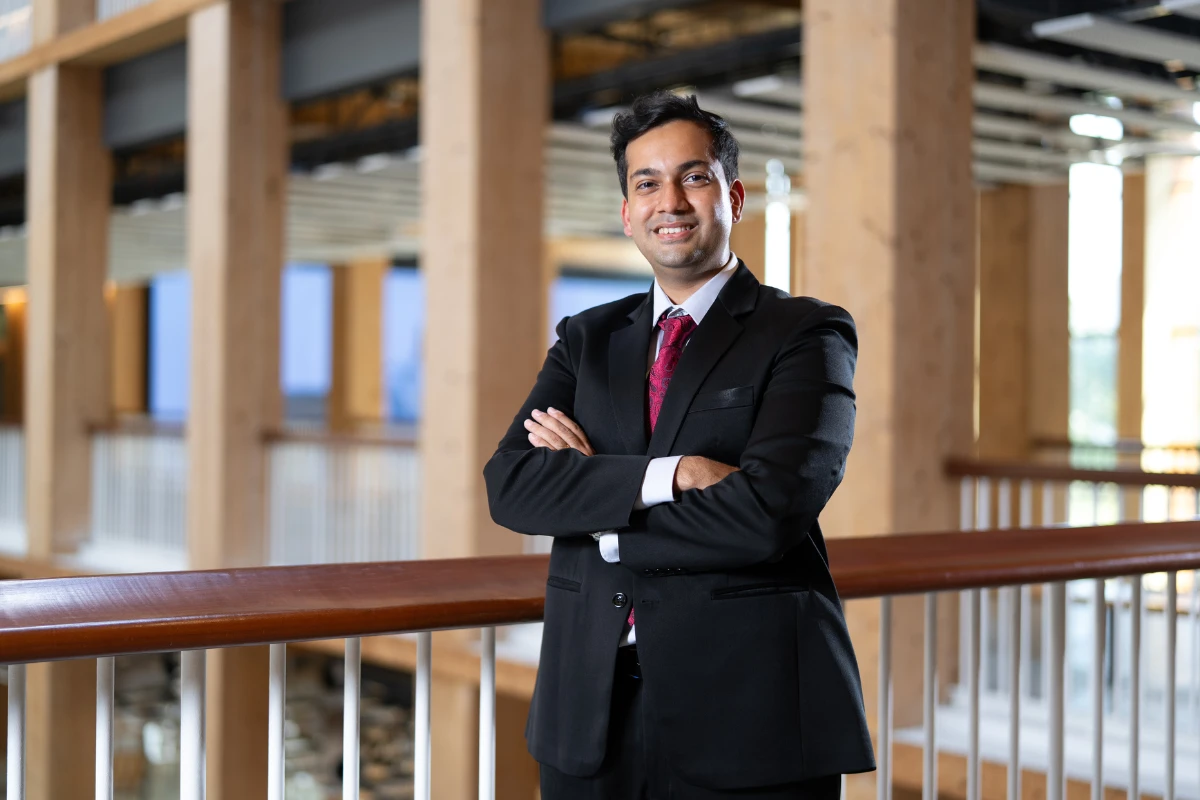
From Technical Expert to Strategic Thinker
"The FlexiMasters gave me the opportunity to step outside my niche technical role and build a strong foundation in business analytics. It has helped me bridge my engineering expertise with strategic thinking, making my contributions to management discussions more impactful."
— Robotics Engineer, Anmol Mathur

Peer learning in the FlexiMasters
"My perspectives have widened, in the sense that I understand more about the other areas that I am previously unfamiliar about, and I am no longer limited to what I have studied.”
— Manager, Serena Mok