NTU alumni driving Asia’s clean energy shift
Asia's energy demand is rising. As Earth Day approaches, the urgency to meet it cleanly is clear. From Singapore's power grid to Vietnam's offshore wind, NTU alumni Stanley Huang and Pham Quoc Anh are driving that shift.
Text: Vivien Yap
Building Singapore's low-carbon power grid
Singapore’s clean energy sector is entering a pivotal phase and evolving rapidly. Energy demand is rising exponentially – from electrification of transport to industrial decarbonisation and the growth of data centres. Singapore's grid must meet this demand while upholding world-class grid reliability.
Leading this effort is Stanley Huang (NBS/1993), Group CEO of SP Group.
Under his leadership, SP Group is modernising one of the most reliable grids in the world to address future-forward priorities. The work has extended into NTU through collaborations such as the SP Group-NTU Joint Laboratory and endowed support for research and talent development. This reflects Huang’s conviction in university-industry pipeline matters. He says: “My focus is to grow capabilities and foster innovation on the road to a low-carbon, smart energy future.”
He entered the energy sector in 2015 after 12 years in manufacturing. “I was drawn to the energy sector because it sits at the intersection of economic progress, national resilience and everyday life,” he says.
Huang is focused on expanding decarbonisation efforts on every front. Renewable energy sources, energy storage, electric vehicle charging, and digital energy systems are increasingly integrated into the infrastructure and operations of buildings, industries and communities. At the same time, he is growing the Group’s footprint of sustainable energy systems like district cooling, in Singapore and the region.
Another key priority is strengthening crossborder grid interconnections to facilitate energy imports, essential to enabling a more sustainable and secure power supply. Building on the partnership and infrastructure SP Group has established with Malaysia, the Group looks forward to contributing towards the creation of a regional power grid.
Appointed Group CEO in 2020, he received the Nanyang Alumni Achievement Award in 2024. He credits his Nanyang Business School training – particularly its grounding in financial discipline and risk management – for shaping how he leads through complexity. For Huang, energy is not just an industry. It is a gateway to improving lives today while building a sustainable future for generations to come.
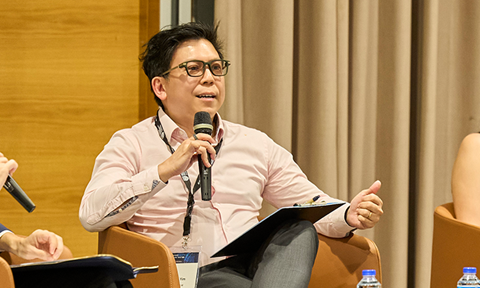
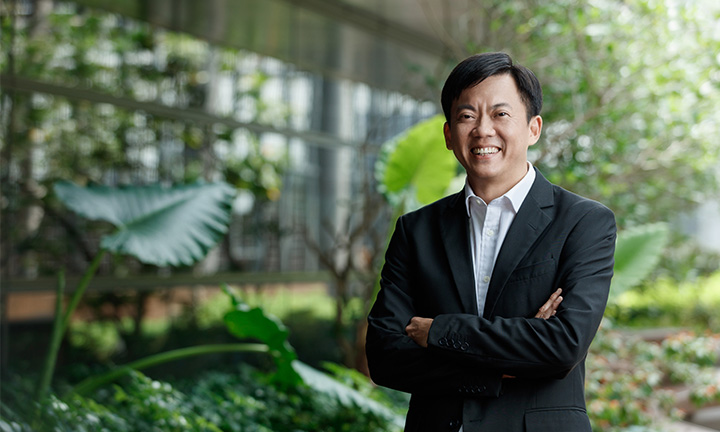 Stanley Huang is the Group CEO of SP Group. (Photo: SP Group)
Scaling clean energy in Vietnam
Thousands of kilometres away, a similar conviction is driving Vietnam's energy transition.
Pham Quoc Anh (CCDS/2008) returned home in 2012 after studying Computing and Data Science at NTU Singapore, stepping into a clean energy industry still in its infancy.
“Stepping into a completely new sector while returning to my home country with almost no professional network and limited experience was challenging,” he recounts.
Today, as Executive Chairman of Pacifico Energy Vietnam, he oversees solar and wind projects across multiple provinces, with offshore wind energy as a key focus alongside early exploration of tidal energy.
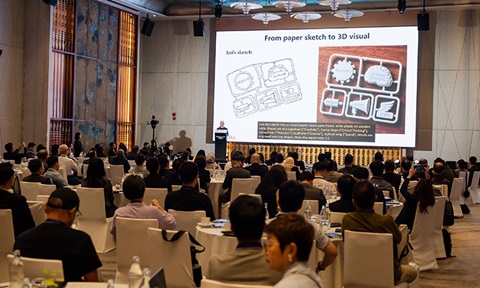
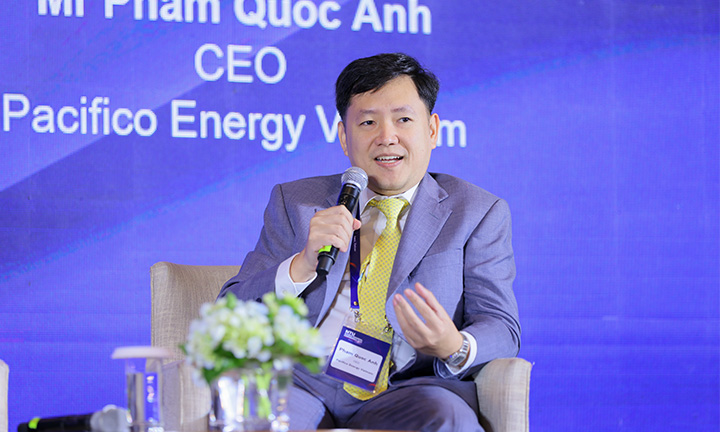 Pham Quoc Anh spoke about the clean energy and its importance to Vietnam’s growth at the NTU Alumni Regional Conference 2024 held in Hanoi.
A defining moment came early. His team competed against far more established global developers for an international grant supporting what would become ASEAN's then-largest offshore wind project. "On paper, we were not the strongest contender," he recalls. "But we had clarity on execution and believed in the vision."
They secured the US$800,000 grant – and with it, proof that credibility-built step by step can outweigh size and pedigree.
He sees the ASEAN power grid as the next major shift. “It will fundamentally change how the region generates, trades and consumes electricity.”
What shaped their leadership
Both leaders point back to NTU as formative. For Huang, it was training in financial discipline, risk management and strategic trade-offs – lessons that still influence how he steers SP Group through rapid change. “In the energy sector, we need to make decisions that involve trade‑offs – between reliability and cost, innovation and safety, long‑term transformation and short‑term deliverables,” he said.
For Quoc Anh, it was something less tangible but equally lasting. "NTU was the first place where I truly learned how a community functions, how ideas circulate, and how people organise themselves to create impact," he says.
The energy transition, both believe, is no longer just an engineering challenge. It is a coordination challenge – one that demands people who can operate across disciplines, sectors and borders.
For students and young alumni considering the field, Huang's advice is grounded: "Build strong foundations and stay open to lifelong learning. Being able to work across diverse teams while staying focused on higher-level priorities will set you apart."
Quoc Anh is more urgent. "The world simply needs more power, but it must be clean. If you want a path where your work matters, where you shape the future of cities and societies, and where impact is visible every day – this is the place to be."