The fabric of leadership
What makes for a successful modern leader? We put the question to Nanyang Alumni Award 2024 recipients and find out how they think alumni in senior industry positions can help their juniors.
“Building VFlowTech over the past six and a half years taught me the value of adaptability and resilience, and showed me that leadership is about empowering others to take ownership. I believe that leadership is about fostering an environment where people can contribute, learn and grow together. NTU alumni in senior leadership roles can bridge the gap between academia and industry. By sharing real world insights, mentoring students, and offering internships, project collaborations and even job opportunities, we can help shape students into well-rounded professionals. Additionally, alumni can contribute to curriculum development, ensuring that academic programmes are aligned with industry needs and that students are equipped with the skills required to thrive in the ever-evolving job market." |
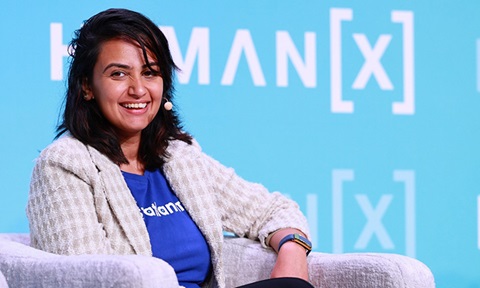
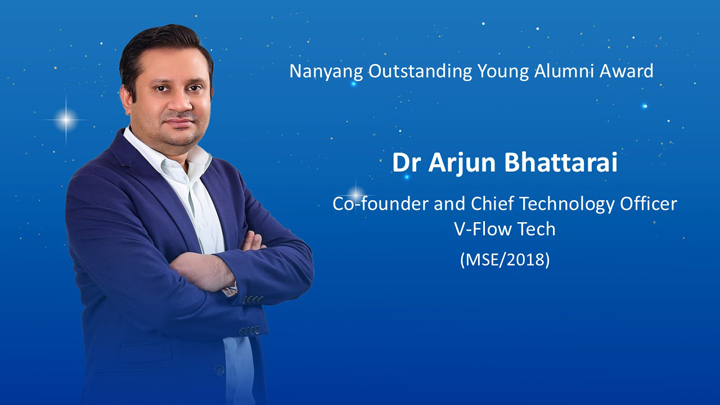 In 2018, Dr Arjun Bhattarai and his cofounder, a fellow NTU alumnus, Dr Avishek Kumar, started VFlowTech, an NTU spinoff harnessing vanadium flow battery technology. They have since grown the team to over 55 employees and raised more than US$19 million from investors. VFlowTech has been recognised on the Forbes Asia 100 to Watch list and the APAC Cleantech 25, an annual list of private sustainable innovation companies. The duo plans to take the company public by 2027.
“Leadership is a privilege, and the role is increasingly about enabling others to succeed. I prioritise building a culture of trust and psychological safety, where people are encouraged to speak up and take risks. I lead by example – experimenting with new ideas, making bold decisions and standing by my team when challenges arise. My engineering education provided a rigorous foundation in fact-based, scientifically grounded problem solving. It honed my ability to deconstruct complex challenges into their essential components, enabling a focus on strategic, actionable solutions. Over time, I have learnt to anticipate future trends and opportunities. Together, these have shaped me into a leader who is not only methodical and results driven, but also forward looking and adaptive, aligning organisational goals with broader societal objectives.” |
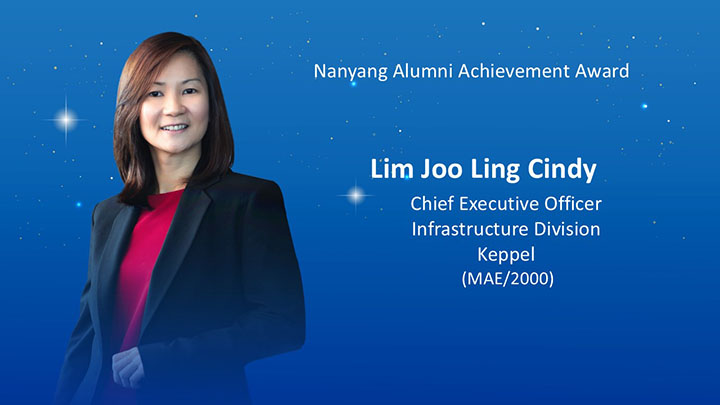 Cindy Lim has spent over
two decades with Keppel
and has been the CEO of
the Infrastructure division
since 2021. She has also held
leadership positions in different
strategic business units and at
the group level.
Cindy Lim has spent over
two decades with Keppel
and has been the CEO of
the Infrastructure division
since 2021. She has also held
leadership positions in different
strategic business units and at
the group level.
“I strongly believe and have benefitted from lifelong learning. As such, I challenge myself to learn new skills and improve myself every day to keep up with the times. I was deeply inspired by Nanyang University’s motto, 自强不息,力求上进 - striving for improvement and progress. Being a class monitor for years also taught me that a leader means to serve and help others. In the old days, leaders walked in front and led the way with top-down directives. Nowadays, a good leader should be beside the team, encouraging and supporting everyone. Leaders today should place more emphasis on soft skills to tap on talented minds in this increasingly sophisticated working environment.” |
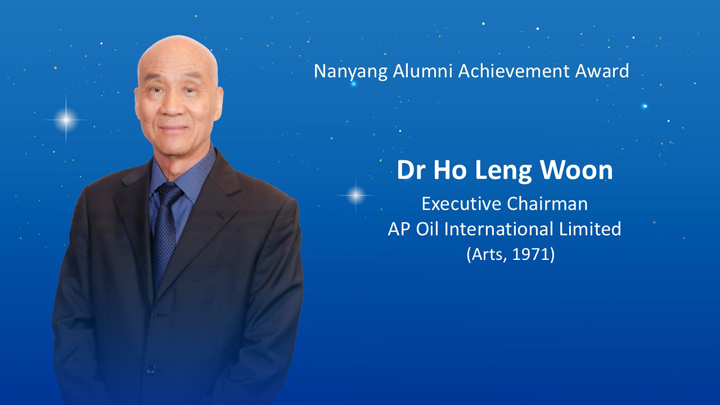 Immediately after joining AP Oil International in 1981,
Dr Ho Leng Woon transformed the small oil trading company
by venturing into manufacturing with the first Singaporeanowned
lubricant blending plant. During his leadership as
Chairman and Managing Director from 1983 to 2015, AP Oil
International was listed on the Singapore Stock Exchange in
2001 and successfully advanced to the Mainboard in 2003.
Dr Ho keeps in touch with his alma mater by giving talks to
students and guiding them in their careers, and is supportive
of various NTU fundraising programmes.
Immediately after joining AP Oil International in 1981,
Dr Ho Leng Woon transformed the small oil trading company
by venturing into manufacturing with the first Singaporeanowned
lubricant blending plant. During his leadership as
Chairman and Managing Director from 1983 to 2015, AP Oil
International was listed on the Singapore Stock Exchange in
2001 and successfully advanced to the Mainboard in 2003.
Dr Ho keeps in touch with his alma mater by giving talks to
students and guiding them in their careers, and is supportive
of various NTU fundraising programmes.
“NTU has always fostered a can-do attitude in students and provided cross-faculty exposure. That helped me to be curious about how other industries function. I had the opportunity to build solutions for real life applications, which often necessitated tinkering and failing before finding success. These have shaped how I build and grow the company across the region today. Effective leadership comes only when we have collective buyin. It’s really important for leaders to listen to their people while motivating them and letting them know that we are in this journey together. Lastly, people skills are ultimately the make-or-break factor in being a leader. One cannot be a leader without anyone following and a leader is only as good as their team.” |
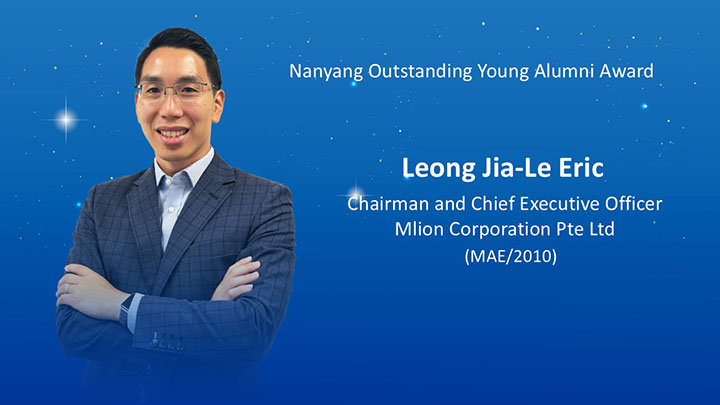 When he founded Mlion Corporation, a foundations solutions
company, in 2011, Eric Leong envisioned that Asia would become a
powerhouse in steel production, and he has been a driving force in
making this happen. Today, Mlion has offices in China, Indonesia,
Malaysia, Philippines, Taiwan, Thailand and Saudi Arabia, and its
staff strength has grown from four to 100 employees. In 2022, the
company’s revenue reached US$186 million.
When he founded Mlion Corporation, a foundations solutions
company, in 2011, Eric Leong envisioned that Asia would become a
powerhouse in steel production, and he has been a driving force in
making this happen. Today, Mlion has offices in China, Indonesia,
Malaysia, Philippines, Taiwan, Thailand and Saudi Arabia, and its
staff strength has grown from four to 100 employees. In 2022, the
company’s revenue reached US$186 million.
“At NTU, I took on a really exciting project exploring AI for speech recognition. Being a few decades ago, the technology was ahead of its time, and I saw its possibilities and how I could harness it. These experiences influenced my leadership style. I believe in being bold when setting a direction and being prepared when things don’t turn out the way we want. Innovation doesn’t happen by chance. We need a culture that promotes it and catalytic functions within organisations to initiate and develop innovative ideas. Personal growth is best achieved when the organisation is also growing, in terms of market expansion or having new products or services, which creates more opportunities for everyone.” |
 Ng Kuo Pin was appointed CEO of
NCS, a technology services firm
and a subsidiary of the Singtel
Group, in 2019. In 2021, he joined
Singtel Group’s Management
Committee. He has been heavily
involved in SCALE@NTU – which
was established by NTU, Singtel
and the National Research
Foundation Singapore to support
Singapore’s transformation into a
Smart Nation – and currently cochairs
its governing board.
Ng Kuo Pin was appointed CEO of
NCS, a technology services firm
and a subsidiary of the Singtel
Group, in 2019. In 2021, he joined
Singtel Group’s Management
Committee. He has been heavily
involved in SCALE@NTU – which
was established by NTU, Singtel
and the National Research
Foundation Singapore to support
Singapore’s transformation into a
Smart Nation – and currently cochairs
its governing board.
“As a startup, Cialfo has had to undergo many transformations and realignment of goals and strategies. Being handson allows me to guide the team while having an intimate understanding of both macro and micro matters. I build a culture of trust within my team by encouraging them to speak up and empowering them with responsibilities and space to drive projects. Over the years, I have learnt to make hard decisions that prioritise the team over individuals, even when I empathise with them. Leaders should be nimble, willing to learn, and able to apply first principles in decision-making. Since AI is an important factor in the future of education, I immersed myself in learning how to apply AI in various contexts of education. Despite not being trained in the area, I have challenged myself to be an early adopter in this space.” |
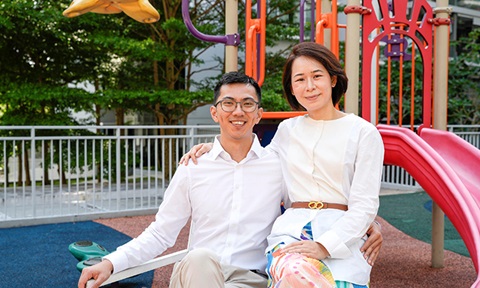
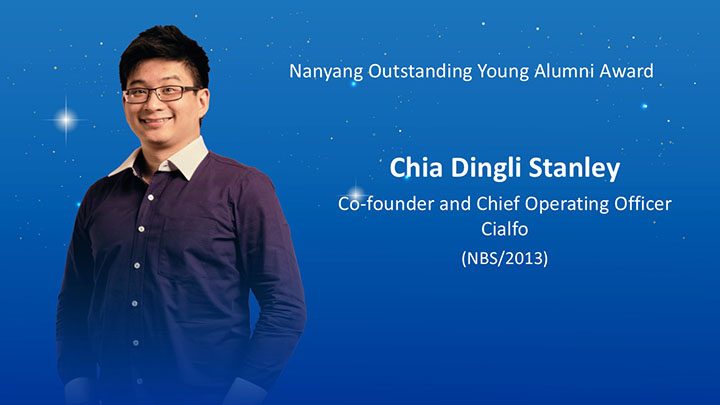 Stanley Chia co-founded Cialfo in 2012
with fellow alumnus Rohan Pasari.
Leveraging artificial intelligence (AI)
and knowledge management, Cialfo’s
platform supports high school students
and their counsellors throughout the
university search and selection process
and early career exploration.
Stanley Chia co-founded Cialfo in 2012
with fellow alumnus Rohan Pasari.
Leveraging artificial intelligence (AI)
and knowledge management, Cialfo’s
platform supports high school students
and their counsellors throughout the
university search and selection process
and early career exploration.
“I have been the beneficiary of many amazing mentors who guided me on how to be a business leader and in making pivotal choices in my career. As a leader, we need to mentor and provide a second chance for those who have stumbled. In the company, we encourage experimentation at all levels and have a ‘padawan’ programme for the high potential members to expose them to new projects and initiatives. And when mistakes are made, we dissect them for learning points instead of reproaching them.” |
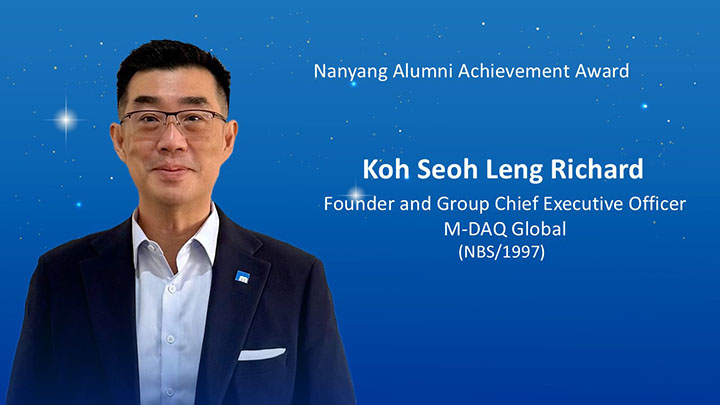 After nearly four decades in the
infocomm, foreign exchange, fintech
and e-commerce industries, Richard
Koh combined his experience and took
an entrepreneurial leap of faith and
set up M-DAQ Global in 2010. Today,
the group serves global e-commerce
marketplaces, securities exchanges,
fintech companies, and corporates
across 45 markets, processing over
S$23 billion (US$17.4 billion) worth of
cross-border transactions annually.
Besides serving on the Advisory Board of
Nanyang Business School, he has spoken
at numerous NTU events and has been a
mentor for his juniors at NTU.
After nearly four decades in the
infocomm, foreign exchange, fintech
and e-commerce industries, Richard
Koh combined his experience and took
an entrepreneurial leap of faith and
set up M-DAQ Global in 2010. Today,
the group serves global e-commerce
marketplaces, securities exchanges,
fintech companies, and corporates
across 45 markets, processing over
S$23 billion (US$17.4 billion) worth of
cross-border transactions annually.
Besides serving on the Advisory Board of
Nanyang Business School, he has spoken
at numerous NTU events and has been a
mentor for his juniors at NTU.
“My accountancy education has given me a solid foundation in core accounting and business knowledge and shaped my style of leadership. A significant challenge we’re facing is adopting AI and other technologies that pose both opportunities and risks. We are also facing a war for talent in a competitive market, especially with generational shifts in the workforce, and are navigating a much more fragmented economic landscape today. I believe the modern leader should have the courage to challenge the status quo, articulate a clear vision that inspires, and demonstrate resilience and a willingness to learn from failures.” |
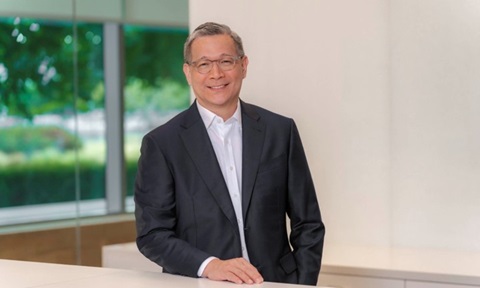
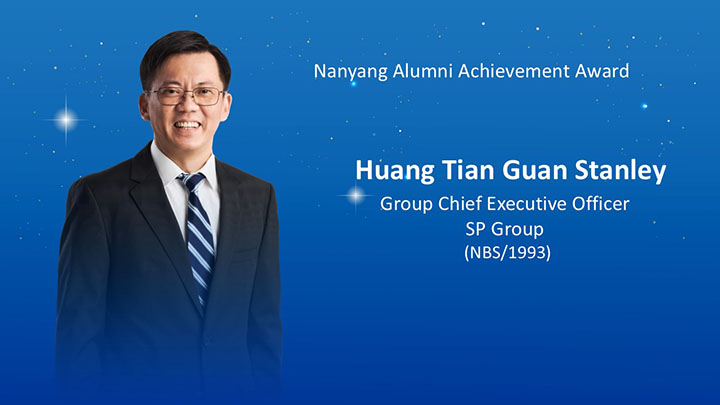 A strong advocate of sustainability, Stanley Huang
has been Group CEO of SP Group since 2020. Guided
by his vision, SP Group's regional footprint has
grown to include China, Thailand and Vietnam,
enabling buildings, industrial parks and districts to
adopt green and energy efficient solutions. He also
spearheaded the company’s digital and workforce
transformation to support Singapore’s energy
transition.
A strong advocate of sustainability, Stanley Huang
has been Group CEO of SP Group since 2020. Guided
by his vision, SP Group's regional footprint has
grown to include China, Thailand and Vietnam,
enabling buildings, industrial parks and districts to
adopt green and energy efficient solutions. He also
spearheaded the company’s digital and workforce
transformation to support Singapore’s energy
transition.
“My NTU experience has helped me cultivate a leadership style that focuses on collaboration and encourages diverse thinking. One of the biggest challenges is driving change within a complex organisational structure, where different departments may have different interests and entrenched ways of thinking. My approach is to engage in open communication, listen to their concerns, and clearly explain the necessity of change and how it benefits everyone. I also implement pilot projects to demonstrate the positive impact of the change. NTU alumni in senior leadership positions can help the university’s mission in many ways. They can provide funding to support the university’s research and education programmes, share their professional experiences, and offer internship and job opportunities for students. They can also participate in creation of curriculum and talent development programmes to nurture future leaders.” |
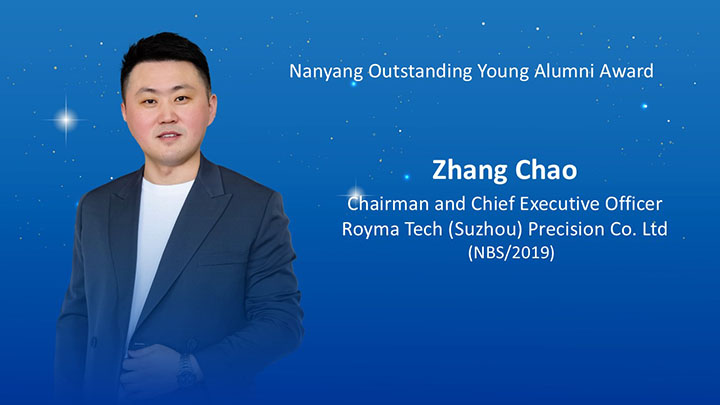 Zhang Chao has taken Royma from strength to strength since
founding it in 2017. The high-precision industrial equipment
manufacturer has established two industrial bases, in Suzhou
and Beijing, and four research and development centres. He
supports NTU by organising and leading enterprise visits to
Suzhou Industrial Park for students from Nanyang Business
School’s Chinese EMBA Programme.
Zhang Chao has taken Royma from strength to strength since
founding it in 2017. The high-precision industrial equipment
manufacturer has established two industrial bases, in Suzhou
and Beijing, and four research and development centres. He
supports NTU by organising and leading enterprise visits to
Suzhou Industrial Park for students from Nanyang Business
School’s Chinese EMBA Programme.
This article first appeared in issue 5 of U, the NTU alumni magazine.