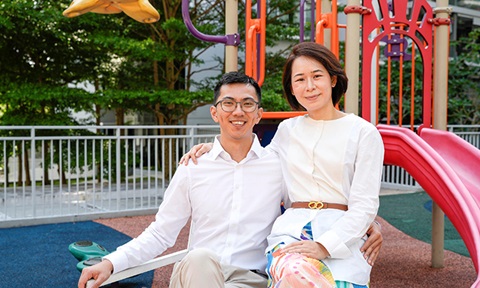
He saw China's tech rise coming. Now he's putting autonomous vehicles on Asia's roads.
A summer at Tsinghua University in 2005 showed Kelvin Zhou where China's technology was heading, long before the rest of the world caught on. Two decades later, his company is one of the first in Asia licensed to run autonomous vehicles on public roads.
Text: Vivien Yap
Driverless vehicles and robotaxi services are no longer just a vision of the future. As cities across the region accelerate toward smarter and greener infrastructure, autonomous vehicles are becoming an integral part of how goods move.
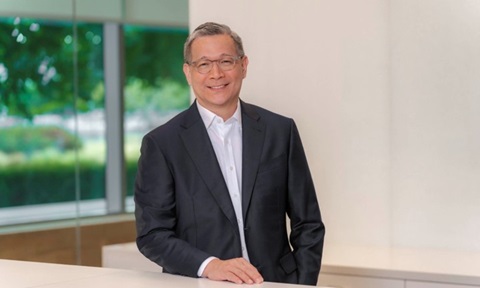
At the forefront of that shift is Kelvin Zhou, Computer Engineering Class of 2006, who leads regional commercial strategy at Zelostech, the company behind what it describes as the world's largest RoboVan enterprise.
In 2025, Singapore became one of the first countries in Asia to commercially license autonomous vehicles to transport goods on public roads. Zelostech was the company that earned it.
Zelostech deploys autonomous vehicles for goods transportation, helping businesses scale through more efficient operations around the clock.
"Technology is here to stay," he says. "Electric autonomous vehicles reduce carbon emissions while keeping supply chains running 24/7 in economies where drivers are harder to hire. If we don't embrace it, we will be obsolete as an individual, a country, or a business."
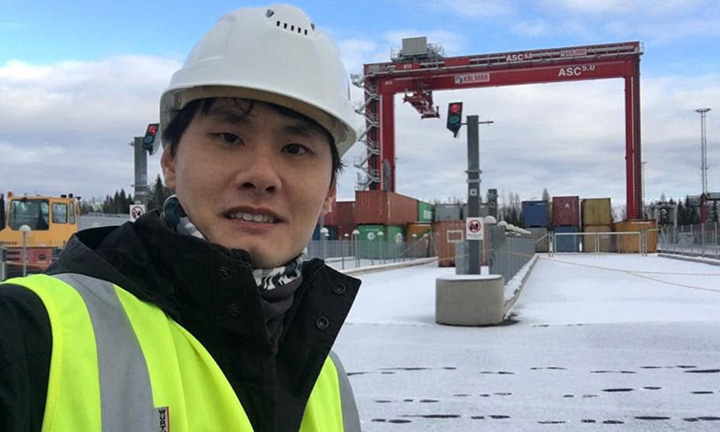 Kelvin Zhou on a work trip in Finland. He has spent much of his career crossing borders, from Singapore's container ports to consultancy projects in Panama and Bangladesh, to leading autonomous vehicle strategy across Asia-Pacific.
A window to the world
Kelvin didn't start in autonomous vehicles. He started at PSA Corporation, drawn in by a recruitment talk on campus. The role was operational and unforgiving: monitoring vessels on tight schedules, coordinating with teams on the ground and in control centres whenever delays threatened to cascade through an entire shipping line.
He credits NTU for the mental discipline that made it manageable: “At school, I learnt to think in structure and pragmatically, something that all engineers need to do at work.”
As a student, Kelvin was drawn to both sciences and humanities, physics and history his twin passions.
Ultimately, it was pragmatism that led him to study Computer Engineering at NTU: “I wanted practical applications to what I was studying and NTU’s reputation for hands-on learning and top-ranking engineering courses made it a clear choice for me.”
Campus life began shifting his perspective in ways the curriculum could not. Living in hall, he formed friendships with international students whose experiences and challenges were far removed from his own.
“Speaking to them made me realise how lucky and sheltered we are in Singapore,” he says.
That nudge became a decision. Kelvin joined a student work immersion programme that took him to Tsinghua University in 2005, where he spent a summer alongside China's top engineering talent, years before the country's electric vehicle and battery industries would reshape global supply chains.
“I could appreciate China’s status as a technological powerhouse many years before my peers,” he notes. It was at Tsinghua that the pieces first came together: the talent density, the ambition, the scale of what China was quietly assembling.
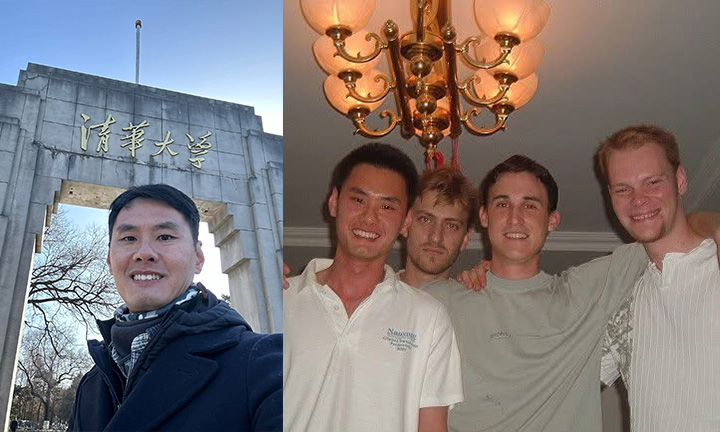 Kelvin (right photo, pictured first from left) during his student internship at Tsinghua University, where a summer alongside international peers first opened his eyes to the scale of what China was building.
From there, his appetite for the world only grew. A role at Haskoning, a sustainable engineering consultancy, took him from Panama to Bangladesh, collecting perspectives and a growing fluency in how different countries approach infrastructure, logistics, and urban planning.
At his peak, he was flying across Asia multiple times a week. "I never thought I'd be a globe-trotter," he admits.
That foresight, combined with a career spent building smart city solutions across the Asia-Pacific, positioned him well for the autonomous vehicle moment now arriving in earnest.
In 2011, he returned to NTU to deepen his expertise, completing a Master's in Logistics and Supply Chain Management with the School of Mechanical and Aerospace Engineering, a degree that bridged his engineering foundations with the operational scale he was navigating in the field.
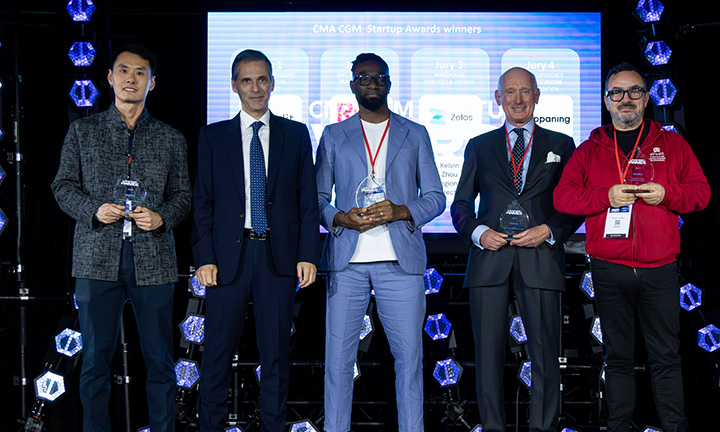 Kelvin (first from left) representing Zelostech in France at the 2025 CMA CGM Startup Awards in France, where the company took top honours in the Warehouse Robotics and Drones category.
Mentoring and leading by example
His approach to leadership was shaped early. At NTU, a robotics professor, Prof Man Zhihong, showed him that the most lasting thing you can give someone is not knowledge but passion.
“Inculcating the values of passion and the right attitude is key in continued lifelong learning,” he says.
Kelvin has carried that forward, mentoring through SGTech and the Singapore Leaders Network, and encouraging the engineers around him to ask questions, step outside familiar circles, and stay curious about the world. For someone who saw the autonomous future coming before most, that curiosity has never really been optional.
Know an NTU alumnus with a story worth telling? Write to us at alumniaffairs@ntu.edu.sg.