From engineer to global CEO: Irving Tan on staying curious and embracing change
Western Digital (WD) CEO and NTU alumnus Irving Tan shares lessons from a career spanning engineering, business and global leadership, and why staying curious and adaptable will be essential as AI reshapes the technology landscape.
By Sadia Roohi
For Irving Tan (MAE/1995 & NBS/2020), some of the most valuable career moves have been the ones that took him outside his comfort zone.
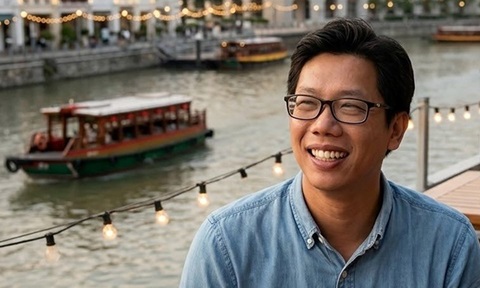
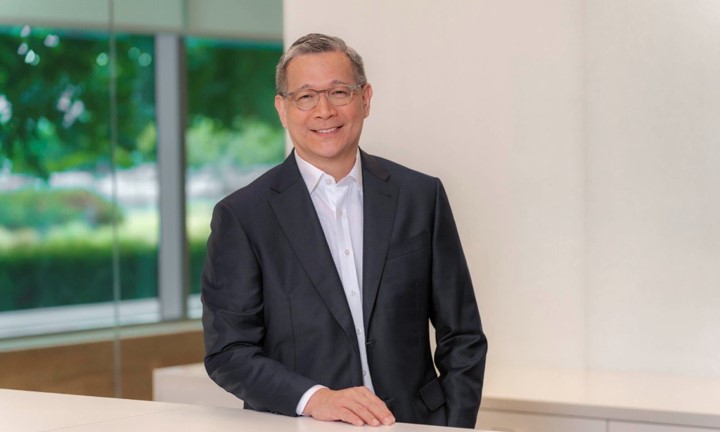 NTU alumnus Irving Tan has held leadership roles across technology, operations and business, culminating in his appointment as CEO of WD. Photo: WD
From engineering and finance, to sales, operations and strategy, the NTU alumnus has built his career by continually broadening his perspective and taking on new challenges.
Today, as CEO of WD, Irving draws on decades of experience across business and technology. He will share his perspectives on the technology landscape and the opportunities and challenges ahead as a keynote speaker at the NTU Tech Summit & Alumni Conference 2026 in Silicon Valley on 23 October.
In this interview, Irving reflects on building a career that does not follow a straight line, leading through uncertainty, and the skills young professionals will need as AI reshapes the industry.
Building a career beyond engineering
Q: Your career has taken you across engineering, finance, sales, operations, strategy and technology. How did that progression unfold?
Irving: It was not something I planned from the beginning. I started my career focused on technical work, then deliberately sought experiences across finance, sales, operations, strategy, and technology. Rather than a single turning point, it was the cumulative effect of those experiences that broadened my perspective and helped me understand how organisations create value.
Each step taught me something different. Engineering taught me rigour, finance and strategy shaped how I think about decisions, operations taught me execution, and customer-facing roles reinforced the importance of listening. General management brought those lessons together by requiring me to align people, strategy, and resources around a common goal.
Careers are rarely linear. The common thread throughout my career has been a willingness to learn, adapt, and take on challenges that broadened my perspective, even when I did not have all the answers on day one.
Q: You began with an engineering education before pursuing an MBA. How did combining technology and business shape your career?
Irving: Engineering gave me a strong technical foundation, but early in my career I became interested in how technology, business, and people come together to create impact. I wanted to understand how investment decisions are made, how organisations scale, and why some innovations succeed while others do not. That led me to pursue an MBA.
The MBA was not about moving away from engineering but complementing it. Engineering taught me how to solve problems. Business education helped me understand which problems matter most, how organisations make decisions, and how to turn ideas into sustainable outcomes. That combination prepared me to take on broader roles across different functions and industries.
Leading through uncertainty
Q: You moved from regional leadership at Cisco to a global operations role. What did that transition teach you about leadership?
Irving: Leading a region teaches you how to operate within a specific set of market dynamics. Leading globally requires you to think about how all those dynamics interact, remain cognisant of the geopolitical environment, and balance competing priorities while maintaining a common strategy and culture.
It also reinforced the importance of listening. Assumptions that work well in one market may not apply elsewhere, so global leadership requires a genuine willingness to learn from different perspectives.
As I took on larger roles and teams, I also learned that what makes you successful as an individual contributor is not necessarily what makes you successful as a leader. Technical expertise and hard work remain important, but leadership is increasingly about setting direction, building strong teams, creating alignment, and enabling people to deliver the desired outcomes.
“I had to unlearn the idea that leadership is about certainty.”
Q: Across your leadership experiences, what is one thing about leading people through change that you have had to unlearn?
Irving: Earlier in my career, I believed that helping people through change meant having all the answers. Over time, I learned that it is not what people are looking for. People understand that leaders do not have perfect visibility into the future. What they do want is honesty, transparency, and clarity about what is known, what is uncertain, and how decisions are being made.
I had to unlearn the idea that leadership is about certainty. More often, it is about helping people navigate uncertainty together. The best leaders create confidence not because they have every answer, but because they create trust.
Staying ahead of the technology curve
Q: AI, cloud computing and digital connectivity are driving significant growth in data. What developments are you watching most closely?
Irving: We are closely following how AI is being monetised and the use cases our customers plan to deploy, including inference, agentic AI, and physical AI. This gives us greater visibility into the strength and durability of demand for our products as well as how we need to innovate and deliver technology that is fit for purpose for AI workloads.
We are also incubating new innovations and opportunities that leverage our core competencies of magnetics, photonics, and nanofabrication.
Q: What changes do you expect to see in the technology landscape over the next five to 10 years?
Irving: Data is becoming one of the world’s most important strategic assets, and AI is accelerating that trend. The opportunity lies in turning growing volumes of data into insights that drive productivity, innovation, and breakthroughs across industries.
The challenge is managing growth securely, sustainably, and efficiently. Cybersecurity, energy consumption, infrastructure resilience, and talent will become even more important as data volumes increase.
Over the next five to 10 years, I expect AI to become deeply embedded in how businesses operate and people interact with technology. We will also see greater convergence across AI, cloud, edge computing, and connected devices. The companies that succeed will be those that combine innovation with operational excellence and adapt quickly as the landscape evolves.
Advice for the next generation
Q: For current NTU students and young professionals entering the technology sector, what skills or mindsets will be important as technology continues to evolve?
Irving: I would tell them not to define themselves too narrowly. Technical excellence matters, but it is only one part of building a successful career.
Learn how businesses work, how to communicate, how to collaborate across disciplines and cultures, and how to lead without authority. Most importantly, learn how to keep learning. The jobs and technologies you will encounter 10 or 20 years from now may not even exist today, so the ability to adapt will be one of your greatest advantages.
My advice to my younger self would be not to worry so much about having a perfectly defined career plan. Stay open to opportunities and be willing to take on challenges that feel uncomfortable. That is often where the most meaningful growth happens.
Meet Irving at Silicon Valley
Q: You will be speaking at the NTU Tech Summit & Alumni Conference 2026 in Silicon Valley. What are you most looking forward to sharing with the NTU community?
Irving: I am looking forward to discussing the opportunities and challenges shaping technology as AI transforms how data is created, used, and managed. I am equally excited to connect with NTU students, alumni, and industry leaders.
If attendees take away one thing, I hope it is that success does not depend on having a perfectly mapped-out plan. It comes from staying curious, continuing to learn, and adapting as technology and the world evolve.
NTU helped lay that foundation for me, and I am grateful for the opportunity to give back to the community that played such an important role in my journey.
Catch Irving’s keynote at the NTU Tech Summit & Alumni Conference 2026 on 23 October at the Computer History Museum in Mountain View, Silicon Valley.
The inaugural US edition brings together NTU alumni, faculty, technology leaders, entrepreneurs and researchers for discussions spanning AI, deep tech, engineering innovation and the future of technology, alongside networking opportunities.