How four alumni are rewriting the newsroom
One waited six hours outside an interviewee’s home for a quote. Another graduated into a dot-com crash and ended up translating other people’s stories.
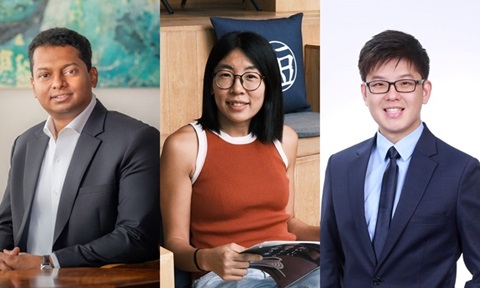
Today, Loh Chee Kong, Chan Chao Peh, Eugene Wee and Ang Yi Ting lead newsrooms at CNA Digital, The Edge Singapore, CNA938 and Lianhe Zaobao. They share what NTU, and every industry shake-up since, taught them.
Text: Vivien Yap | Photos: Photos: Ang Yiting, Chan Chao Peh, Eugene Wee and Loh Chee Kong
Where it started
Eugene got his first taste of journalism at The Nanyang Chronicle, NTU's student-run newspaper produced through the Wee Kim Wee School of Communication and Information’s news practicum. The monthly paper gave him "a very keen appreciation of deadlines," a discipline that has shaped every newsroom he has run since.
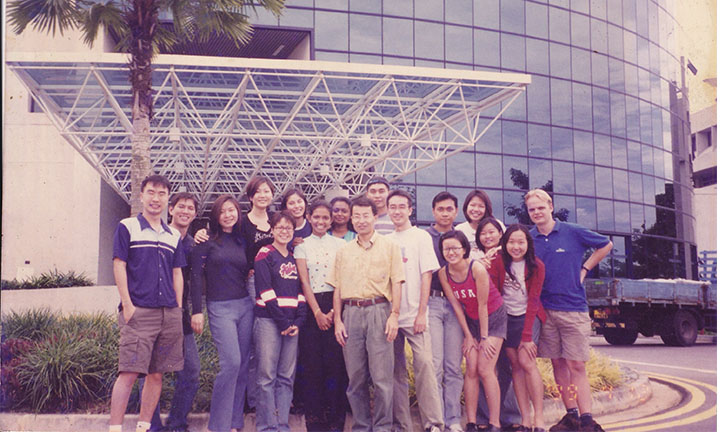 Eugene (second from left) and some of his batchmates standing outside Wee Kim Wee School of Communication and Information.
Contributing to the student paper was equally memorable for Chao Peh, who recalls how the hands-on practicum also complemented modules that put him under the tutelage of former journalists turned professors, such as Senior Lecturer Chua Chong Jin.
Beyond the classroom, Chee Kong wrote his first page-one story during an internship at TODAY, then a free daily newspaper. For another page-one story, he recalls tracking down and waiting outside the home of his interviewee for six hours. "He took pity on me because I was standing outside for so long and agreed to speak to me."
Outside of traditional journalism, Yiting chose to major in broadcast because she loved watching television. "I really wasn't looking at journalism as a career," she says. However, learning about the basics of video production at NTU gave Yiting the strong foundation and discipline required for her eventual role in the newsroom.
Navigating change as a young journalist
Chao Peh graduated just as the dot-com bubble burst. Initially excited to start his career in a news portal, he and his colleagues were made to do translation work for annual reports instead. “I wanted to be a journalist, but instead of writing my own stories, I found myself doing translation work. It was quite demoralising,” he says. When he caught wind of a new paper launching at MediaCorp, he asked his NTU batchmates who were already there about openings and joined TODAY as a reporter. He eventually moved to The Edge Singapore in 2004 as a business writer.
Yiting’s dream job as a broadcast journalist and TV presenter at Channel U News was also short-lived, when a merger in December 2004 returned TV news to Mediacorp six months after she had started work there.
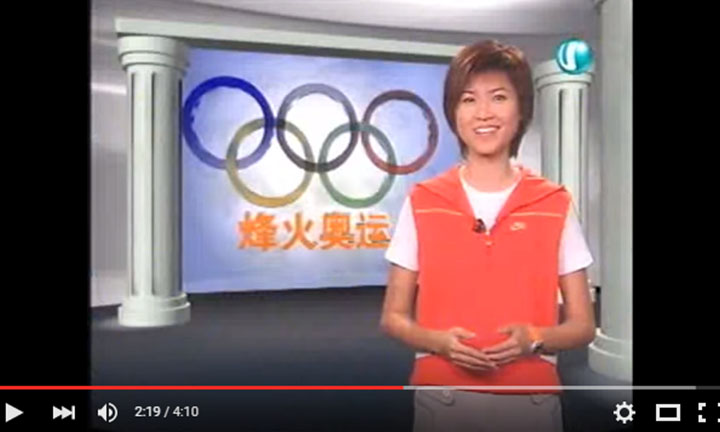 Yiting regularly appeared on television as a broadcast journalist in her early days at Channel U News.
She was assigned to be a print journalist at Lianhe Wanbao following this shift. “It was really shattering,” she recalls, but she kept a growth mindset and continued honing her reporting skills by writing stories in areas she had virtually no knowledge in, learning along the way.
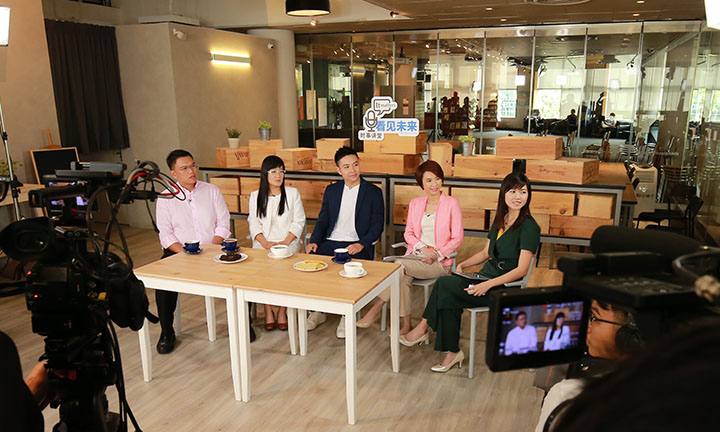 Silver linings: Yiting’s (first from right) production experience stayed relevant when she eventually joined Lianhe Zaobao and started to be involved in digital content creation from 2015 including video production once again.
Eugene started out when print led and digital was an afterthought. His first move, Project Eyeball, an integrated print and online newsroom ahead of its time, closed within two years. He returned to print at The New Paper, then transitioned into online news production when the digital wave eventually arrived. “You can’t hold on to something just because you’re nostalgic,” he says.
Chee Kong left TODAY in 2010 to co-found a business news website. After about 10 months, he returned to the paper as a news editor and eventually led the paper’s pivot to younger readers. With AI now reshaping newsrooms, his response draws on years of navigating industry change: “You have to change before you are being changed.”
From desk to department
While experience in the newsroom is invaluable, the shift from reporter to editor is less about writing and more about judgment at scale.
"As an editor, there are a lot more things to consider because it's no longer just about one story," Yiting says. Chee Kong describes it as a shift from managing output to managing people: "I see my role really as giving them the platform, the environment, the tools they need." Chao Peh puts it more simply: being a good reporter and being a good editor are different skills entirely, and the newsroom only works if you learn both.
Having worked the ground and moved up to lead teams, Eugene emphasises the importance of effective people-led leadership. “The best editor or journalist in the room might not necessarily be the best at running a team. Today, I make an effort to train and remind younger team leads that leading a team is also part of their role beyond technical expertise,” he says.
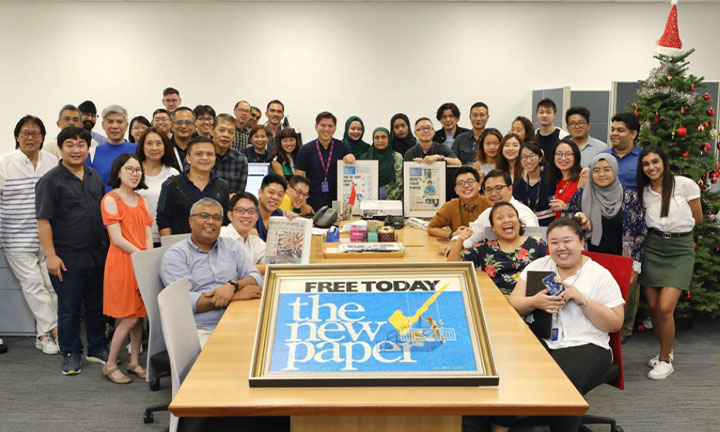 Eugene Wee and his team at The New Paper.
The macro shift: from page one to platform
Today, all four editors have experienced and led the shift into digital and multimedia news reporting. Breaking news articles, social media updates and video content now move simultaneously, where in the past, editors would clear stories one headline at a time.
Chee Kong watched TODAY's print edition shut in 2017 and later oversaw TODAY’s merger with CNA Digital.
Eugene revamped The New Paper's design, business model and content mix in less than a year, and has since moved from print into radio and podcasts, chasing formats he had never worked in at CNA938.
"You really need a team," Yiting says. "Not just one editor who decides everything." For her the stakes carry an added layer: keeping Chinese-language journalism relevant to a generation that reads less and watches more. "We're always trying to keep the Chinese language alive," she says.
Through all the change, including the dangers of misinformation, Chao Peh holds firm on journalistic integrity: “Regardless of whether you are a junior reporter or an experienced editor, to inform and to educate the public is something that we must do properly.”
Are you an NTU graduate working in media? Share your story with us at: alumniaffairs@ntu.edu.sg