Volumetric Bioprinting - Can Shape Bring Us Closer to Function
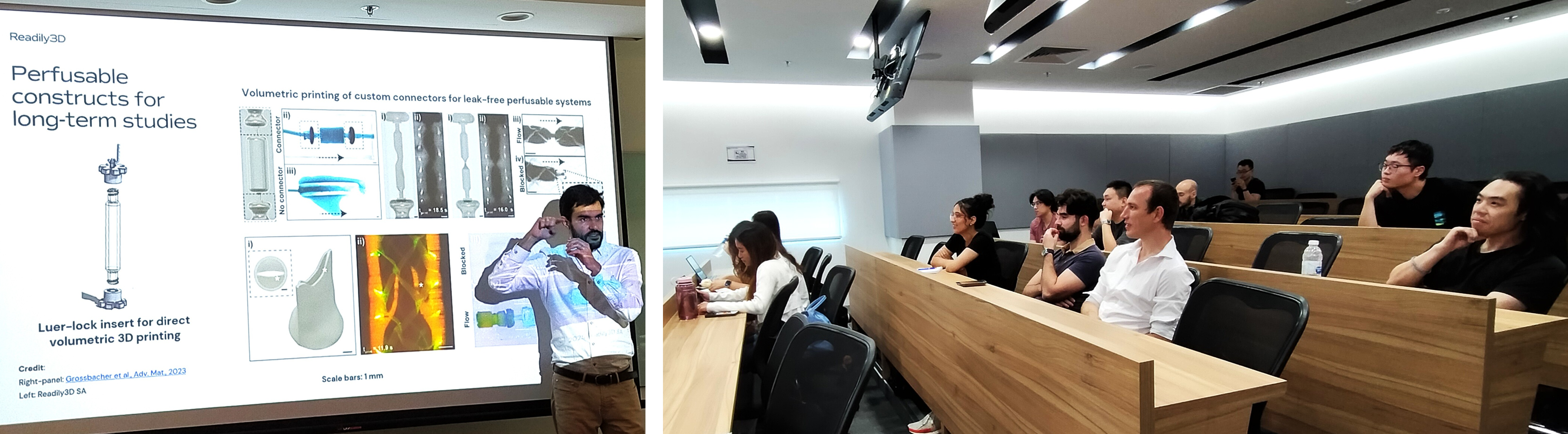
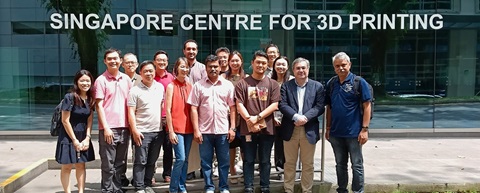
On 30-31 October, we were privileged to learn about the emerging field of tomographic volumetric bioprinting in a seminar titled “Can Shape Bring Us Closer to Function,” delivered by Dr. Jorge Madrid-Wolff, Application Scientist from Readily3D. Readily3D has been revolutionising bioprinting by enabling the rapid creation of complex biological structures without relying on the traditional layer-by-layer process. Volumetric bioprinting allows fabrication without support structures, achieving print speeds of up to 30 seconds through a sterile, contactless optical process. The method minimises shear stress, requires low light exposure, and is compatible with materials such as acrylates, gelatin methacryloyl (GelMA) hydrogels, and polycaprolactone. The technology operates by projecting light from multiple angles onto a photosensitive bio-resin, which solidifies to form complete 3D structures within seconds.
Participants also had the opportunity to learn about machine operation during a live demonstration of the volumetric bioprinter in the SC3DP laboratory. This innovative approach holds immense potential for applications in tissue engineering, organoids, and customised cell scaffolds - offering a glimpse into the future of regenerative medicine and biomedical manufacturing.