
From Physics to New Possibilities in Materials Science: Rajendra Salim’s MSc Journey at NTU MSE
For Rajendra Salim, pursuing a Master of Science (MSc) degree at NTU’s School of Materials Science and Engineering was not just about deepening scientific knowledge — it became a turning point that reshaped how he approached research, community, and his own potential.
Originally trained in physics in Indonesia, Rajendra already knew he wanted to move into applied science. Materials science — sitting at the intersection of physics, engineering and industry — offered exactly the bridge he was looking for.
Like many international students exploring postgraduate opportunities, he began by comparing programmes across globally recognised universities. Rankings first drew his attention, but it was the structure of NTU’s MSc in Materials Science and Engineering that ultimately stood out.
“As someone exploring graduate studies internationally, rankings were one of the starting points. But what mattered more was understanding the programme itself — what I could study and what opportunities it could open up.”
What he discovered next changed the trajectory of his career.
Today, he counts NTU’s Master of Science in Materials Science and Engineering as a turning point — not only academically, but personally.
“Choosing NTU MSE became a turning point in my life. The environment here
pushed me to grow in ways I never expected.”
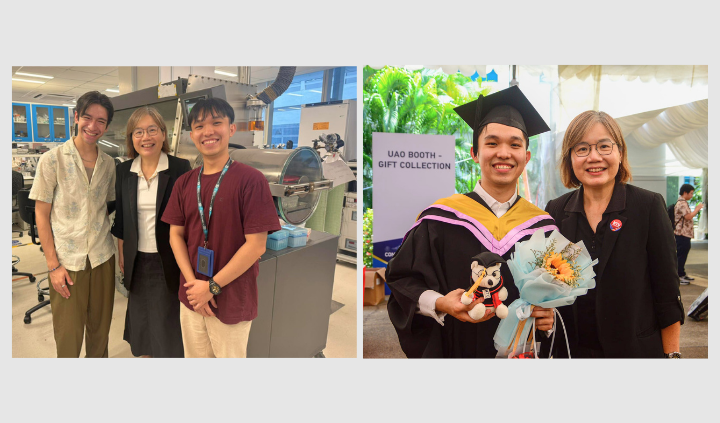
Rajendra Salim’s NTU MSc in Materials Science and Engineering journey to graduation. |
Discovering a Different Kind of Master of Science Programme
While researching programmes across universities such as NTU and other top global institutions, he found that most coursework-based master’s programmes followed a traditional structure.
NTU’s MSc MSE programme stood out.
“What attracted me was the flexibility. NTU offered a coursework master’s programme, with the option to pursue a dissertation. That opened the door for someone like me who wanted to explore research before committing to a full PhD.”
The clarity of the programme structure also made a difference during the application stage.
“Some universities have complex admissions pages where it’s hard to understand the programme. NTU MSE explained the modules, expectations and options very clearly. I knew what I was applying for.”
This combination — flexibility, clarity, and global reputation — ultimately guided his decision.
Life as an MSc MSE Student: Rigorous, But Transformational
Students often assume coursework programmes are relatively straightforward. The reality, he says, is different — and far more rewarding.
“If someone expects a master’s programme to be easy, that’s a misconception.
It’s demanding — but challenging in a good way.”
Between coursework, research activity, and wider participation in the NTU community, the programme required discipline and adaptability. Yet it also developed habits and ways of thinking that would later prove essential.
“You learn how to manage time, think critically, and approach problems systematically. Those skills stay with you.”
Some modules proved especially impactful. Modules in Crystal Chemistry of Materials and other advanced topics pushed students to deepen both their technical understanding and collaborative learning.
“The modules really push you to think deeply and work collaboratively.
Study groups became important — not just for the coursework,
but for building connections with your peers.”
Access to World-Class Research Facilities and More
One of the programme’s defining features is the access students receive to NTU MSE’s advanced research infrastructure.
Before arriving in Singapore, he recalls browsing the faculty and research laboratory pages online and being surprised by the scale of available facilities.
“When I saw the equipment and research facilities available at NTU MSE, it was impressive. Many universities mention about their advanced facilities, but here you could actually see and use them.”
More importantly, the environment is highly collaborative.
“The research fellows and scientists are very approachable. If you don’t know something, you can ask — and often they will explore the answer together with you.”
This mentorship culture proved to be one of the most valuable aspects of the programme.
“The faculty mentorship here is something special. Professors are approachable,
and they genuinely care about students’ development.”
Under the supervision of Professor Lam Yam Meng, Rajendra’s dissertation work gave him exactly that opportunity.
“The dissertation gave me the opportunity to engage deeply with research and explore it meaningfully. My supervisor, Prof Lam, was instrumental in shaping my research direction and guiding me to think more systematically and critically. Through this experience, I gained a clearer understanding of what rigorous research truly demands, which has given me greater confidence in considering a PhD pathway.”
The experience not only strengthened his academic training but also gave him a clearer sense of direction for the next stage of his career.
In addition to his supervisor’s close guidance, the mentorship of the lab’s Research Fellows, Dr Teddy Salim and Dr Rao Haixia, also played a meaningful role in his learning journey.
This environment, where questions are welcomed and ideas are discussed jointly, helped Rajendra build both technical confidence and research maturity.
Access to advanced facilities certainly played a role. But what stood out more to him was the ecosystem of people surrounding the research.
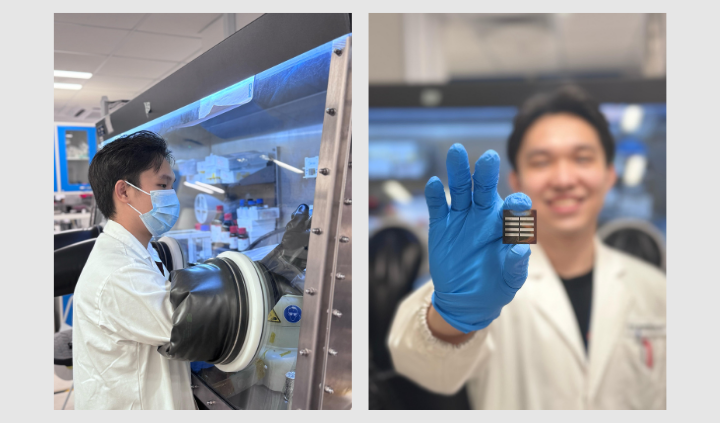
Rajendra in his Master of Science in Materials Science and Engineering (MSc) Coursework and Dissertation |
Discovering the Strength of a Close-Knit Community
NTU MSE often describes itself as a close-knit community — something Rajendra only fully appreciated after experiencing it firsthand.
“Only after being here did I really understand the charm of a small community.
They played a big role in my growth.”
That sense of closeness shows up in many ways: approachable faculty, helpful seniors, collaborative research groups, and students who support one another across labs and programmes.
When Rajendra encountered challenges — whether technical questions in the lab or decisions about modules — there was almost always someone willing to offer guidance or share advice.
“It’s heartwarming to experience this sense of community. Seniors were always willing to share advice on modules, research and how to navigate the programme.”
For prospective students, this may be one of the programme’s less visible strengths. The MSc experience is not only built on curriculum and facilities, but also on a network of people who make the journey both enriching and meaningful.
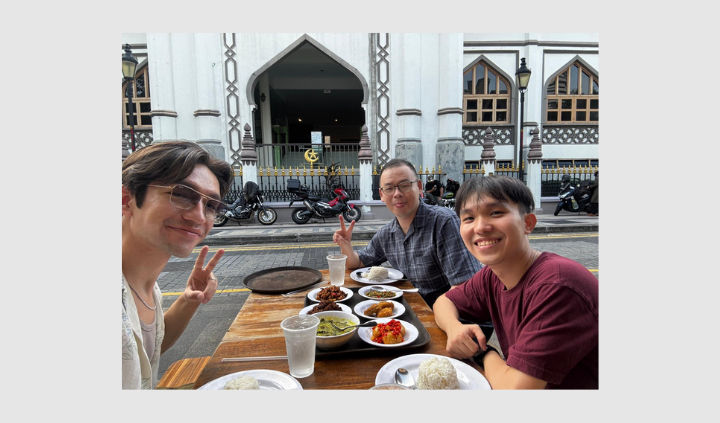
A lunch catch-up over Nasi Padang in the Kampung Glam neighbourhood, with Rajendra and his lab community |
Growing Beyond His Comfort Zone
Perhaps the most striking part of Rajendra’s journey is how much he grew during the programme. By his own admission, he was not always the most confident or proactive student early on, and stepping forward or building networks did not come naturally to him at first.
Moving to Singapore changed that.
“Coming to a new country and the opportunities at NTU MSE pushed me to try new things and step outside my comfort zone. The environment here motivated me to work harder and pursue research seriously.”
Early in the programme, Rajendra joined the MSE Graduate Student Club, partly as a way to meet people and better understand the student community. Through organising activities, attending events, and interacting with peers across NTU, he gradually built a network that extended well beyond his own research group.
“Joining the graduate club was one of the best decisions I made. It helped me build connections not only within MSE, but across the NTU community.”
Memorable moments with the MSE Graduate Student Club, Student Club, |

Those relationships became a source of encouragement, practical advice and friendship throughout his time in the programme.
Running and swimming on campus also became important stress-relief outlets, giving him space to reset mentally and maintain balance amid the pace of postgraduate life.
These experiences helped him realise that growth during postgraduate study is not only intellectual — it is also personal.
“The programme gave me a platform. When I started taking opportunities and trying new things, it really changed how I saw myself.”
Beyond the Classroom: Preparing for Research and Industry Opportunities
The MSc programme also provided Rajendra with exposure to the wider professional landscape surrounding materials science.
Through career fairs, company interactions, and university activities, students can connect with employers across sectors such as semiconductors, advanced manufacturing, sustainability, and energy materials.
For him, these interactions translated into real career opportunities.
“The industry exposure was very useful. I was offered a position through the NTU career fair, which helped me understand the possibilities available after graduation.”
He also notes that the postgraduate study in Singapore provides strong research infrastructure, funding opportunities and global industry exposure. The country’s diverse and international ecosystem also creates a strong platform for career development for international students.
“Singapore is a great place to build international exposure and professional opportunities.”
These exposures are especially meaningful for international students unfamiliar with the industrial applications of materials science.
“Before coming here, I thought postgraduate studies would mainly lead to academia. At NTU MSE, I realised there are many opportunities in industry as well.”
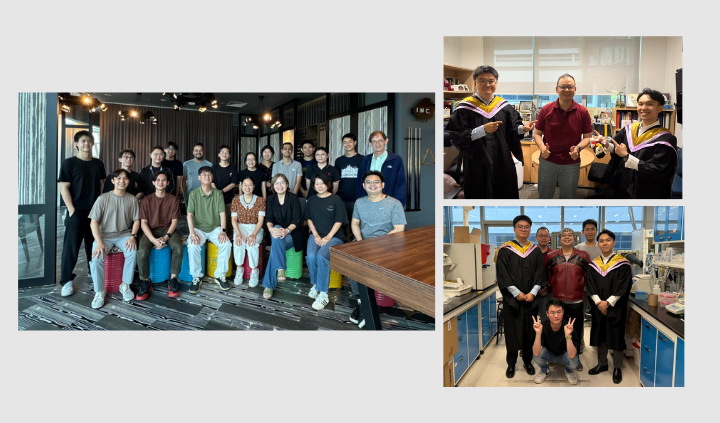
Featuring Rajendra's lab members, including Prof Lam, Research Fellow Dr Teddy Salim and fellow batchmate |
Who Thrives in NTU MSE?
When asked what kind of student is likely to thrive in the programme, his answer was straightforward: those who are willing to engage.
“NTU MSE already provides the platform — through modules, mentorship, research and industry exposure. The students who gain the most are the ones who take the initiative to explore these opportunities.”
At the same time, his own journey shows that being proactive need not be an inborn personality trait. It can be something developed in the right environment, with the right support, and with the courage to start somewhere small.
“If you take the initiative to engage with faculty, participate in activities and explore opportunities, the experience can be life-changing.”
For prospective students considering the programme, Rajendra also encourages them not to be intimidated by the admissions process.
Applying to graduate school abroad can feel overwhelming at first, especially when navigating unfamiliar requirements and multiple application steps.
“Sometimes the application process looks complicated — like opening one box and finding many more forms inside. But if you take the first step and reach out, there are actually many people ready to help.”
His advice to prospective students is simple:
“If you’re interested in the programme, don’t hesitate — just apply. There are many support channels, whether through the admissions team, faculty members or student communities, if you reach out. The experience might turn out to be life-changing.”
A Programme for Students Ready to Build Depth — and Momentum
NTU’s Master of Science (MSc) Programme in Materials Science and Engineering equips students with advanced training for careers in research and across industries such as semiconductors, sustainability, energy systems, advanced manufacturing and biomedical technologies.
The programme offers a flexible curriculum combining advanced coursework with optional research experience.
Starting this semester in August 2026, NTU MSE also offers a Master of Science in Applied Materials Analytics, whilst the Master of Science in Materials Science and Engineering (MSc) programme introduces two new specialisations:
- Nanomaterials
- Sustainable Materials
These additions reflect the growing global demand for expertise in emerging materials technologies that will shape the future of industry and society.
Learn more about the programme:
https://www.ntu.edu.sg/mse/admissions/postgraduates/prospective-students/coursework
