The Next Energy Shift: AI in the Power Seat
As energy demand grows alongside climate concerns, NTU researchers are applying artificial intelligence (AI) to run integrated power and cooling systems to make power generation smarter, cheaper and greener than ever before.
Whether it’s the smartwatch that counts your steps, or the smartphone that lets you order meals and rides with a few taps, energy powers nearly every aspect of modern life.
As global energy demand grows and climate change concerns mount, finding smarter and cleaner ways to produce and use energy become essential.
One promising approach is polygeneration, which brings together different energy systems to meet diverse needs simultaneously, boosting efficiency while reducing carbon emissions.
From polygeneration to cryo-polygeneration
Polygeneration offers clear benefits, but an important question remains: how can these different energy systems be brought together in a way that actually works?
Integrating multiple sources and technologies is complex. Achieving the right balance between technology choices, system size, deployment plans, and economics is key to delivering solutions that are both efficient and sustainable.
Professor Alessandro Romagnoli and Dr Sundar Raj Thangavelu from the Energy Research Institute at NTU said, “The findings for polygeneration validate the real-world potential of sustainable energy solutions, motivating us to explore how these approaches can be adapted to Singapore’s unique energy system through cryo-polygeneration.”
Cryo-polygeneration builds on this concept by integrating multiple power generation and cooling technologies. These include solar PV panels, the utility grid, gas turbines, electrical and absorption chillers, as well as cryogenic cold energy recovered during the regasification of liquefied natural gas (LNG).
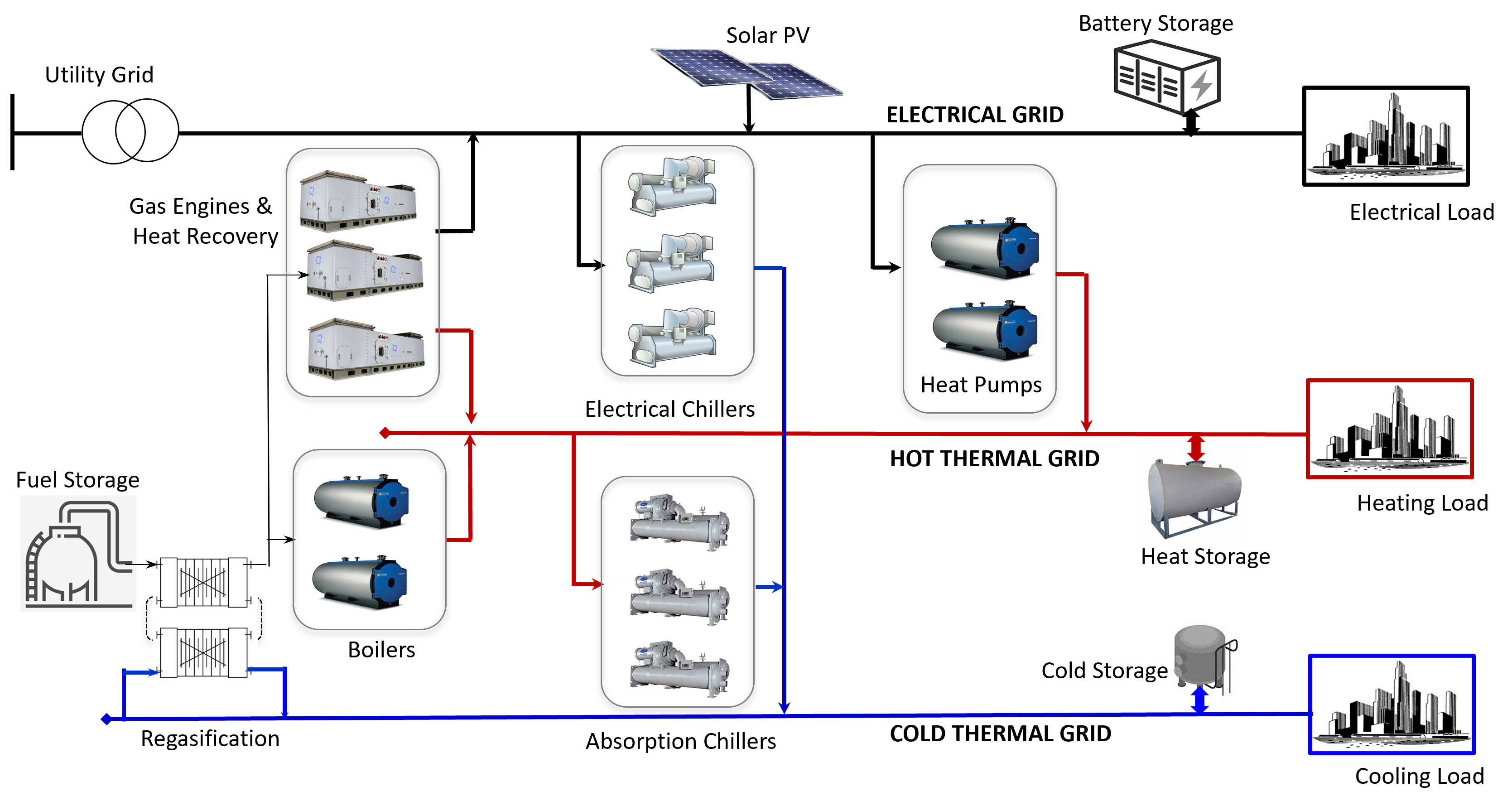
Figure 1: Schematic of the virtual Cryo-Polygeneration Demonstrator developed in TRNSYS simulation platform.
By harnessing this otherwise wasted cold energy, the system can produce electricity, heating and cooling, with the potential for CO₂ capture.
To design a cryo-polygeneration system (CPS) that is economically viable and environmentally sustainable, Prof Romagnoli and team studied how different energy technologies could work together most effectively. “Our goal was to identify an optimal system that delivers strong energy efficiency, cost savings, and is suitable for wider adoption," he shared.
Making cryo-polygeneration work with AI
CPS plays a pivotal role in meeting diverse energy needs of urban communities like Singapore. By integrating multiple energy sources, it can achieve higher energy efficiency than traditional microgrids.
For example, waste heat recovered from turbines can be reused for heating and cooling, boosting overall system performance and sustainability. Trading with the utility grid also adds flexibility, improving resilience and efficiency.
At the same time, CPS faces unique challenges. Its integrated design involves many technologies interacting in complex ways, making system optimisation difficult.
AI models offer a potential solution by simplifying energy model development and enabling reliable performance and better decision-making.
As Prof Romagnoli explained, “AI models with observable and explainable decision-making processes are invaluable for system management. They improve reliability when diagnosing issues, planning maintenance, and troubleshooting malfunctions.”
However, AI is not without its limitations. “Standard AI models often fail to fully account for changes in energy system characteristics over time, such as performance degradation due to ageing and wear,” Prof Romagnoli noted.
“Inaccurate predictions can cause energy production to be over- or underestimated, jeopardising load fulfilment, reducing reliability and creating risks for overall system performance.”
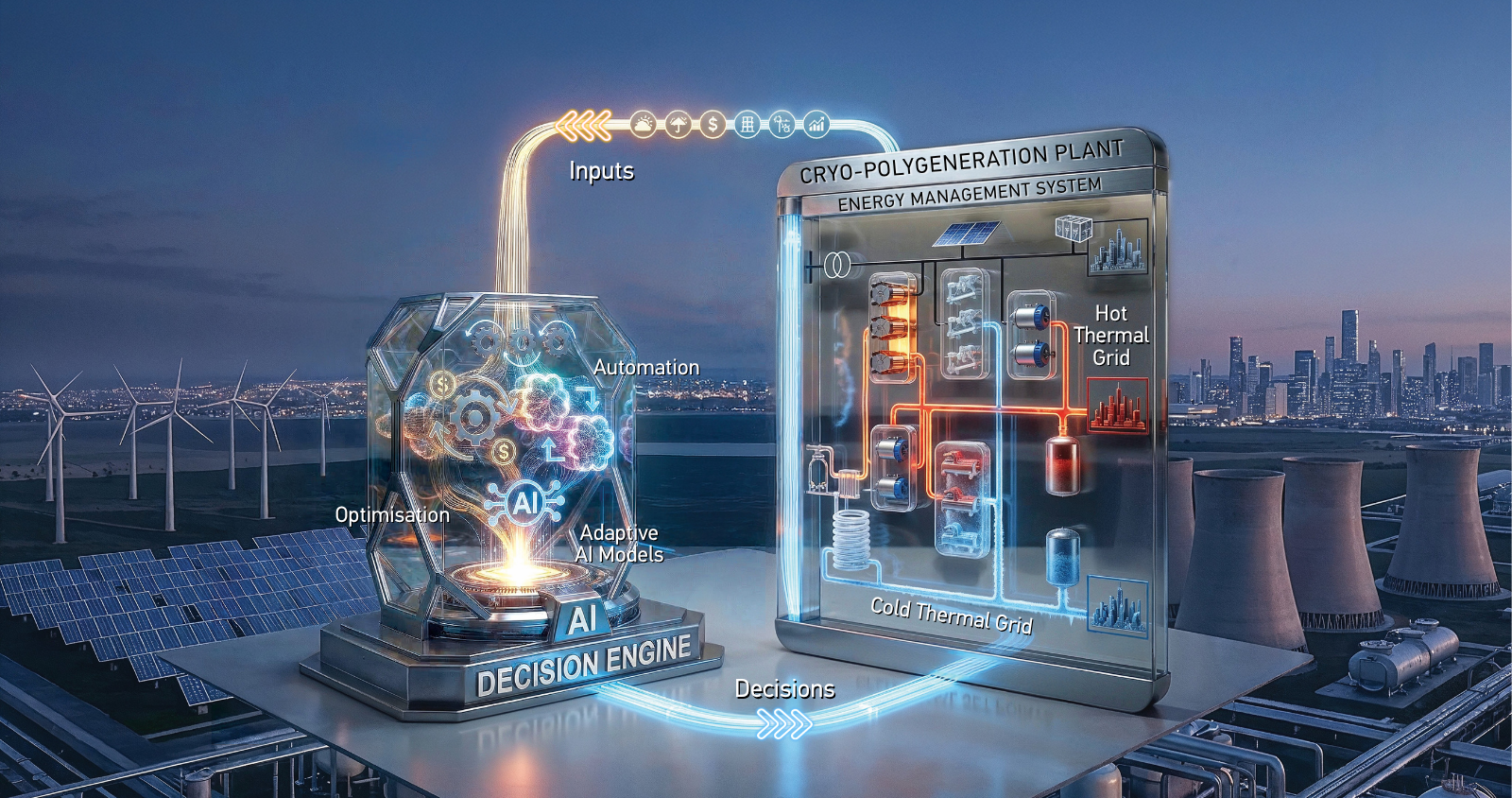 Figure 2: Overview of the cryo-polygeneration system, consisting of the cryo-polygeneration plant and AI decision engine
An adaptive AI approach
The team’s solution combines an adaptive AI model with a purpose-built optimisation algorithm for CPS.
Using real-time operational data, the system continuously adjusts how energy technologies are run throughout the day, accounting for factors such as energy demand, weather conditions, and electricity costs. This allows the system to operate reliably while minimising overall costs.
To ensure accuracy over time, the AI models are regularly updated and enhanced with physics-informed learning, which blends data-driven insights with physical system principles.
Dr Sundar explained that this hybrid approach enables the models to reflect real system behaviour, capture performance changes as equipment ages, and deliver dependable predictions in a dynamic operating environment.
Crucially, the optimisation algorithm respects real-world physical and operational limits. Technologies such as chillers and heat pumps must operate within defined temperature and flow ranges to function safely and efficiently.
If these limits are exceeded, the system recognises the condition and automatically adjusts, by shutting down, idling or entering standby mode when needed.
By recalculating optimal operating settings at frequent intervals, the system ensures cryo-polygeneration remains efficient, reliable and cost-effective over time.
Optimising performance for future energy
Putting the adaptive AI model to the test, the team compared a baseline with a “test” electrical generation profile. While the baseline relies entirely on the utility grid to meet electrical and cooling demands, the test profile draws most power from three gas turbines, with only occasional grid use.
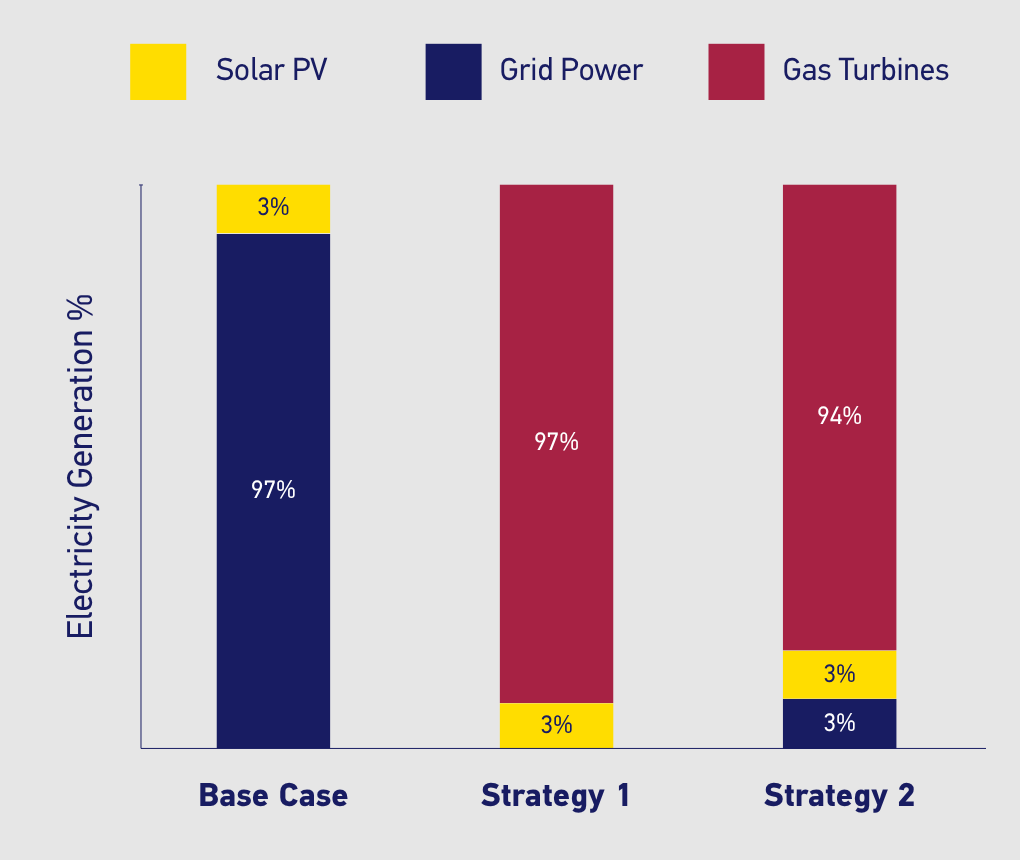 Figure 3: Comparison of generation profiles of base case and test profiles (strategy 1 and 2).
Dr Sundar explained, “Utility power in the test profile was used mainly to capitalise on low tariffs and optimally load the gas turbines, rather than running all turbines continuously. Renewable sources, like solar PV, remain largely passive and non-dispatchable.”
The test profile also lowered peak electrical load to 6,000kW. This was largely thanks to absorption chillers, which generate cooling from waste heat in the turbine exhaust, requiring far less power than conventional electrical chillers.
Overall, electricity use dropped by 19.3%, and recovery and use of waste heat reduced total operating costs by 51.5%. These savings were driven by efficient local from gas turbines and the strategic use of exhaust gas for cooling.
Despite these gains, the test revealed some limitations. The discrete nature of the adaptive AI models and the penalty constraints to avoid under- or over-generation added complexity and affected the algorithm’s ability to reach an optimal solution, especially when excess cold energy was occasionally produced.
Future improvements could refine the AI models and penalties to smooth operations and enhance accuracy without sacrificing performance.
Forecasting is another critical factor. Future research could leverage day-ahead predictions to optimise energy trading with the grid and improve demand-side management, further boosting efficiency and economic returns.
About the researchers
Professor Alessandro Romagnoli Prof Romagnoli is the Assistant Dean for Innovation and Enterprise at NTU, Co-Director of the NTU-Surbana Jurong Corporate Lab and Cluster Director for Multi-Energy Systems and Grids at the Energy Research Institute at NTU. He established the Thermal Energy Systems Lab @ NTU, which focuses on energy conversion and management, and power generation including renewables and energy storage. He has received the following awards: Best Paper Award at SDEWES Conference 2025, Silver medal for Best Paper Category under 2020 International Solid Waste Association, and the Best Paper Award at 30th International Conference on Efficiency 2017. |  |
Dr Sundar Raj Thangavelu Dr Sundar is a Principal Scientist at the NTU Energy Research Institute with over 15 years of experience in distributed energy systems for urban and remote communities. His work focuses on intelligent, reliable and cost-effective low-carbon energy solutions supporting decarbonisation and the global energy transition. |  |
This story first appeared in the MAE Collective 2026, AI edition.
References:
Thangavelu SR, Tafone A, Gunasekhara I, Morita S, Romagnoli A. Cryo-polygeneration plant - a novel operation algorithm leveraging adaptive AI energy systems models for urban microgrids. Appl Energy. 2025;383:125361. https://doi.org/10.1016/j.apenergy.2025.125361.
Tafone A, Thangavelu SR, Morita S, Romagnoli A. Design optimization of a novel cryopolygeneration demonstrator developed in Singapore – Techno-economic feasibility study for a cooling dominated tropical climate. Appl Energy. 2023;330:119916. https://doi.org/10.1016/j.apenergy.2022.119916.