MAE Overseas Internship: Engineering Under Real-World Constraints at Emvolon
The system was running on combustible gases. There was no margin for error.
At a test site in Houston, Arthur Lim Han Zhou, a Year 4 MAE Mechanical Engineering intern, stood by the prototype he had helped build, mentally tracing every connection and safeguard. The system was handling flammable and toxic substances, and every component had been checked and reviewed.
As the test began, he remained focused on the system’s behaviour and potential failure points.
“The entire time I was running through my mental checklist of every component and everything I needed to check, thinking through possible failure points and the mitigation measures in place.”
When the system reached its target condition, the tension broke. What had been a design on paper was now operating in the field.
For Arthur, this moment captured what his year at Emvolon was about. Engineering was no longer confined to controlled environments. It required making decisions that carried real consequences.
 The Emvolon Team onsite in Houstin to test the prototype system. Arthur Lim, most right in photo
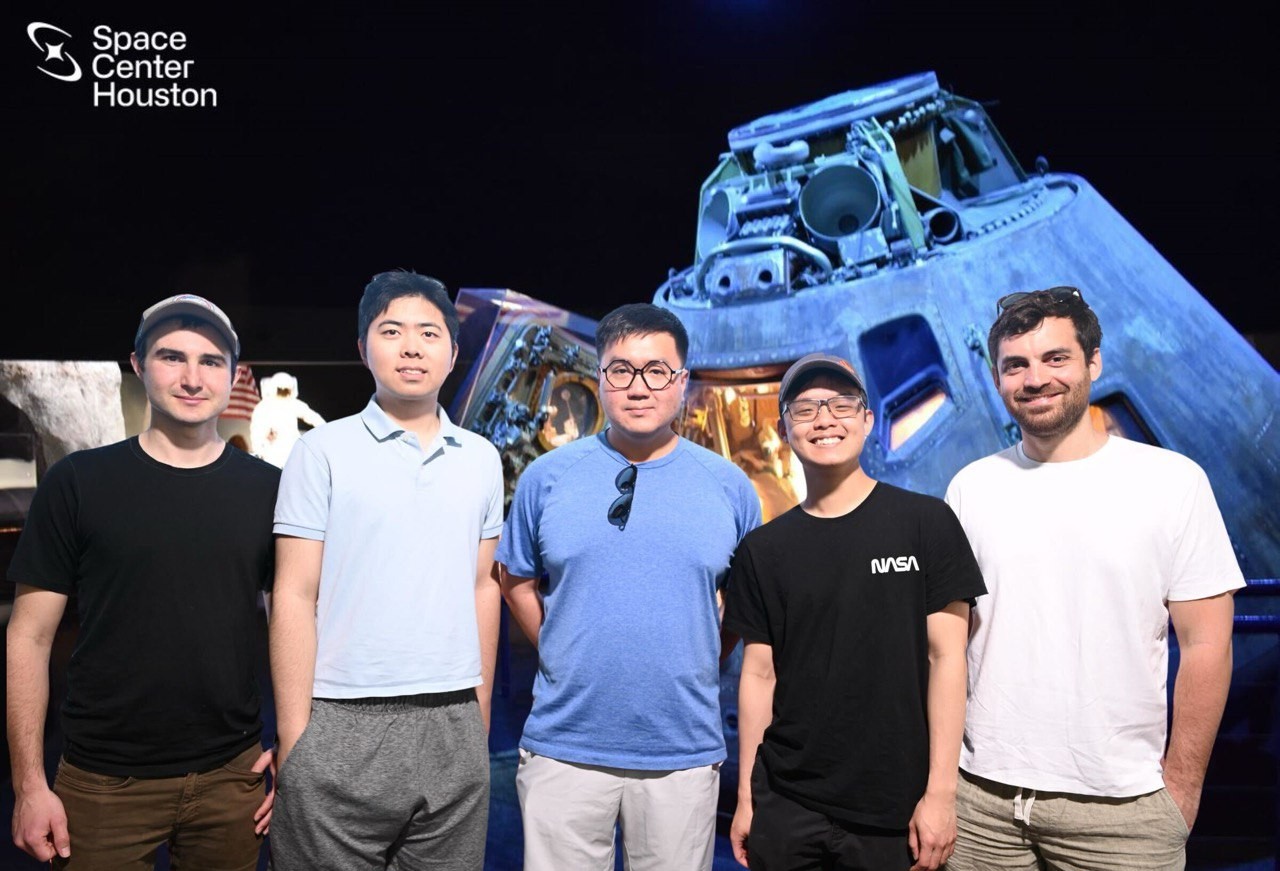 Visit to the Space Center Houston with the Emvolon team during the weekend
A Different Kind of Engineering Environment
Arthur joined Emvolon in Boston as part of its Internal Research and Development team. From the outset, the pace of work was markedly different from what he had experienced in university.
Engineering fundamentals remained unchanged. Documentation, calculations, and design rigour were still expected. What differed was the speed. Iterations were fast, and decisions were made quickly. Mistakes were part of the process, but only if they led to immediate learning.
This became clear early on when he was tasked with the electrical design of a demonstration system under a tight timeline. The responsibility came with an expectation of ownership. The team operated on trust, with each individual expected to take charge of their work and move it forward.
Designing for Safety in a High-Risk System
Emvolon’s system converts stranded methane into methanol by modifying internal combustion engines to function as chemical reactors. The process involves handling combustible and toxic gases, where design decisions carry significant safety implications.
Arthur’s work focused on the electrical and control systems that regulated chemical flow, monitored system conditions, and triggered shutdowns when anomalies were detected. These systems formed a critical layer of protection within the overall process.
From the start, it was clear that every part of the system had to be approached with caution. Risks ranged from detonation to toxic exposure. The challenge was not only to make the system work, but to ensure that it operated safely under all conditions.
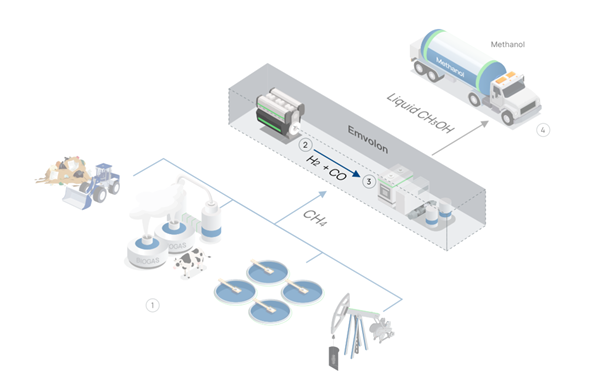
Diagram of the proposed methane to methanol system
Solving Problems in Motion
One of the more complex challenges involved managing vibration within the system. The prototype was mounted on a trailer rather than a fixed structure, and multiple components operating at different frequencies introduced instability.
Addressing this required more than technical adjustments. The team drew on external expertise, engaged existing contractors, and redistributed internal responsibilities to focus on the issue. Because team members were already familiar with different parts of the system, they were able to adapt quickly.
The process highlighted how engineering problems in practice extend beyond design. They involve coordination, resourcefulness, and the ability to respond under pressure.
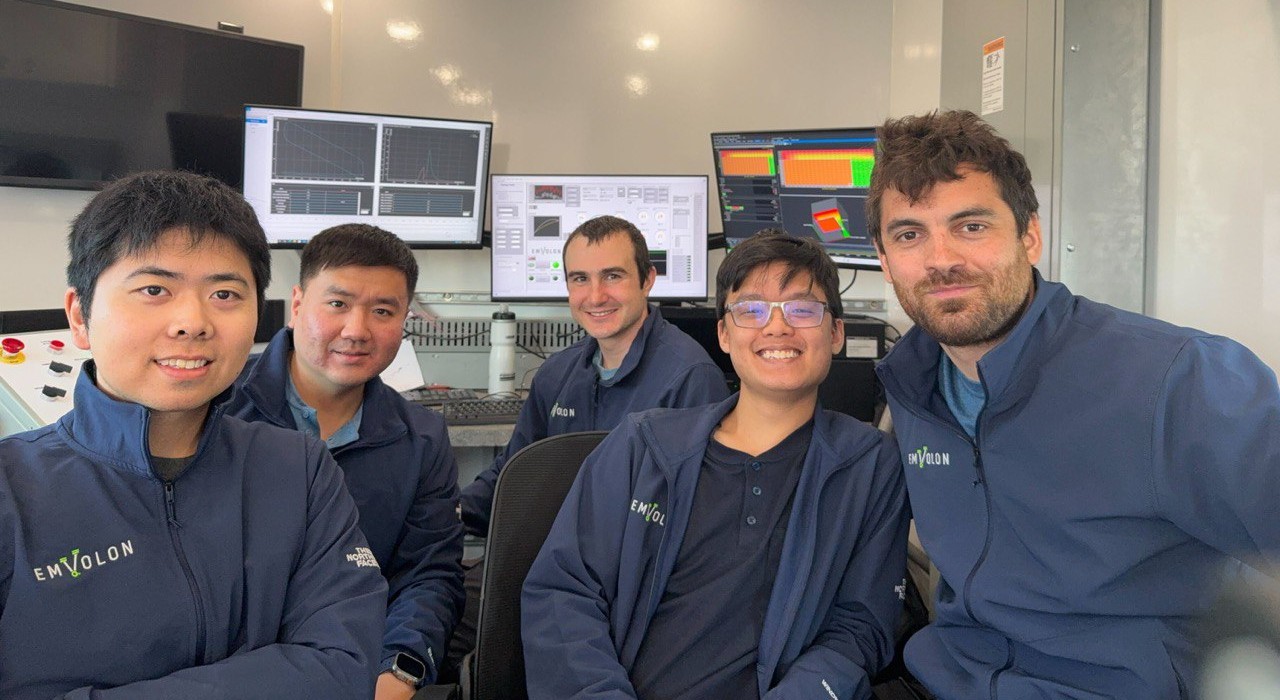 Emvolon Team in the Houston mobile office
Working Across Disciplines
The system brought together multiple disciplines, including electrical engineering, controls, and chemistry. Each team approached the problem from a different perspective.
The chemistry team focused on yield and efficiency, while the engineering team prioritised installation, size, and controllability. Aligning these priorities required clarity in communication and an understanding of what each discipline needed.
Arthur found that effective collaboration depended on adapting how ideas were communicated. Technical depth had to be adjusted depending on the audience, with discussions focused on what was relevant to each team.
Beyond the First Prototype
The experience also reshaped how he viewed engineering work. In a startup environment, development does not end with the first build. Prototypes are only the beginning.
What follows are repeated cycles of testing, refinement, and integration. These cycles are closely tied to operational constraints and business considerations. Engineering decisions are made alongside timelines, resources, and external expectations.
This broader view revealed that successful engineering requires more than technical execution. It requires alignment across functions and an understanding of how systems are brought to market.
Rethinking Climate Technology
Working on methane conversion systems also shifted Arthur’s perspective on climate technology.
Rather than focusing on a single ideal solution, he began to see the value of addressing specific problems. Methane is a significantly more potent greenhouse gas than carbon dioxide and capturing it at the source offers a targeted way to reduce emissions.
As he reflected:
“Working on these systems changed my mindset about climate technology, from looking for the ‘perfect solution’ to looking for many smaller and more practical solutions that will collectively have a huge impact.”
 Arthur at the Houston test site
Continuing the Work
Over time, the experience clarified the type of work Arthur wanted to pursue. He found himself drawn to research and development roles that combine hands-on work with system design, particularly in process engineering and automation.
His involvement with Emvolon has continued beyond the internship. He remains engaged with the systems he helped build and is exploring further studies in collaboration with the company.
The year placed him in an environment where engineering decisions carried real consequences, and where systems moved from concept to operation. It also shaped his interest in continuing work within climate technology, where practical solutions contribute to broader impact.
By Kendra Kee and Karen Chai, NTU MAE Communications