From Zero to Race Ready
How a Mechanical Engineering freshman went from zero experience in battery design and motorsport, to leading one of NTU’s largest multidisciplinary engineering projects.
The Lab That Changed Everything
The first time Shivam Selvam Panicker walked into the NTU MAE Innovation Lab, he stopped.
Towering over the workshop floor was a single-seater electric race car. The workshop was alive with activity, with students hunched over Computer-Aided Design (CAD) screens, machining aluminium, and routing wires.
Shivam was a Mechanical Engineering freshman. He had no background in motorsport and no experience with high-voltage systems.
He also knew, in that moment, that he had found exactly where he needed to be.
Shivam recalled, “The lab quickly became my second home. There is truly no better club than this at NTU.”
Within the week, he had joined NTU Formula Racing. A couple of years later, he would lead it.
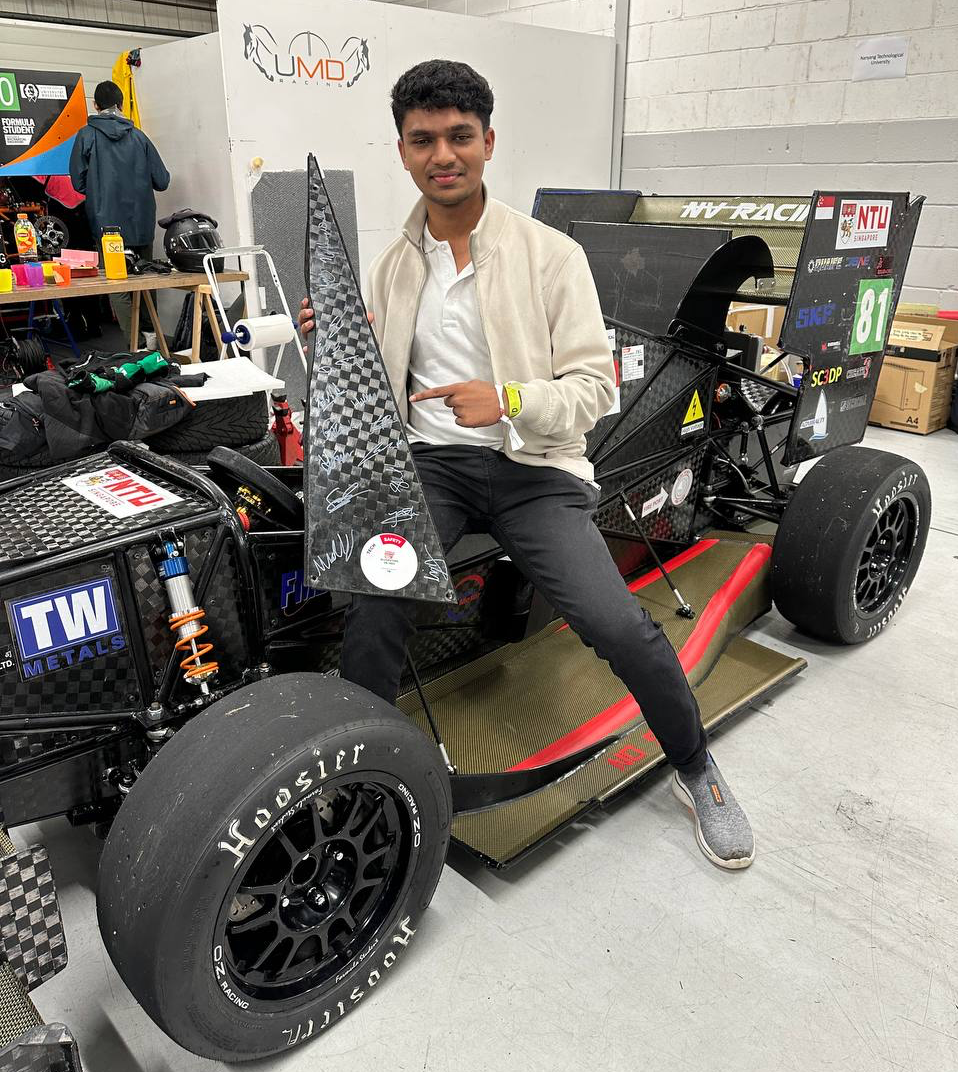 Shivam with the car at Formula Student UK, 2023.
Competing on the World Stage
NTU Formula Racing is not your typical student club. Every year, students from Engineering, Computer Science, Business, and Design schools join forces to design, manufacture, and race a fully electric Formula-style car from the ground up.
They compete internationally at Formula Student UK, one of Europe’s most established educational engineering competitions, as well as Formula Student China.
They are up against universities like Imperial College London and Tsinghua University, teams with decades of Formula Student experience and substantially larger resources.
For NTU Formula Racing, every competition is a statement: that a student team from Singapore can compete with the best in the world.
-nvf-1-track-team-official-photo.jpg?sfvrsn=3b99b02a_1 "(FSUK) NVF-1 Track Team Official Photo") Shivam (most right) and NTU Formula Racing Team at Formula Student UK 2023.
Shivam (most right) and NTU Formula Racing Team at Formula Student UK 2023.
Starting from Zero
In his first year, Shivam was one of 15 students handpicked from 24 applicants, the most junior engineer in the room. Now, NTU Formula Racing receives around 300 applications annually.
As part of the Vehicle Dynamics team, he designed components including a dashboard with an integrated screen, a waterproof housing for electrical sensors, and a mounting bracket for the battery system.
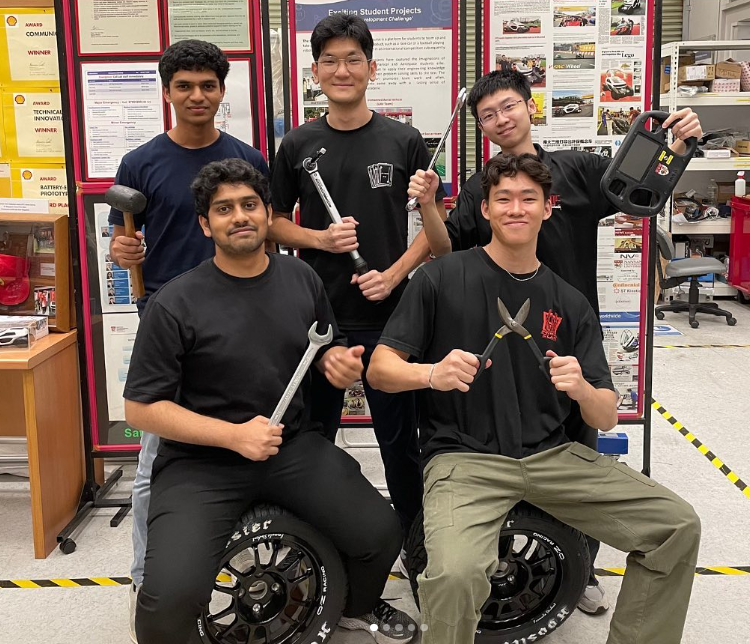 Freshman Shivam (top left) and the Vehicle Dynamics Team in 2023.
Watching how senior engineers operated was an education in itself.
They did not just build cars. They negotiated with sponsors under pressure, translated dense rulebooks into engineering requirements, and managed crises in the weeks before shipping the car overseas.
“What surprised me most was realising that Formula Student is not just a mechanical engineering project. It is like running a startup,” Shivam explained.
At Formula Student UK 2023, the team placed 29th in Design. The result reinforced a lesson Shivam would never forget: building a fast car is only half the battle. Communicating why you built it that way is the other half.
The Most Dangerous Component on the Car
In Year 2, Shivam was promoted to Head of Powertrain and Energy Systems and was responsible for the most safety-critical assignment on the entire vehicle.
The high-voltage lithium-polymer battery system that powers the car is also its most technically complex and strictly regulated subsystem.
A failure during a race event is a safety emergency.
The weight of the assignment became clear immediately. The previous team’s battery had failed technical inspection, and the car had not raced at all.
Shivam admitted that he had never worked with battery systems before. "I had zero prior knowledge of battery design or high-voltage systems. The stakes were high. If I got this wrong, the car would not race."
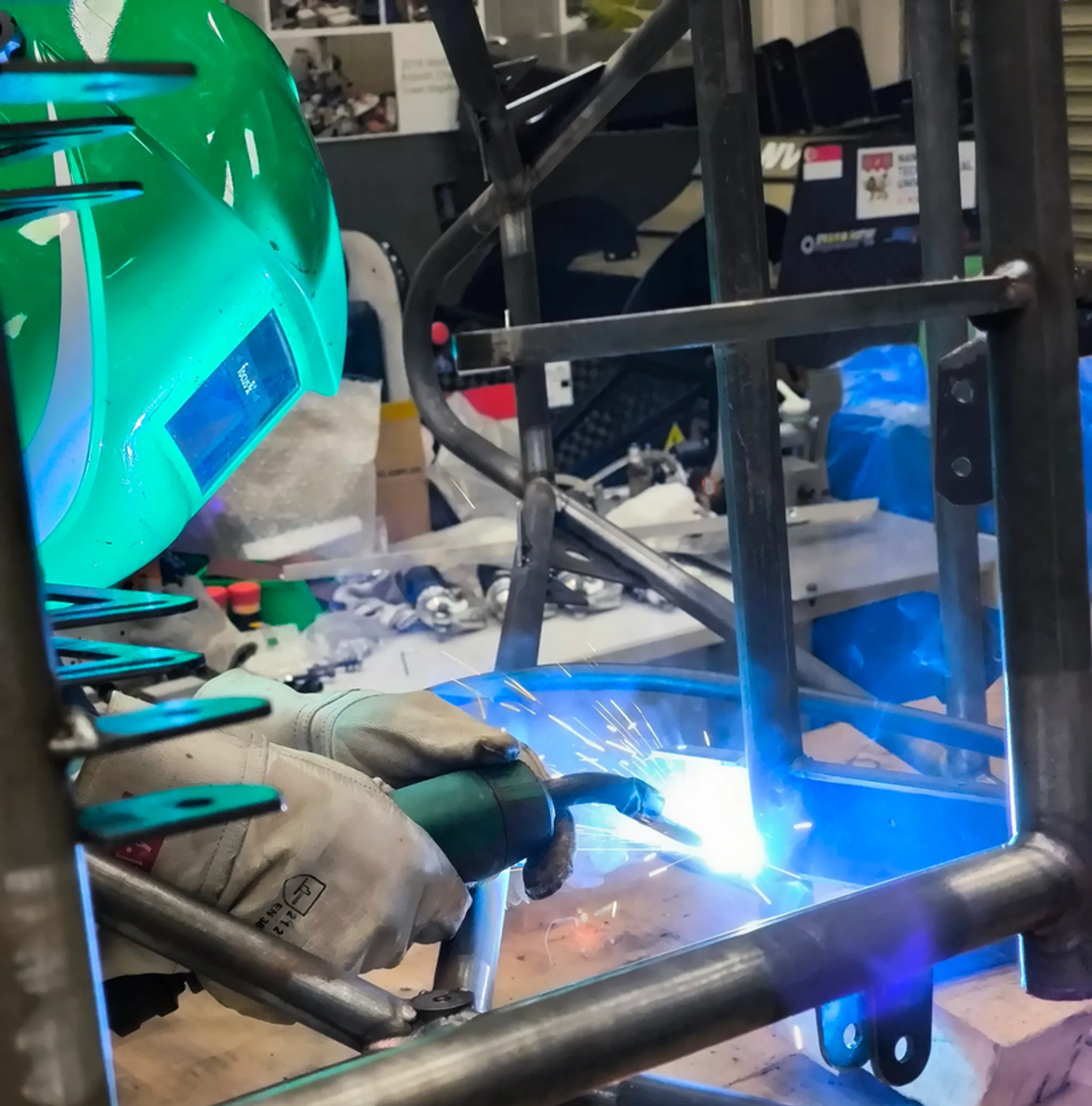 Shivam welding the chassis battery mounts for the car.
Research as an Engineering Tool
He could have been paralysed by the pressure. Instead, he got to work.
On his bus commute, Shivam read theses on electric vehicle battery design. During meals, he studied teardown analysis videos of Tesla and Rivian systems, examining every structural and thermal decision.
He then built a custom optimisation tool in Excel and VBA, which evaluated hundreds of battery configurations against electrical, mass, and Formula Student regulatory constraints simultaneously, eliminating all guesswork from the design process.
The battery also had to withstand crash forces more than four times what a fighter jet pilot experiences.
Shivam ran rigorous computer simulations to validate every structural mount, laying the groundwork for the design decisions that would follow.
Revision 1: Building the foundation
The first battery design had one clear goal: pass inspection at Formula Student China.
Shivam led the innovative design of the high-voltage accumulator, with a focus on modularity for streamlined manufacturing, ease of maintenance, and rapid in-house assembly.
The design achieved a 50 kg weight reduction compared to previous designs. By redesigning the battery mounts for enhanced structural stability and strategically modifying materials, the team also attained a 50% cost reduction.
Every decision was documented meticulously, because the team knew this was only the beginning.
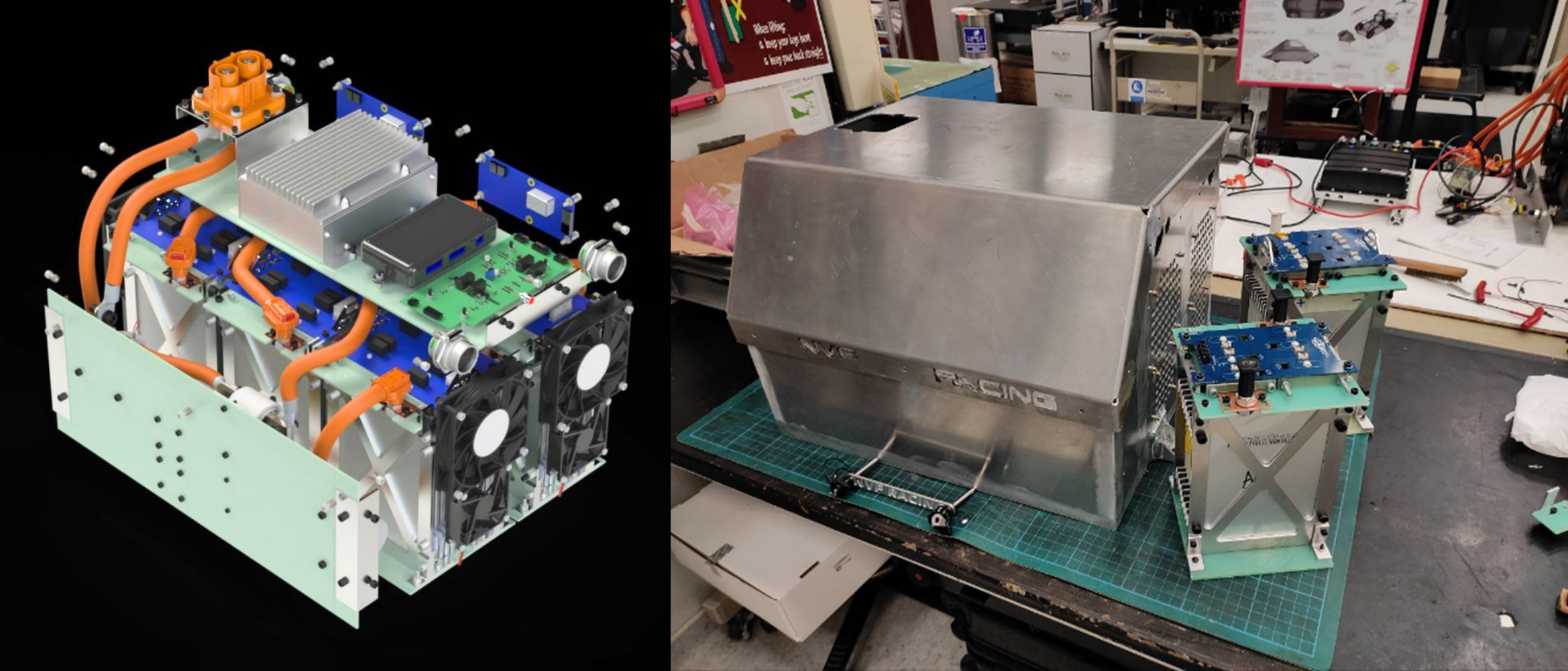 The Revision 1 battery built for Formula Student China 2024.
The Day the Car Would Not Move
Months of research, simulation, and manufacturing had led to this moment. The battery was in the car. It was time to bring it to life.
The motor did not respond. The car did not move.
A single wiring mistake deep within the battery’s control system had quietly brought the entire car to a halt. One error, cascading through everything.
“This was a significant setback. We spent late nights, weekends, and holiday breaks systematically troubleshooting as a team,” Shivam recounted.
When the battery finally powered the car and it moved under its own power for the very first time, the team stood in silence.
Something that had begun as a blank CAD screen and a stack of research papers was now a real, working machine.
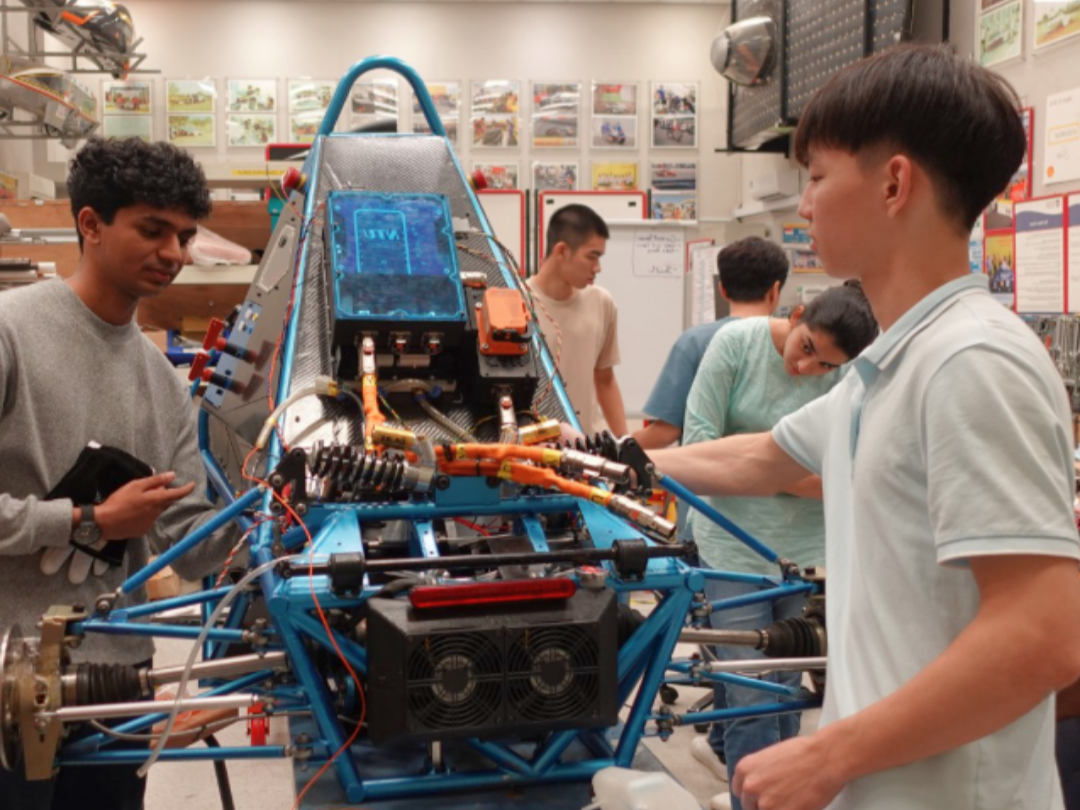 Shivam (most left) and the powertrain team working on the car.
This Time, It Would Be Different
At Formula Student China in October 2024, the NTU Formula Racing team arrived with something to prove. A year of late nights, wiring errors, and relentless troubleshooting had led to this moment.
The accumulator, designed and built by students who had never worked with high-voltage systems before, cleared every safety inspection.
For a team whose battery had failed inspection the year before, it was more than a milestone. It was a statement.
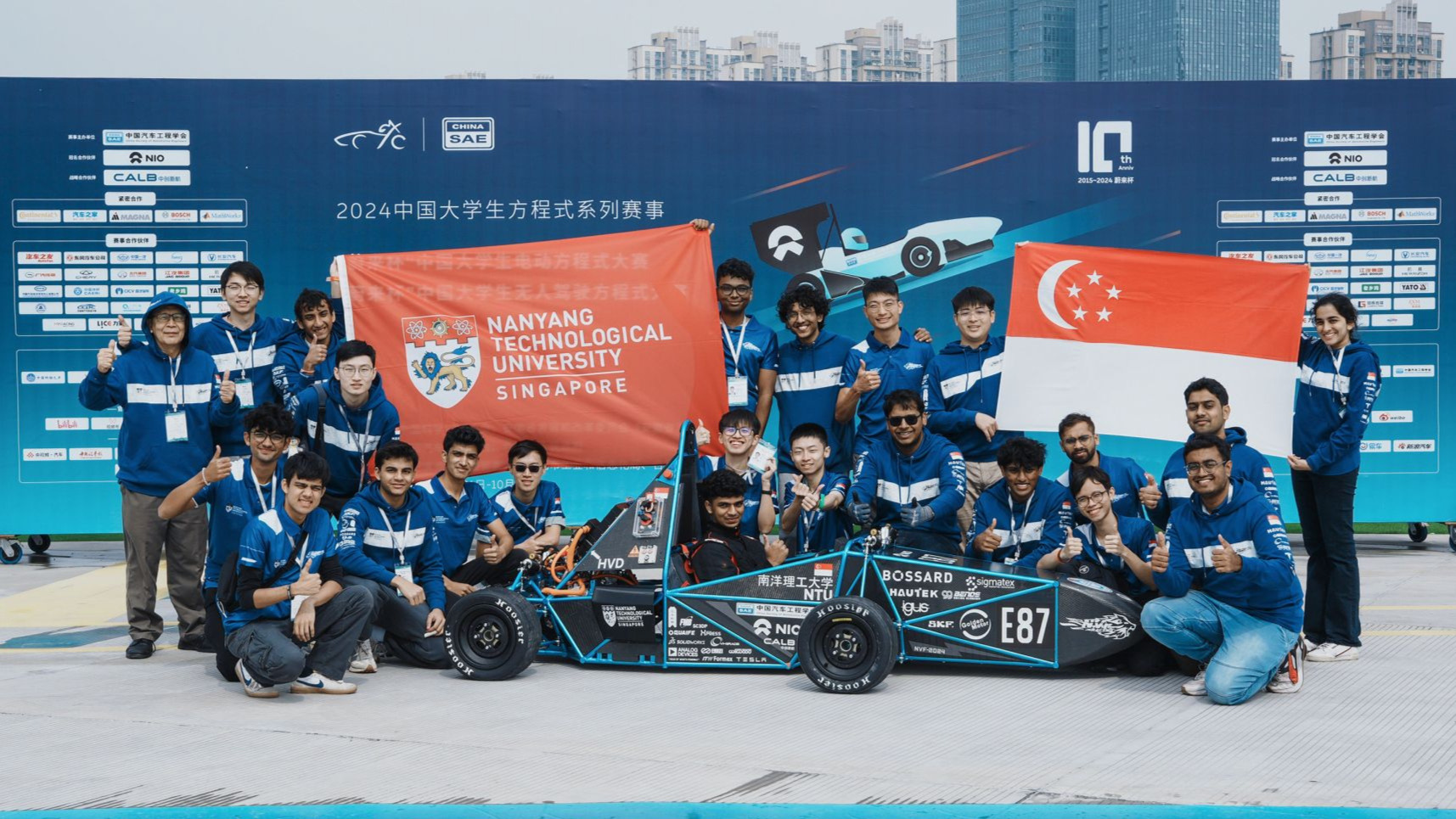 Shivam (in car) with the NTU Formula Racing team at Formula Student China 2024.
Revision 2: Pushing Further
After returning from China, the team was on a tight timeline before Formula Student UK. Most teams would have made minor adjustments. Shivam’s team completely revamped the battery design and made it even more robust in just three months.
What followed was extraordinary. The team boosted performance and optimised the structure, achieving a 29% weight reduction and a 77% increase in energy capacity.
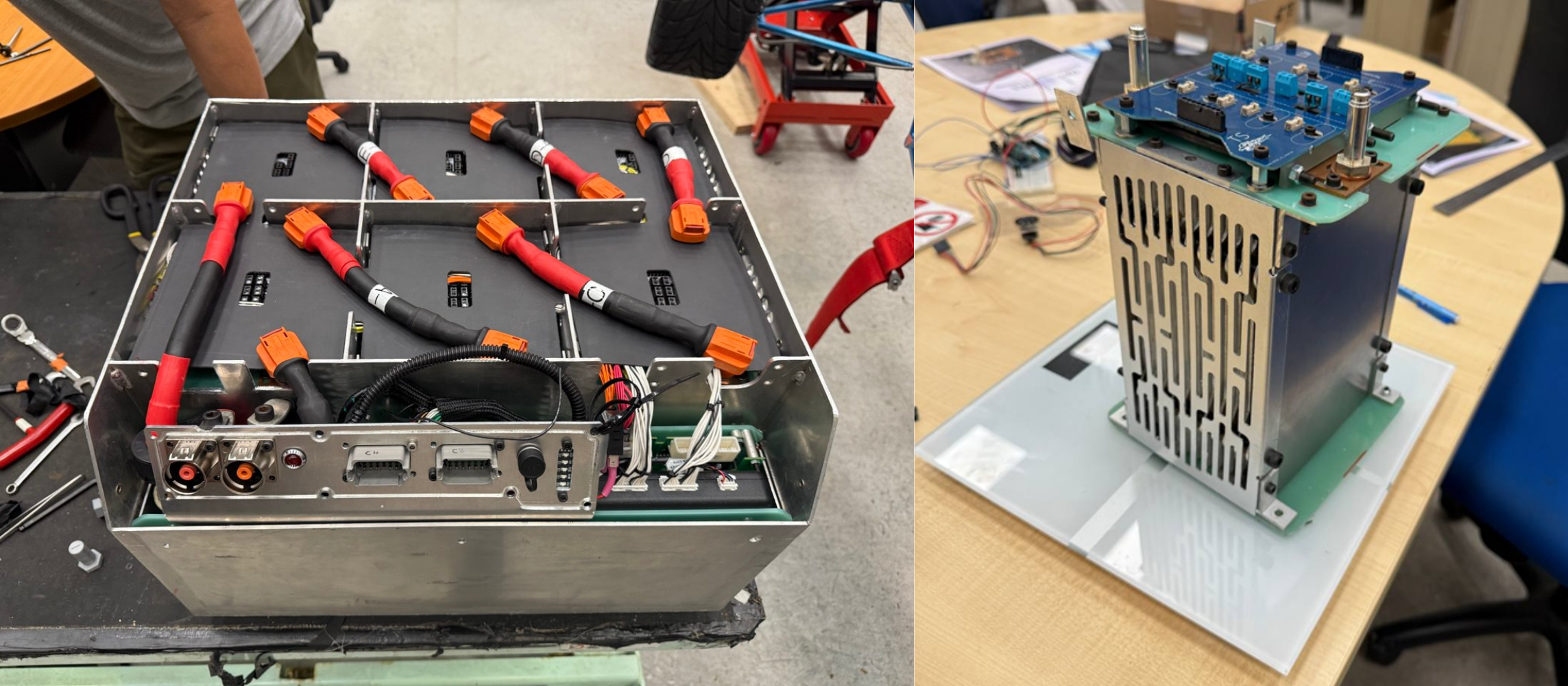 The Revision 2 battery with revamped design built for Formula Student UK 2025.
Eight Out of Sixty
At Silverstone, the car was reassembled on site and rolled into the scrutineering bay.
For Shivam, the wait was the hardest part. The team had run every simulation, checked every connection, and documented every decision. Now it was in the hands of the judges.
When the Revision 2 battery cleared inspection without hesitation, he could barely process it. Around him, teams from universities across the world were still struggling.
Only 8 out of 60 competing teams passed battery inspection. NTU Formula Racing was one of them.
The judges were visibly impressed.
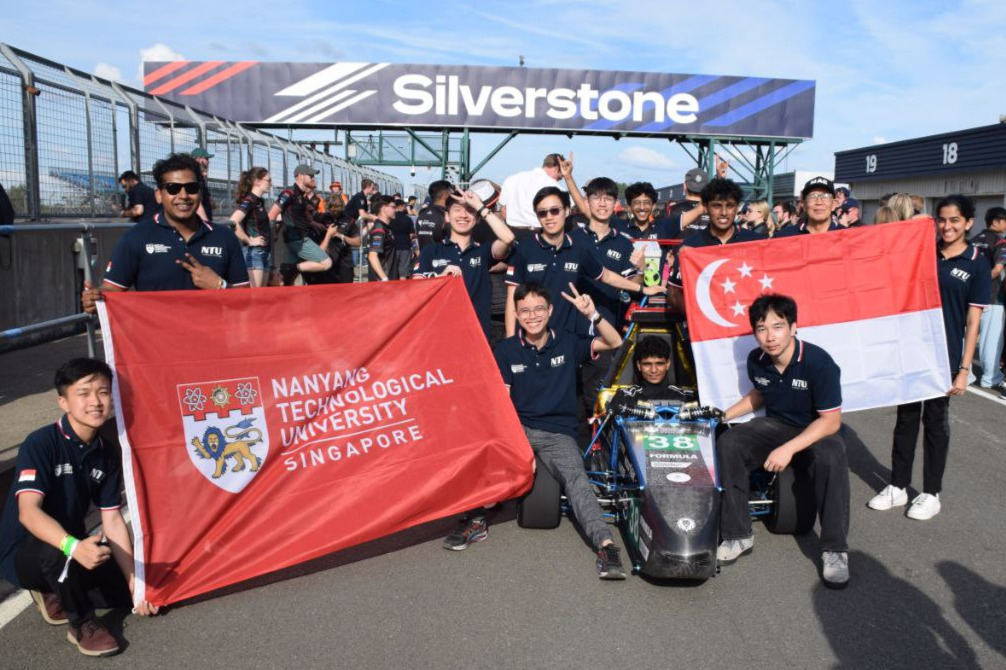 Shivam (in car) with the NTU Formula Racing team at Formula Student UK 2025, Silverstone Circuit.
The broader results told the same story: 19th out of 59 teams in Design, 9th out of 58 in Cost, and 26th out of 106 in the Business event.
Against some of the most established Formula Student programmes in the world, NTU Formula Racing had set a new benchmark.
Leading from the Workshop Floor
Since Year 3, Shivam had served as Team Lead, during the team’s preparation for Formula Student China and Formula Student UK.
He oversaw coordination across nine subsystem teams, managing sponsor relationships, and ensuring that the knowledge built up over years would not be lost when he graduated.
His style of leadership surprised people. He was not the kind of lead who directed from behind a desk.
“Leading from the front means the team sees that no task is beneath the Team Lead. When you are elbow-deep in epoxy at midnight alongside your teammates, that builds a culture of shared ownership that no project management tool can replicate,” Shivam reflected.
He credits his growth to mentors who believed in him, particularly Yash Chandra Shekar, who co-designed the battery with him and stayed on as a team advisor.
Above all, he credits Emeritus Professor Ng Heong Wah, the Faculty Advisor who guided him through three years of increasingly complex engineering work.
“He pushed me harder than anyone, held me to the highest standards, and never accepted anything less than my best,” Shivam said with gratitude. “I would not be the engineer I am today without Professor Ng.”
.png?sfvrsn=dbdebff0_2 "IMG_6589 (1)") From left to right: Prof Ng Heong Wah, Shivam, Ivan Foo and Yash Shekar.
From left to right: Prof Ng Heong Wah, Shivam, Ivan Foo and Yash Shekar.
Leaving His Legacy
It is Shivam's final year. The car is built. The competitions are done.
What he leaves behind is more than a podium result. The team now has a validated carbon fibre battery casing, a custom design optimisation tool, a full thermal simulation pipeline, and a generation of engineers who know how to design a high-voltage battery system from scratch.
His final contribution to the team was just completed in May 2026.
The battery's aluminium enclosure was replaced with a Carbon Fiber Reinforced Polymer (CFRP) composite structure, a design that very few Formula Student teams in the world have attempted.
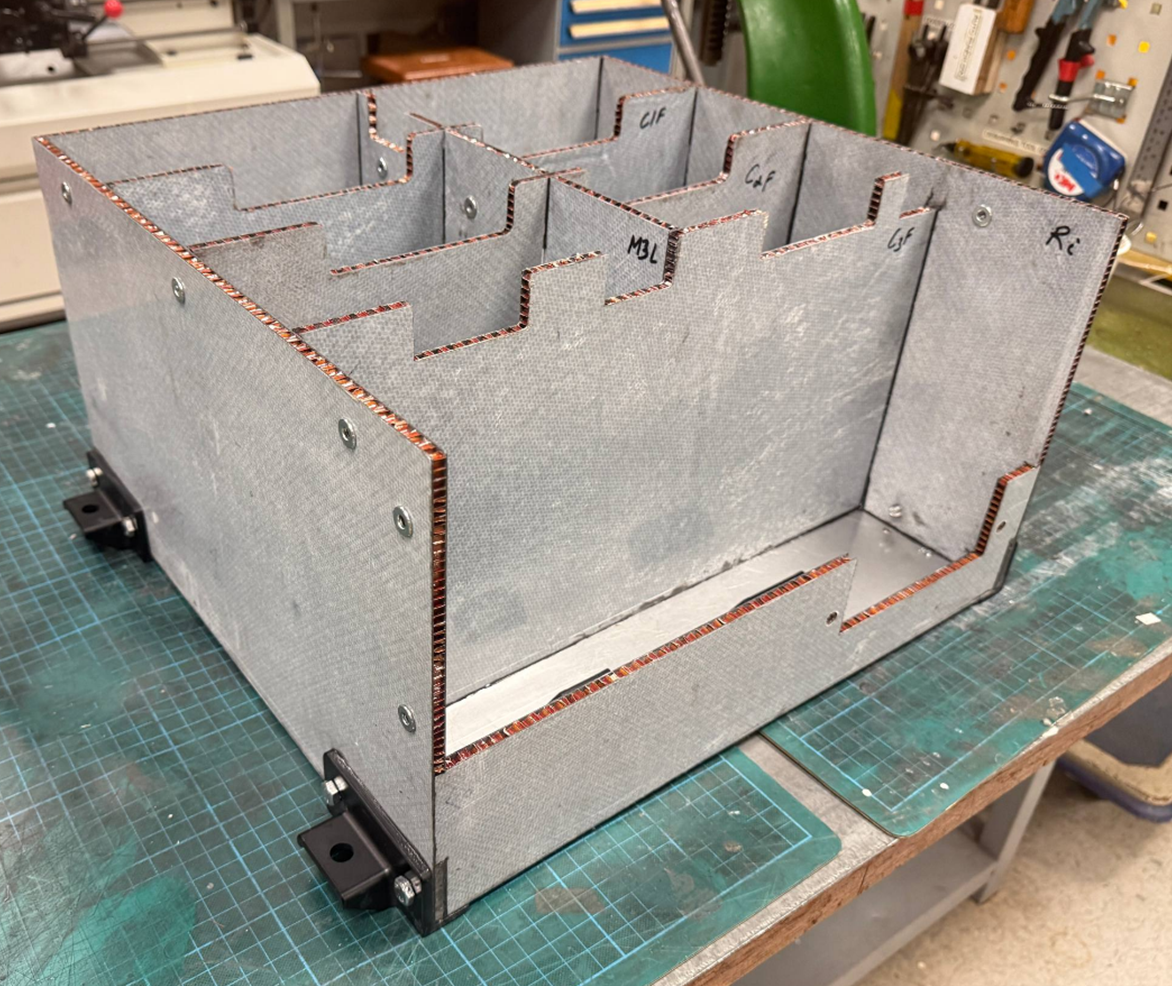 The new carbon fibre battery case.
-vs-old-(right)-battery.png?sfvrsn=84a7399d_1 "New (left) vs Old (right) battery") The new case (left) weighs just 7kg compared to the old case (right) at 14kg, a 50% weight reduction.
The new case (left) weighs just 7kg compared to the old case (right) at 14kg, a 50% weight reduction.
The idea had come from Shivam himself. He presented the case to the team, they backed it, and together they built it by hand in the NTU MAE Innovation Lab.
“My hope is that this inspires the juniors coming after us to push even further, because the ceiling is only as high as you are willing to reach,” Shivam shared.
Four years on the workshop floor taught Shivam something no lecture hall can. Real engineering, the kind where you own the problem completely and solve it under pressure, builds a different kind of engineer altogether.
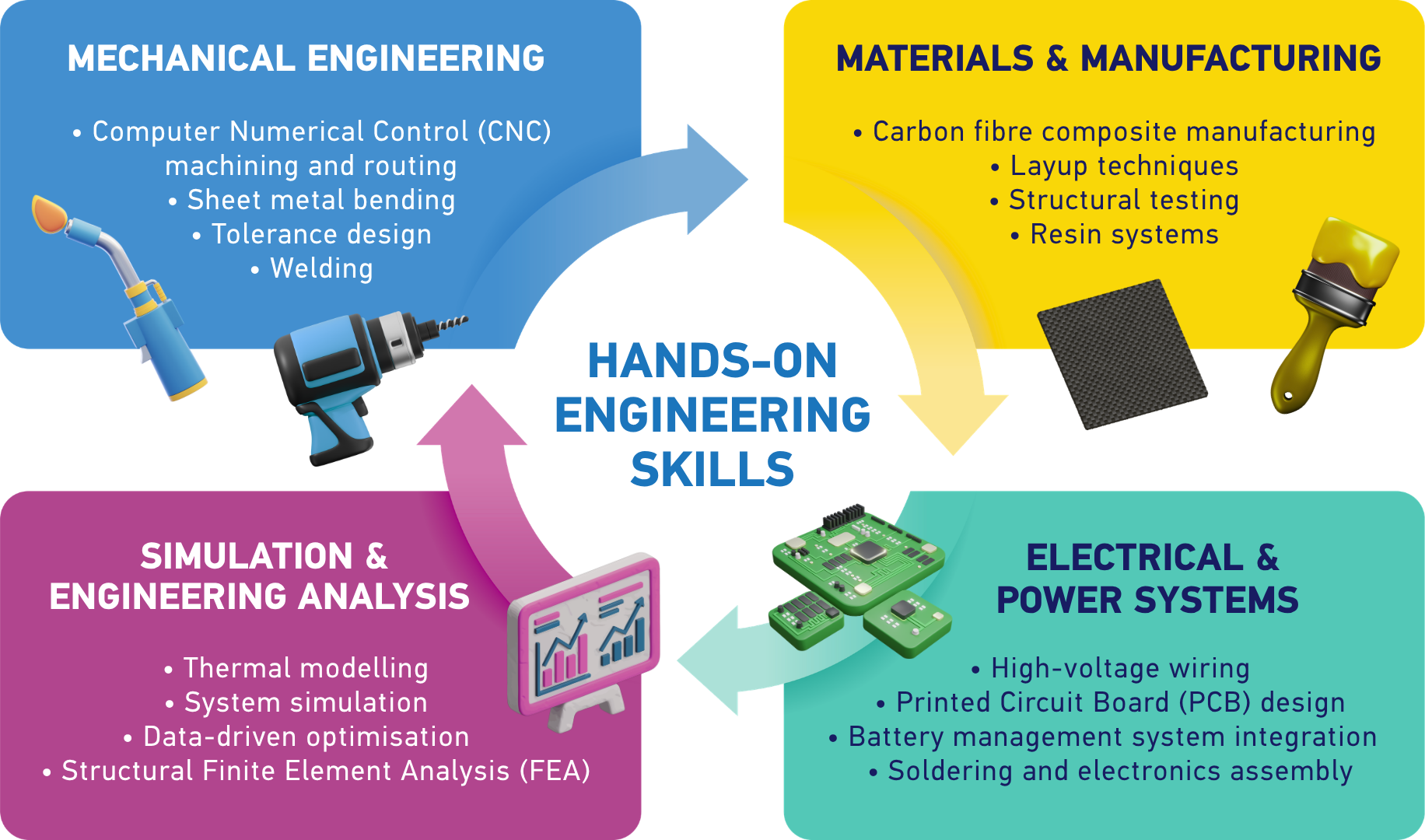
Four years. Four skill domains. These are skills beyond textbooks that NTU Formula Racing built in their members.
About NTU Formula RacingNTU’s Formula Student team was set up in 2020 in collaboration with the Nanyang Venture, NTU’s premier team for eco-efficiency vehicles. Starting with just 25 members in 2023, the team has grown to around 70 members in 2026. The team consists of students from School of Mechanical and Aerospace Engineering (MAE), School of Electrical and Electronic Engineering (EEE), School of Computer Science and Engineering (SCSE), School of Art Design and Media (SADM) and Nanyang Business School (NBS). As the first Formula Student team from Singapore and Southeast Asia to compete at Formula Student UK, NTU Formula Racing carries the NTU name onto the world stage of engineering competition. |
About Shivam Selvam PanickerShivam is a Mechanical Engineering graduate, Class of 2026, at NTU’s School of Mechanical and Aerospace Engineering and served as the Team Lead for NTU Formula Racing. He was the only undergraduate selected for NTU’s Abu Dhabi Autonomous Racing League 2024 team. Beyond Formula Racing, he contributed to advanced energy system modelling as a research intern at the Energy Research Institute at NTU (ERI@N). |
By Regine Ng and Karen Chai, NTU MAE Communications