Engineering for people: Chua Li Ting’s design driven path
As a Year 4 Mechanical Engineering undergraduate at NTU’s School of Mechanical and Aerospace Engineering (MAE), Chua Li Ting spent part of her semester working on a design project that would take her beyond the classroom and into an industry setting overseas.
Through MAE’s MPE module, Product Design MA4858, Li Ting took part in a collaboration with the Nagoya Institute of Technology (NITech) and Japanese automotive and technology company DENSO. The project brought together students from NTU and NITech to work on a shared design brief, with the winning team earning the opportunity to present their work in Japan.
Learning beyond borders
The module centres on understanding user needs and translating them into product ideas through a structured design process. For this round, DENSO set the theme: mobility in 2035 with micro energy harvesting.
Working in mixed teams across institutions, Li Ting and her teammates developed a semester long Emergency Response (ER) Drone project, which they later showcased at DENSO’s office in Japan.
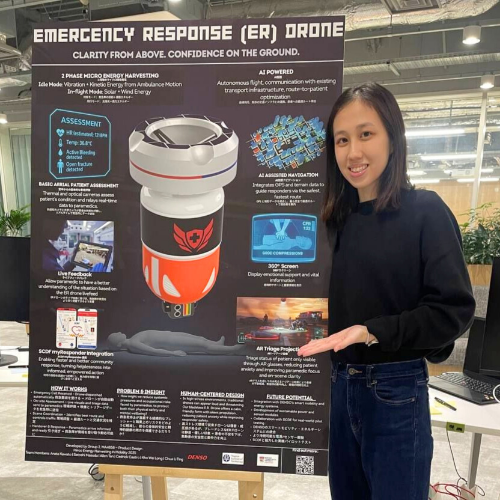 Li Ting with ER Drone Poster
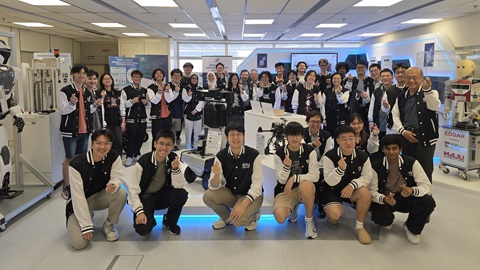
Visiting DENSO’s research facilities was a highlight for many students. As one of Japan’s leading automotive and technology companies, DENSO offered a glimpse into how large-scale research and development is carried out.
“We were exposed to AI, machine learning and advanced simulation systems,” Li Ting shares. “The experience deepened my appreciation for how research, innovation, and engineering come together in real world industrial applications.”
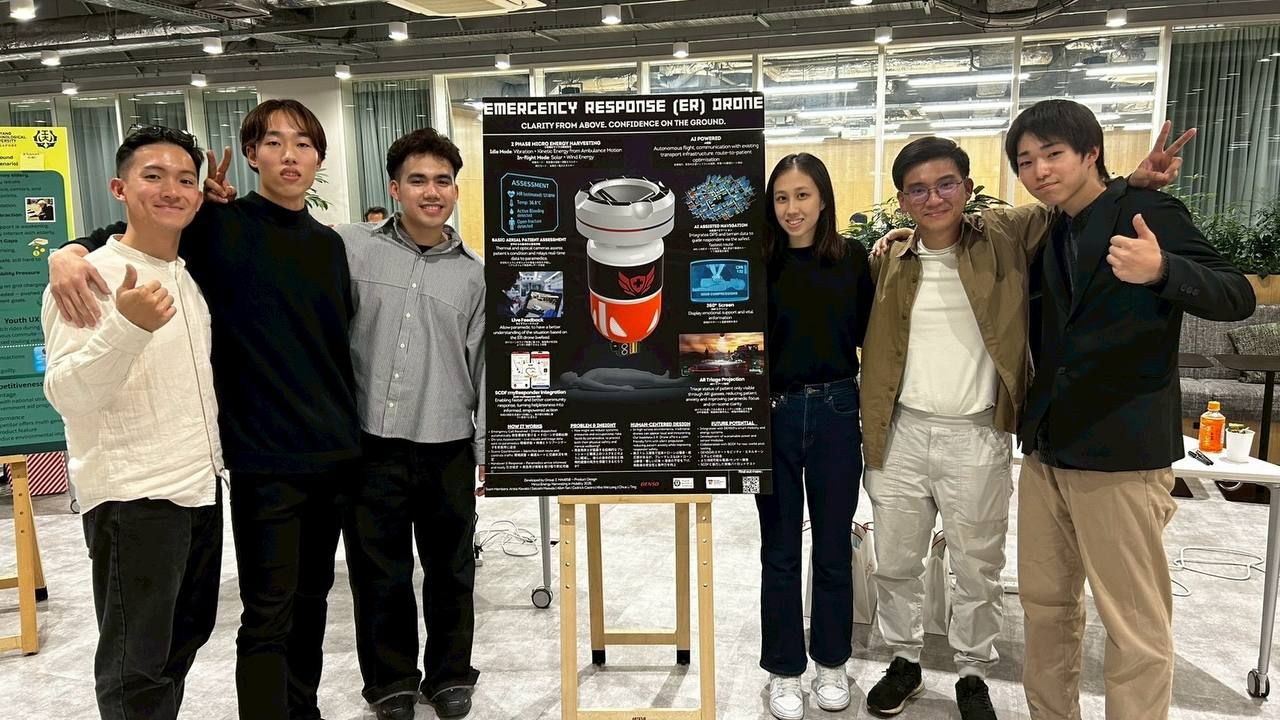 NTU and NITech Student Team
Reimagining emergency response
At the core of the project was the ER Drone, a concept designed to support paramedics responding to emergencies in unpredictable and high-risk environments.
“Our idea started from observing a gap in how technology supports frontline healthcare workers, especially paramedics,” Li Ting explains. “Much innovation focuses on clinical environments like hospitals, rather than the unpredictable and high-risk conditions paramedics face in the field.”
Instead of starting with a fixed solution, the team focused on understanding the challenges faced by first responders. They asked how technology could help reduce stress, support decision making and improve both physical and mental well-being during emergency situations.
With drone technologies already widely used across military, commercial and recreational settings, and ongoing research into safer designs such as bladeless drones, the team saw potential to rethink how drones might be used in emergency care. Their concept integrates AI driven functions that provide paramedics with real time situational information before and during arrival on site, helping them prepare more effectively.
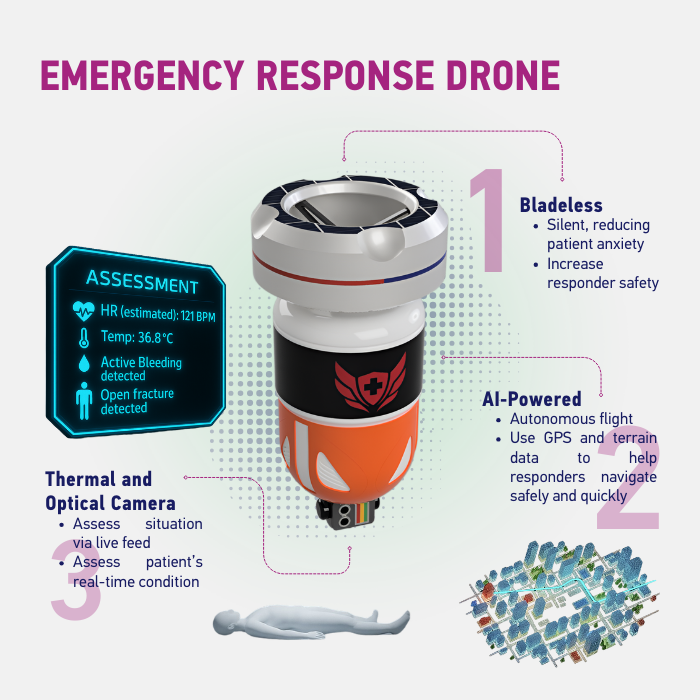 Emergency Response Drone Overview
“We challenged ourselves to think beyond current limitations and envision how intelligent, human centred technologies could support emergency responders in 2035 and beyond,” she says.
Engineering with empathy
For Li Ting, the experience — from classroom learning to the school trip to Japan — influenced how she thinks about engineering work.
“Engineering is not just about formulas and numbers,” she reflects. “It is also about empathy – to understand how people think, feel and experience the world.”
“By stepping into users’ shoes to understand their challenges and pain points, we can design solutions that are not only functional, but meaningful and impactful,” she adds.
Li Ting initially joined the design stream because she enjoyed hands on work. Through studio-based modules and guidance from faculty such as Associate Professor Leong Kah Fai and Professor Chen Chun Hsien, she began to see design as more than building or testing prototypes.
“Design requires a deep understanding of users, context and impact,” she says. “This insight changed how I see engineering.”
Immersing in culture
Outside of project work, Li Ting also spent time exploring Nagoya with fellow students. Group visits to Nagoya Castle and Mirai Tower offered opportunities to bond across cultures.
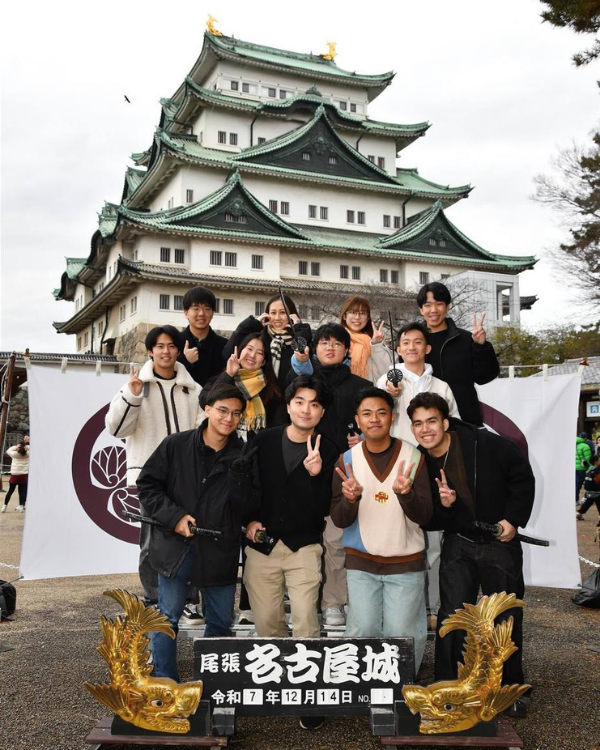 Students at Nagoya Castle
She also took part in a ceramic painting activity, where she was struck by the level of craftsmanship involved. One experience that stood out was a furoshiki workshop, where she learned traditional Japanese cloth wrapping techniques used for gifts and ceremonies.
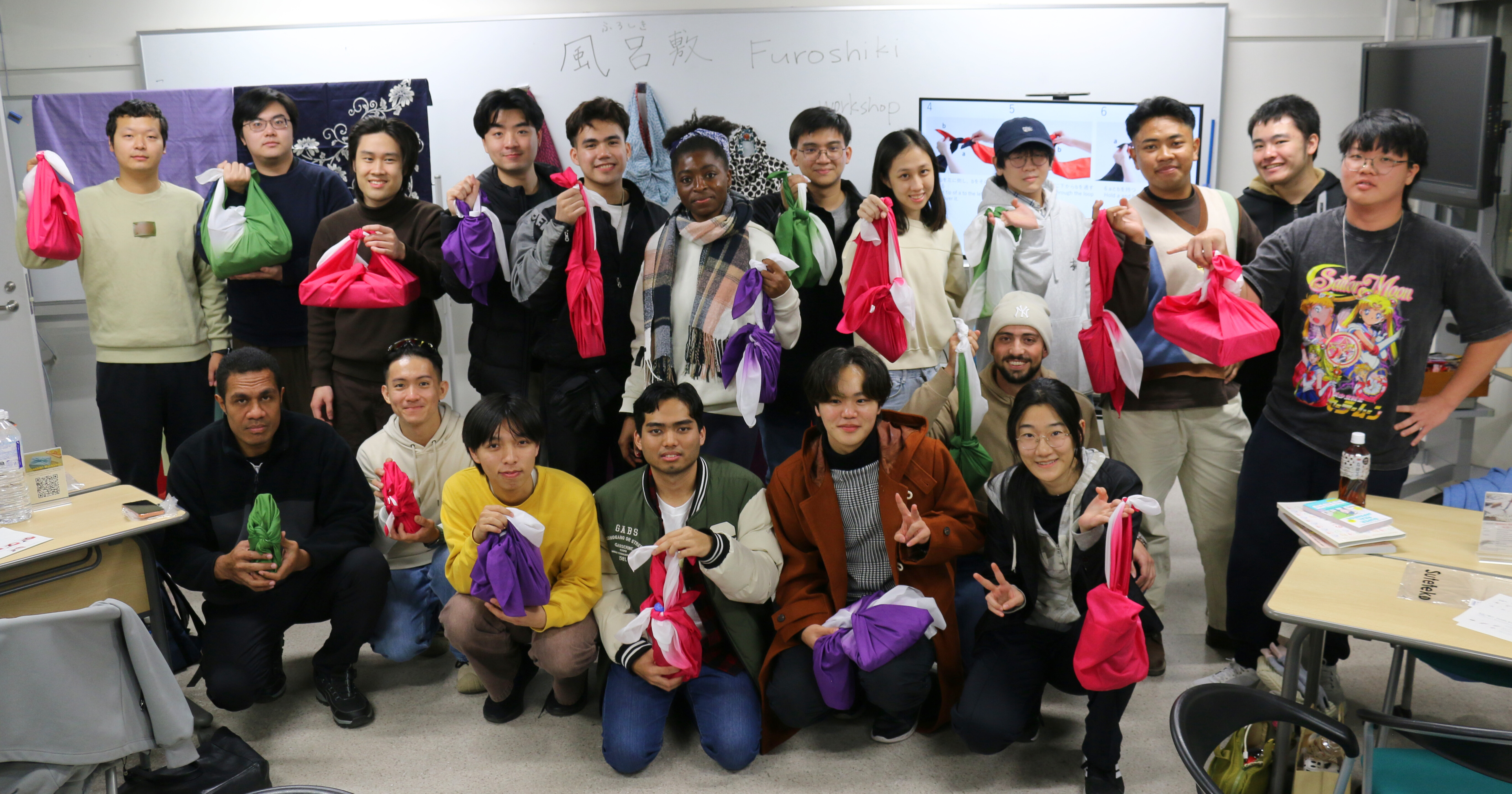 Students at Furoshiki Workshop
“As someone who usually relies on wrapping paper, this gave me a new perspective on sustainability and tradition,” she says. “It was meaningful to not only learn about culture but experience it firsthand.”
From cultural exchange in Japan to reimagining emergency response through design, Li Ting’s journey reflects a new generation of NTU engineers who are globally minded, empathetic and driven to create technology that serves people first.
By Regine Ng and Karen Chai, NTU MAE Communications