Inaugural Global Asia Research Centre (GARC) Seminar by Dr DB Subedi
The newly launched Global Asia Research Centre inaugurated its Event Series on 22 January 2026 with a seminar by Dr DB Subedi, Senior Lecturer of Political Science and International Studies at the University of Queensland.
With research interests are in peace and conflict studies, religion and politics, and populism and nationalism in the Asia Pacific region, Dr Subedi examines the contested discourses surrounding peace and peacebuilding in Asia, with particular attention to the emerging ‘illiberal peace turn’ and its broader global implications. Drawing on experiences from South and Southeast Asia, Dr Subedi explores how peacebuilding practices are being reimagined in response to two converging dynamics.
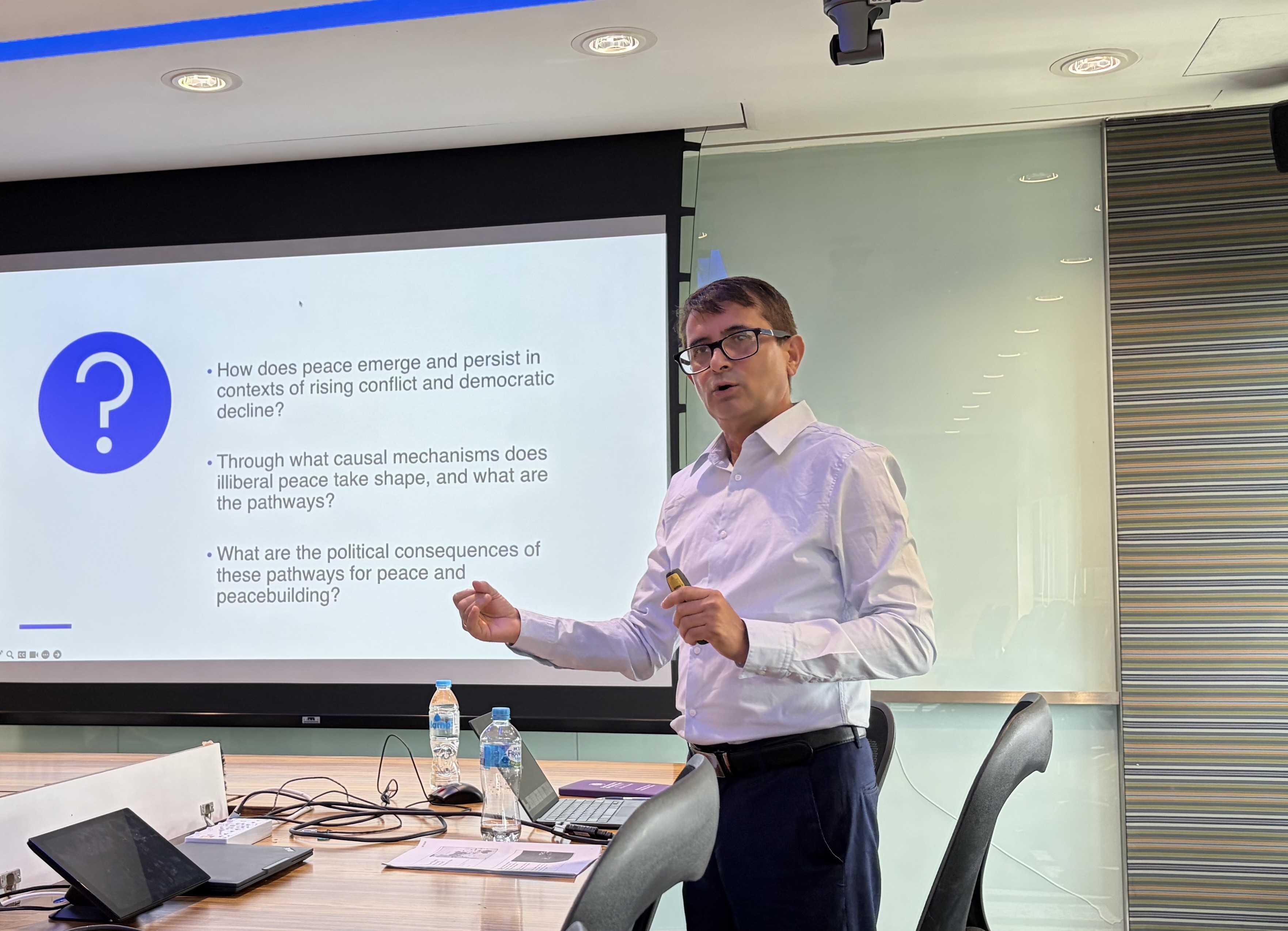
First, the region continues to grapple with persistent ethnic, identity, and liberation conflicts that challenge state authority and legitimacy from below. Second, liberal peacebuilding frameworks, once dominant in shaping conflict transformation, have come under increasing critique for their lack of cultural and contextual sensitivity amid a wider global retreat of liberal norms. Attempts to reconcile liberal peace with local realities through “hybrid peace” have often entrenched authoritarian power and state dominance, sometimes even exacerbating conflicts.
Against this backdrop, Dr Subedi shows how a new form of peacebuilding is emerging across the Asia-Pacific. Instead of a focus on peacebuilding through an emphasis on liberal democracy, justice, and freedom, peacebuilding is now geared towards regime security and stability as the end goal. The Asia-Pacific region provides a suitable backdrop to observe illiberal peacebuilding in action, as it is a region where protracted subnational conflicts persist and the peacebuilding strategies that have been adopted rely on domestic-based management, rather than through international or multinational efforts that rely on peacekeeping efforts. As global fatigue regarding liberal peace and peacekeeping efforts has set in, especially among Western countries, elite actors in the Global South have thus moved to prioritize order and security over liberty and social inclusion.
The type of conflict, the extent of state capacity, and the regional and/or international context play a huge role in determining the pathways for illiberal peacebuilding to take shape. As Dr Subedi argues, there are four possible ideal-type pathways for illiberal peacebuilding - liberal-hybrid mutation, authoritarian adaptation, negotiated containment, and post-victory consolidation. The stabilization of each conflict and the illiberal peacebuilding process that follows can emerge through multiple pathways, as they are not isolated or distinct from one another. In this illiberal peacebuilding model, regime type (i.e. democracy versus autocracy) does not matter much. As the overarching goal has more to do with the stabilization of conflict via containment, coercion, or substitution to guarantee order and regime survival, genuine conflict resolution becomes less of a priority. Illiberal peacebuilding faces resistance from below and competitive pressures from above. While it represents a significant departure from the liberal ideas of peace, it remains far from offering a coherent alternative to liberal–hybrid peacebuilding.
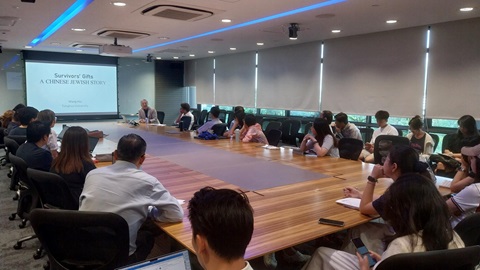
Following Dr Subedi’s presentation, the floor opened to a lively discussion as attendees made critical connections between Dr Subedi’s research and their own backgrounds and experiences, with many possibilities for future collaborations. Global Asia Research Centre aims to be a regional hub for scholarship on Asia and its place in global politics, economics, governance, and social change.
Stay tuned for more seminars, workshops, and conferences throughout the year in the Global Asia Research Centre Event Series.
/assoc-prof-lin-jingxia_websitebanner.tmb-listing.png?sfvrsn=88a9cef8_1)