Global Asia Research Centre (GARC) Seminar by Professor Bei Wu
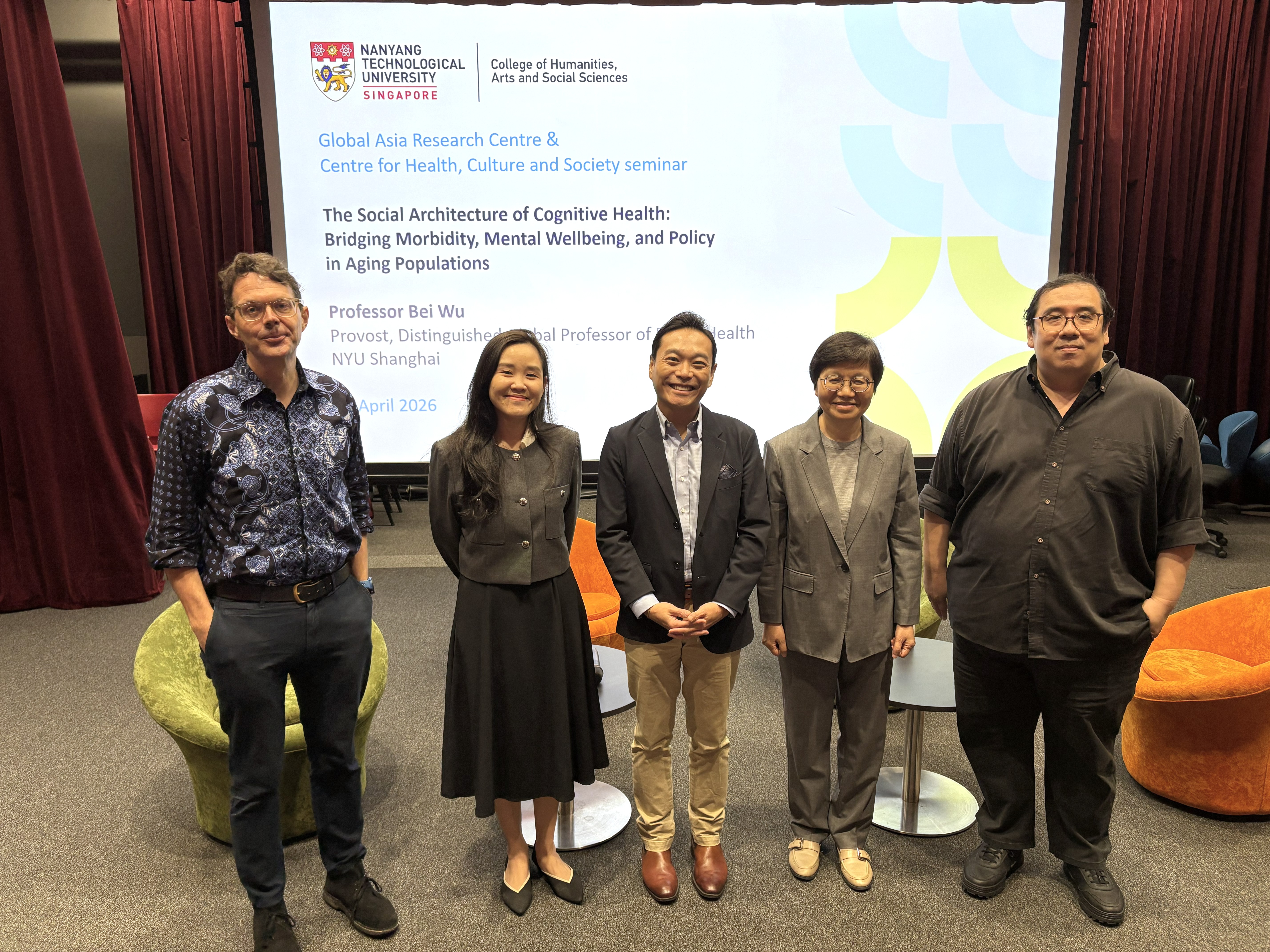
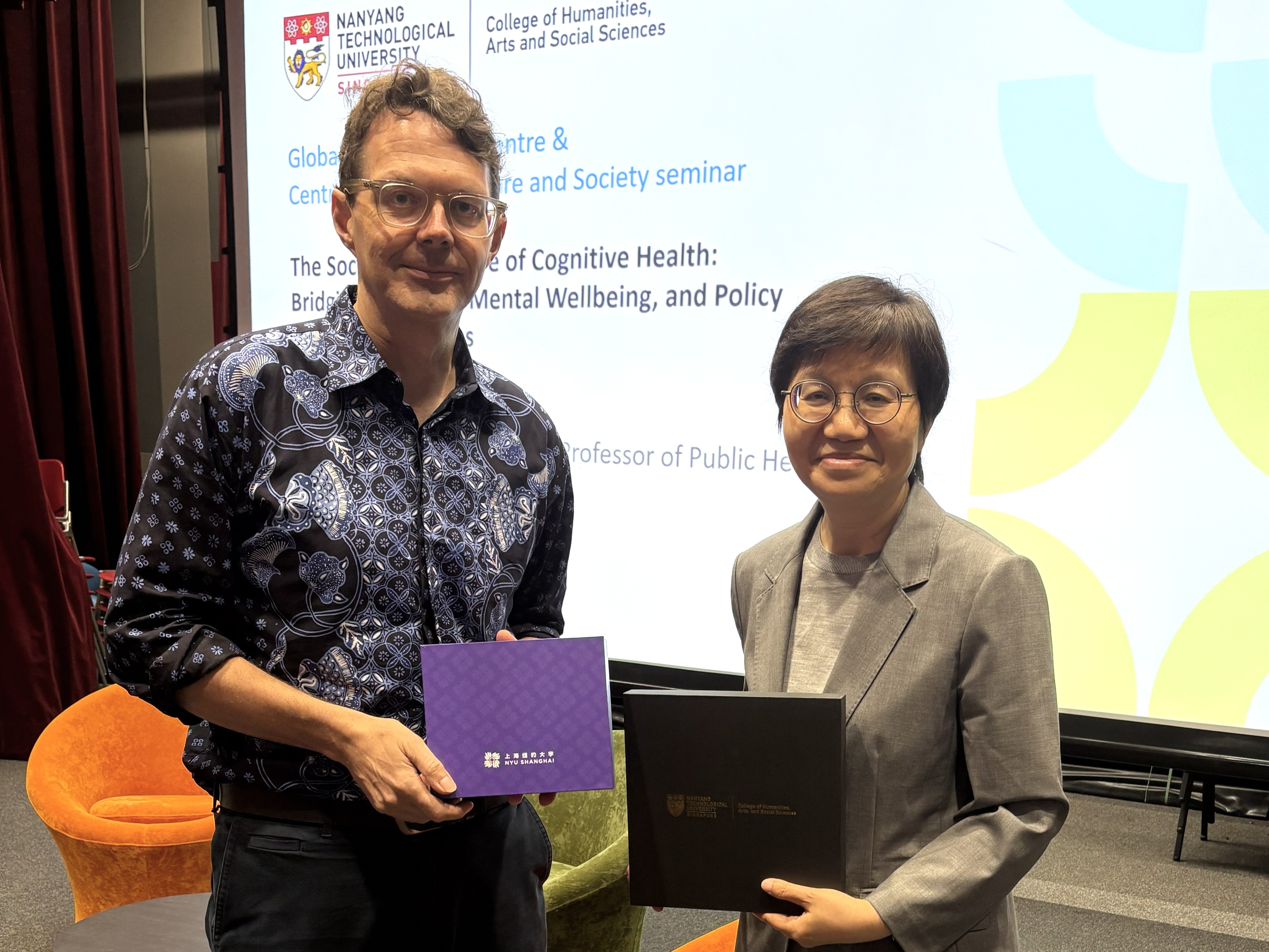
On Friday, 10 April 2026, NTU College of Humanities, Arts and Social Sciences’ (CoHASS’) two new research centres, Centre for Health, Culture and Society (CHCS) and Global Asia Research Centre (GARC), co-hosted Professor Bei Wu, Provost and Distinguished Global Professor of Public Health at NYU Shanghai. An internationally recognized leader in gerontology, Professor Wu’s career is defined by her multidisciplinary approach to global health and aging. With a prolific body of scholarship exceeding 800 peer-reviewed publications, her research spans the critical intersections of dementia caregiving, geriatric oral health, long-term care policy, and immigrant health.
Professor Bei Wu opened her talk on The Social Architecture of Cognitive Health: Bridging Morbidity, Mental Wellbeing, and Policy in Aging Populations by framing dementia as one of the defining public health challenges of the twenty-first century. With over 50 million people living with dementia worldwide—60% of them in low- and middle-income countries—and China alone recording more than 9 million cases, the scale of the crisis poses a critical public health challenge. Against this backdrop, Professor Wu introduced the concept of the social architecture of cognitive health: “the intentional orchestration of social, cultural, environmental, and policy systems to safeguard cognitive function and cultivate mental well-being across the life course”. She argued that this framework transcends individual clinical interventions by addressing the structural foundations of cognitive resilience, organised around four pillars: (i) social connectivity; (ii) environmental optimisation; (iii) economic and educational access; and (iv) integrated policy.
Professor Wu detailed her longitudinal research that illuminated the “oral-systemic-brain axis”: a pathway through which oral health directly influences neurodegeneration. Her 2023 article, drawing on 12 years of data from the nationally representative Health and Retirement Study, demonstrated that older adults who experienced both diabetes mellitus and edentulism (complete tooth loss) faced a significantly accelerated rate of cognitive decline, particularly among those aged 65–74. A subsequent study examined how intergenerational social mobility interacts with edentulism to shape cognitive ageing. The findings supported both an accumulation model—whereby lifelong socioeconomic advantage builds cognitive reserve that buffers against health shocks such as tooth loss—and a sensitive period model, with the strongest effects observed in mid-life and early old age, underscoring these decades as a critical window for intervention.
Professor Wu’s concluded that “sustained socioeconomic advantage throughout life can effectively buffer against the negative cognitive impacts of edentulism, particularly in early old age” and followed up with implications for practice and policy. For practice, her research demonstrates that integrating oral health screenings into mid-life primary care visits can meaningfully reduce a key risk factor for dementia. We must also be especially vigilant with individuals who have histories of socioeconomic disadvantage because they carry a dual burden of risk. She highlighted that policies promoting lifelong educational and economic stability are, in effect, cognitive health policies, and called for expanded access to affordable dental care as a strategy to reduce a key risk factor. To truly tackle the link between oral health and cognitive ageing, we need integrated aging policies that align healthcare, oral health, and social support. The overarching message was clear: moving toward a ‘healthspan’ rather than lifespan model requires building social environments that function as biological buffers, making neighbourhood cohesion, equitable access, and integrated care not merely desirable, but essential.
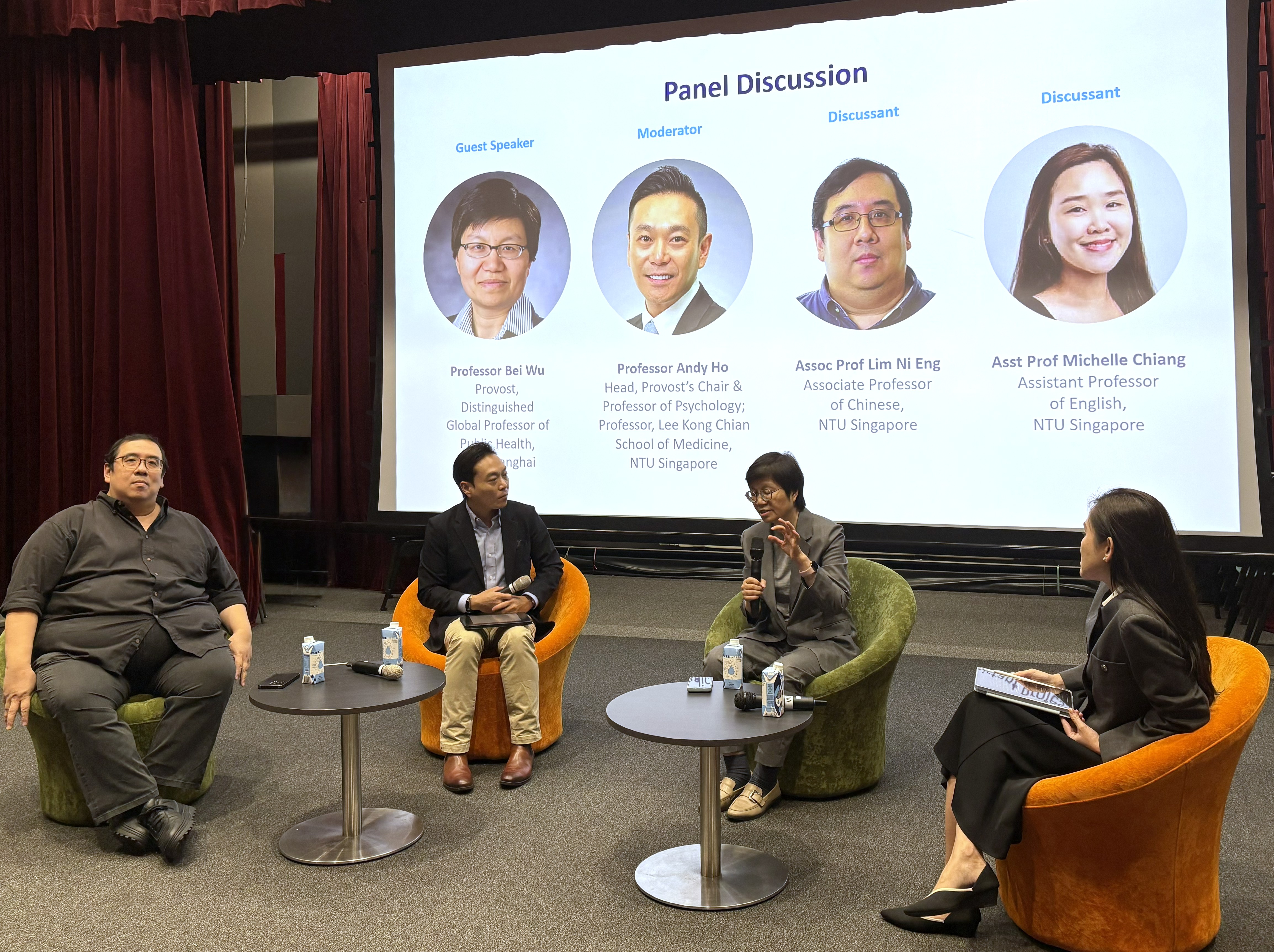
Professor Wu’s seminar was followed by a panel discussion, moderated by Professor Andy Ho, with discussants Assoc Prof Lim Ni Eng and Asst Prof Michelle Chiang.
The panel discussion centred on rethinking healthy ageing through a holistic, life‑course lens that goes beyond biomedical models. Distinguished guest speaker Professor Bei Wu emphasised that prevention must begin early, highlighting strong evidence that lifestyle factors—such as physical activity, nutrition, oral health, social engagement, and neighbourhood environments—play a powerful role in shaping cognitive and overall health in later life. She underscored the need for multi‑level approaches involving individuals, communities, and policy, arguing that behaviours are more effectively changed through tailored, context‑sensitive interventions rather than one‑size‑fits‑all solutions. The discussion also stressed shifting care beyond hospitals into communities, strengthening neighbourhood cohesion, and recognising caregiving and social support as central pillars of healthy longevity.
As moderator, Professor Andy Ho played a pivotal role in shaping a cohesive and reflective discussion by skilfully guiding the panel across clinical, social, and humanistic dimensions of healthy ageing. He framed key questions that connected individual behaviour change with broader policy and community contexts, while consistently reinforcing a holistic understanding of health that integrates physical, mental, social, and environmental factors. Throughout the session, he actively synthesised speakers’ perspectives, drew insightful links between research evidence and real‑world practice in Singapore, and enriched the dialogue with examples from psychology, healthcare delivery, and community initiatives.
Asst Prof Michelle Chiang (SoH) contributed a humanities‑informed perspective, focusing on the power of narrative, storytelling, and attentive listening in promoting behavioural change and culturally meaningful interventions. She reframed dementia and ageing as outcomes shaped by accumulated social, economic, and relational experiences across the life course. Through narrative spaces—such as reminiscence workshops using food, photographs, music, or shared conversations—older adults can be recognised as individuals rather than a homogeneous group, fostering dignity, visibility, and social connection.
Associate Professor Lim Ni Eng (SoH) brought a clinical and sociological lens to the discussion, highlighting systemic constraints faced by healthcare professionals, particularly short consultation times and biomedical training that marginalises social determinants of health. He argued that meaningful attention to patients’ lived contexts must begin with medical education reform and a clearer articulation of clinicians’ roles beyond diagnosis.
The audience Q&A deepened the discussion by raising critical questions about why social determinants of health remain undervalued, how authority and trust shape health messaging, and how family and couple‑level dynamics influence health behaviours. Speakers responded by noting that lifestyle change is inherently difficult, but also more sustainable when interventions engage families, caregivers, and peers as partners. Discussions also addressed the role of technology and AI in healthcare, with consensus that while digital tools can enhance literacy and efficiency, they cannot replace human compassion, judgment, or relational care.
The session concluded with a shared call to ground research, policy, and interventions in lived experience—by listening to communities, empowering caregivers, and designing spaces and systems that support meaningful social interaction as the foundation of healthy ageing.
/ug-town-hall-(header-pic)_updated1.tmb-listing.png?sfvrsn=a0936bc_1)
/58.tmb-listing.jpg?sfvrsn=c98bb35a_1)
749334c4-4609-4705-a4c3-e3100c93f512.tmb-listing.jpg?sfvrsn=a26bd855_1)
-(1200-x-720-px).tmb-listing.png?sfvrsn=cd745b16_1)