Global Asia Research Centre (GARC) Seminar by Professor Wang Hui
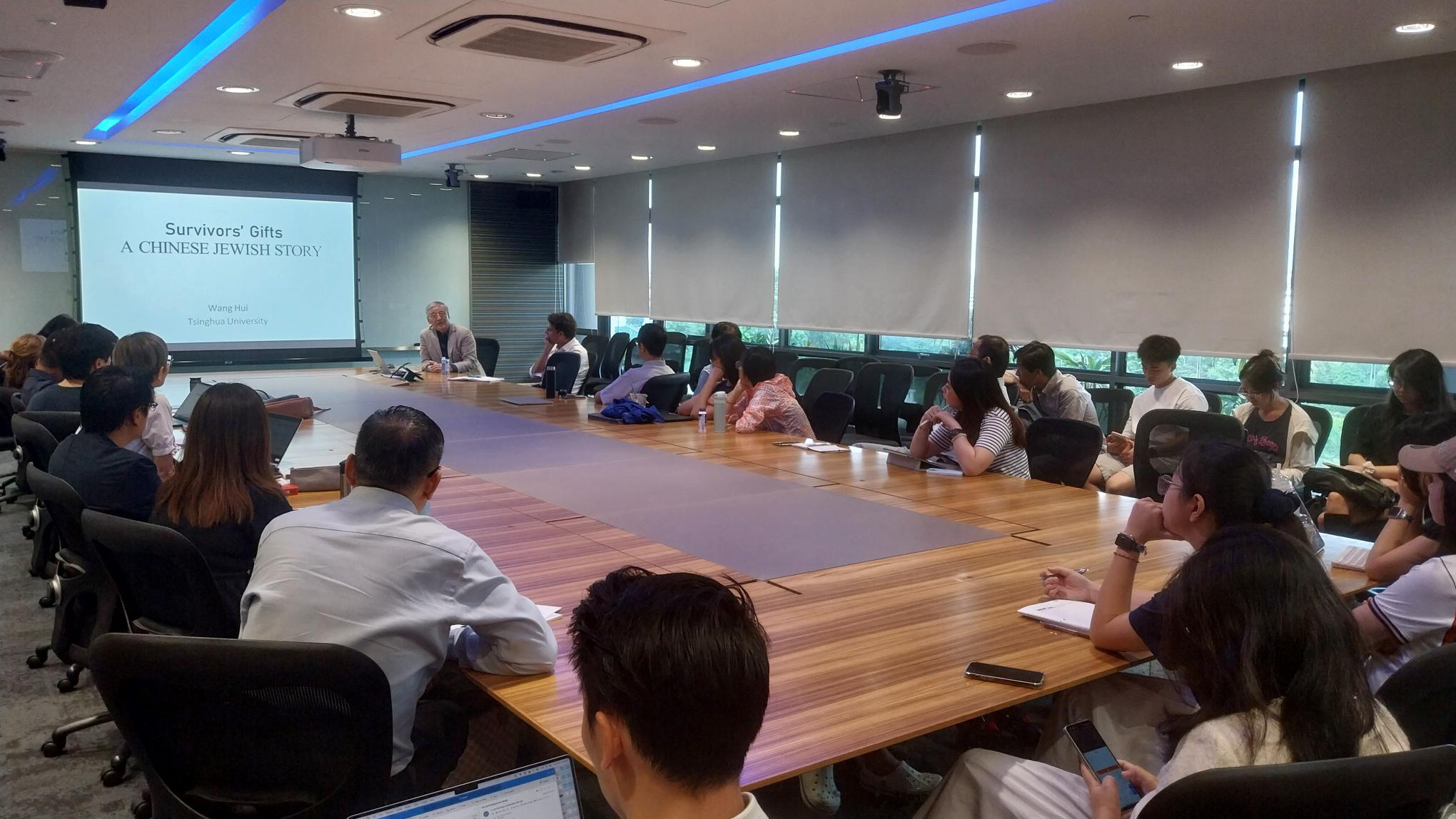
On Thursday, 18 June 2026, NTU College of Humanities, Arts and Social Sciences’ (CoHASS’) Global Asia Research Centre (GARC) hosted a seminar by Professor Wang Hui, Distinguished Professor in the School of Humanities at Tsinghua University and Director of the Tsinghua Institute for Advanced Study in the Humanities and Social Sciences.
His research interests include Chinese intellectual history, Chinese literature and social and political theory. He has received numerous awards for his scholarship, including the Luca Pacioli Award (2013) and Anneliese Maier Research Award (2018), and has been Visiting Professor and fellow at Harvard, Edinburgh, Bologna, Stanford, UCLA, Berkeley, Tokyo University, the University of Washington, Wissenschaft Kolleg zu Berlin, and Swedish Collegium for Advanced Study among others. He was the co-editor of the influential Chinese journal Dushu from 1996 to 2007. In 2008, the magazine Foreign Policy listed him as one of the top 100 most influential intellectuals worldwide. His recent publications include China’s Twentieth Century (2016), China from Empire to Nation-State (2015), and The Politics of Imagining Asia (2011).
Professor Wang Hui's seminar, entitled Surviors' Gifts, used the life story of a Jewish musician exiled to China as a thread to explore the complex relationship between history, culture, politics, and truth through the different fates of Jews in China, Japan, and Europe. The Holocaust and the Jewish question during World War II are not only one of the cornerstones of post-war historical narratives but also central issues in legal trials, ethical inquiries, philosophical reflections, and aesthetic politics, permeating all fields of knowledge and politics. However, these discussions are mostly centered on European history, and even when they involve related phenomena in other regions, they are often observed and discussed through the lens of European history. This seminar focused on three main questions:
1. From the perspective of music and politics, it explored the influence of Jews in China during this period, explaining the modes of identity and existence of migrant and exiled communities in different societies;
2. It analysed and compared the ways in which China and Japan treated Jews, explaining why Jews were able to survive in Japanese-occupied areas (Harbin and Shanghai), and why the Japanese invaders who committed the Nanjing Massacre spared the Jews;
3. From the above perspectives, it examined the historical and philosophical premises and limitations of the human rights discourse prevalent in the 20th century and contemporary times, and why this discourse and its practices have failed to prevent the long-standing and ongoing oppression and atrocities in other places.
Following Professor Wang Hui's sharing, there was a spirited discussion as many attendees wished to ask questions and share their thoughts, including CoHASS Dean Professor Jon Wilson, Assoc Prof Els Van Dongen, Asst Prof Eric Cheng, and Asst Prof Chu Kiu-Wai.
Stay tuned for more seminars, workshops, and conferences throughout the year in the Global Asia Research Centre Event Series.
/ug-town-hall-(header-pic)_updated1.tmb-listing.png?sfvrsn=a0936bc_1)
/58.tmb-listing.jpg?sfvrsn=c98bb35a_1)
749334c4-4609-4705-a4c3-e3100c93f512.tmb-listing.jpg?sfvrsn=a26bd855_1)
-(1200-x-720-px).tmb-listing.png?sfvrsn=cd745b16_1)