The Real Test of a Good Idea
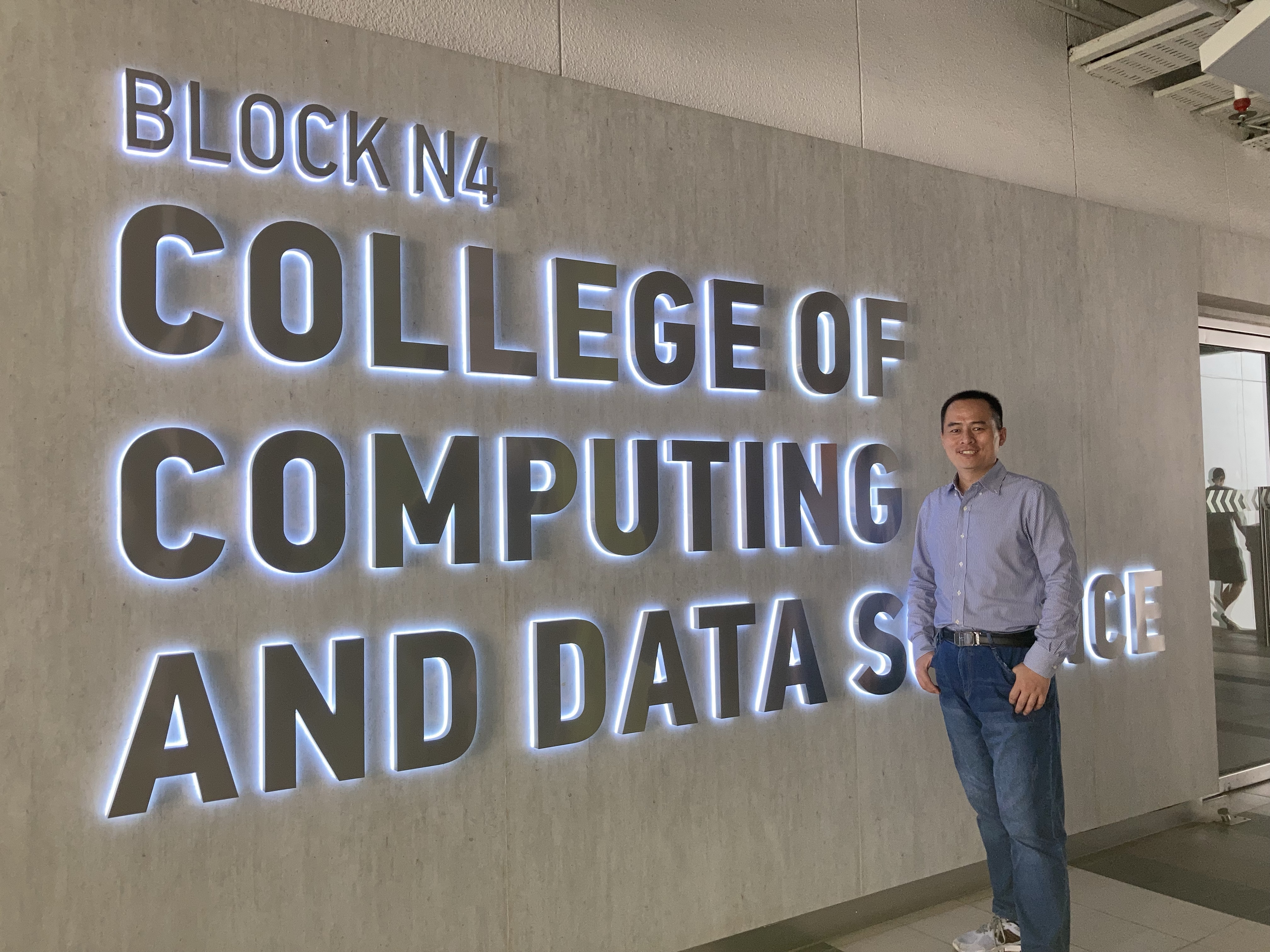
For more than a decade, Dr Xu Shifeng built software at some of the world's leading technology companies. From Microsoft in Beijing to IBM in Singapore, he worked on products used by millions. It was the kind of career many would have been content to continue.
He wasn't.
Over time, the work became predictable. The technical challenges that had once excited him gradually gave way to routine. He found himself asking a different question – not what he could build next, but how he could deepen his understanding of the ideas behind the technology itself. Rather than settling into the comfort of experience, he made an unconventional decision: to return to university and pursue a PhD in computer science after more than a decade in industry.
"I wanted to master cutting-edge paradigms and tackle complex research challenges," he says. "Driven by that goal, I committed to pursuing a PhD."
That decision would ultimately shape his research philosophy.
Many researchers focus on developing elegant mathematical theories. Shifeng was equally interested in what happened after that. His work centred on one deceptively simple question: could those ideas withstand the test of reality?
His research addressed some of the biggest computational bottlenecks in diffusion-based generative AI models. Looking beyond theoretical elegance, he identified places where existing methods relied on engineering workarounds because the underlying theory fell short in practice. By closing that gap, he developed techniques that significantly accelerated training while improving the quality and efficiency of AI-generated content. His work has since been published, open-sourced and recognised internationally, including a Spotlight paper at ICLR 2025, placing it among the conference's top five per cent of submissions.
"The biggest hurdle was resolving a noticeable gap between theory and practice," he explains. "By focusing directly on this discrepancy, I uncovered a way to bridge the gap cleanly."
But perhaps the greatest test of any idea is not found in a research paper.
When Shifeng began his PhD, his daughter was just eight years old. Pursuing full-time research meant balancing experiments, paper deadlines and family life simultaneously. That balance was only possible because it became a shared commitment.
His wife – also an NTU PhD graduate under the same supervisor – understood exactly what the journey demanded. She offered practical advice, shared childcare responsibilities and, on weekends, took over parenting duties so he could spend uninterrupted hours in the lab running experiments and writing papers.
"I've been incredibly lucky," he says. "My family supported my PhD every step of the way, especially my wife."
Looking back, Shifeng sums up his journey in three words: optimism, perseverance and serendipity. While many think of serendipity as chance, he sees it differently.
"Breakthroughs don't happen in a vacuum," he says. "By staying relentlessly focused on a goal and putting in the work, serendipitous moments of inspiration naturally follow."
That philosophy carried him through ten months of IELTS preparation, six unsuccessful approaches to potential supervisors and the persistence to keep moving forward until the right opportunity finally arrived.
His advice to anyone considering a return to research is disarmingly simple.
"It's never too late to learn."
For Shifeng, every worthwhile idea eventually faces the same question. Not whether it is elegant. Not whether it is mathematically beautiful.
But whether it stands up to reality.