The Craft Behind Great Computing
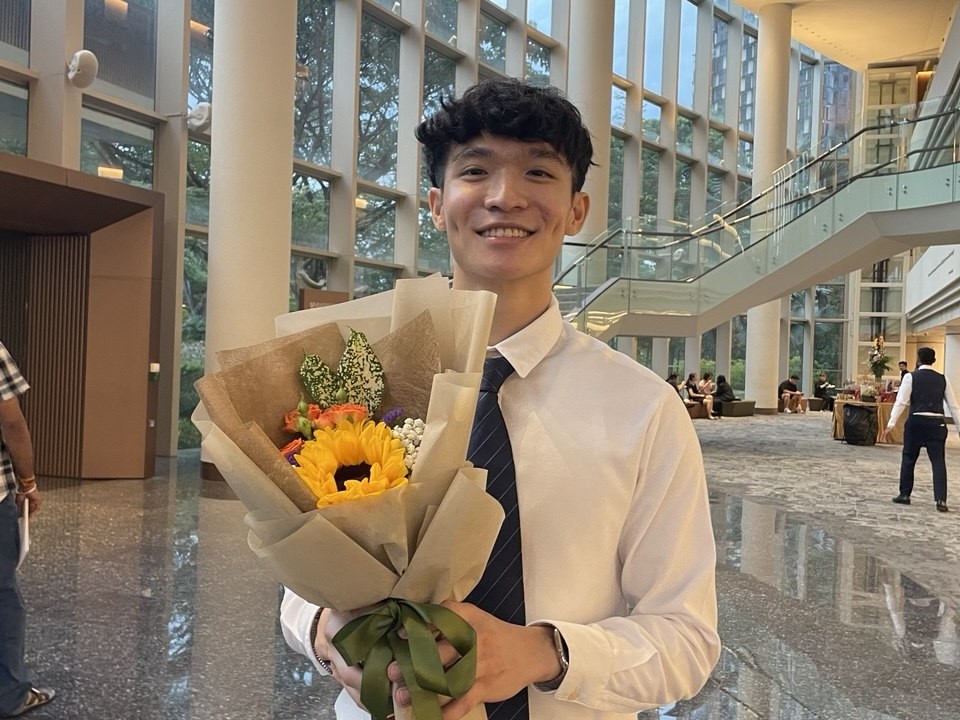
Dion Lim Sin Le never set out to become the top Computer Engineering graduate.
He set out to become good at the craft.
Whether he was learning to code from scratch, debugging a robot or applying for internship after internship, he approached every challenge the same way: do the work properly, don't cut corners, and trust that genuine expertise takes time to build.
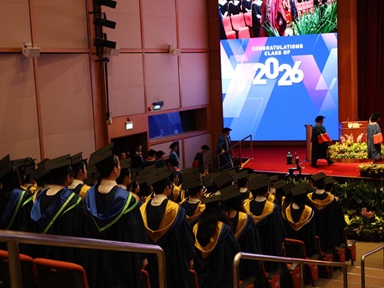
That mindset would eventually earn him the Defence Science and Technology Agency (DSTA) Gold Medal as the top graduating Computer Engineering student from NTU College of Computing and Data Science. For Dion, however, the award represents something far more meaningful than academic achievement.
"I came into Computer Engineering without any prior coding knowledge," he says. "Receiving this recognition affirms the effort and late nights I put into learning and my dedication to doing things well without cutting corners."
Robotics first brought Dion to Computer Engineering. He chose the programme because he knew he needed to master both hardware and software if he wanted to build intelligent systems.
What he discovered was an appreciation for the craft behind great engineering.
Building projects was only part of the journey. Understanding how complex systems communicate, integrate and work together mattered just as much.
That lesson came into sharp focus during a second-year module on Microprocessor System Design.
This was before AI assistants became part of every programmer's toolkit. When the robot refused to work, there was no Claude to explain cryptic errors or suggest fixes. Dion and his classmates worked through manuals, schematics, technical documentation and Stack Overflow until they understood the problem well enough to solve it themselves.
It was painstaking work.
It was also where he learnt the satisfaction of engineering from first principles and the value of solving difficult problems together.
Outside the classroom, the lessons continued.
Finding his first internship proved harder than expected. Across his first two years, Dion submitted more than 100 applications before one company finally said yes.
He rewrote his résumé. Sought advice from seniors. Attended career workshops. Applied again.
That experience taught him to handle rejection pragmatically, stay humble and trust the process.
Sometimes, one opportunity is all you need.
Dion credits much of his growth to the people around him – course mates, hall friends, seniors, professors and mentors – who reminded him that engineering is rarely a solo pursuit. The toughest problems were often solved together, and the steepest learning curves became manageable because someone was always willing to help.
Nothing worthwhile happened overnight.
Not learning to code.
Not building robots.
Not finding an internship.
Craft takes time.
That belief shapes the advice he now gives to juniors.
Rather than chasing the highest-paying job or the latest technology trend, he encourages students to focus on building genuine skills and taking on meaningful challenges.
"The money will follow," he says. "If you focus on building genuine skills and taking on meaningful challenges, the long-term value you create will naturally open doors."
After graduation, Dion will join AMD as a Test Engineer, working on technologies that will continue to evolve long after today's AI headlines have faded.
He isn't worried about that.
Trends come and go.
Craft endures.