She Asked Better Questions. The Answers Changed Her Career.
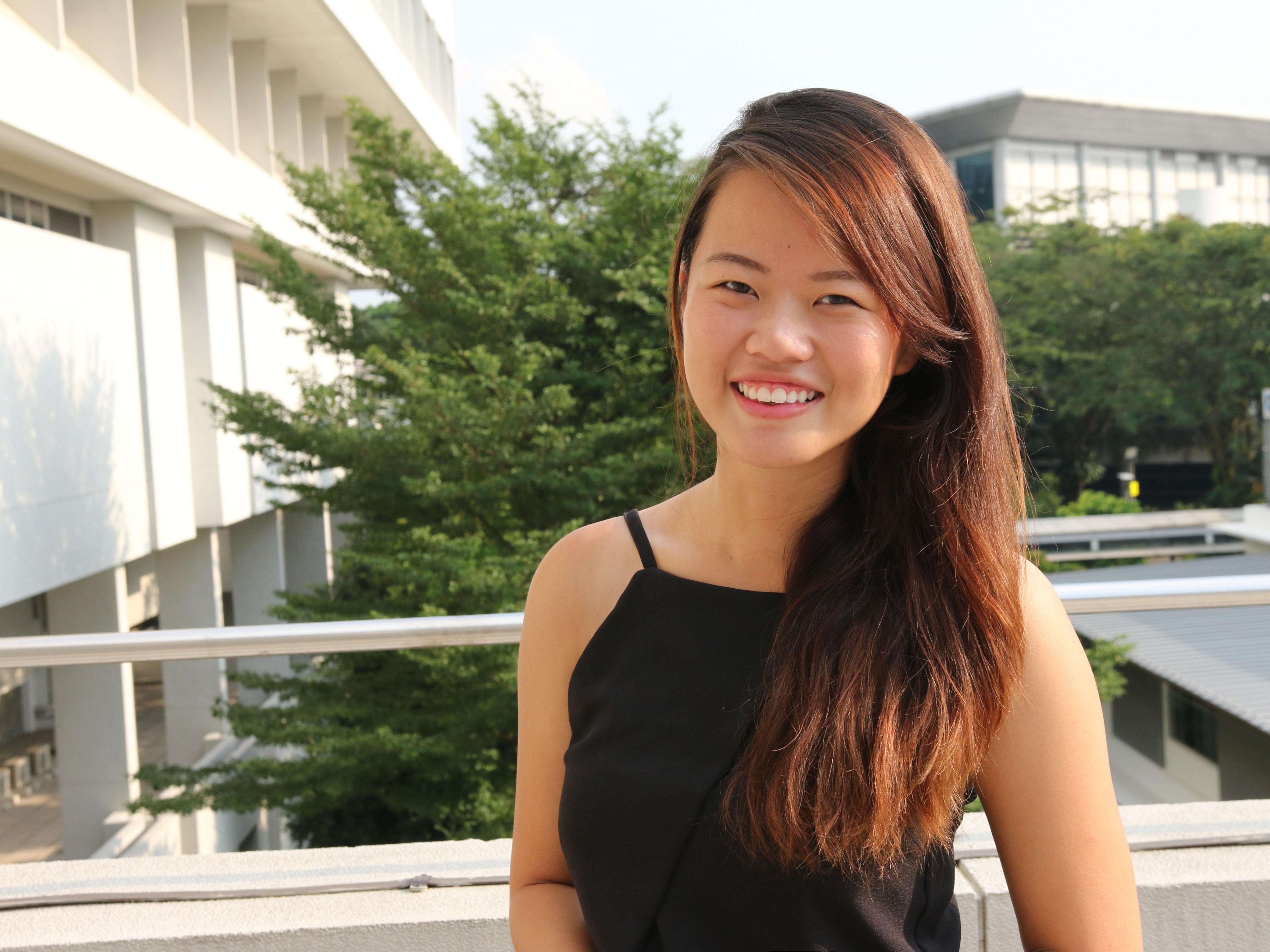
Most organisations have plenty of data. The harder question is what to do with it.
For Cai Xue Er, that question first surfaced in her role in commercial business and operations. Working on digitalisation and automation projects introduced her to tools like Power BI, showing her how data could explain what had already happened. But she found herself wondering whether there was a better way.
"Most of the work was descriptive or diagnostic, telling us what happened, not what might happen next," she recalls.
That question stayed with her. If organisations increasingly relied on data to guide important decisions, surely there was value not just in understanding the past, but in anticipating the future. Rather than accepting the limits of what she knew, Xue Er decided to build the skills that would allow her to answer that question herself.
Returning to her alma mater to pursue the Master of Science in Data Science at NTU's College of Computing and Data Science (CCDS) felt like a natural choice. The programme's technical rigour appealed to her, but what stood out even more was its end-to-end approach. Instead of treating analytics as an isolated discipline, it covered the full data science workflow, from preparing data to building models and communicating insights. A Python bridging course also gave her the opportunity to build strong foundations before tackling more advanced topics.
As part of the programme's pioneer cohort, there were no seniors to turn to for advice and no established roadmap to follow. Rather than seeing that as a disadvantage, Xue Er embraced it as an opportunity to become more proactive.
She asked questions.
She sought out her professors, who were generous with their time and knowledge. She learnt alongside classmates who came from different professional backgrounds, exchanging ideas, comparing approaches and helping one another navigate unfamiliar territory. In the absence of a playbook, they built a learning community together.
"It pushed me to be more proactive. I found myself asking more direct questions to professors who were very willing to share their insights."
The questions did not stop there.
Balancing a demanding full-time job with part-time postgraduate studies required discipline and careful planning. Instead of leaving coursework until deadlines loomed, she made it a point to keep pace with every class. That consistency not only helped her stay on top of her studies, but also made her more productive at work. Along the way, the support of understanding supervisors, encouraging classmates and her family made the journey possible.
Coming from a non-technical background also meant learning to code from scratch.
"It was daunting at first," she admits.
Rather than allowing that to become a barrier, she leaned on teammates with stronger technical foundations, stayed curious and continued practising through side projects both inside and outside work. The experience reinforced a mindset that would define her time in the programme: every challenge could be approached by asking, learning and trying again.
That mindset came together in her capstone project, where she tackled the challenge of detecting turning points in financial markets – identifying when markets shift from one pattern of behaviour to another, such as periods of growth, decline or heightened volatility.
To do this, she combined a statistical technique known as a Markov Switching model with machine learning, allowing the strengths of one approach to complement the other. The resulting hybrid model identified these market shifts more accurately and achieved better risk-adjusted investment returns than a traditional Buy-and-Hold strategy.
The project reinforced an important lesson: the best solutions rarely come from relying on a single technique. Instead, they emerge from understanding the problem well enough to know which tools to combine.
Today, Xue Er works as an Underwriting & Data Analyst, where many of the skills she developed during the programme have become part of her everyday work. SQL underpins her work with databases, Python helps automate repetitive tasks, while modules in Data Preparation, Data Science Thinking and Data Visualisation continue to shape how she approaches problems and communicates insights to stakeholders. Just as importantly, the programme gave her confidence that she was building on a rigorous technical foundation.
Looking back, the career pivot did not begin with learning a programming language or completing a capstone project.
It began with a question.
A question about whether data could do more than explain the past.
By continuing to ask better questions, Xue Er found answers that changed not only her understanding of data, but the direction of her career.