Learning to Trust the Unknown
The biggest challenge of a PhD is rarely the one people imagine.
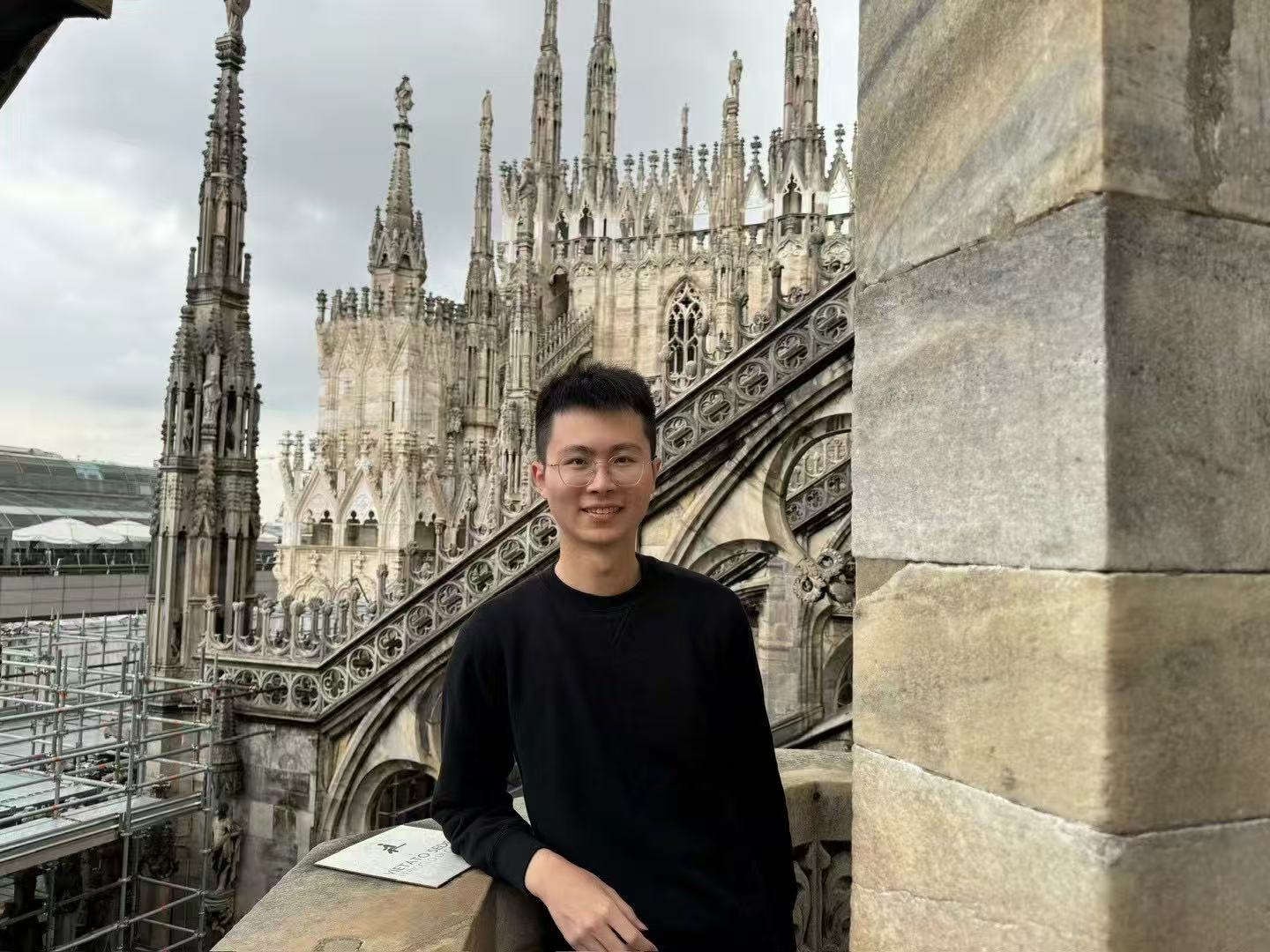
For Dong Junhao, it was not the mathematics, algorithms or complexity of artificial intelligence. It was learning to stay committed to an idea long before there was any certainty it would succeed.
"In research, you can spend months pursuing an idea without knowing whether it will eventually succeed," he reflects. "It can be difficult to stay confident when progress is slow."
That lesson shaped not only his doctoral journey, but also the researcher he has become.
Ironically, Junhao's interest in computing began with video games. Curious about how virtual worlds were created, he pursued computer science after high school. As he learnt more about algorithms, machine learning and artificial intelligence, his fascination shifted from how computers could entertain us to how they could solve real-world problems. Eventually, one question became central to his work: as AI systems become increasingly capable, how can we make them trustworthy?
That question led him to pursue a PhD at NTU's College of Computing and Data Science.
His award-winning thesis, Towards Generalizing Adversarial Robustness in Deep Learning, explores how AI systems can remain reliable when confronted with unexpected inputs, limited training data and evolving security threats. Rather than focusing solely on improving benchmark performance, his research seeks to make AI dependable in the messy, unpredictable conditions of the real world.
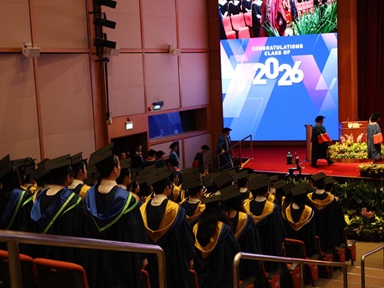
The work earned him the NTU PhD Medal of Honour, but the journey behind it was anything but smooth.
Like many researchers, Junhao encountered failed experiments, rejected papers and promising ideas that fell apart under closer scrutiny. Over time, he learnt not to see these setbacks as verdicts on his work. Instead, they became opportunities to question assumptions, redesign experiments or sometimes let go of an idea altogether and begin again with a clearer perspective.
Throughout that journey, he found an invaluable mentor in his PhD supervisor, Professor Ong Yew-Soon.
Whether in the lab or during weekend hikes with fellow researchers, their conversations often extended beyond technical discussions to leadership, careers and life. "His mentorship has shaped me not only as a researcher, but also as a person," says Junhao.
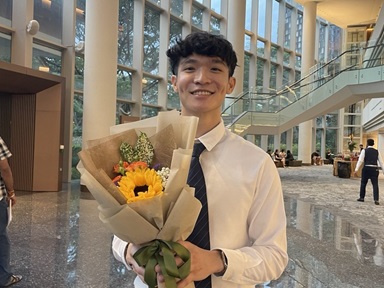
When he learnt that he had received the NTU Medal of Honour, his first reaction was surprise.
Surrounded by so many talented peers, he never viewed the award as an individual achievement. Instead, he credits his supervisor, collaborators, family and friends for helping him through the inevitable uncertainty that comes with research.
Today, as AI becomes increasingly embedded in everyday life, Junhao hopes his work will contribute to systems that are not only intelligent, but also dependable when people need them most.
His advice to students reflects the lessons he learnt along the way: choose problems that genuinely matter to you, build strong fundamentals, seek guidance from mentors and never mistake slow progress for failure.
Looking back, Junhao describes his PhD journey in three words: curious, resilient and grateful. They reflect a researcher who discovered that the biggest breakthroughs are often preceded by long periods of uncertainty.
"The biggest challenge was not any single technical problem," he says. "It was learning to live with uncertainty."