The Brave Rebuild: How Aimé's Founders Tore Down Their Own Startup to Build a Better One
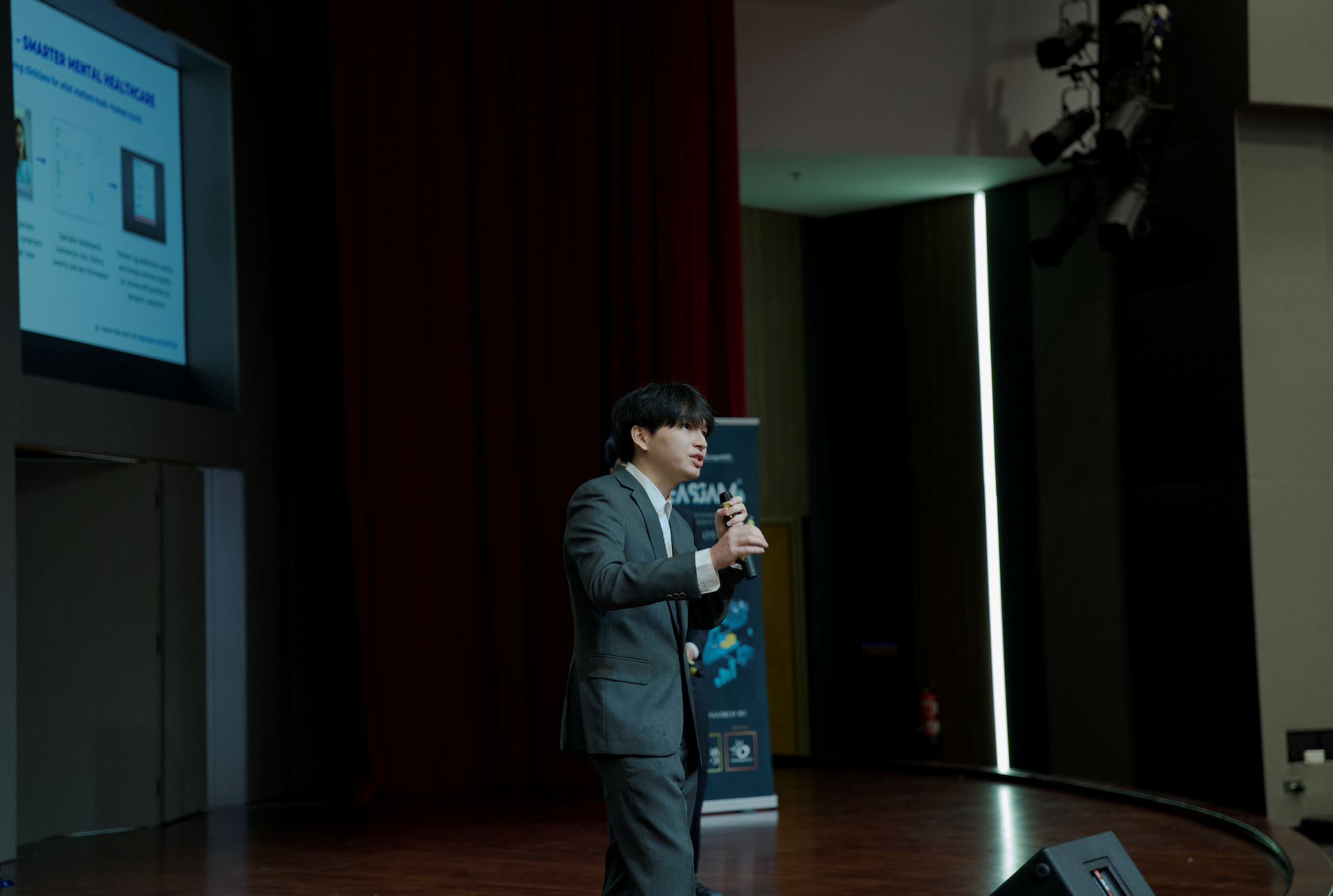
In a clinic in the United States, a mental-health clinician speaks to her computer in preparation for the next appointment: "Brief me on Sarah before her consultation. Any drug interactions with the medications she is taking now? Schedule a follow-up same time next Tuesday."
Executing these tasks is Aimé, an AI assistant that navigates, reads, and drafts across the software the clinician already uses – electronic health records, calendars, inboxes, and browser portals. Developed as a voice-activated browser agent, Aimé frees up clinicians from clunky administrative workflows so they can focus on what matters most: patient care.
Aimé is being trialled today by ten design-partner clinics in the US and Singapore. Less than a year ago, it did not exist in this form. Its predecessor did, and its founders shut it down on purpose.
A pivot, on purpose
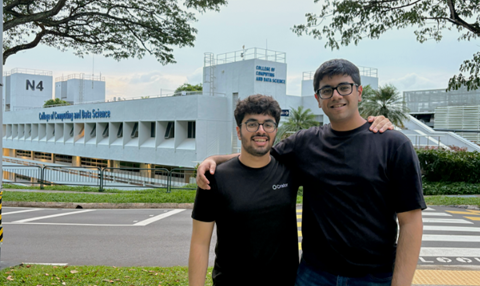
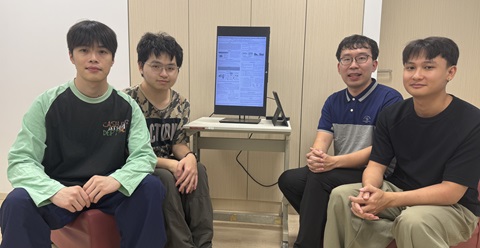
The startup began in 2024 as AidMi, an AI-native electronic health record (EHR) and clinical scribe, founded by NTU students Alen Tao (Nanyang Business School), Wang Yu Teng (CCDS), and Shanice Lim (School of Civil and Environmental Engineering). As the project progressed, Shanice stepped away to pursue other commitments.
The current venture now thrives as a collaborative, cross-border initiative combining five co-founders. Besides Alen and Yu Teng, other members include Clive Tua (NBS), Kwon Sang Yun (NUS), and Mutaqin Aryawijaya, an alumnus of Institut Teknologi Bandung (ITB).
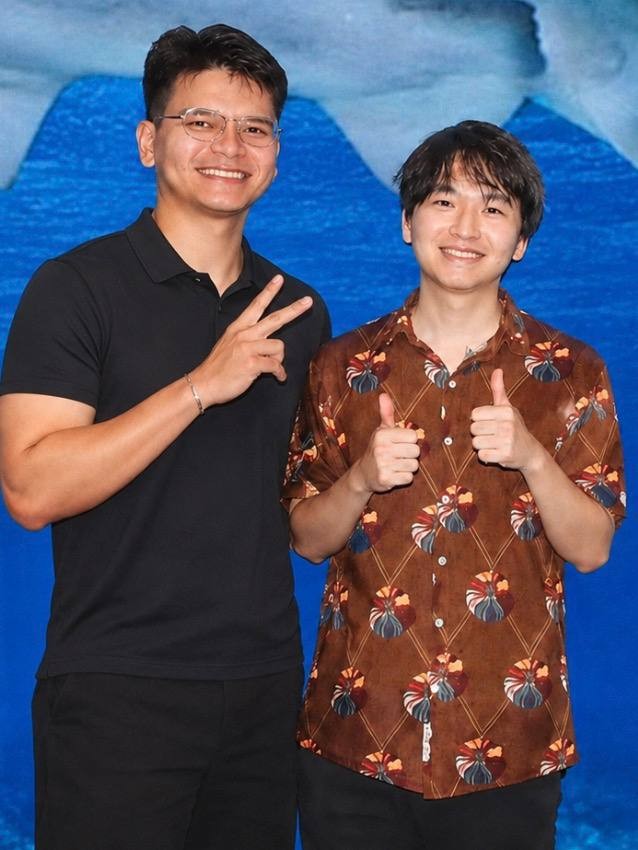
The founders had their earliest institutional supporter on NTU campus: CCDS's Innovation Lab (iLab), and specifically its Student Entrepreneurship Programme (SEP). SEP is a flagship initiative modelled after Silicon Valley's open innovation concepts to serve as a centralised hub for a vibrant entrepreneurship ecosystem. Its funding covered the first cloud infrastructure, engineering tools and subscription costs that would otherwise have been out of reach for undergraduates.
The engineering behind the bravery
While the original concept was sound, the Aimé pivot was necessary to address changing clinical demands. After months of clinician conversations, the team discovered that clinicians were already juggling five or six tools daily, and no one wanted to migrate to another one, however good.
"The winning move is not really a better tool," says co-founder Kwon Sang Yun, "but to meet clinicians inside the tools they already use, to get the work done." The rebuild that followed was total. "Technically and product-wise, it meant we had to tear down everything and rebuild – architecture, designs, database. A complete overhaul.”
Even their advisors were shocked but all agreed it was the right call. What emerged from the rebuild was a voice-driven agent that lives alongside the tools they already have open, invoked in natural language and answerable to the clinician on every action it takes.
Rebuilding a browser-and-computer-use agent that works fast, accurately and safely is tough, but Yu Teng, who leads product development and AI/ML, credits his NTU coursework for the discipline that made the overhaul possible.
"The fundamentals helped me to get started – the algorithms, data systems and software design courses, and especially CCDS's hands-on group projects, mini-projects and capstone," he said. "It taught us how to turn real-life problems and messy ideas into a proper working system."
What comes next
Today, Aimé is based in the San Francisco Bay Area, backed by Quest Ventures, and part of University of California, Berkeley SkyDeck accelerator (a launchpad for high-growth tech startups). It has been selected for Meta's Llama Incubator (first APAC cohort) and the AlchemistX Silicon Valley Residency 2025, and its clinical advisory board reaches from NTU's School of Social Sciences to faculty and clinicians at Stanford, Harvard, University of California San Francisco, Kaiser Permanente, and Singapore's Institute of Mental Health. A US institutional seed round is in early conversation.
For a young team, the willingness to break their own product and rebuild it from scratch may prove to be their most valuable engineering decision yet.