Sharpening the Edge: How Project NEO Accelerates the Student-to-Professional Leap
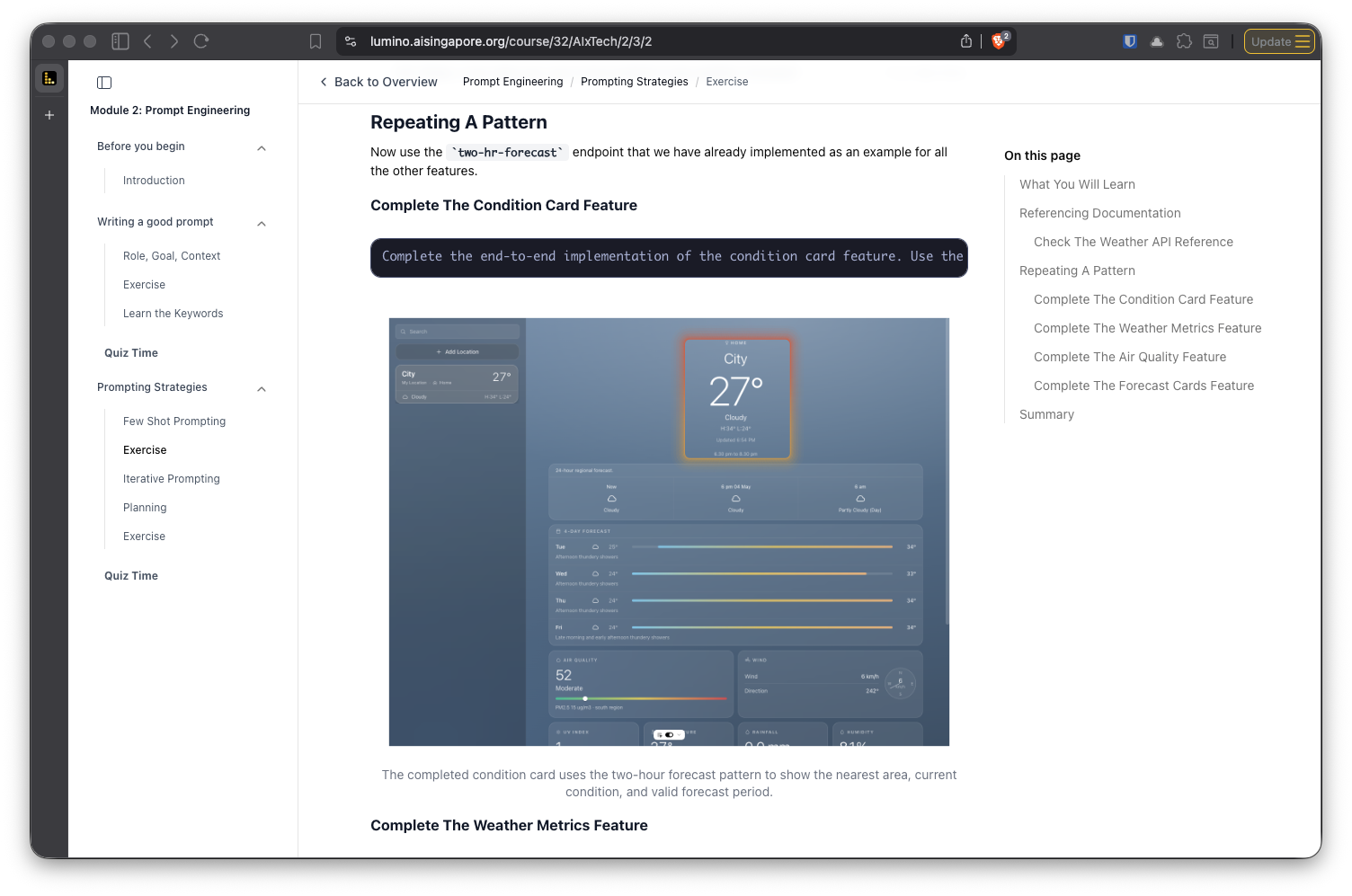
Photo: AI Singapore
Graduating CCDS students already leave with one of the most valuable assets in tech: strong computing fundamentals. Project NEO*, a beta programme developed with AI Singapore (AISG) in collaboration with the Infocomm Media Development Authority (IMDA), was built to make sure those fundamentals translate into immediate impact on day one of their careers.
Held across four weeks in March and April, Project NEO gave over 60 selected final-year CCDS undergraduates early access to a discipline that is fast becoming essential in the workplace – the discipline of working alongside AI at a professional standard.
The programme sits within CCDS's broader Learn With AI framework, which aims to ensure graduates are not just familiar with AI tools, but genuinely fluent in directing them. This means knowing how to integrate AI into their workflows thoughtfully, evaluate its output critically, and apply it with the same rigour they bring to their own code.
The premise is simple. Almost every computing student today already uses AI to code. But there is a meaningful difference between casually prompting an assistant and systematically engineering context, managing agent workflows, and evaluating AI output with rigour. Project NEO was designed to close that distance, to take the deep technical grounding CCDS students already have and sharpen it for the realities of an AI-driven workplace.
Across nine asynchronous modules, participants worked through topics such as context engineering and long-term memory management, AI-assisted Git workflows, and spec-to-code pipelines with real-world evaluation and feedback. They also received a month of complimentary access to premium AI code assistants, including GitHub Copilot, AWS Kiro, OpenAI Codex, and Z.ai GLM.
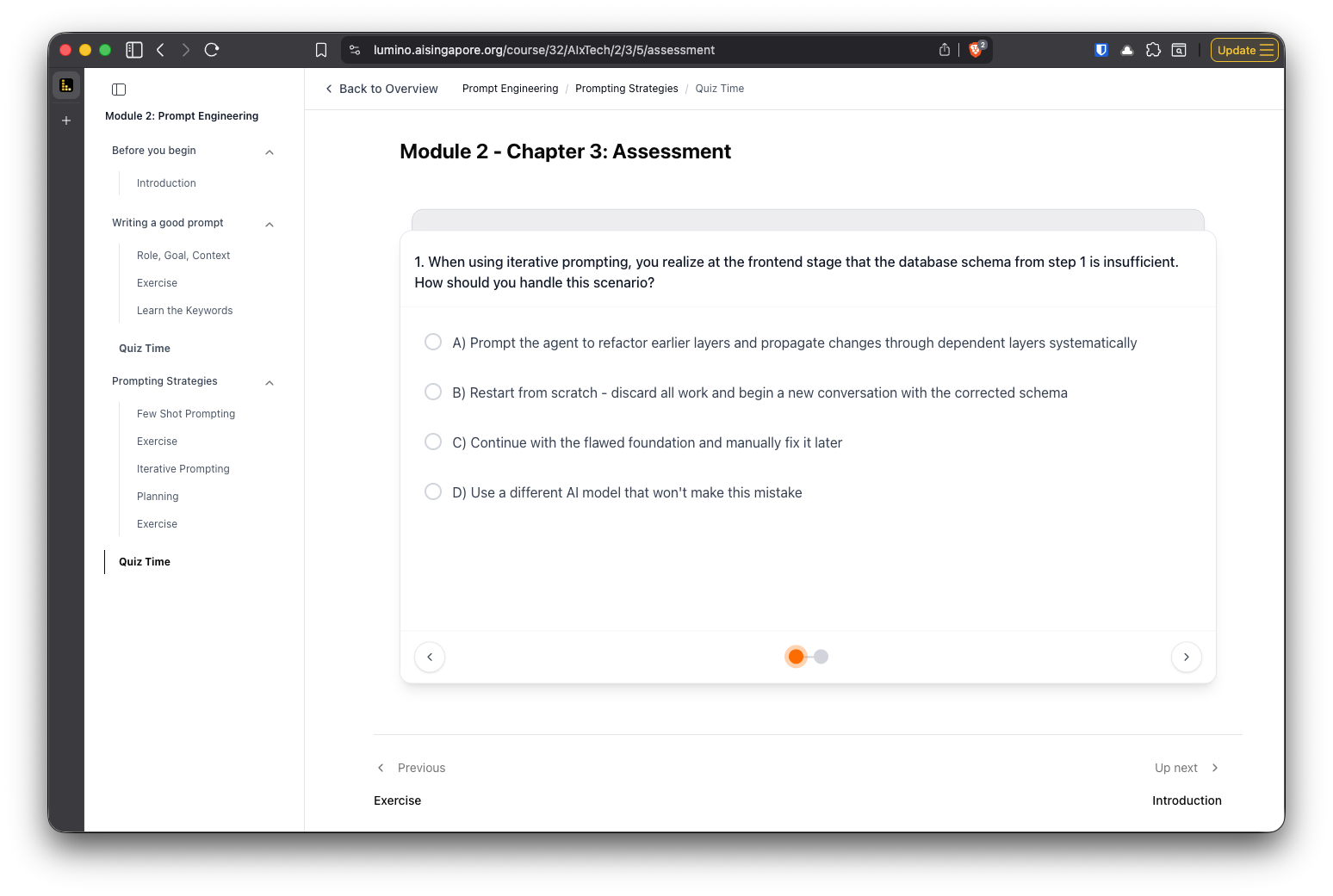 Photo: AI Singapore
The programme delivered meaningful takeaways for participants who shared how the lessons reframed something they thought they already understood. Several students, for example, pointed to context engineering as a concept they would not have sought out on their own, but now consider essential to getting reliable results from AI tools.
Other participants felt that its impact was immediate and personal. Y4 Computer Science student Ninette Goh shared that a deeper understanding of AI tools will help maximise her time spent and hence, her work done.
Y3 Computer Science student Chua Zhi Li thought it was timely. "It's a good fundamental and essential learning programme for those preparing to go into the workforce," she said, adding that it was a reflection of how directly the curriculum maps to what graduates will be expected to do.
That relevance held true even for the most experienced students. Reyan Thong, a Y4 Data Science and AI student, found the programme sharpened his everyday practice. "Even as someone already working with agentic AI systems, the course gave me a clearer framework for integrating these workflows into day-to-day development," he said, "and is a great starting point for anyone looking to build in the right direction."
The programme, still in its beta phase, was built to learn from its participants as much as they learned from it. The physical focus group and post-programme feedback surfaced a strong appetite for more hands-on project work and career-matching support – insights that will directly shape future iterations. In a field that moves this quickly, the curriculum has to keep evolving too.
Upon completion, participants earn an official Project Neo certificate recognising them as "AI Bilingual", equipped to blend AI seamlessly into their professional skill set. For CCDS, the programme marks a deliberate extension of its mission: from preparing students to graduate, to ensuring they arrive in the workforce ready to contribute from the start.
The fundamentals were always there. Project Neo helps put them to work, faster.
*Project NEO is not the final title of the programme and may change after the Beta phase.