NTU CCDS Faculty Sweep EMNLP 2026 Best Paper Awards
Two NTU College of Computing and Data Science faculty, Professor Jordan Boyd-Graber and Associate Professor Luu Anh Tuan received both Best Paper awards awarded at the 2026 Empirical Methods in Natural Language Processing (EMNLP) Conference in Budapest, Hungary.
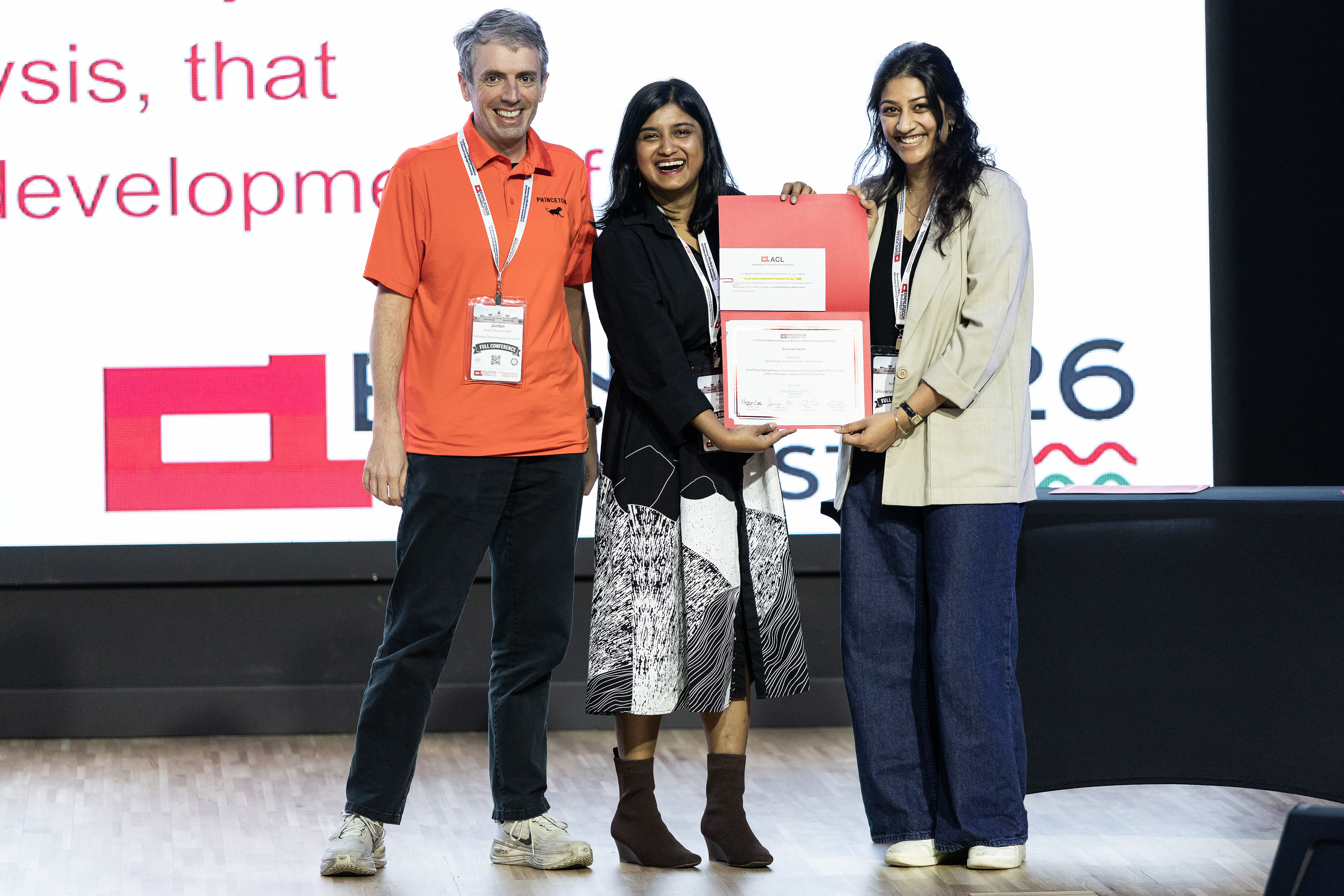
Boyd-Graber received the award for “DiscoTrace: Representing and Comparing Answering Strategies of Humans and LLMs in Information-Seeking Question Answering” while Tuan received the award for “Don’t Read Everything: A Curvature-Conditioned Query for Linear Attention”.
Both papers aimed to improve large language models (LLMs).
Boyd-Graber’s paper focuses on understanding using linguistic theory what makes humans different from computers when they answer a question, while Tuan’s paper looks at the low-level computational machinery of how language models build the context-sensitive representations that language models use to generate the next token.
“The fact that both types of research are happening at NTU shows the breadth of NTU’s growing strength in natural language processing research,” Boyd-Graber said.
Boyd-Graber’s work examines the ways in which humans and LLMs answer questions, how these approaches are different, and what qualities make an answer “good” to humans. His team developed “DiscoTrace”, a structured representation that breaks down answers and labels individual segments with actions such as “commenting,” “asserting,” or not directly answering the query.
Using DiscoTrace, the team analysed human-written answers on internet communities and compared them against LLM-generated answers. The team showed that different communities have different expectations and norms about what makes for a good answer and showed how LLMs answer questions differently than humans. In the future, DiscoTrace can help tune models, including helping them sound more human.
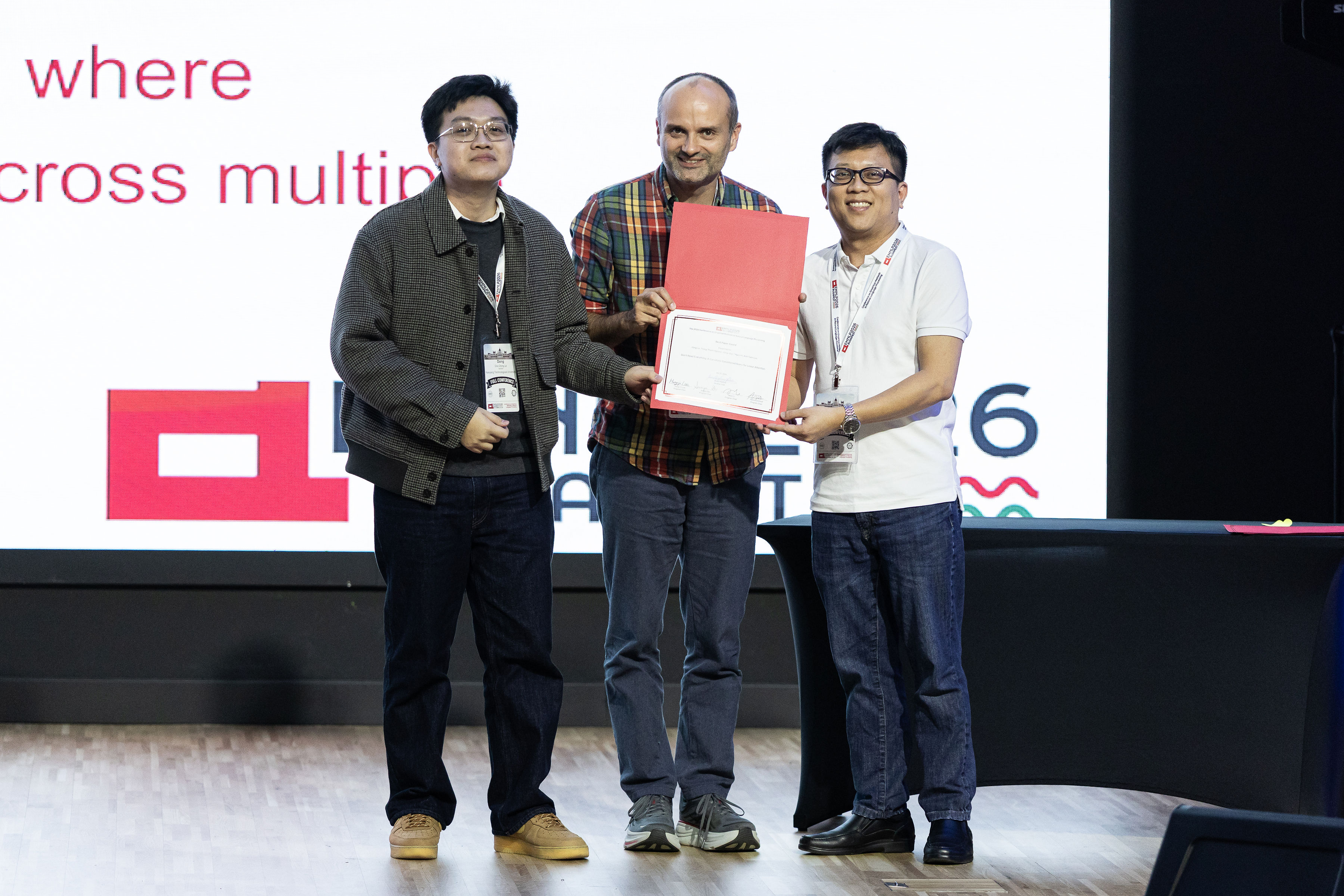
Tuan’s research addresses a fundamental challenge in large language models, which is enabling them to process and retrieve information from increasingly long contexts without incurring prohibitive computational costs. Tuan’s research introduces a new perspective on this problem: rather than focusing solely on how AI models store information, his team investigated how they can retrieve the most relevant information more effectively.
By developing a novel attention mechanism that improves long-context understanding and information retrieval, their work takes a step towards building more efficient, scalable, and capable language models. Tuan believes this approach opens up promising new directions for the next generation of AI architectures.
“Receiving the Best Paper Award at EMNLP is a tremendous honour, particularly given the conference’s reputation as one of the world’s premier venues for research in AI and natural language processing,” said Tuan. “This award is both an affirmation of our efforts and an inspiration to continue advancing fundamental AI research, pushing the boundaries of what is possible, and making meaningful contributions to the global research community.”