NTU CCDS AI-supported Course and Senior Lecturer Win Education, Technology Awards
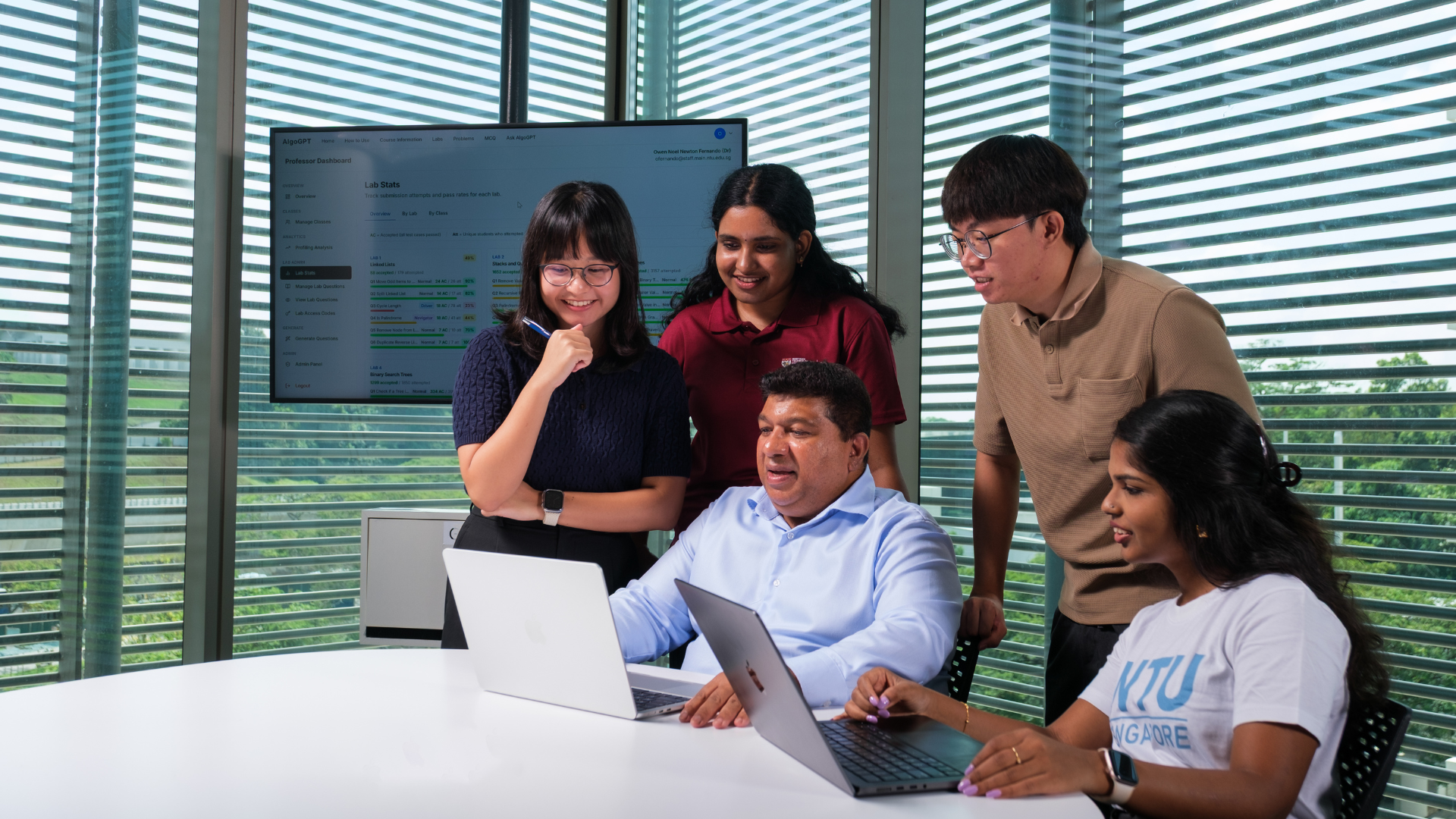
SC1007: Data Structures and Algorithms, an NTU College of Computing and Data Science class led by Dr. Owen Noel Newton Fernando, has been selected as a recipient of the 2006 Global MOOC and Online Education Alliance (GMA) Award.
Additionally, Fernando received the inaugural NTU John Cheung Emergent Technology Award, given in recognition of his innovative approaches to teaching and learning through emerging technologies.
“The GMA Awards aim to bring together outstanding educational innovations from around the world and recognize courses and teaching practices that demonstrate significant innovation, educational value, and potential for broader application,” GMA wrote in its award citation.
Fernando received the award at the 2026 Global MOOC and Online Education Conference at Vietnam National University in November 2026.
“The award encourages us to continue improving the learning experience and gives us an opportunity to share our work with educators internationally,” Fernando said.
Fernando, who is a senior lecturer with CCDS, has been teaching Data Structures and Algorithms for more than 10 years. Data Structures and Algorithms (SC1007) is a foundational CCDS undergraduate course that aims to teach students how to organise data as well as how to design, implement, and analyse algorithms to solve computational problems.
What makes Data Structures and Algorithms distinctive from other similar courses is the use of AlgoGPT, an OpenAI-based platform that supports personalised learning with AI and helps students critically evaluate AI-generated code.
Fernando led the development of AlgoGPT with a team of students in 2025.
“We introduced AlgoGPT to provide more personalised guidance during programming practice while keeping students actively involved in developing their own solutions,” he explained.
Fernando integrated AlgoGPT into the compulsory laboratory portion of the Data Structures and Algorithms course through CCDS’s Learn with AI initiative. AlgoGPT supports students by giving hints to assignments without giving the entire solution, generating code with deliberate mistakes for students to evaluate, and allowing students to practice programming outside the laboratory.
“AlgoGPT guides students as they develop their own solutions, keeping them responsible for understanding why a solution works,” Fernando said. “This combination of personalised support, independent problem-solving and critical evaluation supports nearly 1,000 students in developing both strong computing foundations and the judgement to work effectively with AI.”
AlgoGPT also supports personalised learning by analysing students’ multiple-choice question responses, laboratory submissions, and practice attempts. This allows AlgoGPT to recommend questions tailored to an individual student’s proficiency and learning needs. Teaching assistants and lecturers can also access these analyses at cohort, laboratory-group and individual levels to identify conceptual difficulties, make instructional decisions, and provide targeted interventions.
Fernando believes that the future of AI in computer science education lies in making learning more personalised, with intelligent systems that adapt to each student’s needs, abilities and progress.
“Students should learn not only from their own mistakes, but also by examining AI-generated solutions, questioning the AI’s reasoning, identifying errors and exploring better approaches,” Fernando said. “Ultimately, success should be measured not simply by what students can achieve with AI, but by what they can understand, explain and accomplish independently after learning with it.”
The AlgoGPT team will conduct interactive lessons at the NTU Open House on Saturday, 27 February 2027. Register your interest to experience AlgoGPT in action here.