Knowing Why Makes the Hard Parts Worth It
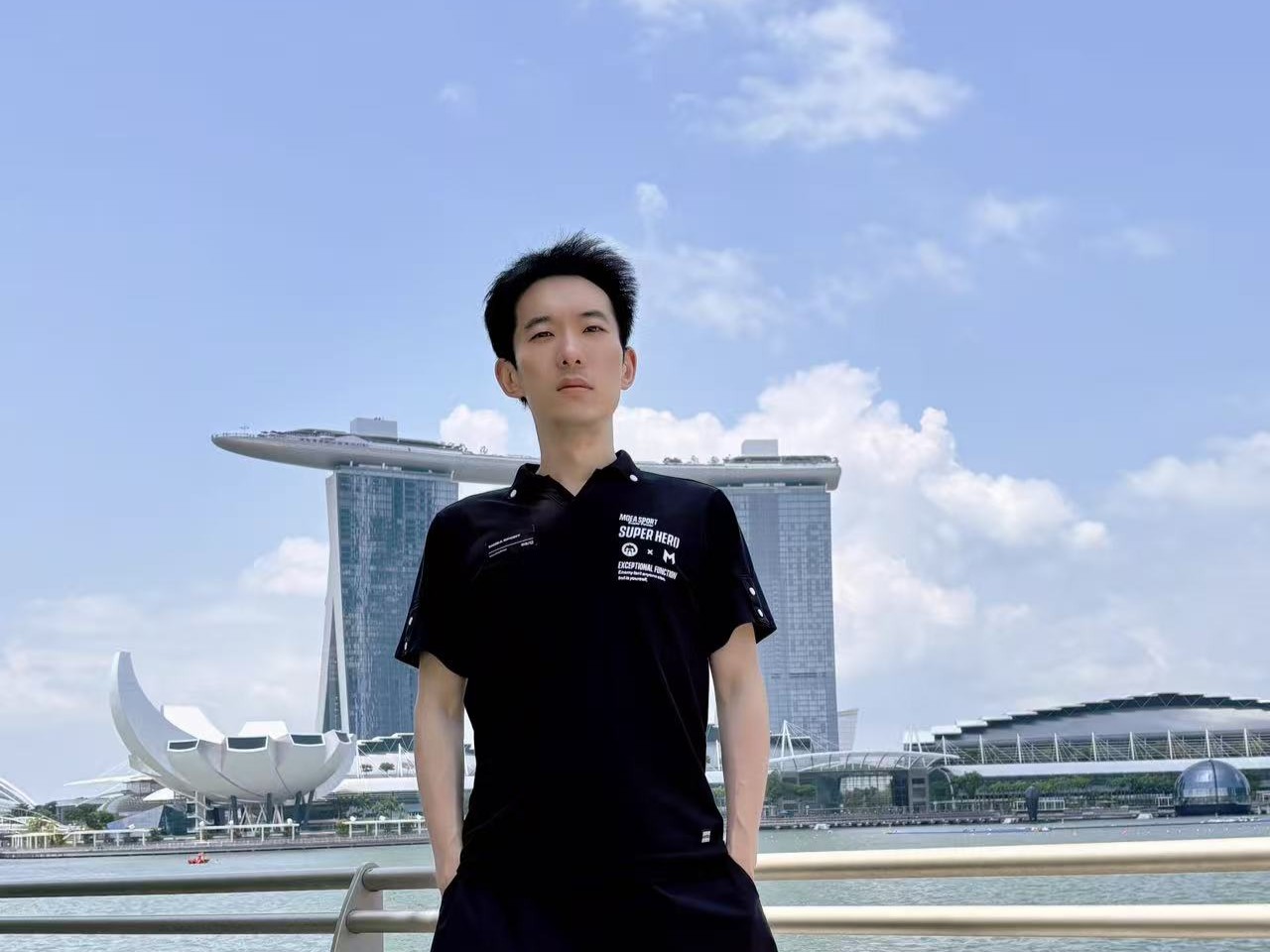
By the time Wang Yuanrong arrived at NTU's College of Computing and Data Science (CCDS), he already knew he wasn't looking for another qualification.
Having completed a Computer Science degree in China and spent time working in industry, he realised what he wanted most was to keep learning.
"That experience gave me a clearer understanding of what I truly wanted," he says. "To continue learning, to deepen my knowledge, and to pursue work that is important, innovative and meaningful."
That clarity brought him to Singapore. NTU's internationally recognised faculty and welcoming environment made the decision feel natural, while cybersecurity appealed because it combined technical depth with real-world purpose.
"I have always been fascinated by the technical depth of hacking," he explains. "But more importantly, I wanted to become someone who protects systems and people."
The Master of Science in Cyber Security programme was every bit as demanding as he had expected. Four modules each semester meant weekdays were spent preparing for evening classes, reviewing lectures and tackling assignments, while weekends often became an extension of the working week.
Yet what stayed with him most wasn't the workload.
It was the opportunity to keep asking bigger questions.
An AI Security module challenged students to write a research-style paper and conduct experiments instead of completing conventional assessments, giving Yuanrong his first real taste of academic research.
"It gave me practical research experience that cannot easily be gained from courses focused mainly on security theory," he says.
Inspired by that experience, he explored how fully homomorphic encryption could be applied to deep learning models, discovering where elegant theory met real-world constraints.
"It felt like I had truly understood something important."
The programme's interdisciplinary approach also reshaped how he viewed cybersecurity. Rather than seeing vulnerabilities as isolated technical problems, he came to appreciate how identity, trust and organisational processes often determine whether systems remain secure.
The biggest challenge, however, lay beyond the curriculum. Yuanrong wanted to explore AI security more deeply while weaving those ideas into his capstone project. Time was always in short supply, but he pressed on.
"There was no perfect solution to the shortage of time," he says. "I relied mostly on passion and self-discipline."
Learning at NTU was never confined to the classroom. Conversations with his professors challenged the way he thought about research, security and the wider world. Some broadened his perspective, others introduced him to new areas of AI, while still others demonstrated the academic rigour and generosity that have since shaped his own approach to learning.
He credits mentors including Dr Tay Kian Boon, Associate Professor Wu Hongjun, Professor Zhang Jie, Professor Guo Jian and Associate Professor Zhang Tianwei for creating an environment where curiosity was encouraged, ideas were challenged and learning extended well beyond the curriculum.
Today, Yuanrong is preparing to pursue a PhD at a prestigious university in China, focusing on embodied intelligence security – an emerging field he believes will one day help solve real-world problems.
His advice to future students reflects the philosophy that has guided his own journey.
"Be clear about what you want and work towards it with persistence."
"Entering a programme does not prove everything. What truly shapes you is the effort you put in every day."