Nigeria 10-year economic roadmap update
The Nigerian economy has stabilised but now the harder task of boosting growth must begin
By Rafiq Raji
.jpg?sfvrsn=f3e07945_1 "20230818NTU 10 (2)")
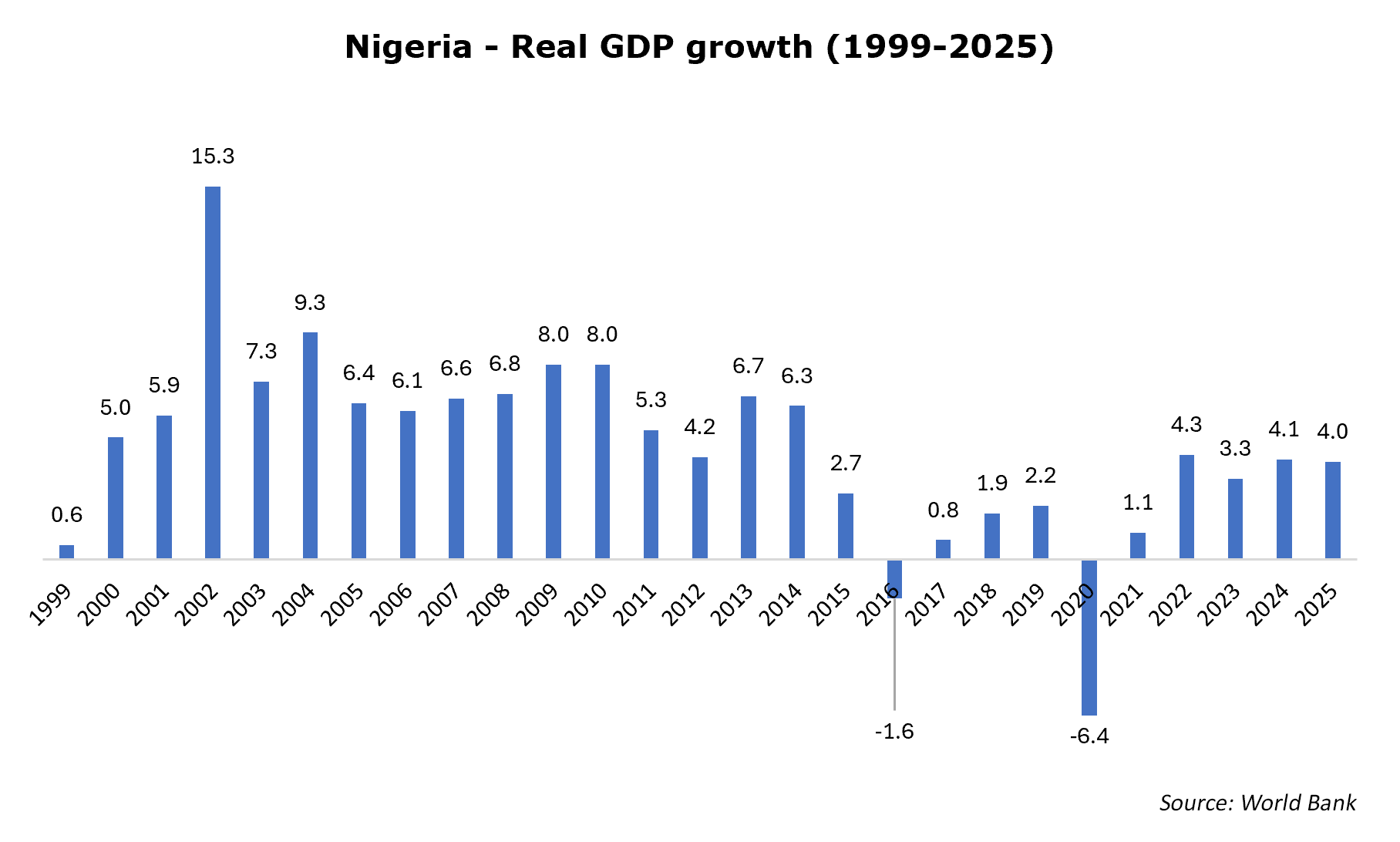
In 2023, the NTU-SBF Centre for African Studies published “Back to Growth: Priority agenda for the economic revival of Nigeria”, a 10-year economic roadmap for Nigeria.[1] Three years later, the Nigerian economy has stabilised.[2],[3] Still, rising economic growth, from 1% in 2021 to 4% in 2025, and most recently to 4.4% in the second quarter of 2026, is not creating enough new jobs nor increasing incomes. Foreign portfolio investors were already warming up to the Nigerian equity market in late 2026, evidence that the 2023-26 economic reforms were considered to be credible, as pre-reform fears that disqualified Nigerian stocks from being in their portfolios, ease.[4] Economic stabilisation has come at a huge cost for many Nigerians, however. A hard-biting cost of living crisis since 2023 has become a major point in the upcoming 2027 general elections.[5] Securing and improving the business environment, enabling greater access to finance for firms, plugging the infrastructure gap, especially the gas-to-power value chain of the electricity sector, as well as robust incentives to attract foreign direct investment into the value chains of the agriculture, oil and gas, mining, and manufacturing sectors will be key to enabling much-needed higher, broad-based, and sustainable economic growth. Having achieved the first phase of our 10-year economic roadmap for macroeconomic stability through bold reforms in 2023-25, the Nigerian government must now implement complementary reforms to achieve the second phase objective of boosting economic growth from 4% in 2025 to at least 7% by 2030. The updated action plan (see appendix) highlights in greater detail the objectives, targets, and tasks across the sectoral and policy spectrum towards achieving the 7% 2026-30 economic growth objective.
Return to fiscal responsibility and continued monetary policy orthodoxy remain key
Strong economic reforms since mid-2023, from the floating of the naira, stoppage of fuel subsidies, and a phased liberalisation of electricity pricing, which have stabilised the hitherto struggling economy, have also been impoverishing and caused a cost-of-living crisis. Nigeria's poverty headcount ratio rose to 61% of the population in 2025, from 40% in 2019, according to the World Bank. A cash transfer program to ease the cost-of-living crisis from hard biting reforms underwhelmed.[6] In US dollar terms, the size of the Nigerian economy has more than halved since 2019, when nominal GDP was US$668bn, to US$291bn in 2025, when the exchange rate was about 1,500 naira to a US dollar. Were the exchange rate stronger, at about 400 naira to a US dollar that it was before the mid-2023 naira devaluation, for instance, the 2025 nominal GDP (size of the economy) of N441.54trn would be US$1.1trn in US dollar terms. The Nigerian government has been hard-pressed to show how savings from the removal of fuel subsidy have been spent, amid increased foreign borrowing like the US$4.5bn refinancing of state oil firm NNPC Limited’s erstwhile US$3.3bn crude oil forward-sale loan in August 2026 (which was originally arranged in late 2023); a US$5bn total return swap facility from the United Arab Emirates’ First Abu Dhabi Bank in 2026 that is already being drawn down, and a planned Eurobond.[7],[8],[9],[10] Rising fiscal opacity, amid noteworthy cases of unreported spending in 2023-26, overlapping annual budgets and serial breaches of the fiscal responsibility law, are growing concerns.[11],[12] Tax revenue has improved significantly in 2026 thus far, as new tax laws enable the authorities to digitise the collection process and deploy more effective compliance measures, as well as administrative measures to centralise the pooling of federal revenue.[13],[14] The authorities also plan to sell state assets to generate revenue for planned 2026-27 spending.[15] Nigeria will spend US$11.6bn to service debt in 2026, equivalent to about half of projected revenue for the year.[16] The budget deficit is expected to widen to more than double the 3% of GDP legal cap in 2026, although fiscal consolidation subsequently might be elusive, owing to the urgency for more public spending to facilitate higher economic growth.[17] Even so, the authorities should put in greater effort towards reducing deficit spending to the 3% of GDP level allowed by the fiscal responsibility law.
The Central Bank of Nigeria (CBN) cut interest rates by 50 basis points to 26.5% in February 2026, and kept rates unchanged since, while also holding on to 45% of bank reserves (as at end-August 2026).[18] The global economic effects of the 2026 US-Iran war, and an expected rise in spending ahead of the 2027 general elections, will force the central bank to maintain a policy tightening stance in 2026-27 to check inflation, although it will face tremendous pressure to become accommodative once these inflationary risks recede. Doubling hard currency reserves to US$100bn from US$54bn in early September 2026, which is possible if the central bank continues to accrete foreign exchange reserves rather than waste them on interventions to artificially strengthen the naira, could organically boost the local currency to exchange at 750 naira to a US dollar by 2028, and even stronger to 500 naira (or much lower) by 2030, from about 1,300 naira in mid-September 2026. In that event, a US$1trn Nigerian economy by 2030 is probable. But this will require focused, consistent, and reinforcing economic reforms, with no policy reversals after phasal gains. Thus, complementary economic reforms to leverage upon the 2023-26 stabilisation of the Nigerian economy must be the immediate priority of the Nigerian authorities. The authorities might be tempted to use rising foreign exchange reserves to artificially strengthen the naira closer to the 400-500 naira to a US dollar pre-2023 devaluation exchange rate, but this will be ill-advised: an organic approach will be more sustainable. Continuing to manage the economy credibly, enabling incentives for more big-firm listings on the Nigerian Stock Exchange (after imminent public stock listings of the Indian-facilitated Dangote crude oil refinery and China-backed fintech firm OPay), as well as inclusion in more global market indices (after the inclusion of selected big stocks on the Nigerian Stock Exchange in the FTSE Russell’s frontier market index in September 2026), will attract higher foreign portfolio investment, boosting hard currency reserves, and strengthening the naira.[19]
Secure and improve the business environment to boost industrial growth
Widespread insecurity has become one of the most significant factors weighing on doing business in Nigeria.[20] Structural constraints have enabled the entrenchment of a sharply growing criminal shadow economy, ranging from kidnapping, banditry, extortion, to terrorism, further worsening widespread insecurity across a country where about two-thirds of the population are poor.[21] The United States withdrew its troops from Nigeria in August 2026, after about a 6-month deployment to assist Nigerian authorities tackle expanding Islamist terrorism in northern and central Nigeria.[22],[23] After a botched coup attempt to oust Bola Tinubu, Nigeria’s civilian president, in October 2025, amid rising insecurity across the country, the federal government increased the salaries of members of the armed forces by up to 80% in August 2026, after increasing the number of army divisions and ordering the recruitment of more soldiers.[24],[25],[26] Constitutional amendments to allow 36 subnational police forces to complement the federal police have passed through most of the legislative hurdles, making them imminently available to tackle the security crisis, although there is a significant risk they might worsen the situation over time, as armed regional forces with widely divided worldviews, from Islamic shariah law in northern Nigeria to entrenched local religion-tribal allegiances in southern Nigeria, might eventually resort to armed conflict to push subnational political agendas.[27]
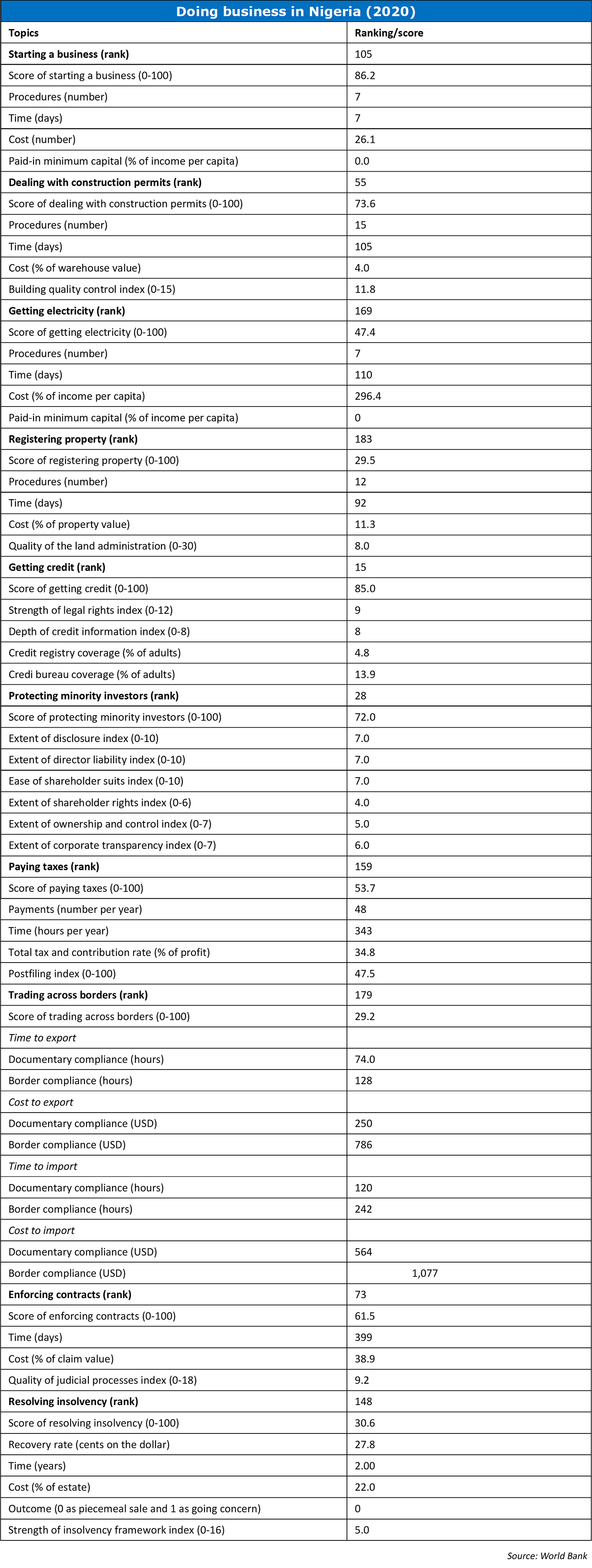
The Nigeria Industrial Policy (2025-35) aims to grow manufacturing to at least a quarter of yearly economic output by 2035, from less than a tenth in 2015-24.[28] A huge infrastructural deficit, if not addressed, will weigh on this ambition. More than 86m Nigerians do not have access to electricity, for instance, and firms continue to grapple with unstable power supply, constraining their ability for productivity and job creation. Enforcing contracts also continues to be hugely problematic for firms (see appendix). The success of the new US$20bn 700,000 barrels/day (b/d) Dangote crude oil refinery, which started operating at full capacity in 2026, with the promoter planning to double its capacity with an additional US$14.3bn investment to 1.4m b/d in 2029, shows how government incentives and facilitation, as well as entrepreneurial doggedness, can enable a private sector-led industrial revival; in this case, of a hitherto import-dependent Nigerian downstream petroleum industry.[29], [30],[31] Less than a year into full operations, the Dangote refinery was already driving the export of more than 500,000 barrels/day of petroleum products from Nigeria on average in mid-2026, from less than 80,000 b/d just three years earlier in 2023, as well as adequately meeting domestic fuel demand.[32] The Nigerian government has also been enabling a raft of incentives to boost investment in upstream deep-water crude oil exploration, as it tries to double crude oil production to 3m b/d by 2030.[33],[34],[35]
But similar progress has not been made in the Nigerian electricity supply industry, as subsidies remain for consumers at the bottom of the pyramid, metering remains inadequate, transmission losses continue, gas supply remains erratic, and participants in the value chain, from generation, transmission, to distribution, remain severely financially constrained. To revive the electricity supply industry, and other struggling to non-existent industrial complexes, greenfield projects by private investors, with state-facilitation to remove any existing structural constraints that might undermine their viability, have demonstrably become the most effective approach for achieving the country’s industrialisation objectives. Thus, the latest attempt by the government to partner with private investors to revive moribund state-owned steel-producing plants is unlikely to be successful.[36] A US$1.3bn alumina refinery financing deal by the Africa Finance Corporation in early 2026 represents the type of greenfield industrial projects, from exploration to processing, that the private sector should be incentivised to finance and build instead.[37] Without significantly resolving the insecurity constraint, however, the private sector will continue to be hesitant about making long-term investments in Nigerian industrialisation.
Incentivise gas-to-power value chain for more private investment in electricity supply
Reliable and adequate supply of electricity will add at least 5% to real GDP growth. But huge financial constraints, infrastructural bottlenecks, irregular subsidies, electricity tariffs that are not cost-reflective, and unreliable gas supply paid for in hard currency, continue to weigh on the electricity supply industry.[38] Ample proven gas reserves of at least 215trn cubic feet, one of the world’s ten largest, have not been successfully commercialised for domestic power production, as most of what has been developed are being used to produce liquefied natural gas (LNG) for export.[39] Gas producers have liberty to choose between selling to an underwhelming domestic electricity generation market or to a highly lucrative and reliable LNG export market. To incentivise more gas production for the domestic market, the authorities licensed private firms to be supplied gas associated with crude oil production that would otherwise be flared by oil producing companies but has recorded limited success thus far.[40] In any case, gas-powered electricity generation stations cannot produce at full capacity owing to a transmission grid capacity bottleneck, which caps the amount of electricity that can be wheeled to distribution companies to about two-thirds of existing total electricity generation capacity in the country.
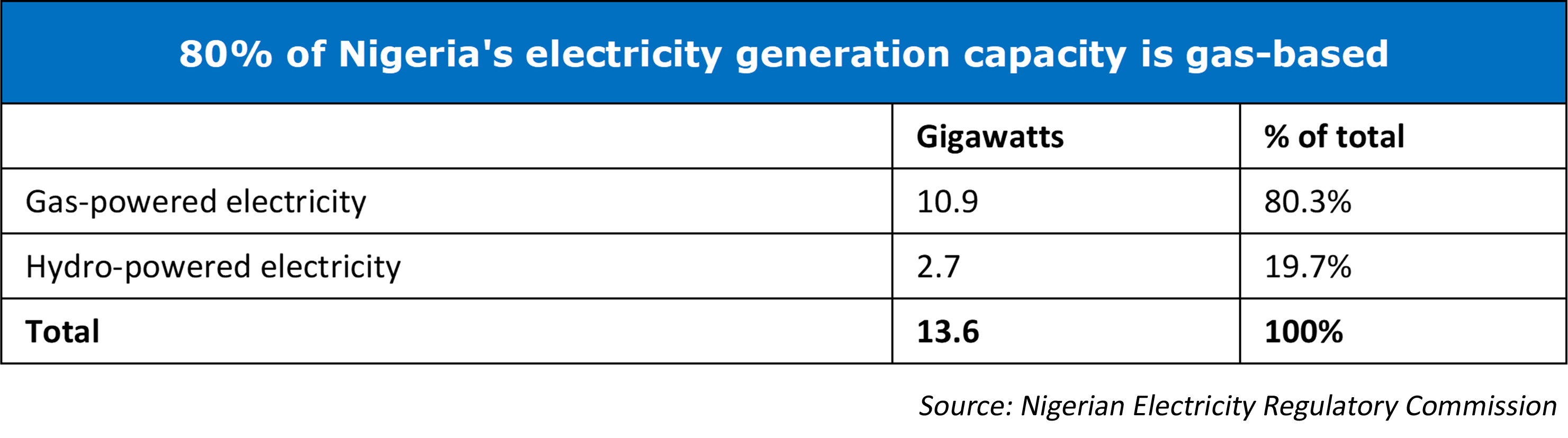
With an installed electricity generation capacity of 13.6 gigawatts (GW) in 2026, only 8.7GW can be wheeled at any one time through the national grid, owing to capacity constraints of the transmission system, although no more than 5.8GW has ever been generated for transmission, according to the authorities.[41],[42] Without enough revenue, electricity generation companies perennially fail to make payments for even the little gas that is supplied, which can be as low as less than half of their optimal daily requirement of 1.6bn standard cubic feet.[43] Electricity producers must also make their gas payments in hard currency, causing a currency mismatch for the firms. A lot of last-mile electricity consumers also fail to fulfill their payment obligations, many remain unmetered, and a significant number of consumers at the bottom of the pyramid tap electricity illegally, leaving electricity distribution companies continuously financially constrained.[44] Besides, a great deal of electricity transmitted is lost in transit. The government does not have the capacity to expand the electricity transmission infrastructure to meet rising generation capacity, leaving most of it dormant.
Private investment will be required to upgrade the electricity transmission infrastructure. But this will require the removal of the structural constraints that have weighed on the Nigerian power sector for so long. Cost-reflective tariffs must be applied across all electricity consumer segments. The transmission infrastructure should be concessioned to a private operator, with firm investment commitments to repair, upgrade, and expand the grid via binding contracts and timelines. As much gas as is required for domestic electricity production must be supplied to generation stations, insofar as the buyer is willing and able to pay the market price when due. But this will require the authorities to liberalise local gas pricing and stop subsidies across the entire electricity supply industry value chain. Government initiatives to commercialise otherwise flared gas by oil producers have probably been slow-moving because of these market constraints. Oil producers also continue to prefer supplying feedstock for a more predictable and lucrative liquefied natural gas export market, over a floundering domestic power sector that perennially underpays and thus piles up their receivables. The authorities’ effort to provide financial relief for players in the electricity supply industry will hardly be effective without the requisite structural reforms of the sector.
Enable greater access to finance for firms
Nigerian banks raised N4.65trn (US$3.5bn) in fresh capital in 2024-26, to meet the central bank’s recapitalisation directive by end-March 2026.[45] But doubts remain about how much of the new capital will be used to finance the real economy in the face of lucrative risk-free investment opportunities in government securities and moderately risky large-sized firms.[46] While efforts are also underway by the authorities to tap the country’s US$22bn pension fund industry to finance Nigeria’s US$100bn yearly infrastructure financing requirement, much greater financing at scale would be required from domestic and foreign sources to significantly fill the gap.[47] Just a little more than a tenth of Nigerian firms get affordable access to credit, as interest rates are high, documentation requirements are onerous, and collateral demanded by banks tend to be overwhelming. Small and medium-sized enterprises (SMEs), which contribute to almost half of yearly economic output, and employ more than two-fifths of the working population, face severe and longrunning constraints on access to affordable and sustainable finance. According to the World Bank, private sector credit extension in Nigeria is less than a quarter of GDP, undershooting even the continental average. Previous solutions to enable greater and cheaper access to credit, for small and medium-sized enterprises especially, ranging from development finance institution-backed guarantees, credit enhancements, and others have thus far underwhelmed, since as they are bounded, they have not scaled, and thus not sustainable. Moral hazard, arbitrage, perverse incentives, and corruption consistently make these initiatives fall short.
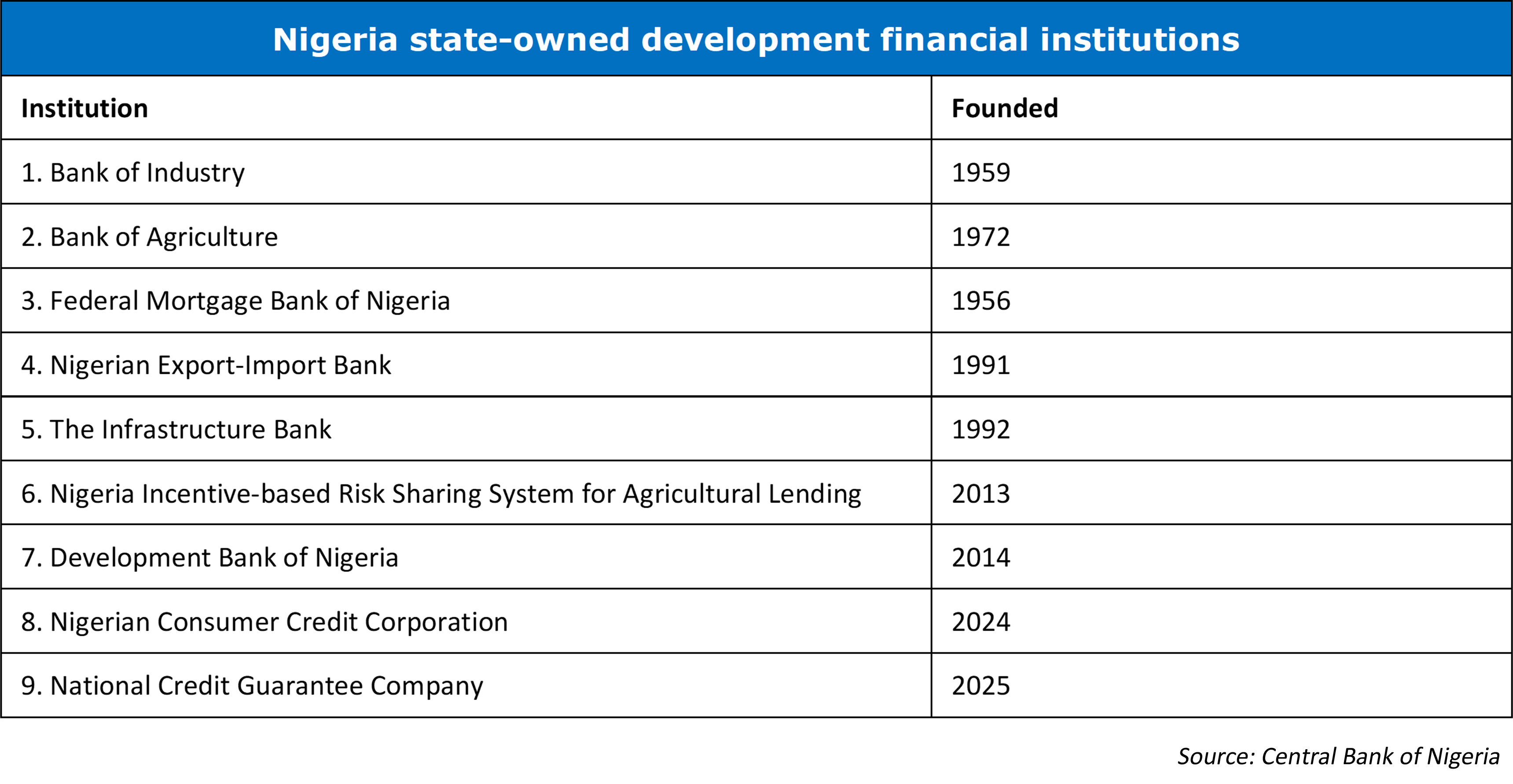
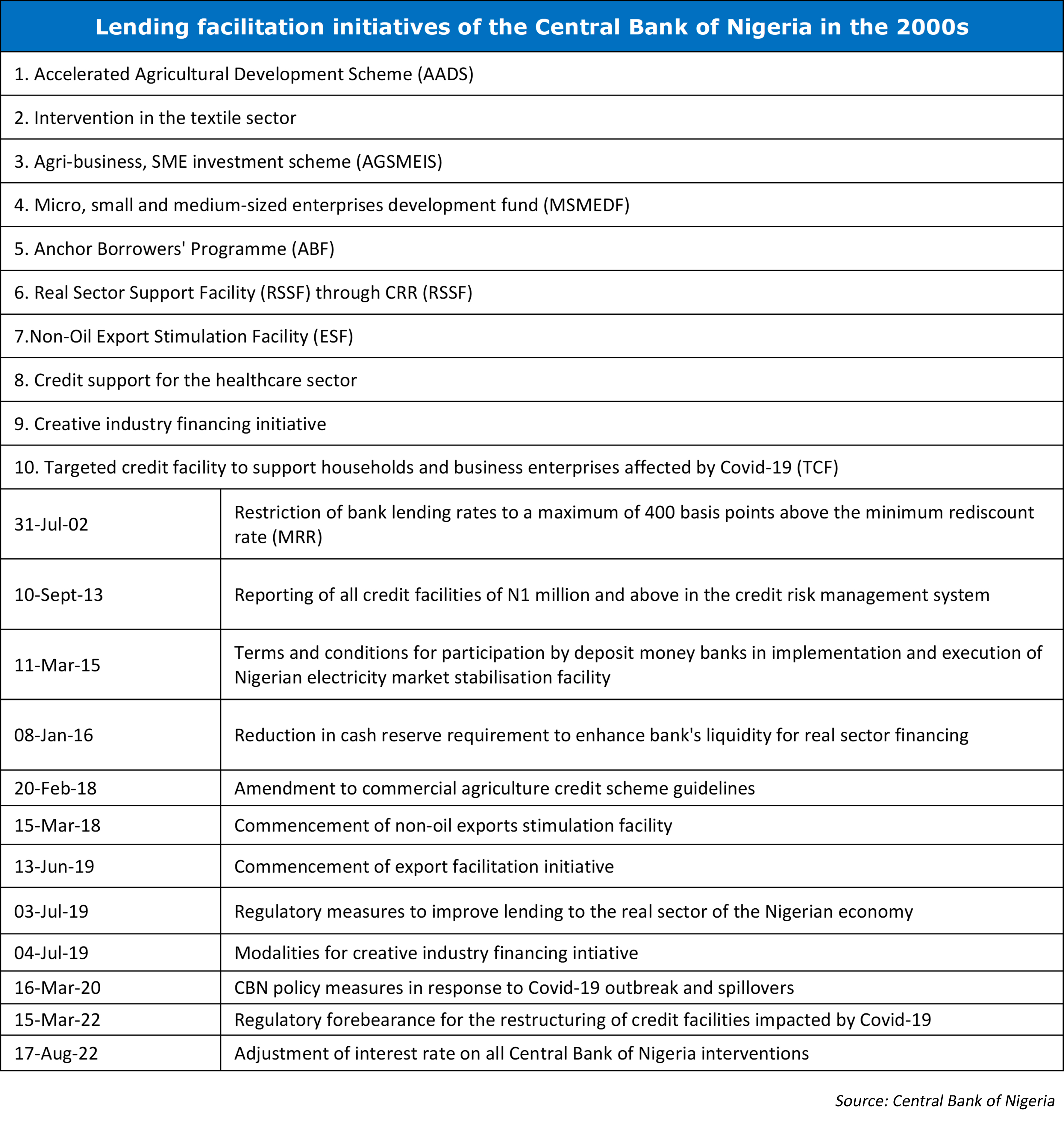 The World Bank plans to support Nigeria towards enabling investment-led growth in 2026-32. To enable easier and cheaper access to credit for SMEs at scale, the World Bank views credit enhancements, guarantees, co-financing, parallel financing, blended finance, structured finance, political risk insurance, risk-sharing facilities, supply chain finance, agent banking expansion, and movable asset-based lending as viable and scalable pathways it could facilitate for solving the continuing credit drought constraining SME growth. But this would require contemporaneous effort on the part of the authorities. Commercial banks, which hold about a quarter of their assets in government securities, and just recently recapitalised, will require a suite of simple, scalable and sustainable incentives to increase their exposure to riskier lending. In 2019-23, the Central Bank of Nigeria (CBN) introduced numerous development financing initiatives to boost bank lending to the real sector. While on the face of it, these ideas were simple and potentially effective, they could not be scaled nor were they sustainable, owing to the administrative constraint imposed by the CBN on prior approval of every loan. The central bank could reintroduce the release of bank reserves for real sector lending without the constraining administrative requirement for its approval, leaving monitoring to existing routine banking supervision checks. In any case, the CBN is ordinarily able to monitor all loans outstanding on the online Credit Risk Management System (CRMS) that all banks are connected to. While domestic development finance institutions (DFIs) remain viable pathways to scale access to finance for firms, most of them remain hugely constrained by inadequate capital and slow bureaucracies (see appendix for list of Nigerian DFIs). For instance, the Bank of Agriculture (BoA), which was established in the early 1970s, has limited capital and inadequate number of branches in rural areas, although the recent transfer of past central bank interventions in the agriculture sector to the BoA, as well as the injection of additional capital, should enable it provide better services to farmers, who though largely have little faith in the institution owing to bureaucratic delays in securing loans, are also chronic loan defaulters.[48] The Nigeria government also plans to increase the capital base of the Bank of Industry (BoI), a positive outlier amongst Nigerian DFIs, which has disbursed N1.3trn (US$1bn) in loans to firms in 2023-25.[49] Robust domestic and foreign institutional investor support for the BoI over the years point to its scalable potential for financing SMEs and large firms, especially in the manufacturing sector.[50],[51]
Download the eBook version of "Back to Growth: Priority agenda for the economic revival of Nigeria".
Appendix
.jpg?sfvrsn=92d7704_1 "appendix (4)")
References
[1] Jain, A. (2023). Back to growth: Priority agenda for the economic revival of Nigeria. NTU-SBF Centre for African Studies. web.nbs.ntu.edu.sg/cas/e-book/Back-to-Growth-Priority-agenda-for-the-economic-revival-of-Nigeria.pdf
[2] Reuters. (2026, August 28). Moody's revises Nigeria's outlook to 'positive'. Reuters. https://www.reuters.com/world/africa/moodys-revises-nigerias-outlook-positive-2026-08-28/
[3] Reuters. (2026, May 15). S&P lifts Nigeria's ratings on improving macroeconomic profile. https://www.reuters.com/world/africa/sp-lifts-nigerias-ratings-improving-macroeconomic-profile-2026-05-15/
[4] Nwachukwu, I. (2026, August 28). FTSE return puts Nigerian stocks back on foreign investors’ radar. BusinessDay. https://businessday.ng/markets/article/ftse-return-puts-nigerian-stocks-back-on-foreign-investors-radar/
[5] George, L. and Achirga, A. (2026, August 10). Nigerians’ cost of living pain deepens as election looms. Reuters. https://www.reuters.com/world/africa/nigerians-cost-living-pain-deepens-election-looms-2026-08-10/
[6] World Bank. (2026). Country partnership framework for the Federal Republic of Nigeria for the period FY26-FY32. https://www.worldbank.org/ext/en/country/nigeria/cpf#
[7] Eboh, C. (2026, July 30). Nigeria says subsidy savings absorbed by debt costs, higher spending. Reuters. https://www.reuters.com/world/africa/nigeria-says-subsidy-savings-absorbed-by-debt-costs-higher-spending-2026-07-30/
[8] Eboh, C. (2026, August 4). Nigeria approves $4.5 billion refinancing of NNPC oil-backed facility. Reuters. https://www.reuters.com/business/energy/nigeria-approves-45-billion-refinancing-nnpc-oil-backed-facility-2026-08-04/
[9] Sofia, N. (2026, June 29). Nigerian Government Seeks Advisers for Planned Eurobond Offering. Bloomberg. https://www.bloomberg.com/news/articles/2026-06-29/nigerian-government-seeks-advisers-for-planned-eurobond-offering
[10] Orjinmo, N. (2026, June 26). Nigeria Draws First Tranche of $5 Billion Swap With UAE Bank. Bloomberg. https://www.bloomberg.com/news/articles/2026-06-26/nigeria-draws-first-tranche-of-5-billion-swap-with-uae-bank
[11] Reuters. (2026, July 1). Nigeria's unreported spending equals 2% of GDP, IMF official says. https://www.reuters.com/world/africa/nigerias-unreported-spending-equals-2-gdp-imf-official-says-2026-07-01/
[12] Tunji, S. (2026, March 13). States demand forensic audit of $8.8bn crude-for-loan deals. Punch. https://punchng.com/states-demand-forensic-audit-of-8-8bn-crude-for-loan-deals/
[13] Orjinmo, N. (2026, June 18). Nigeria Tax Revenue Jumps 49% on Overhaul, New Oil Levies. Bloomberg. https://www.bloomberg.com/news/articles/2026-06-18/nigeria-tax-revenue-surges-49-to-11-6-billion-on-reforms
[14] Reuters. (2026, February 18). Nigeria directs all oil, gas revenues to federation account in sweeping reform. https://www.reuters.com/business/energy/nigeria-directs-all-oil-gas-revenues-federation-account-sweeping-reform-2026-02-18/
[15] Magdy, M. & Osae-Brown, A. (2026, February 10). Nigeria Targets State Asset Sales to Private Investors This Year. Bloomberg. https://www.bloomberg.com/news/articles/2026-02-10/nigeria-targets-state-asset-sales-to-private-investors-this-year
[16] Ailemen, A. (2026, May 12). Nigeria to spend $11.6b on debt servicing in 2026 – Tinubu. BusinessDay. https://businessday.ng/news/article/nigeria-to-spend-11-6b-on-debt-servicing-in-2026-tinubu/
[17] Eboh, C. (2026, March 31). Nigerian lawmakers approve increased $49.4 billion 2026 budget. Reuters. https://www.reuters.com/world/africa/nigerian-lawmakers-approve-increased-4938-billion-2026-budget-2026-03-31/
[18] Bala-Gbogbo, E. & Ohuocha, C. (2026, February 24). Nigeria central bank opts for small rate cut to restart easing cycle. Reuters. https://www.reuters.com/world/africa/nigeria-central-bank-cuts-key-rate-by-50-basis-points-2026-02-24/
[19] Ajia, J. (2026, September 4). FTSE Russell adds 10 Nigerian firms to index. Punch. https://punchng.com/ftse-russell-adds-10-nigerian-firms-to-index/
[20] Chibuife, I. (2026, May 20). Insecurity tops list of business constraints, says CBN survey. The Guardian. https://guardian.ng/business-services/insecurity-tops-list-of-business-constraints-says-cbn-survey/
[21] Judah, J. (2026, March 18). Nigeria struggles to contain spreading security crisis. Financial Times. https://www.ft.com/content/0736a60c-09d3-4c39-bb18-c04c5eba5e49
[22] Schmitt, E., Jammeh, S., & Auwal, I. (2026, August 27). U.S. to Withdraw 200 Troops Sent to Nigeria Under Trump. The New York Times. https://www.nytimes.com/2026/08/27/us/politics/nigeria-trump-troops-terror-attacks.html
[23] Wan, A. (2026, May 16). Trump Says US Forces, Nigeria Military Killed ISIS Leader. Bloomberg. https://www.bloomberg.com/news/articles/2026-05-16/trump-says-us-forces-nigeria-armed-forces-killed-isis-leader
[24] Eboh, C. (2026, August 4). Nigeria's Tinubu approves military pay rise as security challenges persist. Reuters. https://www.reuters.com/world/africa/nigerias-tinubu-approves-military-pay-rise-security-challenges-persist-2026-08-04/
[25] Eboh, C. (2026, July 24). Nigeria’s Tinubu approves army expansion to 12 divisions with 28,000 new recruits. Reuters. https://www.reuters.com/world/africa/nigerias-tinubu-approves-army-expansion-12-divisions-with-28000-new-recruits-2026-07-24/
[26] Olurounbi, R. (2026, January 29). Nigeria Coup Bid Involved Officers Denied Promotion, Probe Finds. Bloomberg. https://www.bloomberg.com/news/articles/2026-01-29/nigeria-coup-bid-involved-officers-denied-promotion-probe-finds
[27] Folorunsho-Francis, A. (2026, June 29). State police: NASS sends bill to 36 states’ assemblies. Punch. https://punchng.com/state-police-nass-sends-bill-to-36-states-assemblies/#google_vignette
[28] Federal Republic of Nigeria (2025). Nigeria industrial policy. https://nipc.gov.ng/assets/resources/nigeria-industrial-policy-2025/nigeria-industrial-policy-2025.pdf
[29] Raji, R. (2026, April 30). Replicating the Dangote-India B2B model for African industrialisation. NTU-SBF Centre for African Studies. https://www.ntu.edu.sg/cas/news-events/news/detail/replicating-the-dangote-india-b2b-model-for-african-industrialisation
[30] Anyaogu, I. (2026, September 7). Nigeria’s Dangote refinery plans $14 billion expansion as it signs IPO documents. Reuters. https://www.reuters.com/business/energy/nigerias-dangote-sign-refinery-ipo-documents-ceremony-later-monday-2026-09-07/
[31] Eboh, C. (2026, August 11). Dangote refinery spurs West Africa fuel trading hub ambitions. Reuters. https://www.reuters.com/business/energy/dangote-refinery-spurs-west-africa-fuel-trading-hub-ambitions-2026-08-11/
[32] Reuters. (2026, August 24). Dangote refinery drives seven-fold rise in Nigeria petroleum product exports, EIA says. Reuters. https://www.reuters.com/business/energy/dangote-refinery-drives-seven-fold-rise-nigeria-petroleum-product-exports-eia-2026-08-24/
[33] Bala-Gbogbo, E. (2026, August 11). Nigeria approves deep-water oil investment framework aimed at unlocking $50 bln. Reuters. https://www.reuters.com/business/energy/nigeria-approves-deep-water-oil-investment-framework-aimed-unlocking-50-bln-2026-08-11/
[34] Orjinmo, N. (2026, July 14). Shell gets more tax relief on $20 billion Nigerian oil project. Bloomberg. https://www.bloomberg.com/news/articles/2026-07-14/shell-gets-more-tax-relief-on-20-billion-nigerian-oil-project
[35] Adeoye, A. (2026, March 18). Move to unblock Nigeria’s oil sector hints at progress. Financial Times. https://www.ft.com/content/a51c010c-8086-46a0-929f-339636f21e57
[36] Okojie-Okeiyi, J. (2026, August 25). Private capital bets on Nigeria’s $4bn steel gap. BusinessDay. https://businessday.ng/business-economy/article/private-capital-bets-on-nigerias-4bn-steel-gap/
[37] Eboh, C. (2026, March 2). Nigeria, AFC sign $1.3 billion deal to build alumina refinery. Reuters. https://www.reuters.com/business/energy/nigeria-afc-sign-13-billion-deal-build-alumina-refinery-2026-03-02/
[38] George-Ikoli, T. & Sayne, A. (2026). Nigeria’s gas-to-power ambitions: Limits, opportunities and alternatives. Natural Resource Governance Institute. https://resourcegovernance.org/sites/default/files/2026-07/Nigeria_gas_power_limits_opportunities_alternatives.pdf
[39] Nigerian Upstream Petroleum Regulatory Commission. (2026, April 1). Media release on the national annual petroleum reserves position as at 1st January 2026 [Press release]. https://www.nuprc.gov.ng/media/news/5fa3f1a3c8223aa7c4dc4a39
[40] Nigerian Upstream Petroleum Regulatory Commission. (2026, September 9). Awardees of gas flare sites could lose permits if not utilised, NUPRC says [Press release]. https://www.nuprc.gov.ng/media/news/fedc854607cd9d47ddc2c947
[41] Nigerian Electricity Regulatory Commission. (2026). 2026 quarterly report: Q1. https://nerc.gov.ng/wp-content/uploads/2026/07/2026_Q1-Report.pdf
[42] Aina, D. (2026, June 9). TCN rejects claims of transmission grid constraints. Punch. https://punchng.com/tcn-rejects-claims-of-transmission-grid-constraints/
[43] Ogunseyin, O. (2026, February 27). NISO attributes Nigeria’s poor electricity to inadequate gas supply. The Guardian. https://guardian.ng/energy/niso-attributes-nigerias-poor-electricity-to-inadequate-gas-supply/
[44] Oladipo, O. (2026, August 25). Electricity subsidy trap leaves 9 of 11 DisCos on government life support. BusinessDay. https://businessday.ng/energy/article/electricity-subsidy-trap-leaves-9-of-11-discos-on-government-life-support/
[45] Ogwu, S. (2026, April 8). Nigeria concludes N4.65 trillion bank recapitalisation programme. African Business. https://african.business/2026/04/finance-services/nigeria-concludes-4-65-trillion-bank-recapitalisation-programme
[46] The Editorial Board. (2026, September 7). Letting capital reach the businesses that create jobs. BusinessDay. https://businessday.ng/editorial/article/letting-capital-reach-the-businesses-that-create-jobs/#google_vignette
[47] Onu, E. (2026, July 9). Nigeria’s $22 Billion Pension Industry Eyes Infrastructure Fund. Bloomberg. https://www.bloomberg.com/news/articles/2026-07-09/nigeria-s-22-billion-pension-industry-eyes-infrastructure-fund
[48] Daily Trust. (2026, July 18). Farmers worry over Bank of Agriculture services, call for restructuring. https://dailytrust.com/farmers-worry-over-bank-of-agriculture-services-call-for-restructuring/
[49] Nwachukwu, I. (2026, February 25). FG plans N3trn capital for Bank of Industry by 2026. BusinessDay. https://businessday.ng/companies/article/fg-plans-n3trn-capital-for-bank-of-industry-by-2026/
[50] Africa Finance Corporation. (2024, December 3). AFC leads up to €2 billion syndicated facility in largest-ever global loan syndication for Bank of Industry [Press release]. https://www.africafc.org/news-and-insights/news/afc-leads-up-to-2-billion-syndicated-facility-in-largest-ever-global-loan-syndication-for-bank-of-industry
[51] Daka, T. (2026, August 18). BOI bond oversubscription signals investor confidence in Nigeria’s economy. The Guardian. https://guardian.ng/news/boi-bond-oversubscription-signals-investor-confidence-in-nigerias-economy/