China is driving rising African automotive electric vehicle trade
Overcapacity of Chinese automotive manufacturers is making overseas expansion not just necessary but existential
By Rafiq Raji

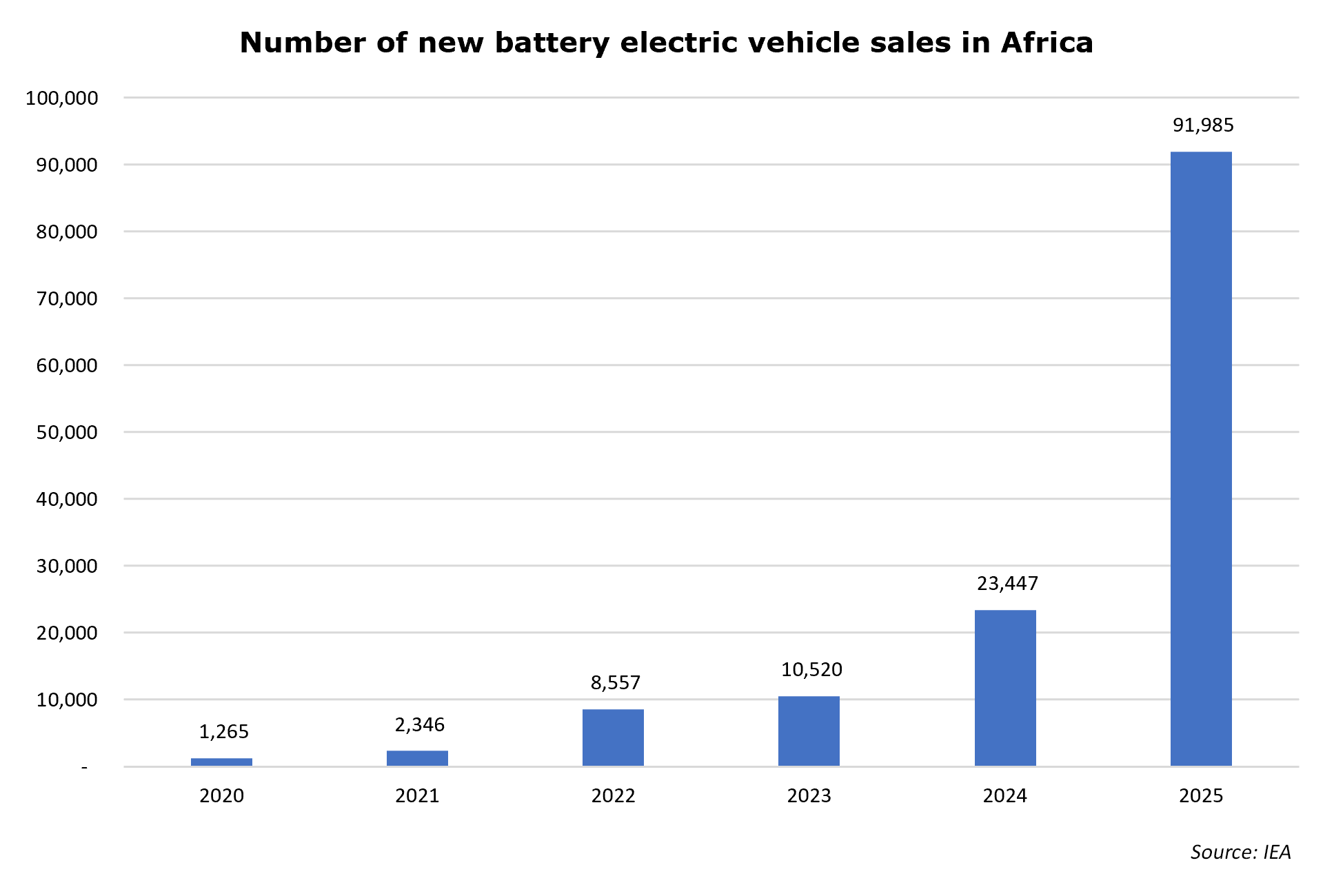
Chinese EV imports and local assembly are growing in African markets
Chinese EV manufacturers will increasingly rely on overseas markets for new sales, as EV penetration in China races to saturation, with BYD estimating it could easily be 80% in a few years, from the Chinese Passenger Car Association’s estimation of a 63% penetration already in May 2026. [4],[5] Chinese authorities are already taking measures to slow the rising automotive manufacturing overcapacity, permanently revoking the local vehicle production licences of eight automakers in June 2026, making the overseas expansion of Chinese automotive firms not just necessary but existential. [6] African consumers bought more than 44,000 Chinese EVs in 2025 (a third of that by Ethiopia), a 129% year on year rise from about 19,000 in 2024, with fuel shortages due to the Iran war in February-June 2026 expected to drive even much higher sales in 2026. [7] An Ethiopian ban on imports of internal combustion engine vehicles (ICEVs) also underpins the booming EV automotive trade. [8] Ethiopia’s rapid EV evolution is particularly striking, not only because it is a low-income economy and until recently (after the commissioning of the 6,450MW Grand Ethiopian Renaissance Dam in September 2025) suffered severe electricity shortages, it is almost entirely Chinese-driven, from financing, imports, to local assembly. [9] In early 2026, the Ghanaian government announced it was developing a partnership with China’s Shenzhen New Jekyll and Chery to build EV assembly plants in Ghana as well. [10] Nigerian and Kenyan automotive firms are also assembling EVs using Chinese-made components. [11],[12],[13]
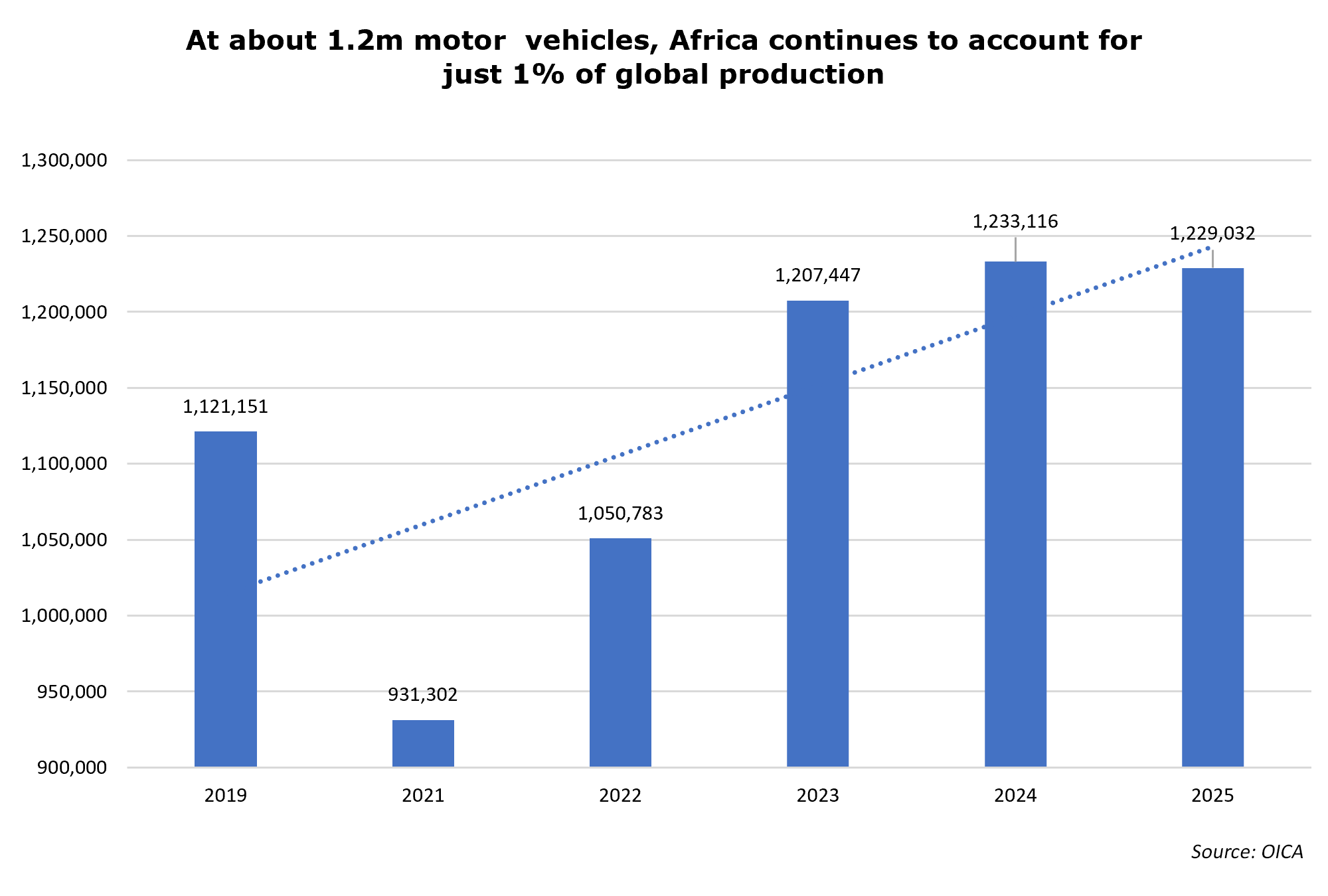
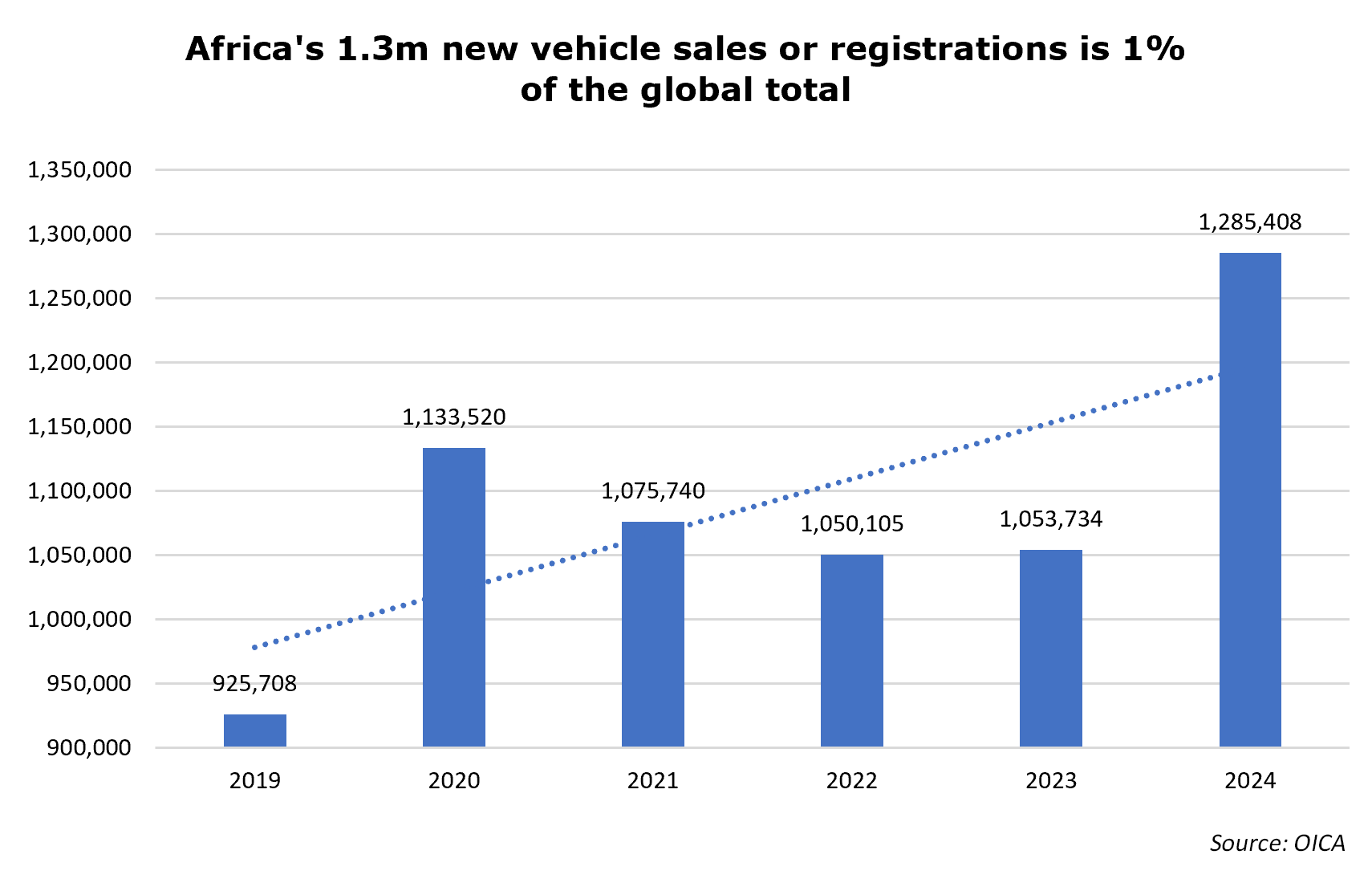
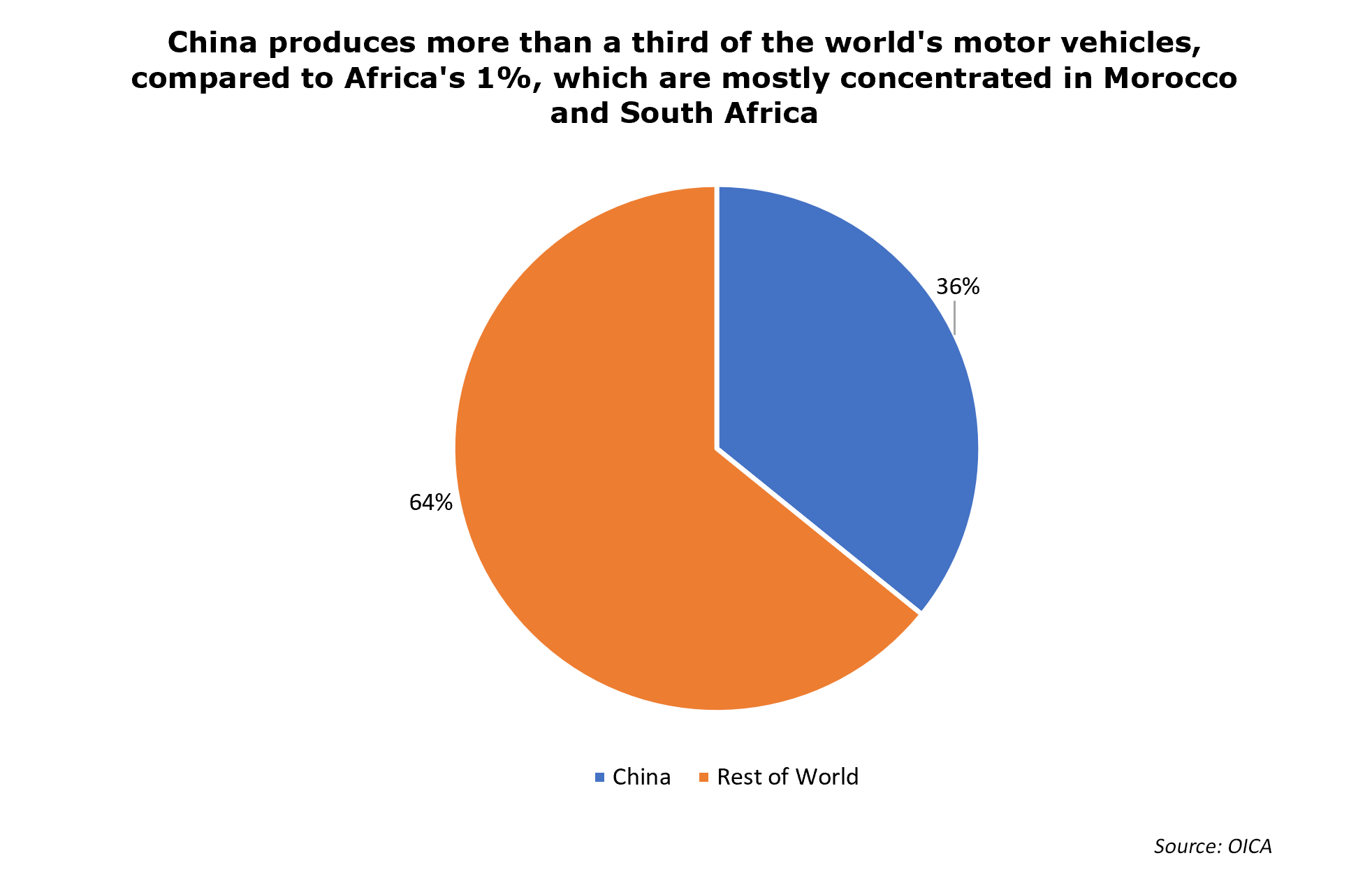
Rising Chinese manufacturing investment in South Africa’s automotive industry is partly in response to planned tariffs of up to 50% on Chinese and Indian automotive imports, as the South African government tries to protect local firms, as well as increasingly more aggressive Western trade restrictions on Chinese vehicle imports.[14],[15],[16] Chery, a Chinese automotive manufacturer, is taking over a South African plant for local assembly of internal combustion engine vehicles (ICEVs) and electric vehicles (EVs), where it plans to export them to other African markets as well as Europe, with production expected to start from end-2027.[17] Chinese automotive manufacturers are reacting to the US-led global tariff war on Chinese goods, as well as industrial policy measures by the South African government, which is keen to protect the local automotive manufacturing industry.[18],[19] Spiro, a leading African electric motorbike provider, secured US$55m in funding from Chinese investors in June 2026 at almost a US$1bn valuation (threshold for so-called unicorn status), highlighting the wide-ranging engagement of Chinese firms across the evolving African EV value chain, from supplying equipment for local assembly, providing financing, to outright imports of EVs.[20]
Geely, which debuted in the South African market with electric and hybrid vehicles in late 2025, is expanding its offering to include internal combustion engine vehicles (ICEVs), to enable it compete with already established and mostly Asian ICEV brands in that market.[21] Geely’s ICEV move highlights the dual reality across African automotive markets, where there is growing curiosity about electric vehicles, but practical needs continue to require that they remain complements to ICE vehicles. In other words, an African EV owner will almost always rely on an ICEV for more tasking activities, only using the EV for more predictable commutes, and outings. This is in part due to still limited charging infrastructure, which remain mostly in big cities, and are still few and far in between, as well as how long each charge lasts. EVs are also relatively pricier. China’s BYD, which entered the South African EV market in 2023, is selling its EVs at comparable prices with ICEVs, however, a bet that consumers will increasingly make a binary choice between acquiring an EV or an ICEV.[22]
US plans in May 2026 to deepen restrictions on Chinese vehicles over national security concerns will benefit African economies looking to boost their automotive industries, as Chinese automakers face greater urgency to look for new markets to absorb their overcapacity, although local assemblers may find it hard to compete, even with industrial policy measures to force Chinese manufacturing investment.[23] Chinese automotive brands, which already make up 40% of new vehicle sales in South Africa, have begun moving towards localising their production, with Jetour and Chery expected to start producing some of their models in South Africa from a retrofitted Rosslyn plant in 2027 if the ongoing acquisition from Nissan by Chery (Jetour’s parent company) is concluded by mid-2026.[24],[25],[26],[27]
Morocco’s proximity to Europe, its free trade agreement with both the European Union and United States, its relatively better infrastructure, as well as its established automotive manufacturing industry, are enabling Chinese automotive manufacturers operating there to continue to ensure the competitiveness of their electric vehicles, which are slammed with up to 45% in tariffs by the European Union if they originate from China.[28],[29] China’s Gotion High-Tech is investing US$5.6bn in an up to 100 gigawatt-hours (GWh) per year battery gigafactory (20GWh initially) in Morocco, to produce cathodes and anodes for EV batteries for mainly European markets, as well as African ones, enabling Chinese manufacturers to localise even more of their EV production across most of the value chain, thus addressing any lingering concerns about rules of origin violations.[30] Chinese firms are also building a similar EV manufacturing ecosystem in South Africa.[31]
African governments should defer EV revenue ambitions for production incentives
In our 2021 “Electric Vehicles: An ironic African opportunity?” article, we assessed a 50,000 to 300,000 new annual EV sales by 2030 (already about 100,000 in 2025) to be realistic, especially as technological improvements will increasingly make them relatively affordable, and highlighted South Africa, Nigeria, Egypt and Kenya as the likely critical African EV markets by then. We also recommended African governments provide financial and non-financial incentives to enable faster EV adoption across the continent. Just five years on, Ethiopia has banned ICEV imports, Kenya is considering import tax waivers for EVs, South Africa is widening the scope of its automotive incentives to include processing minerals used for EV batteries, with many other African economies introducing measures to advance their EV adoption objectives as well (see Appendix).[32],[33],[34] Ethiopia’s National Electric Mobility Strategy and Implementation Plan (2025-30) similarly expands on earlier EV adoption initiatives to a broader focus on developing an EV value chain from minerals processing to EV assembly, a green industrialisation opportunity.[35],[36]
In April 2026, the Nigerian government waived import duties on electric vehicles to make them more affordable, especially as the trade shocks from the 2026 Iran war increasingly made ICEVs expensive to acquire and maintain.[37] Legislation to enable quicker and sustainable EV adoption in Nigeria is also in progress.[38] Even so, tax laws around automotive manufacturing, imports and sales in many African economies are still playing catch-up to the quickly evolving shift to EVs. In South Africa, for instance, where EV sales grew almost 19 times over the most recent 5-year period to about 17,000 new vehicles in 2025, from about 900 in 2021, the tax laws are still designed around ICEVs, although the urgency of the need to update them has now been recognised.[39] And even as many African governments are incentivising EV adoption, some are also increasingly seeing it as a revenue opportunity. In tax proposals announced in May 2026, the Kenyan government plans to impose a 16% value-added tax on electric vehicles, which are projected to number about 70,000 in new annual sales in 2030 from 2,700 units in 2023, although the first 100,000 EV imports will enjoy an import duty waiver.[40],[41] With EV adoption still in its infancy, African governments should focus more on developing the value chain, rather than hurrying to tap revenue from the trade.
.jpg?sfvrsn=bb947115_1 "appendix (2)")
References
[1] International Energy Agency (2026, May 20). Close to 30% of cars sold this year are set to be electric as countries and consumers respond to energy crisis. https://www.iea.org/news/close-to-30-of-cars-sold-this-year-are-set-to-be-electric-as-countries-and-consumers-respond-to-energy-crisis
[2] Raji, R. (2021, April 14). Electric Vehicles: An ironic African opportunity? Nanyang Business School. https://www.ntu.edu.sg/cas/news-events/news/detail/electric-vehicles-an-ironic-african-opportunity
[3] Mokonoto, B. and Prinsloo, L. (2026, May 15). Uber rival Bolt, China’s Dongfeng reach South Africa EV deal. Bloomberg. https://www.bloomberg.com/news/articles/2026-05-15/uber-rival-bolt-china-s-dongfeng-reach-south-africa-ev-deal
[4] Cheng, E. (2026, June 9). Electric vehicle giant BYD predicts 80% of China car sales will soon be electric. CNBC. https://www.cnbc.com/2026/06/09/electric-vehicle-giant-byd-predicts-80percent-of-china-car-sales-will-soon-be-electric.html
[5] Webster, J. And Jing, T. (2026, May 4). Chinese electric vehicle exports rise amid the oil crisis, posing a dilemma for importing countries. Atlantic Council. https://www.atlanticcouncil.org/blogs/energysource/chinese-electric-vehicle-exports-rise-amid-the-oil-crisis-posing-a-dilemma-for-importing-countries/
[6] Alves, M. (2026, June 17). China cancels eight automakers’ production rights in one sweep. Electric Vehicles. https://eletric-vehicles.com/general/china-cancels-eight-automakers-production-rights-in-one-sweep/
[7] Olingo, A. (2026, May 9). Fuel shortages and high prices push adoption of EVs in Africa, led by Ethiopia. AP. https://apnews.com/article/ethiopia-electric-vehicles-iran-war-d4d5ffa1a7b06d3b2e34d59dcc80f0e7
[8] Tadesse, F. and Rathi, A. (2026, February 18). Electric vehicle sales boom as Ethiopia bans fossil-fuel car imports. Bloomberg. https://www.bloomberg.com/news/features/2026-02-18/ethiopia-ev-boom-sparked-by-ice-car-import-ban
[9]Mutiso, R. and Tariq, H. (2026, April 17). New data puts Ethiopia among global EV leaders. Energy for Growth Hub. https://energyforgrowth.org/article/new-data-puts-ethiopia-among-global-ev-leaders/
[10] Ekanem, S. (2026, January 22). Ghana signs two China-backed EV deals to accelerate local vehicle assembly. Business Insider. https://africa.businessinsider.com/local/markets/ghana-signs-two-china-backed-ev-deals-to-accelerate-local-vehicle-assembly/sqyxkve
[11]Jones, W.D. (2026, March 19). Nigerian firms embrace kit-based EV assembly for cost savings. IEEE Spectrum. https://spectrum.ieee.org/ev-nigeria
[12] Olingo, A. (2026, February 18). Nigeria and Kenya lead Africa’s push for electric vans assembled from Chinese EV kits. AP. https://apnews.com/article/ev-africa-rideence-saglev-nigeria-kenya-f5082b95fccade232f00023aa4640b69
[13] Musau, D. (2026, February 5). The quiet rise of Chinese electric car assembly in Kenya. Business Daily. https://www.businessdailyafrica.com/bd/corporate/industry/manufacturing/the-quiet-rise-of-chinese-electric-car-assembly-in-kenya-5349492
[14] Pillay, Y. (2026, May 26). Cheap car imports from China and India tighten pressure on South Africa’s auto industry. IOL. https://iol.co.za/business-report/economy/2026-05-26-cheap-car-imports-from-china-and-india-tighten-pressure-on-south-africas-auto-industry/
[15]Cele, S. and Thukwana, N. (2026, January 27). South Africa weighs steep tariffs on Chinese, Indian autos. Bloomberg. https://www.bloomberg.com/news/articles/2026-01-27/s-africa-mulls-steep-tariffs-on-china-india-cars-as-imports-surge
[16] Dludla, N. (2025, June 26). Facing global headwinds, Chinese automakers make a play for Africa. Reuters. https://www.reuters.com/business/autos-transportation/facing-global-headwinds-chinese-automakers-make-play-africa-2025-06-26/
[17]Ekanem, S. (2026, April 1). Chinese carmaker targets South African market with new EV facility by end of 2027. Business Insider. https://africa.businessinsider.com/local/markets/chinese-carmaker-targets-south-african-market-with-new-ev-facility-by-end-of-2027/fmkgv5d
[18] Dludla, N. (2026, June 9). South Africa proposes extending auto incentives to battery minerals. Reuters. https://www.reuters.com/world/africa/south-africa-proposes-extending-auto-incentives-battery-materials-2026-06-09/
[19] Nyabiage, J. (2025, May 27). China eyes Africa as it shifts EV gears in face of US, EU tariffs. South China Morning Post. https://www.scmp.com/news/china/diplomacy/article/3311843/china-eyes-africa-it-shifts-ev-gears-face-us-eu-tariffs
[20] Prinsloo, L. (2026, June 22). Chinese backing helps African startup Spiro near unicorn status. Bloomberg. https://www.bloomberg.com/news/articles/2026-06-22/chinese-backing-helps-african-startup-spiro-near-unicorn-status
[21] Dludla, N. (2026, May 20). Geely to launch first petrol model in South Africa, targets 10-vehicle lineup. Reuters. https://www.reuters.com/world/asia-pacific/geely-launch-first-petrol-model-south-africa-targets-10-vehicle-lineup-2026-05-20/
[22] Dludla, N. (2026, April 15). BYD shuns price war in South Africa to build EV brand. Reuters. https://www.reuters.com/business/autos-transportation/byd-shuns-price-war-south-africa-build-ev-brand-2026-04-15/
[23]Ekanem, S. (2026, May 12). African automakers brace for impact as U.S. moves to ban Chinese car imports. Business Insider. https://africa.businessinsider.com/local/markets/african-automakers-brace-for-impact-as-us-moves-to-ban-chinese-car-imports/kv508by
[24] Xinhua (2026, May 30). Chinese automakers gain ground in South Africa as Jetour T2 wins 2026 car of the year. https://english.news.cn/20260530/eb6ee9f51a79403b9a662496120fff57/c.html
[25] Makwana, M. (2026, May 30). Shifting gear: Why Africa is the next battleground for Chinese automotive growth. Forbes Africa. https://www.forbesafrica.com/current-affairs/2026/05/30/shifting-gear-why-africa-is-the-next-battleground-for-chinese-automotive-manufacturing-growth
[26]Dludla, N. (2026, April 29). China’s Jetour to produce T series SUVs in South Africa as it expands overseas. Reuters. https://www.reuters.com/world/asia-pacific/chinas-jetour-produce-t-series-suvs-south-africa-it-expands-overseas-2026-04-29/
[27]Reuters (2026, January 23). Nissan to sell South Africa plant to China’s Chery. https://www.reuters.com/world/asia-pacific/nissan-sell-south-africa-plant-chinas-chery-2026-01-23/
[28]Business Insider (2026, May 31). China’s $6 billion investment turns Africa’s largest carmaking hub into EV battleground with Europe. https://africa.businessinsider.com/local/markets/chinas-dollar6-billion-investment-turns-africas-largest-carmaking-hub-into-ev/e9p7qx3
[29]Foster, P. And Bounds, A. (2026, May 31). EU frets as China builds an industrial base in Morocco. Financial Times. https://www.ft.com/content/706c1db4-effa-4e53-9bdd-f66496407626?syn-25a6b1a6=1
[30]Ekanem, S. (2025, September 15). Morocco to host Africa’s first battery gigafactory with $5.6 billion Chinese investment. Business Insider. https://africa.businessinsider.com/local/markets/morocco-to-host-africas-first-battery-gigafactory-with-dollar56-billion-chinese/3ljvbsb
[31]Venter, I. (2026, March 30). Geely SA, CNBM SA join forces to develop South African electric vehicle ecosystem. Engineering News. https://m.engineeringnews.co.za/article/geely-sa-cnbm-sa-join-forces-to-develop-south-african-electric-vehicle-ecosystem-2026-03-30
[32] Wallis, W. (2026, June 22). Iran war supercharges electric vehicle uptake in Africa. Financial Times. https://www.ft.com/content/14cb294b-cdf0-4623-9393-3287fb85a4e4?syn-25a6b1a6=1
[33]Dludla, N. (2026, June 9). South Africa proposes extending auto incentives to battery materials. Reuters. https://www.reuters.com/world/africa/south-africa-proposes-extending-auto-incentives-battery-materials-2026-06-09/
[34] Monteiro, A (2026, May 22). South Africa proposes rules to entice local EV battery-making. Bloomberg. https://www.bloomberg.com/news/articles/2026-05-22/south-africa-proposes-rules-to-entice-local-ev-battery-making
[35] Adeyemi, S. (2026, May 29). Ethiopia’s new transport roadmap could make it one of Africa’s biggest EV hubs. Business Insider. https://africa.businessinsider.com/local/markets/ethiopias-new-transport-roadmap-could-make-it-one-of-africas-biggest-ev-hubs/kv26y3j
[36]Climate Policy Database (2025, February 4). Electric vehicle import mandate and ICE vehicle ban (2024). https://climatepolicydatabase.org/policies/electric-vehicle-import-mandate-and-ice-vehicle-ban
[37] Alade, B. and Onyenucheya, A. (2026, April 14). FG removes import duties on electric vehicles, transit buses. The Guardian. https://guardian.ng/news/fg-removes-import-duties-on-electric-vehicles-transit-buses/
[38] Premium Times (2025, November 5). Senate passes second reading of electric vehicles transition bill. https://www.premiumtimesng.com/news/top-news/833120-senate-passes-second-reading-of-electric-vehicles-transition-bill.html
[39]Visser, A. (2026, June 17). Electric vehicle sales rise, but Sars rules stuck in the petrol era. Moneyweb. https://www.moneyweb.co.za/mymoney/moneyweb-tax/electric-vehicle-sales-rise-but-sars-rules-stuck-in-the-petrol-era/
[40]Adegboyega, A. (2026, May 18). Kenya plans new EV tax in move that could slow Africa’s clean transport boom. Business Insider. https://africa.businessinsider.com/local/markets/kenya-plans-16-vat-on-electric-vehicles-in-setback-for-africas-ev-industry/6v0c34p
[41]Wanja, C. (2026, May 22). President Ruto: First 100,000 electric vehicles duty-free. KBC. https://www.kbc.co.ke/president-ruto-first-100000-electric-vehicles-duty-free/