Assessing Ethiopia’s economic reforms and outlook
A liberalising Ethiopia is attracting the interest of Singaporean and other investors
By Rafiq Raji
daneywiki-210119-090147.jpg?sfvrsn=4f49a222_1 "Addis-Ababa_2020_(CC__BY-SA)DaneyWiki-210119-090147") Skyline of Addis Ababa, Ethiopia. ©Daney Wiki
Skyline of Addis Ababa, Ethiopia. ©Daney Wiki
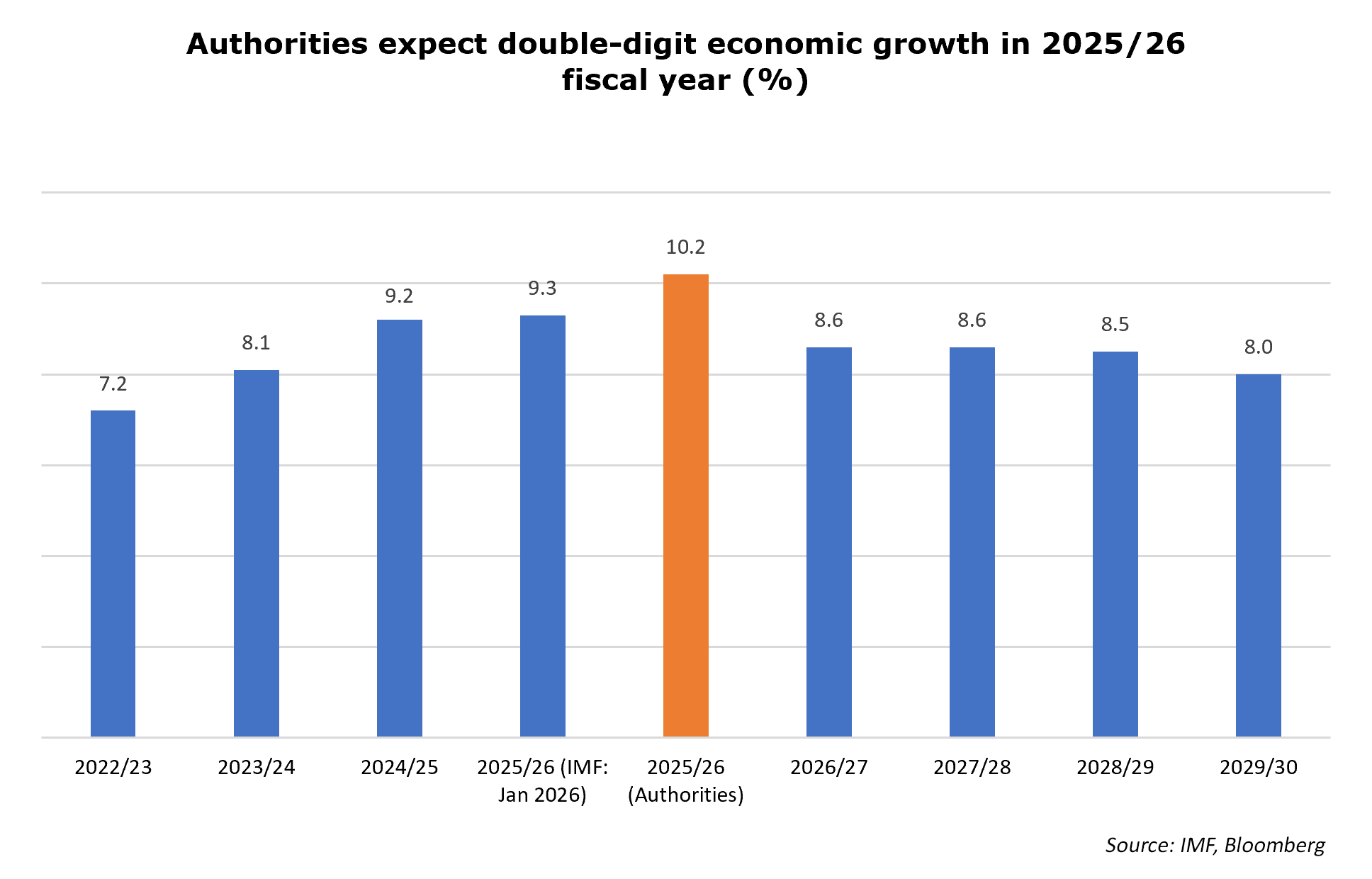
In November 2025, Singaporean prime minister and minister for finance Lawrence Wong paid an official visit to Ethiopia (a reciprocal state visit to Ethiopian prime minister Abiy Ahmed Ali’s earlier visit to Singapore in June 2024), during which Mr Wong launched the Singapore-Africa Partnership Leading to Growth and Sustainability (SAPLINGS) technical assistance initiative, signalling Singapore’s intention to deepen relations with the continent, and Ethiopia’s improving economic prospects.[1] As Ethiopia’s public investment-led growth model began to peak, amid serial internal and external shocks, ranging from COVID-19, drought, a civil war, the Russia-Ukraine war, and lately the US-Iran war, Mr Ali, who has been in office since 2018 and secured another term of office in June 2026, began opening up the Ethiopian economy in July 2024, when it also secured a US$3.4bn 4-year extended credit facility from the International Monetary Fund (IMF), which was already drawn by more than 70% (US$2.7bn) in mid-2026.[2],[3] In early 2026, the authorities forecast the Ethiopian economy will grow by 10.2% in 2025 (fiscal year from July 8th 2025 to July 7th 2026), an upward revision from the government’s earlier expectation of 8.9% six months before, and the first time in almost a decade that output growth will exceed 10%, although real GDP growth has averaged 7.5% over the past eight years.[4],[5] Ethiopia’s accession talks with the World Trade Organisation (WTO) are also advancing.[6] The European Union announced it would be resuming budget support to Ethiopia in April 2026, after a 5-year suspension at the start of the 2020-22 civil war in the northern Tigray region between forces of the federal and regional governments.[7]
 Monetary policy reforms anchoring inflation, debt restructuring progressing
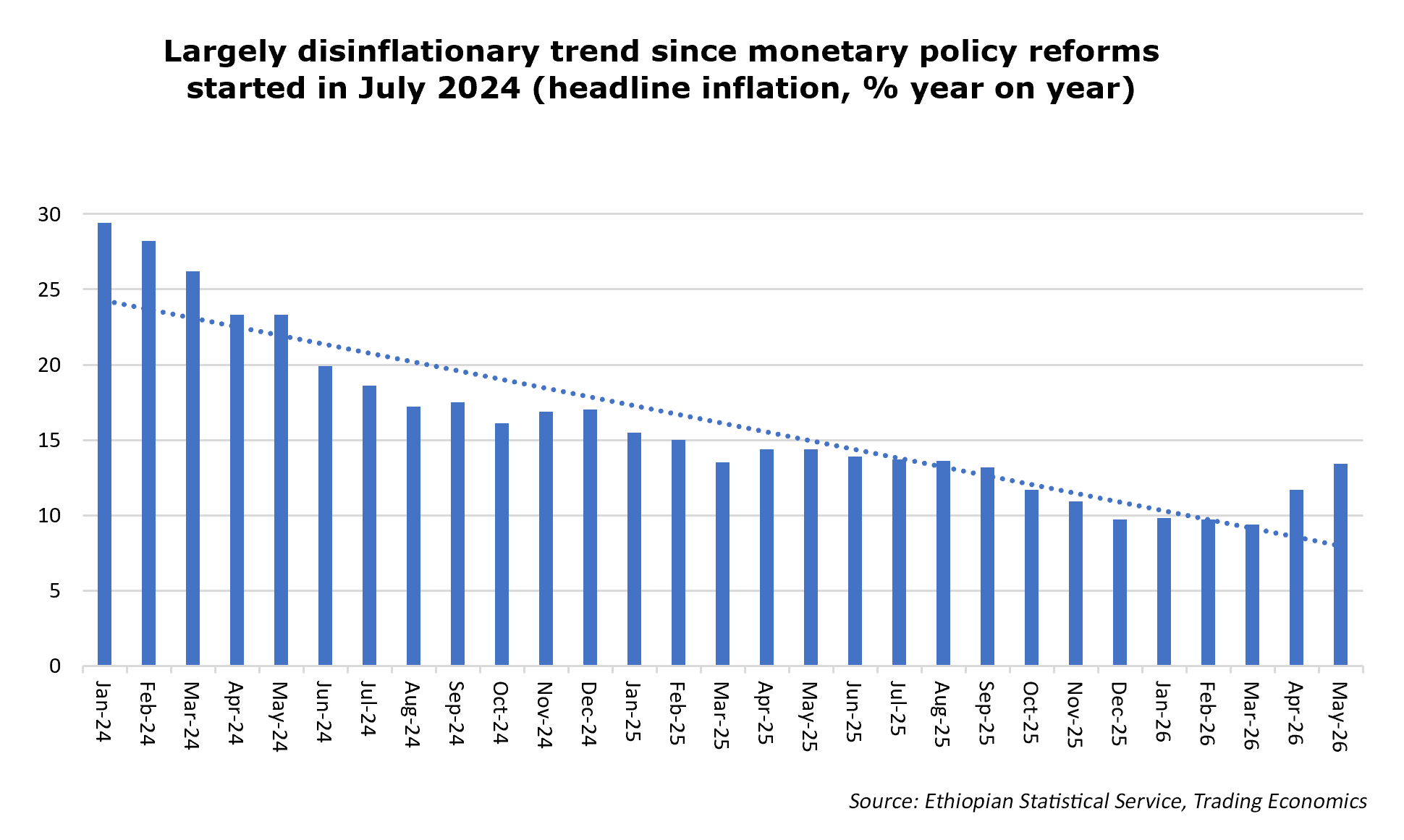
Moving to a market-determined foreign exchange rate for the birr by the National Bank of Ethiopia (NBE, the central bank) in July 2024, as well as transitioning to a monetary policy rate framework from a monetary targeting one, and the stoppage of central bank financing of the federal budget, heralded Ethiopia’s long-desired but hitherto elusive economic liberalisation era. The NBE’s inaugural monetary policy rate remains unchanged at 15% in mid-2026, a tightening stance, with a largely disinflationary trend since to 13.4% in May 2026, from 18.6% in July 2024. The authorities also stopped the requirement imposed on the financial sector for the mandatory purchase of the Development Bank of Ethiopia and 5-year treasury bonds. As part of its financial sector reforms, the authorities launched the Ethiopian Securities Exchange in January 2025, after more than half a century without an official stock market, with five companies (four banks and state-owned Ethio Telecom) listed thus far as at June 2026.[8] The authorities granted the country’s first foreign investment banking license to Nigeria’s United Capital Group in June 2026.[9] Ethiopia opened up its financial sector to foreign banks via legislation in December 2024, although the NBE only published the requirements and modalities in mid-2025, which are still evolving.[10],[11],[12] In May 2026, the NBE removed the monopoly of state-owned Commercial Bank of Ethiopia (CBE) to issue China-bound export permits, as the authorities liberalise the country’s financial sector further, as well as expand trade with China.[13] The authorities have also opened up gold trading to commercial banks, as part of reforms to make the NBE more efficient.[14
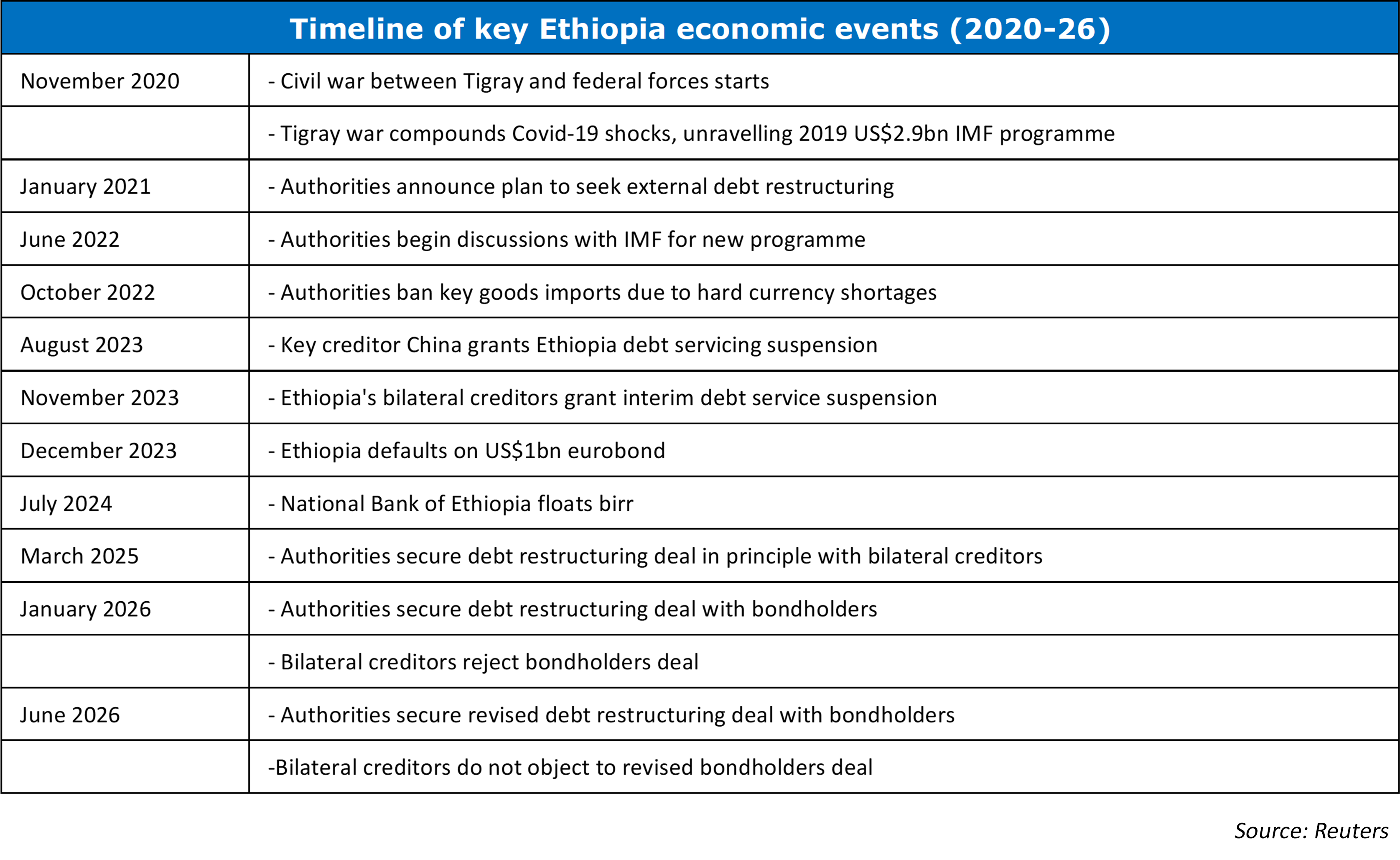
 As at late June 2026, Ethiopia reached a revised deal with its bondholders that official creditors did not object to, advancing the unexpectedly drawn-out external debt restructuring process.[15],[16],[17] Ethiopia defaulted on its US$1bn eurobond repayments in December 2023, a month after its official bilateral creditors agreed to a debt servicing standstill, and about three years after it requested for external debt restructuring in February 2021. Ethiopian authorities agreed a deal in principle with official creditors (owed US$12.6bn as at June 2025, out of which US$5.4bn (43%) is owed to China) in March 2025, and a preliminary one with bondholders (owed US$1.1bn as at June 2025) in early January 2026, which was rejected by official creditors over comparability of debt treatment, leading to an impasse that made bondholders threaten legal action. Ethiopia’s public debt of US$56.1bn (50.4% of GDP) in end-June 2025 consists of an external component of US$35.3bn (31.7% of GDP) and a domestic component of US$20.8bn (18.7% of GDP).
Escalation of internal and external political rifts expected over the medium term
The ruling Prosperity Party (PP) won about 90% of parliamentary seats in the 2026 general elections, cementing Mr Ali’s 8-year long grip on power since 2018 for another 5 years. The 2020-22 civil war in the northern Tigray region, which started after Mr Ali systematically weakened the Tigray People’s Liberation Front’s (TPLF) historical stranglehold on the erstwhile ruling Ethiopia People’s Revolutionary Democratic Front (EPRDF) coalition, resulted in scores dead, and multitudes displaced, entrenching Ethiopia’s longstanding status as a fragile and conflict-affected state. Internal political tensions are rife.[18] A peace agreement to end the Tigray war is beginning to fray, after the TPLF violated it by taking back control of the Tigray region in May 2026, leading to the region’s exclusion from the 2026 general elections. US visa restrictions on TPLF leaders in June 2026 will hardly cool escalating tensions, after they initiated forced conscriptions.[19],[20] Unrest continues in Oromia, where Mr Ali hails from and the banned Oromo Liberation Army (OLA) is fighting for greater regional autonomy, as well as in Amhara, where the Fana militia is doing similarly. Both OLA and Fana have rejected the 2026 general election results. An escalation of hostilities between federal forces and militias in two of Ethiopia’s largest regions, as well as with TPLF forces in the strategically located Tigray region, which borders neighbouring Eritrea, is not only likely imminent before end-2026 but would probably persist over the medium term.
A historical quest for unhindered access to the Red Sea underpins a great deal of Ethiopia’s foreign policy in the Horn of Africa, after formally losing it to Eritrean independence in 1993. Ethiopia entered into a memorandum of understanding with Somaliland for access to the Red Sea in exchange for recognising Somaliland as a sovereign state in January 2024, amid huge opposition from the Somalian government (which continues to see breakaway Somaliland as its territory), although the thawing of tensions between Ethiopia and Somalia since the Ankara Declaration in late 2024, where both agreed to work together to fulfill Ethiopia’s maritime ambitions, appears to be holding up.[21],[22],[23] The Eritrean access to the sea option is not only becoming increasingly difficult for Ethiopia to acquire peacefully (owing to a deterioration of relations with the Ali administration, Eritrea is expected to ally with the TPLF in a potential resumption of hostilities in the northern Tigray region, after siding with Ethiopian federal forces in the 2020-22 civil war) but also now being used as leverage by rival Egypt.[24] Another regional geoeconomic priority is hydropower production via the River Nile, a source of sustained tensions with Egypt, which relies on the Nile for domestic, agricultural and industrial production, with negotiations at a prolonged impasse in mid-2026.[15]
Manufactures to increasingly drive non-agricultural exports
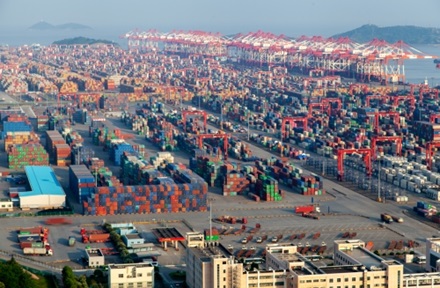
Ethiopia’s export trade is also booming, generating US$8.7bn in revenue ten months into the 2025 fiscal year (from July 8th 2025 to July 7th 2026), exceeding the government’s target by 20% and a 43% year on year rise on the level in 2024, as foreign exchange and trade reforms boost the top African coffee-exporting country’s export competitiveness.[26] The authorities are targeting US$10bn in export revenue in the 2025 fiscal year.[27] There is growing foreign investor interest in Ethiopia’s manufacturing sector, especially by Chinese firms, lately in the production of green ammonia, fertilizer, and electrical equipment.[28] A “Made in Ethiopia” import substitution industrialisation drive has enabled the manufacture of goods that were previously imported worth US$14.5bn over the past four years, with more than 90 imported products targeted for local production.[29] Ethiopia is also striving to trade more with other African countries (its intra-African trade was US$1.7bn in 2023, about 9% of its total bilateral trade), especially its East African neighbours and South Africa, where it shipped its first goods under the African Continental Free Trade Area (AfCFTA) in October 2025.[30] In just about a year (2025-26), Chinese-made solar photovoltaic cells have become Ethiopia’s fourth largest export, which made US competitors to request an investigation in mid-May 2026 about possible transshipment of Chinese solar power system components to the US via Ethiopia. If the US authorities do not find that significant manufacturing of the solar panels happens in Ethiopia, with most of the production done in China before exporting for assembly in Ethiopia instead, then it will be a violation of international and US trade rules of origin. Singapore’s Zeto Holding and Japan’s Toyo Solar have been specifically alleged by a group of eight US solar power system manufacturers of operating “minimal Ethiopian solar manufacturing operations” and yet ship finished solar power system components to the US.[31] The US department of commerce is expected to announce its findings in July 2026.
References
[1] Singapore Ministry of Foreign Affairs (2025, November 24). Official visit of prime minister and minister for finance Lawrence Wong to the Federal Democratic Republic of Ethiopia [Press statement]. https://www.mfa.gov.sg/newsroom/press-statements-transcripts-and-photos/official-visit-of-prime-minister-and-minister-for-finance-lawrence-wong-to-the-federal-democratic-republic-of-ethiopia--24-november-2025/
[2] Editorial Board (2026, March 18). Ethiopia starts to bury its Marxist past. Washington Post. https://www.washingtonpost.com/opinions/2026/03/18/ethiopia-market-reforms-derg-abiy-ahmed/
[3] International Monetary Fund (2026, June 3). IMF Reaches Staff Level Agreement on the Fifth Review of the Extended Credit Facility for Ethiopia [Press release]. https://www.imf.org/en/news/articles/2026/06/03/pr26183-ethiopia-imf-reaches-staff-level-agreement-fifth-review-extended-credit-facility
[4] Reuters (2026, February 3). Ethiopia economy to expand 10.2% in 2025-26, prime minister says. https://www.reuters.com/world/africa/ethiopia-economy-expand-102-2025-26-prime-minister-says-2026-02-03/
[5] Tadesse, F. (2026, February 3). Ethiopia returns to double-digit economic growth after reforms. Bloomberg. https://www.bloomberg.com/news/articles/2026-02-03/ethiopia-returns-to-double-digit-economic-growth-after-reforms
[6] World Trade Organization (2026, April 22). Ethiopia steps up domestic reforms to advance WTO accession negotiations. https://www.wto.org/english/news_e/news26_e/acc_22apr26_376_e.htm
[7] Miriri, D. (2026, April 21). EU resumes Ethiopia budget support after five-year hiatus. Reuters. https://www.cnbcafrica.com/2026/eu-resumes-ethiopia-budget-support-after-five-year-hiatus
[8] Adegboyega, A. (2026, June 29). After 50 years without a stock market, Africa’s second-most populous nation adds another major bank. Business Insider. https://africa.businessinsider.com/local/markets/after-50-years-without-a-stock-market-africas-second-most-populous-nation-adds/4yc4qbv
[9] TRT Afrika (2026, June 9). Ethiopia grants first foreign investment banking licence to Nigeria's United Capital Group. https://www.trtafrika.com/english/article/a3da7d224903
[10] NTU-SBF Centre for African Studies (2025, October 29). African banks eye entry into Ethiopia after sector opens to foreign investors. https://www.ntu.edu.sg/cas/news-events/news/detail/african-banks-eye-entry-into-ethiopia-after-sector-opens-to-foreign-investors
[11] TRT Afrika (2025, June 26). Ethiopia central bank allows foreign banks to operate. https://www.trtafrika.com/english/article/cb9bc8bd760a
[12] Adeyemi, S. (2025, October 21). Africa’s fastest-growing economy sets new rules for foreign stake in local banks. Business Insider. https://africa.businessinsider.com/local/markets/africas-fastest-growing-economy-sets-new-rules-for-foreign-stake-in-local-banks/jfwj0jq
[13] Xinhua (2026, May 27). Ethiopia authorizes commercial banks to issue permits for exports to China. https://english.news.cn/africa/20260527/ed5be2aebd424b99aa24aeb52cb982c4/c.html
[14] Bailey, B. (2026, February 2). Ethiopia to open gold market to banks, phase out miner premiums. BusinessDay. https://businessday.ng/africa/article/ethiopia-to-open-gold-market-to-banks-phase-out-miner-premiums/
[15] Reuters (2026, June 29). Ethiopia agrees preliminary deal to restructure $1 billion bond. https://www.reuters.com/world/africa/ethiopia-agrees-preliminary-deal-restructure-2024-eurobond-2026-06-29/
[16] Miriri, D. (2026, February 4). Key events in Ethiopia’s journey towards debt restructuring. Reuters. https://www.reuters.com/world/africa/key-events-ethiopias-journey-towards-debt-restructuring-2026-05-28/
[17] PR Newswire (2026, June 29). Ethiopia ad hoc bondholder committee: Statement on the conclusion of restricted discussions with Ethiopia regarding the defaulted 2024 notes. https://www.prnewswire.co.uk/news-releases/ethiopia-ad-hoc-bondholder-committee-statement-on-the-conclusion-of-restricted-discussions-with-ethiopia-regarding-the-defaulted-2024-notes-302813713.html
[18] Alkazaz, A. and Hussein, M. (2026, May 29). A visual guide to Ethiopia’s ethnic groups and conflict areas. Aljazeera. https://www.aljazeera.com/news/2026/5/29/a-visual-guide-to-ethiopias-ethnic-groups-and-conflict-areas
[19] Human Rights Watch (2026, June 23). Ethiopia: Tigray authorities should withdraw abusive law. https://www.hrw.org/news/2026/06/23/ethiopia-tigray-authorities-should-withdraw-abusive-law
[20] Reuters (2026, June 18). US announces targeted visa restrictions for some Ethiopians. https://www.reuters.com/world/africa/us-announces-targeted-visa-restrictions-some-ethiopians-2026-06-18/
[21] Dahir, A.L. (2024, January 2). Why a port deal has the Horn of Africa on edge. The New York Times. https://www.nytimes.com/2024/01/02/world/africa/ethiopia-somaliland-port-deal.html
[22] Kaledzi, I. (2024, December 16). Somaliland unfazed by Somalia-Ethiopia compromise. DW. https://www.dw.com/en/somaliland-unfazed-by-somalia-ethiopia-compromise/a-71065172
[23] Ozkan, M. (2026, January 13). Ethiopia’s spy chief visits Somalia unannounced amid Horn of Africa tensions: Report. Anadolu Ajansi. https://www.aa.com.tr/en/africa/ethiopia-s-spy-chief-visits-somalia-unannounced-amid-horn-of-africa-tensions-report/3798151
[24] Carroll, R. (2026, May 21). Ethiopia accuses Egypt of obstructing Red Sea access bid: What to know. Al-Monitor. https://www.al-monitor.com/originals/2026/05/ethiopia-accuses-egypt-obstructing-red-sea-access-bid-what-know
[25] Middle East Online (2026, July 1). Egypt rules out return to Ethiopia dam talks without binding guarantees. https://middle-east-online.com/en/egypt-rules-out-return-ethiopia-dam-talks-without-binding-guarantees
[26] Adeyemi, S. (2026, May 16). Ethiopia records export boom with $8.7 billion in revenue after currency reforms. Business Insider. https://africa.businessinsider.com/local/markets/ethiopia-records-export-boom-with-dollar87-billion-in-revenue-after-currency-reforms/kwqlc1e
[27] Adeyemi, S. (2026, May 16). Ethiopia records export boom with $8.7bn in revenue after currency reforms. Business Insider. https://africa.businessinsider.com/local/markets/ethiopia-records-export-boom-with-dollar87-billion-in-revenue-after-currency-reforms/kwqlc1e
[28] Belachew, W. (2026, April 30). Chinese investors boost their presence in Ethiopia. China Daily. https://www.chinadaily.com.cn/a/202604/30/WS69f2af65a310d6866eb46673.html
[29] Okafor, C. (2026, May 4). Ethiopia’s export revenue is set to jump from $3 billion to a historic $10 billion. Business Insider. https://africa.businessinsider.com/local/markets/ethiopias-export-revenue-is-set-to-jump-from-dollar3-billion-to-a-historic-dollar10/vy9zlbx
[30] NTU-SBF Centre for African Studies (2025, October 21). Ethiopia begins trading under AfCFTA. https://www.ntu.edu.sg/cas/news-events/news/detail/ethiopia-begins-trading-under-afcfta
[31] Irwin-Hunt, A. (2026, June 10). Ethiopia solar exports boom sparks US tariffs evasion probe. FDI Intelligence. https://www.fdiintelligence.com/content/118724f2-d6dd-4721-94de-9be083d4dde1