Masterclass: Demystifying Green Finance
Climate change is often framed as a scientific challenge. We look to breakthroughs in renewable energy, advances in battery storage, or new technologies capable of removing carbon from the atmosphere. Yet beneath these solutions lies a less visible, but equally important, question: who will pay for the transition?
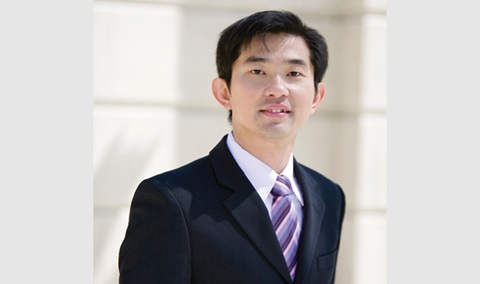
Speaking at the Demystifying Green Finance masterclass as part of the NBS30 Finale, Professor Hao Liang, President's Chair Professor in Finance at Nanyang Business School, argued that achieving a low-carbon future is ultimately a matter of mobilising capital at an unprecedented scale.
"We probably need US$100 trillion for infrastructure, for new technology, and for the transition to renewable energies," he said. "But we are currently massively underinvesting on these fronts."
The scale of the challenge is difficult to comprehend. Carbon dioxide remains in the atmosphere for more than a century, meaning that even if economic activity ceased tomorrow, global temperatures would not suddenly fall. At best, societies can slow the pace of warming while continuing to sustain economic growth and improve living standards.
This tension lies at the heart of green finance: how can economies continue to grow while reducing their environmental impact? More importantly, how can financial systems accelerate that transition?
More Than Just "Green" Investments
Green finance is often associated with renewable energy projects, sustainability-linked bonds, or investment portfolios branded as environmentally responsible. But Prof Liang argues that the concept is much broader.
At its core, green finance is about directing capital towards activities that support the transition to a low-carbon economy while managing the risks that climate change poses to businesses and investors alike.
That distinction matters because emissions are not confined to a single factory or power plant. Modern economies are deeply interconnected, and so are their carbon footprints.
Companies typically account for emissions across three categories. Scope 1 covers emissions generated directly by a company's operations. Scope 2 refers to emissions arising from purchased energy. Scope 3, however, captures emissions across the entire value chain, from suppliers to customers.
For many organisations, Scope 3 emissions account for the largest share of their total footprint.
Consider the financial sector. Banks occupy office buildings and consume relatively little energy directly. Yet through the businesses they finance, whether in oil and gas, mining, or agriculture, they exert significant influence over global emissions.
"Even for seemingly green sectors, their Scope 3 emissions can also be huge," Prof Liang noted.
Viewed through this lens, green finance becomes less about identifying a handful of "good" companies and more about understanding how capital shapes behaviour throughout the economy.
Climate Change Is Also a Financial Risk
Climate change introduces a new category of risks that businesses can no longer afford to ignore.
The first is physical risk: the direct impact of climate-related events such as floods, droughts, rising sea levels, and extreme weather. A food producer may suffer from prolonged drought, while coastal facilities face growing exposure to sea-level rise.
The second is transition risk, which arises as economies move towards net zero.
Governments are introducing carbon taxes. Regulators are tightening disclosure requirements. Consumers are demanding more sustainable products. Entire industries are being forced to adapt to a world that increasingly prices carbon and rewards efficiency.
These changes carry significant implications for investors and businesses.
Assets that once generated reliable returns may lose their value over time. Fossil fuel reserves currently listed as assets on company balance sheets, for example, could eventually become stranded assets—resources that can no longer be economically extracted or used.
"If we want to achieve net zero by the middle of the century, then basically we have to stop using oil and gas," Prof Liang said.
The implications extend far beyond energy companies. Drilling rigs, pipelines, processing facilities, and associated infrastructure could all become obsolete in a low-carbon future.
For businesses, understanding climate risk is no longer a matter of corporate social responsibility. It has become a strategic and financial imperative.
Putting a Price on Carbon
If finance influences behaviour, then pricing mechanisms determine where capital flows.
One of the most effective tools, according to Prof Liang, is carbon pricing.
"Whenever you have to pay for something, you just stop doing it," he observed. "If you have to pay for carbon emissions, then you reduce your emissions."
The logic is straightforward. By attaching a financial cost to emissions, governments create incentives for companies to invest in cleaner technologies and improve efficiency.
Singapore's carbon tax is one example. Elsewhere, emissions trading systems allow businesses to buy and sell carbon allowances, creating markets that reward reductions in emissions.
Over time, these mechanisms can transform carbon from an externality into an economic consideration embedded within business decisions.
At the same time, companies that successfully reduce emissions may benefit from emerging opportunities such as carbon credits, sustainability-linked financing, and preferential access to capital.
This shift reflects a broader truth: sustainability and profitability are increasingly intertwined.
Yet markets alone are unlikely to deliver the transition at the pace required.
Many decarbonisation projects remain expensive, technologically uncertain, or difficult to finance. To address this, governments and development institutions are increasingly deploying public and concessional capital to "de-risk" investments, making them more attractive to private investors.
The objective is simple: make climate-related projects bankable.
Asia's Unique Transition Challenge
The challenge becomes even more complex in Asia.
As the world's fastest-growing region, Asia continues to experience rapid industrialisation and rising energy demand. At the same time, many economies remain heavily dependent on fossil fuels.
China still relies significantly on coal for electricity generation. Singapore derives most of its electricity from natural gas. Across the region, renewable energy adoption continues to expand, but not quickly enough to meet future demand.
"Asia is unique in this decarbonisation trajectory," Prof Liang said.
Unlike many Western economies, Asia cannot simply focus on reducing consumption. It must simultaneously support economic development, improve living standards, and transition to cleaner sources of energy.
Renewable energy presents additional challenges. Wind does not always blow, and sunlight is not always available. Investments in battery storage, grid infrastructure, and complementary technologies will therefore play a critical role in ensuring energy security.
This is why conversations about green finance are particularly relevant in Asia.
The region represents both one of the largest sources of future emissions and one of the greatest opportunities for climate investment. Decisions made over the next decade will shape not only Asia's economic future, but also the world's ability to achieve its climate targets.
Building a Just Transition
As countries accelerate decarbonisation efforts, another question has emerged: who bears the cost of transition?
Prof Liang emphasised the importance of what policymakers call a "just transition"—ensuring that efforts to reduce emissions do not create unintended economic or social consequences.
Moving away from fossil fuels affects workers, industries, and communities. Poorly managed transitions can disrupt employment, slow economic growth, and widen inequalities.
A successful transition, therefore, must be both environmentally sustainable and socially inclusive.
Equally important is maintaining trust in green finance itself.
As sustainability becomes more prominent, concerns around greenwashing have also grown. Without clear standards and credible disclosures, companies may overstate the environmental impact of their activities.
This is why taxonomies, reporting frameworks, and international standards are becoming increasingly important. They provide a common language for determining what constitutes a genuinely sustainable investment and help ensure that capital is directed where it is needed most.
Ultimately, green finance is not simply about funding a cleaner future. It is about building confidence in the systems that will enable that future to emerge.
Financing the Future
Climate change is often described as the defining challenge of our time. Solving it will require scientific innovation, political will, and international cooperation.
But it will also require capital.
Finance determines which technologies are scaled, which industries adapt, and which ideas move from ambition to implementation. It shapes incentives, influences behaviour, and increasingly defines the pace of the global transition.
As Prof Liang's masterclass made clear, the path to net zero is not only about reducing emissions. It is about creating the financial architecture capable of supporting a more sustainable economy.
The question is no longer whether the transition will happen. It is whether we can finance it quickly enough.