Make space for curiosity
Two NTU alumni are creating spaces where people can explore, experiment and discover.
Text: Derek Rodriguez | Photos: Lily Ho and Emily Yeo
Playground for the imagination
Why don’t children have more spaces that let them slow down and discover their own ways to play?
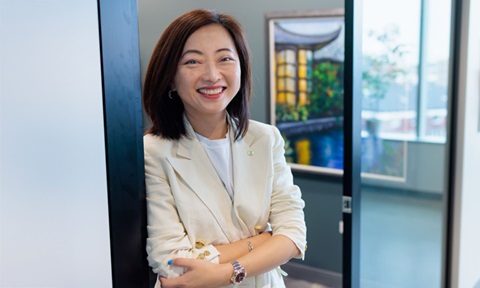
That question sparked the creation of Riri’s Children Playloft, founded by 2005 graduate Lily Ho.
“The inspiration came from my own experience as a parent,” says Lily, who has two kids. “I was never quite drawn to the typical indoor playground environment, where the emphasis is on high-energy physical play. During family trips to Japan, we visited spaces that offered open-ended and creative play, where children could explore toys, build things and just be curious. And I wondered why we don’t have places like this in Singapore.”
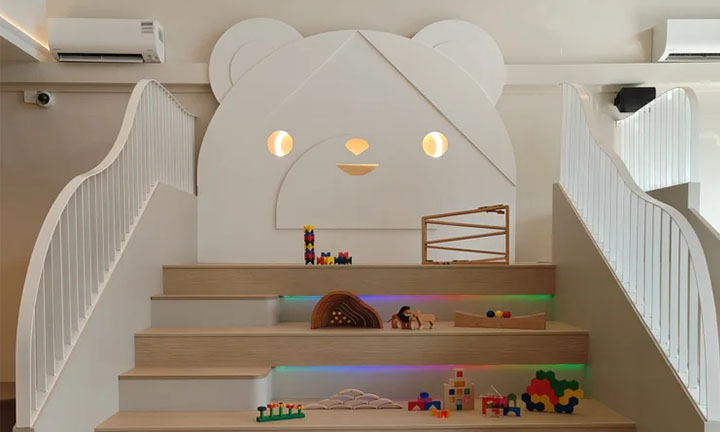
Described by Lily as an “intergenerational toy museum”, Riri’s in Sin Ming Plaza is inspired in part by Japanese approaches to play, with environments designed to encourage children, as well as adults, to explore, imagine and experiment.
“We often see parents and grandparents becoming absorbed in playing alongside the children. We’ve even received messages asking whether adults can visit without children,” she reveals.
A career built on trying things
The idea of creating space for exploration also reflects how Lily has approached her own life and career.
As an NTU student, she found her independence through hall life. Her internships also helped her discover what she enjoyed and where her strengths lay.
“Perhaps more than any particular lesson, what has stayed with me has been the value of trying things,” says Lily.
After graduating with a degree in applied economics, she pursued her dream of becoming a journalist, spending five years as a business reporter at Lianhe Zaobao.
“Journalism allowed me to meet people from many different walks of life and gave me a front-row seat to how businesses and industries worked. I didn’t imagine that I would be on the other side, building a business myself,” says Lily.
She later moved into communications, spending close to a decade at the Singapore Exchange, before taking the plunge into entrepreneurship.
“I initially took a no-pay leave but soon realised that there was so much more that I wanted to do – developing programmes for children, creating new play experiences, working with schools and finding ways to make the space more meaningful to the families who come through our doors. That’s what gave me the conviction to leave my corporate career and focus fully on Riri’s,” says Lily.
The programmes she has introduced include initiatives that make play more accessible to children who may otherwise have fewer opportunities to enjoy such experiences. “I like that we can be a place that creates opportunities not just for the children who visit us, but also for the people who work with us,” she says.
A taste of our heritage
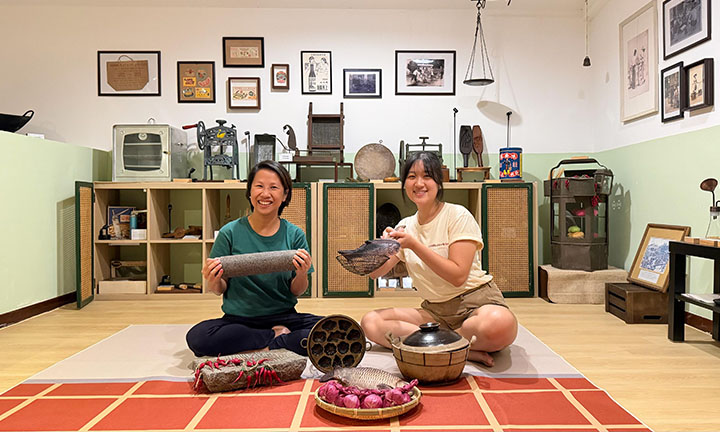 Emily (left) at the museum with her co-founder, Yeo Min.
At the Museum of Food along Joo Chiat Road, visitors are encouraged to do something that might raise eyebrows in a conventional museum: touch the exhibits, smell the ingredients and even taste them.
It’s all part of the hands-on approach championed by Emily Yeo, an NTU accountancy graduate and co-founder of the museum, which brings Singapore’s food heritage to life through interactive displays.
“Eating is basically Singapore’s national sport, yet there wasn’t a dedicated space to get our hands dirty and learn about it,” says Emily. “We wanted a place where locals of all ages could gather to celebrate our food heritage, not just by looking at things behind glass, but through hands-on cooking programmes and flipping through vintage cookbooks.”
Food, she believes, is difficult to understand from a distance. Visitors can learn how tau sar piah is made, for instance, or discover how earlier generations produced delicate kueh without the technology available today.
“It would be so hard to just talk and listen about food, and not be able to feel, smell and taste it,” says Emily. “It definitely alters each participant’s perspective of the dish.”
In one fishball-making class, a young boy who came with his mum was put off by the raw fish at first and couldn’t believe that was how fishballs were made. Two hours later, he was asking his mum to buy the ingredients so they could recreate the experience at home.
“I love how food just naturally brings people together, and especially so with our local heritage foods,” says Emily.
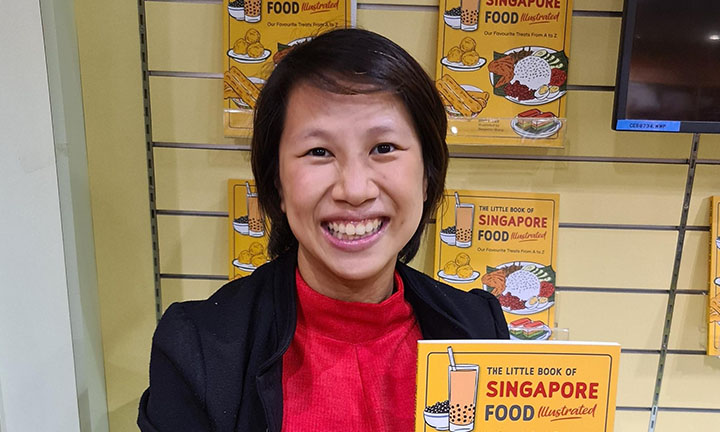 Emily published The Little Book of Singapore Food: Illustrated, an illustrated cookbook containing recipes for some of Singapore’s most popular dishes, in 2022.
Let them cook
The museum isn’t Emily’s first venture into culinary education.
In 2013, she noticed that young children were becoming increasingly disconnected from food and ingredients, and opened a cooking studio for children.
Her motivation was personal too.
“The unspoken secret is… I actually could not cook to save my life. And that is why I started this. I didn’t want my children to grow up like me, lost in the kitchen,” she says.
After years of kitchen experiments, Emily’s four children have become quite adept in the kitchen themselves. She hopes the children who attend her workshops take away the confidence to keep experimenting on their own too.
“Our workshops serve as an ignition key,” she says. “My hope is that beyond our workshop, the children remain curious and, with their newfound kitchen confidence, go on to tinker in their own kitchens.”
Finding the right ingredients
As an NTU student, she did not have a 10-year plan. She was studying accountancy, heavily involved in hall life and, in her own words, mostly trying to survive early adulthood.
“NTU was my ultimate testing ground for figuring out who I actually was,” she says. “It was a safe place to discover my strengths, but more importantly, a great place to boldly confirm what I absolutely shouldn't be doing.”
Hall life also taught her something that she continues to rely on today: the importance of bringing people together.
“I can have all the vision in the world, but if you don’t have a robust, resilient team alongside you, you are just a person with an idea,” she says.
Emily hopes the Museum of Food will grow into a thriving ecosystem, with young people taking an increasingly active role in preserving and sharing Singapore’s food heritage.
Her ambition is not simply to introduce the next generation to traditional dishes, but to give them the confidence to ask questions, get involved and carry those stories forward.
“I want it to be the definitive cause-driven culinary hub for Singapore food, where the next generation is just as excited about our heritage as we are.”
This article first appeared in issue 8 of U, the NTU alumni magazine.