The Chief Resident is in
The Lee Kong Chian School of Medicine (LKCMedicine) marks its 15th anniversary this year. We caught up with Dr Melissa Chia from NTU's pioneer batch of medical students.
Text: Sanjay Devaraja / Photos: Dr Melissa Chia
In 2018, LKCMedicine’s pioneer cohort began their careers as doctors.
Among them was Melissa, now a Senior Resident and Chief Resident in Anaesthesiology under the National Healthcare Group’s Residency Programme. In this role, she trains practising doctors pursuing anaesthesiology, including preparing them for qualifying exams.
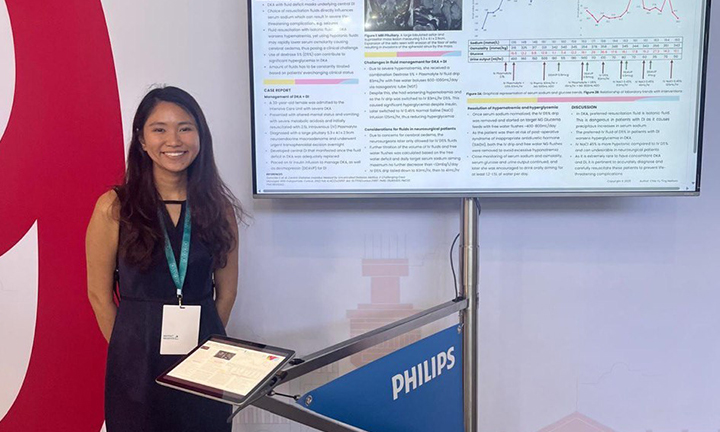 Earlier this year, Melissa presented her work in Portugal at one of Europe’s leading anaesthesiology conferences.
What was studying medicine in LKCMedicine like?
Being part of the pioneer cohort meant forging our own path. My classmates and I built a supportive culture, started new initiatives and created lasting traditions, from jam sessions to community projects. Our professors were incredibly dedicated, guiding us closely through every step.
LKCMedicine was also where I met my husband, a fellow classmate. One of my fondest memories was studying in the rooftop medical library with friends as we prepared for our final exams on New Year’s Eve. Seconds before midnight, we all ran to the rooftop garden to watch the fireworks over Marina Bay. It was spectacular – a moment that captured the spirit of our journey together.
 From study buddies to life partners: Melissa and her husband, Dr Joel Wong, at LKCMedicine for their pre-wedding shoot.
What does it mean to be a Chief Resident under the National Healthcare Group’s Residency Programme?
I help students prepare for a key part of the Master of Medicine Anaesthesia exams. I plan tutorials, practice sessions and mock examinations. Beyond that, I aim to create a safe space in the operating theatre where students feel comfortable practising hands-on skills under guidance. My goal is to help them build both competence and confidence.
How did LKCMedicine prepare you for your residency and leadership?
From day one, the School taught us that medicine is as much about empathy as it is about knowledge. I learnt to truly listen and be present for my patients. I often meet patients at their most vulnerable, and my education taught me that a calm voice or kind word can make all the difference.
The team-based learning approach at LKCMedicine empowered me to take charge of my own learning. I learnt to identify knowledge gaps and plan ahead – skills that helped me navigate the steep learning curve during my residency.
What drew you to anaesthesiology?
In medical school, I observed a case where a patient’s airways closed after being administered anaesthesia. Despite the life-threatening moment, the anaesthetist remained calm and quickly performed life-saving procedures. That moment inspired me to develop the ability to make critical decisions under pressure.
My interest in anaesthesiology deepened during a two-week posting at Tan Tock Seng Hospital, where I received practical training. After graduation, I joined the hospital’s anaesthesia department as a medical officer and was mentored by my former LKCMedicine tutor, Dr Mary Wong. Her patient guidance and care supported me throughout my training. Over time, I grew to love every aspect of the field – even the small moments, like reassuring patients before surgery.
Anaesthesiology requires close collaboration with multiple stakeholders. How do you lead a team in the operating theatre?
Before an operation, I introduce myself and conduct team huddles. Being approachable helps my team members feel comfortable speaking up. Open and constructive dialogue is essential to ensuring that our patients receive the best possible care.
What advice would you give medical students who are deciding on their specialisations?
Keep an open mind and explore different postings. Find something that aligns with your interests – passion will carry you through the toughest parts of your training and career. Stay curious, seek mentorship and learn from every clinical encounter. Growth comes from being present and proactive.
-with-her-batchmates-in-their-first-year-at-lkcmedicine.jpg?sfvrsn=fca4ddad_1) Melissa (first row, seventh from left) with her batchmates in their first year at LKCMedicine.
Melissa (first row, seventh from left) with her batchmates in their first year at LKCMedicine.
This article first appeared in issue 6 of U, the NTU alumni magazine.