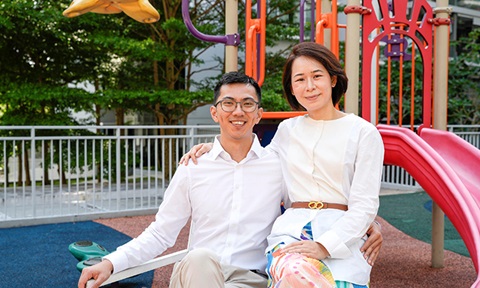
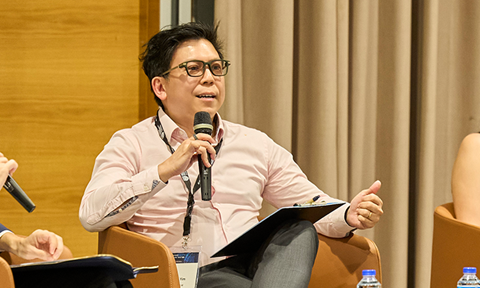
Honey, spice and fish: NTU alumni working to improve Singapore's food ecosystem
Ahead of the UN's International Day of Awareness of Food Loss and Waste on 29 September, three NTU food entrepreneurs share what drew them to food and how they are contributing to a more sustainable and resilient food system.
Text: Vivien Yap | Photos: Joelle Goh, Malcolm Ong, J Jeyaseelan
Joelle Goh, J Jeyaseelan and Malcolm Ong graduated from NTU decades apart, in different degrees, and none set out to work in food.
Joelle Goh (EEE/2005) trained in optical engineering. J Jeyaseelan (WKWSCI/2010) studied communication, hoping for a career in advertising or public relations. Malcolm Ong (EEE/1988) studied electronics at what was then the Nanyang Technological Institute, before it became NTU.
Today, one works with bees and raw honey, one hand-mixes spice blends in a wet market, and one runs a fish farm.
Learning a craft from scratch
Each of them started as an outsider to their trade, learning its language and skills from the ground up.
For Joelle, it started with a taste of raw honey straight from the comb.
“It wasn't just sweeter or richer. It had a freshness and complexity that surprised me.”
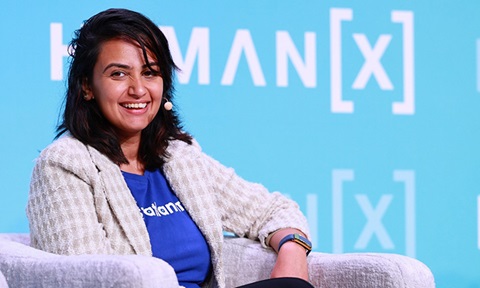
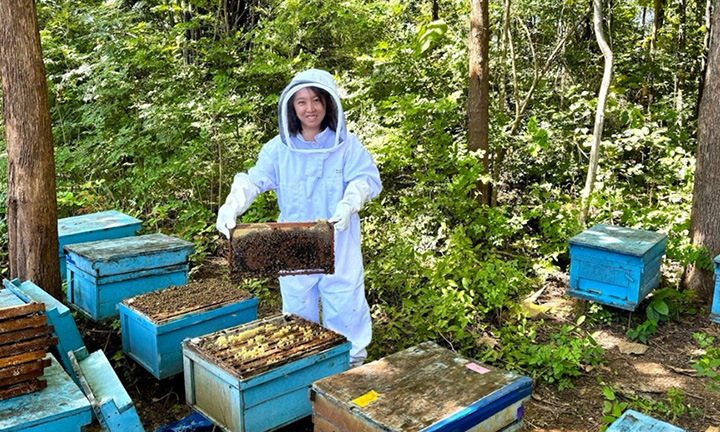 Joelle harvesting honey in a bee farm in Thailand.
The experience prompted her and her husband to visit bee farms across the region and learn directly from beekeepers before setting up The Hives Keeper, a Singapore-based raw honey supplier.
Jeya began working alongside his father for nearly a decade before he started seriously learning the craft of spice mixing around 2016. His interest grew as he noticed how few stalls specialised in custom spice blends.
“I love the concept of customising spices for people,” he says.
Today, he is better known as “The Spice Man” for his custom spice mixes. But the skill did not come naturally to him.
“When I was first learning the skill from my father, I did not understand it at all. The spices all looked the same to me, and I kept sneezing because I was so sensitive to all the smells,” he recalls.
Malcolm's transition into fish farming was steeper. Moving from software into aquaculture in his late forties, he had none of the domain knowledge or industry relationships his new trade required, only his love of the ocean.
“I'm someone who learns by doing rather than by sitting and listening,” he says.
He built The Fish Farmer from the ground up, putting systems in place for everything from feeding and packing to compliance and record-keeping.
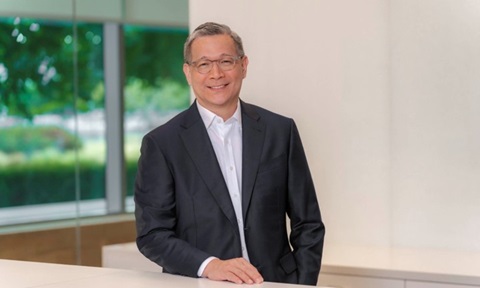
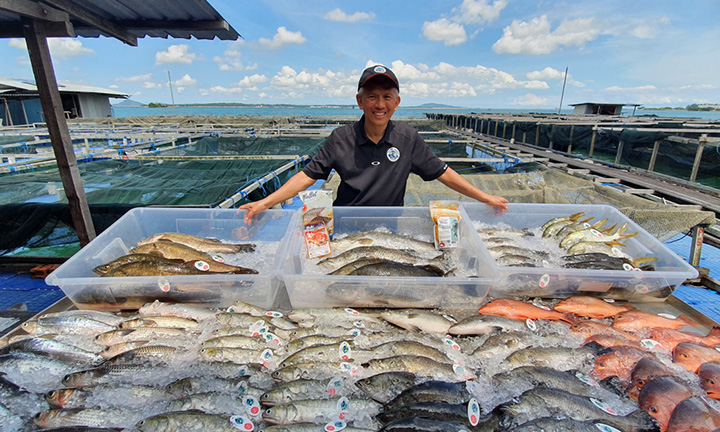 Malcolm showing off the fish he harvests at his fish farm, off the coast of Changi Jetty Point.
Yet what has kept him going is the people.
“I am very proud of the team that I have built. Everyone is very good at what they do, and it makes me happy to be at work every day.”
More than what they sell
They may work with very different ingredients, but for all three, the appeal goes beyond the product.
For Jeya, his provision stall is also a way to preserve a shared culinary language that Singapore risks losing.
“Food makes up so much of Singapore’s culture,” he says, pointing to how ingredients such as cinnamon cross every cuisine on the island, from Chinese and Malay to Indian.
His long-term goal is to run spice and wet market workshops for schools and youth groups, helping a generation raised on supermarkets reconnect with where its food comes from.
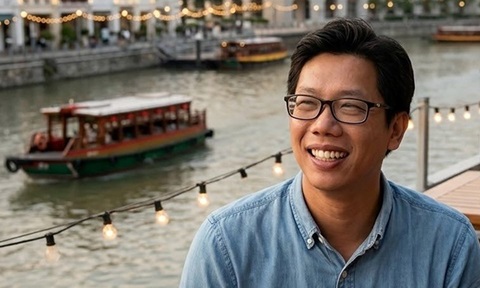
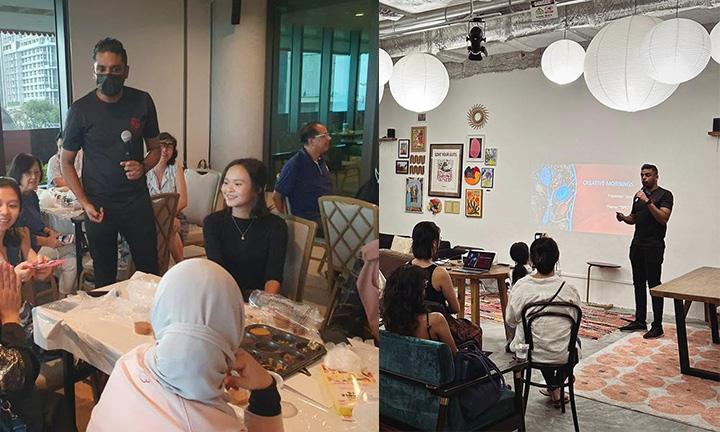 Jeya giving workshops and talks to interested attendees about the culture and craft of spice mixing.
Malcolm has watched a similar shift happen in the fishing industry. Years of visiting Jurong Fishery Port showed him fish stocks shrinking in size and variety, a trend he attributes to overfishing and the decline of the region's wild catch.
His response has been to build the systems he felt the industry lacked when he entered it, from proper compliance and record-keeping to sustainable practices. His aim is to make aquaculture a credible long-term alternative, rather than a stopgap.
He is also pushing into product innovation, selling pre-seasoned fish fillets to make sustainably farmed fish a more convenient ingredient for home cooks.
For Joelle, sustainability begins with knowing where the honey comes from and who produces it.
Her mission is, in her words, “to make healthy living exciting by connecting people with authentic, sustainably sourced honey while supporting the people and ecosystems behind every jar.”
That means choosing sourcing regions deliberately, including Western Australia for its environmental standards, and Northern Thailand for its biodiversity and beekeeping tradition, while staying personally involved with the beekeepers behind every harvest.
Her longer term ambition is for The Hives Keeper to reach more people across the region, encouraging them to pay more attention to the pollinators, food origins and the people behind the honey.
A shared harvest
None of the three expected to find their way into food when they enrolled at NTU. Their paths since then have been very different, but each has drawn on the foundations of their NTU education and experience to build something on their own terms.
Their stories also point to a broader lesson about Singapore's food system. Strengthening it is not only about what happens on farms, in laboratories or through policy. It can also happen through preserving food knowledge, producing food responsibly, supporting the people behind it and helping consumers understand where their food comes from.
As Singapore marks the United Nations’ International Day of Awareness of Food Loss and Waste on 29 September, their journeys offer three distinct perspectives on what it means to build a food system that is more connected, sustainable and resilient. Sometimes, that work starts with a jar of honey, a hand-mixed spice blend or a fish farm.
Inspired by these alumni entrepreneurs? Discover more businesses owned by NTU alumni in our Alumni Business Directory.
Know an NTU alumnus with a story worth telling? Write to us at alumniaffairs@ntu.edu.sg.