Back to the classroom after 24 years: How Joshua Lai stayed ahead of AI
After 24 years in technology leadership, NTU Singapore alumnus Joshua Lai took a three-month sabbatical to study Data Science and AI. A year on, he is applying what he learnt to rethink how technology can be used at work.
Text: Sadia Roohi | Photos: Joshua Lai, Swarup Biswas
For Joshua Lai, returning to the classroom after more than two decades in the workforce was not about starting over. It was about preparing for what came next.
“After 24 years in technology leadership, I recognised that AI was no longer just a trend but a fundamental shift in how we deliver software and governance,” says Joshua, who completed NTU Singapore’s Advanced Professional Certificate in Data Science and AI in 2025.
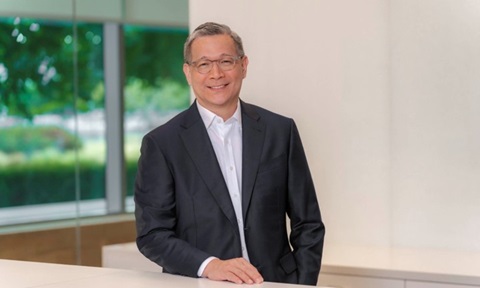
 NTU alumnus Joshua Lai has spent more than two decades in technology leadership and continues to expand his expertise as the industry evolves.
As AI began reshaping his field, Joshua wanted to understand the technology well enough to apply it strategically, rather than simply watch from the sidelines. He took a three-month sabbatical to study at NTU, describing it as a “calculated investment” in moving from traditional Agile approaches to an AI-augmented way of working.
The decision has since translated into tangible results. At Julius Baer, Joshua now applies generative AI to standardise processes, enhance operational capabilities and drive innovation. This year, he was also recognised with Julius Baer’s COO Asia Award for “Continuous Improvement - AI Innovation in IT”.
For Joshua, the experience reinforced a belief he has held throughout his career.
“I’ve always believed that our careers are not linear paths, but ongoing experiments in learning,” he says.
Building on experience
Joshua’s experience shows that returning to study after years in the workforce does not necessarily mean leaving existing expertise behind. For experienced professionals, new knowledge can add another layer of skills built over years of work.
Trainer Swarup Biswas, who teaches in NTU’s professional education programmes, sees this among the experienced learners in his classes.
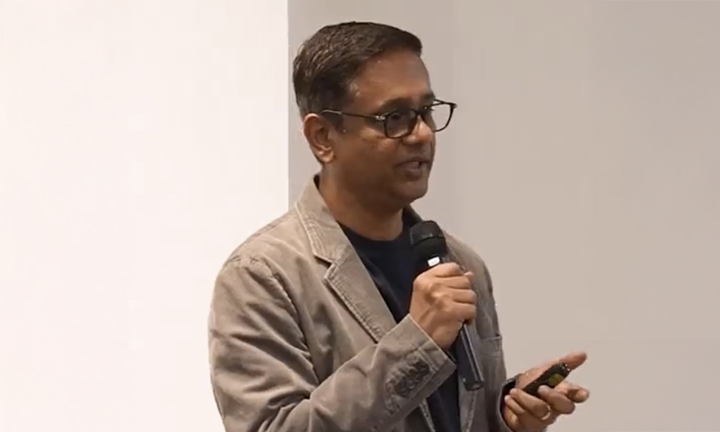 NTU trainer Swarup Biswas says experienced professionals can draw on their industry knowledge to make sense of how AI can be applied in their work.
Participants come from different industries, and bring varying levels of technical knowledge. Some work in IT, while others come from fields such as banking.
Their professional experience can be an advantage when learning something new.
“They know what real work looks like, right? So they can tell whether a technique matters or it just looks impressive on demonstration,” Swarup says.
“They also bring their use cases and the things that they think they could solve within the domain. And they actually can relate and connect the dots much better compared to somebody who is new in the organisation.”
For Joshua, connecting new knowledge with existing experience was central to his own learning journey.
The programme gave him a technical foundation in data science and AI that complemented his background in Agile, project management and quality assurance. He could then take what he learnt and apply it directly to his work.
“The rigour and practical relevance were exactly what I needed to move beyond theory and directly into application,” he says.
The courage to become a beginner again
For an experienced professional, returning to the classroom after years in the workforce can also mean being comfortable with not having all the answers.
Swarup says this is one of the concerns he encounters among experienced learners. After years of building experience or managing others, they may find it challenging to become a novice again and acknowledge what they do not know.
Yet that discomfort can be part of learning.
In the classroom, learners are challenged to build things themselves, ask questions and engage with people who may approach problems differently.
They also gain something that independent learning cannot always provide: the opportunity to hear different perspectives, build relationships and apply new knowledge through hands-on work.
This matters particularly in a fast-changing field such as AI. Rather than focusing only on specific tools, Swarup emphasises understanding the underlying principles so that learners can continue adapting as technology evolves.
Putting learning into practice
For Joshua, the value of returning to study became clearest when he brought his new knowledge back to work.
After completing the programme, he applied what he had learnt to build generative AI-enabled dashboards and automation at Julius Baer.
He says the experience has also changed how he approaches his work.
“It has shifted my focus from merely ‘delivering’ to ‘optimising through intelligence’,” he says. “I now approach every project with an AI-first mindset, always looking for ways to reduce waste and enhance decision-making.”
That combination of existing expertise and new capabilities is also what Swarup sees as particularly valuable among experienced professionals.
“The biggest immediate gain in AI-based education will come with people who have domain experience,” he says.
For example, someone with years of experience in logistics who learns how AI can be applied to the field can bring together two forms of knowledge: an understanding of the industry and the ability to use new technology within it.
Joshua’s own experience reflects this approach. Rather than leaving his previous expertise behind, he has added AI to it.
“It has been the constant,” he says, of continuing education. “It allows me to bridge the gap between legacy systems and future-ready solutions.”
His advice to other experienced professionals is not to be intimidated by the learning curve.
“We often think that mid-career is the time to consolidate, but I’ve found it is the best time to disrupt ourselves,” he shares.
For Joshua, returning to the classroom was ultimately an investment in extending what he already knew, not replacing it. After 24 years in technology leadership, he chose to become a learner again so he could approach the next stage of his career with new capabilities.
And for professionals considering their own next step, that may be the value of continuing education: not starting again, but building what comes next on what they already know.
Thinking about your own next step? Explore NTU's Professional and Executive Certificate programmes.