
Books
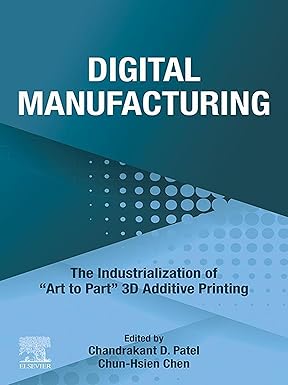
By (author):
Chandrakant D. Patel (HP Chief Engineer and Senior Fellow, HP Inc., Palo Alto, CA, United States), Chun-Hsien Chen (HP-NTU Digital Manufacturing Corporate Lab, School of Mechanical and Aerospace Engineering, Nanyang Technological University, Singapore)
Link to purchase book:
https://www.amazon.com/Digital-Manufacturing-Industrialization-Additive-Printing-ebook/dp/B0B5ZKW7ZT
Digital Manufacturing: The Industrialization of "Art to Part" 3D Additive Printing explains everything needed to understand how recent advances in materials science, manufacturing engineering and digital design have integrated to create exciting new capabilities. Sections discuss relevant fundamentals in mechanical engineering and materials science and complex and practical topics in additive manufacturing, such as part manufacturing, all in the context of the modern digital design environment. Being successful in today's "art to part" cyber-physical manufacturing age requires a strong grounding in science and engineering fundamentals as well as knowledge of the latest techniques, all of which readers will find here.

By (author):
Patrick Manu (University of Manchester), Shang Gao (University of Melbourne), Paulo Jorge Da Silva Bartolo (Nanyang Technological University, Singapore), Valerie Francis (University of Melbourne), Anil Sawhney (Liverpool John Moores University)
Link to purchase book:
https://www.wiley.com/en-us/Metal+Powder-Based+Additive+Manufacturing-p-9783527346318
Metal Powder - Based Additive Manufacturing provides valuable knowledge and critical insights regarding the recent advances in various metal powder - based additive manufacturing techniques. This book also reviews typical powder preparation processes and highlights the significance of metal powder—based additive manufacturing for various industrial applications.

By (author):
Patrick Manu (University of Manchester), Shang Gao (University of Melbourne), Paulo Jorge Da Silva Bartolo (Nanyang Technological University, Singapore), Valerie Francis (University of Melbourne), Anil Sawhney (Liverpool John Moores University)
Link to purchase book:
https://www.amazon.sg/Handbook-Construction-Safety-Well-being-Industry/dp/1032079924
This handbook seeks to examine and advance current understanding of the confluence of construction health, safety and well-being and the broad range of Industry 4.0 technologies in use in the architecture, engineering and construction (AEC) industry.
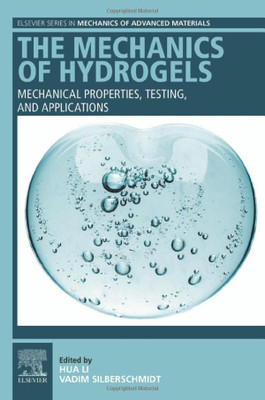
By (author):
Hua Li (School of Mechanical and Aerospace Engineering, Nanyang Technological University, Singapore), Vadim Silberschmidt (Wolfson School of Mechanical, Electrical and Manufacturing Engineering, Loughborough University, Loughborough, United Kingdom)
Link to purchase book:
https://www.amazon.in/Mechanics-Hydrogels-Mechanical-Properties-Applications-ebook/dp/B0BB9PH8Z7
The Mechanics of Hydrogels: Mechanical Properties, Testing, and Applications offers readers a systematic description of the mechanical properties and characterizations of hydrogels. Practical topics such as manufacturing hydrogels with controlled mechanical properties and the mechanical testing of hydrogels are covered at length, as are areas such as inelastic and nonlinear deformation, rheological characterization, fracture and indentation testing, mechanical properties of cellularly responsive hydrogels, and more. Proper instrumentation and modeling techniques for measuring the mechanical properties of hydrogels are also explored.
By (author):
Dong ZhiLi (Nanyang Technological University, Singapore)
Link to purchase book:
The structure–property relationship is a key topic in materials science and engineering. To understand why a material displays certain behaviors, the first step is to resolve its crystal structure and reveal its structure characteristics. Fundamentals of Crystallography, Powder X-ray Diffraction, and Transmission Electron Microscopy for Materials Scientists equips readers with an in-depth understanding of using powder x-ray diffraction and transmission electron microscopy for the analysis of crystal structures.

By (author):
Zhou Kun (Nanyang Technological University, Singapore)
Link to purchase book:
https://www.wiley.com/en-us/AdditiveManufacturingAdditive Manufacturing Technology: Design, Optimization, and Modeling provides comprehensive and in-depth knowledge of the latest advances in various additive manufacturing technologies for polymeric materials, metals, multi-materials, functionally graded materials, and cell-laden bio-inks. It also details the application of numerical modeling in facilitating the design and optimization of materials, processes, and printed parts in additive manufacturing.
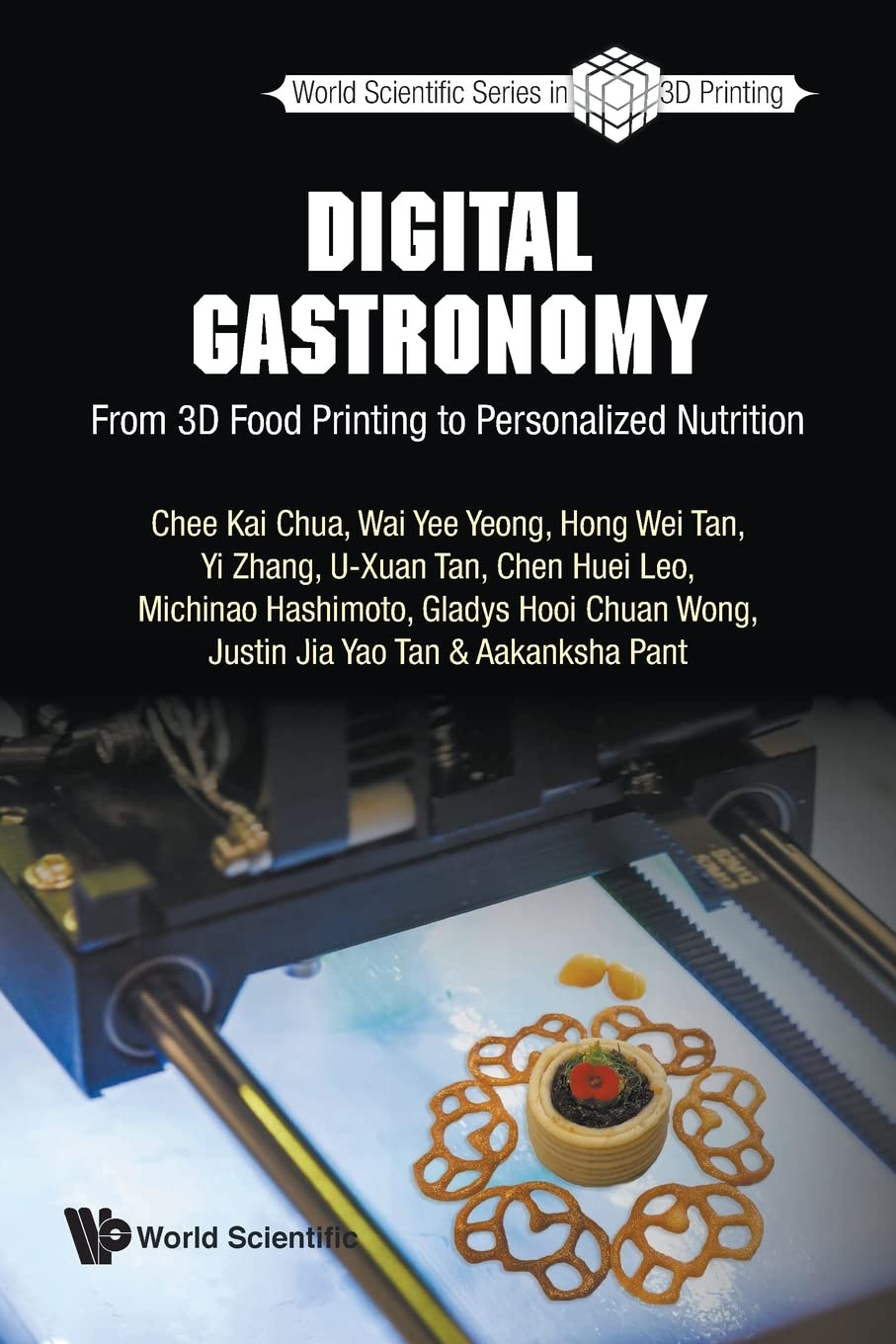
By (author):
Chee Kai Chua (Singapore University of Technology and Design, Singapore), Wai Yee Yeong (Nanyang Technological University, Singapore), Hong Wei Tan (Singapore University of Technology and Design, Singapore), Yi Zhang (University of Electronic Science and Technology of China, China), U-Xuan Tan (Singapore University of Technology and Design, Singapore), Chen Huei Leo (Singapore University of Technology and Design, Singapore), Michinao Hashimoto (Singapore University of Technology and Design, Singapore), Gladys Hooi Chuan Wong (Khoo Teck Puat Hospital, Singapore), Justin Jia Yao Tan (Singapore University of Technology and Design, Singapore), and Aakanksha Pant (Singapore University of Technology and Design, Singapore)
Link to purchase book:
The food industry has seen many changes over the last several decades — new technologies have been introduced into the way we cook, manufacture, and present food products to consumers. Digital gastronomy, which combines new computational abilities such as three-dimensional (3D) printing with traditional food preparation, has allowed consumers to design and manufacture food with personalized shapes, colours, textures, and even nutrition. In addition to the personalization of food, 3D printing of food has other advantages such as promoting automation in food preparation and food sustainability through 3D-printed cell-based meats and alternative proteins. Entire meals can be constructed just by 3D food printing alone.
By (author):
Zhou Kun (Nanyang Technological University, Singapore)
Link to purchase book:
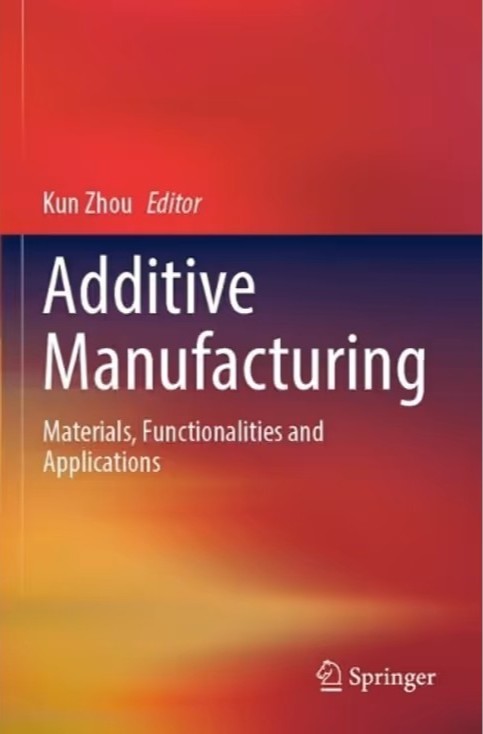
This book focuses on the advances of additive manufacturing in the applications of wearable electronics, energy storage, biomedical implants and devices, drug delivery, and technologies for 4D printing, large-scale printing, and ceramics printing. It provides timely insights into the materials, functionalities, and applications of additive manufacturing.
By (author):
Letícia Charelli (Universidade Federal do Rio de Janeiro, Brazil)
Link to purchase book:
https://shop.elsevier.com/books/smart-organ-on-chip-devices/balbino/978-0-443-13403-6
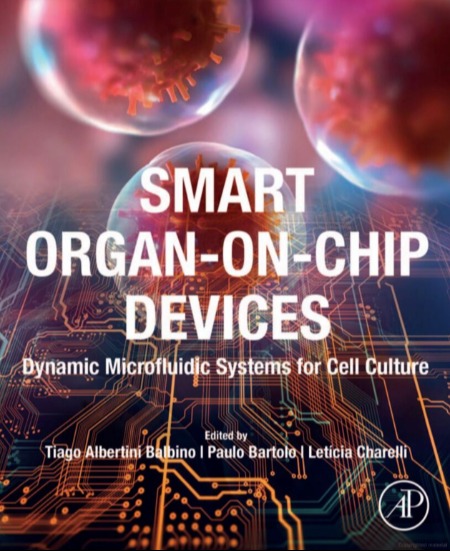
Smart Organ-on-Chip Devices: Dynamic Microfluidic Systems for Cell Culture discusses the concepts to engineer functional stimuli responsive organotypic-on-chip devices and its application in several fields, including drug development, disease modeling, personalized medicine, and tissue engineering. Groundbreaking studies are presented throughout the book sections to reinforce the importance of adding more reliable and robust in vitro platforms able to closely emulate the dynamism of human physiology.
The authors present new information regarding in silico studies of cell spheroids within microfluidic devices, as well as step-by-step guidance on key procedures. Written for researchers, practitioners and students using microfluidic devices as platforms, by well-respected scientists from both academia and industry.
By (author):
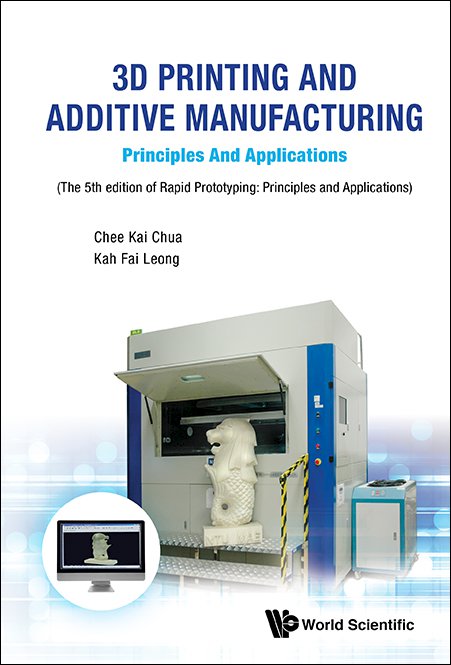
Additive Manufacturing (AM) technologies are developing impressively and are expected to bring about the next revolution. AM is gradually replacing traditional manufacturing methods in some applications because of its unique properties of customisability and versatility. This book provides a very comprehensive and updated text about different types of AM technologies, their respective advantages, shortcomings and potential applications.
3D Printing and Additive Manufacturing: Principles and Applications is a comprehensive textbook that takes readers inside the world of additive manufacturing. This book introduces the different types of AM technologies, categorised by liquid, solid and powder-based AM systems, the common standards, the trends in the field and many more.
Easy to understand, this book is a good introduction to anyone interested in obtaining a better understanding of AM. For people working in the industry, this book will provide information on new methods and practices, as well as recent research and development in the field. For professional readers, this book provides a comprehensive guide to distinguish between the different technologies, and will help them make better decisions regarding which technology they should use. For the general public, this book sheds some light on the fast-moving AM field.
In this edition, new AM standards (e.g. Standard of Terminology and Classification of AM systems) and format standards will be included, Furthermore, the listing of new machines and systems, materials, and software; as well as new case studies and applications in industries that have recently adopted AM (such as the Marine and Offshore industry) have also been incorporated.
By (author):
Wai Yee Yeong (Nanyang Technological University, Singapore)
Link to purchase book:
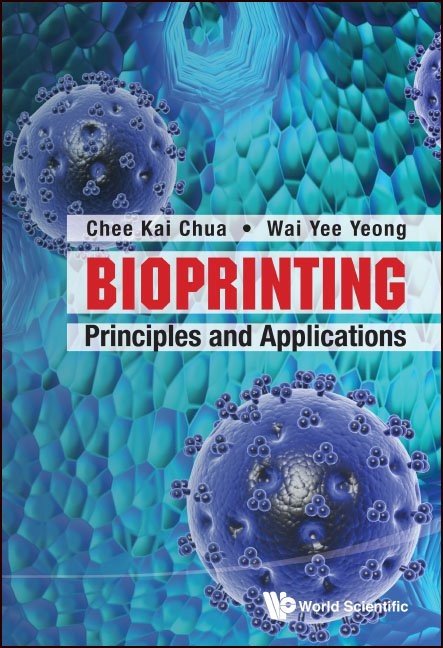
At labs around the world, researchers have been experimenting with bioprinting, first just to see whether it was possible to push cells through a printhead without killing them (in most cases it is), and then trying to make cartilage, bone, skin, blood vessels, small bits of liver and other tissues. There are other ways to try to “engineer” tissue — one involves creating a scaffold out of plastics or other materials and adding cells to it. In theory, at least, a bioprinter has advantages in manipulating control of the placement of cells and other components to mimic natural structures.
But just as the claims made for 3-D printing technology sometimes exceed the reality, the field of bioprinting has seen its share of hype. The reality is that, although bioprinting researchers have made great strides, there are many formidable obstacles to overcome. Nobody who has any credibility claims they can print organs, or believes in their heart of hearts that that will happen in the next 20 years, but for operations like hip replacement, advance in Bio-printing has made customization of certain body parts possible.
This book will start from the concept of Tissue Engineering, covering various approaches in Scaffolds for tissue engineering, Bioprinting techniques and Materials for bioprinting, Cell processing, 3D cell culture techniques, Computational design and simulation, multi-disciplinary approaches in bioprinting and finally cover the applications of bioprinting.
By (author):
Young-Jin Kim (Nanyang Technological University, Singapore)
Link to purchase book:
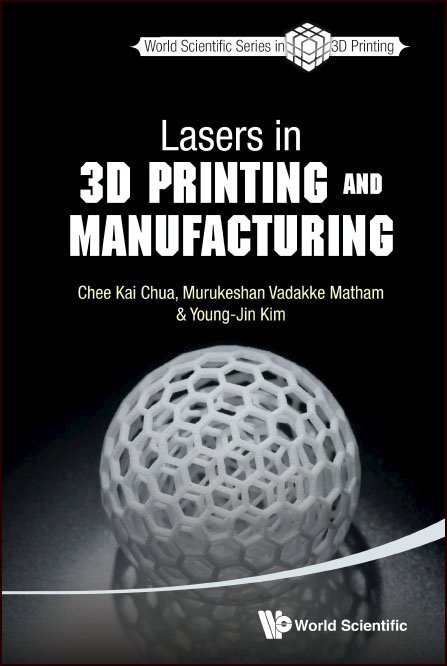
Additive Manufacturing (AM), popularly known as 3D printing, is playing an increasingly significant role in the manufacturing arena. AM has revolutionized how prototypes are to be made and small batch manufacturing should be carried out. Due to high flexibility and high efficiency of lasers, laser-assisted Manufacturing (LAM) and AM technologies are recently getting much attention over traditional methods.
This textbook is a timely information resource for undergraduates, postgraduates and researchers who are interested in this emerging technology. The book will cover the basics of lasers, optics and materials used for manufacturing and 3D printing. It will also include several case studies for readers to apply their understanding of the topics, provide sufficient theoretical background and insights to today's key laser-assisted AM processes and conclude with the future prospects of this exciting technology.
This is the first textbook tailored specifically for Lasers in 3D Printing and Manufacturing with detailed explanations. The book will focus on laser-assisted 3D printing and Additive Manufacturing (AM) from basic principles of lasers, optics and AM materials to advanced AM technologies, including in-depth discussion on critical aspects throughout the laser-assisted AM processes, such as optical system design, laser-material interaction and laser parameters' optimization.
By (author):
Link to purchase book:
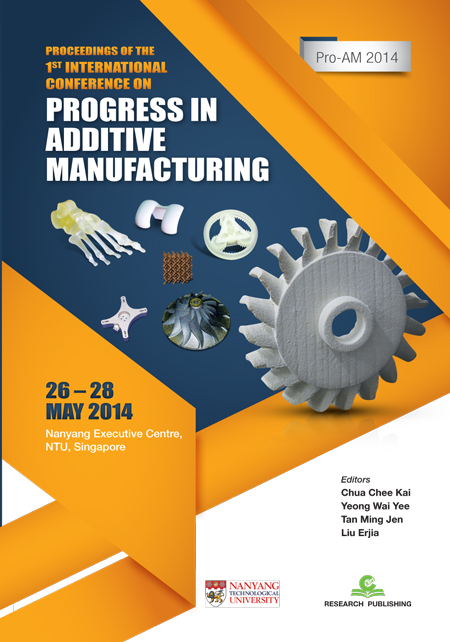
This inter-disciplinary publication provides together the state-of-the-art developments on all aspects related to the Additive Manufacturing. This book contains over 100 high quality research papers from more than 20 countries within Southeast Asia and beyond the region. The conference has solicited and gathered scientific and technical research submisisons related to all aspects of major conference tracks. All the submitted papers in the proceeding have been peer reviewed by the reviewers drawn from the scientific and technical committee, external reviewers and editorial board depending on the subject matter of the paper. After the rigorous peer-review process, the submitted papers were selected on the basis of originality, significance, and clarity for the purpose of the conference. The selected papers and additional late-breaking contributions to be presented as lectures will make an exciting technical program.
By (author):
Link to purchase book:
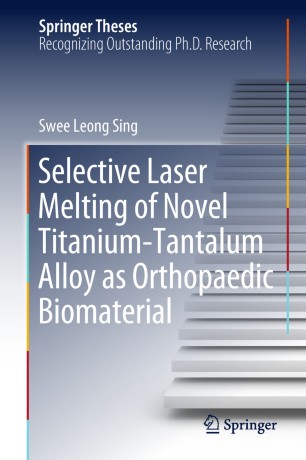
This book investigates the microstructural and mechanical properties of titanium-tantalum (TiTa) alloy formed using selective laser melting (SLM). TiTa has potential orthopaedic biomedical applications thanks to its high strength to modulus ratio. However, because it is difficult to obtain, it is still not widely used. The book describes how SLM is utilized to form this alloy, and provides a better understanding of the SLM process in porous lattice structure fabrication and its control through statistical modelling.