
Mentorship for Young Scientists: Developing Scientific Survival Skills by Professor Federico Rosei
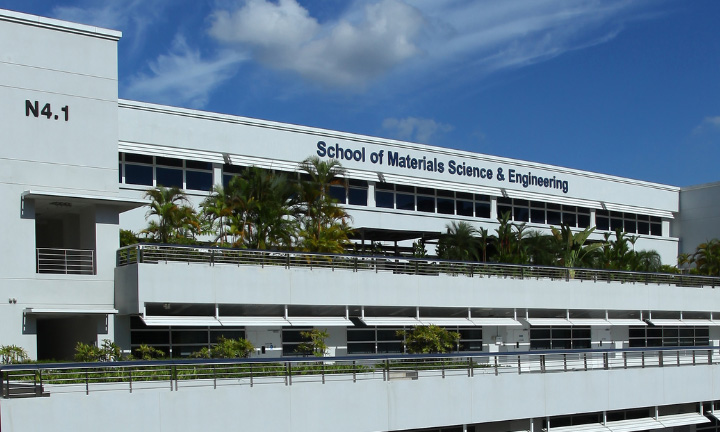
NTU MSE Seminar Hosted by Professor Lam Yeng Ming
Abstract
In this lecture, I aim to convey a feeling for our course on “Survival Skills for Scientists” [1–8]. This is a graduate course that I personally designed and developed, in which we give basic advice and offer mentorship for graduate students and post-docs. The central theme of this presentation is that succeeding in Science requires skills (often referred to as ‘soft professional skills’) beyond those needed for Science. The lecture aims at giving basic guidance and mentoring to young scientists (typically science and engineering undergraduate and first year graduate students).
The main topics are:
- The job market for graduates in science and engineering (industry, national labs and academia; advantages and disadvantages)
- The fundamental laws of ‘scientific survival’ (know yourself, plan ahead, and play chess)
- Ethics in modern science
- Publish or perish; publishing quality papers, having an impact
- Presenting your work to your peers
- Funding in modern science
- Alternative careers
References
[1] F. Rosei, T.W. Johnston, “Survival Skills for Scientists”, Imperial College Press (2006).
[2] F. Rosei, HOW TO ‘SURVIVE’ AFTER GRADUATING IN MATERIALS SCIENCE - VII: Writing Cover Letters for Top Journals, J. Mater. Ed. 44, 141–146 (2022).
[3] F. Rosei, T.W. Johnston, How to ‘Survive’ after Graduating in Materials Science VI: How to Write Winning Proposals, J. Mater. Ed. 35, 127–134 (2013).
[4] F. Rosei, T.W. Johnston, How to ‘survive’ after graduating in Materials Science V: presentations at conferences (oral and poster), J. Mater. Ed. 34, 197–206 (2012).
[5] F. Rosei, T.W. Johnston, How to ‘survive’ after graduating in Materials Science - IV: Writing Compelling Papers, J. Mater. Ed. 33, 161–178 (2011).
[6] F. Rosei, T.W. Johnston, How to ‘survive’ after graduating in Materials Science III: The Peer Review System, J. Mater. Ed. 32, 163–178 (2010).
[7] F. Rosei, T.W. Johnston, How to ‘Survive’ after Graduating in Materials Science II: Basic Advice, J. Mater. Ed. 31, 293–310 (2009).
[8] F. Rosei, A. Pignolet, T.W. Johnston, How to ‘survive’ after graduating in Materials Science - I: Developing a Graduate Course on ‘Survival Skills for Scientists’, J. Mater. Ed. 31, 65–80 (2009).
Biography
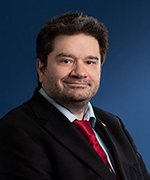
Professor Federico Rosei
Chair of Industrial Chemistry
University of Trieste
Federico Rosei O.C., C.Q. (MSc (1996) and PhD (2001) from the University of Rome “La Sapienza”) holds the Chair of Industrial Chemistry at the Department of Chemical and Pharmaceutical Sciences, University of Trieste since March 2023. Previously he was Full Professor at the Centre Énergie, Matériaux et Télécommunications, Institut National de la Recherche Scientifique, Varennes (QC) Canada, where he served as Director (07/2011–03/2019). He held the Canada Research Chair (Junior) in Nanostructured Organic and Inorganic Materials (2003–2013) and the Canada Research Chair (Senior) in Nanostructured Materials (2016–2023) and the UNESCO Chair in Materials and Technologies for Energy Conversion, Saving and Storage (2013–2023). Dr. Rosei’s research interests focus on structure/property relationships in nanomaterials and their use as building blocks in emerging technologies. He has published over 545 articles in prestigious international journals with over 32,500 citations (H-index 93). Dr Rosei is a Fellow of numerous prestigious academies and scientific societies worldwide, including the Royal Society of Canada, Academia Europaea, TWAS, the American Physical Society, AAAS, and the Royal Society of Chemistry. His exceptional contributions to science, innovation, and mentorship have been recognized with many distinguished honours, including the Officer of the Order of Canada (2025), Knight of the National Order of Quebec (2023), a Guggenheim Fellowship in Engineering (2023), the Blaise Pascal Medal of the European Academy of Sciences (2019), the Brockhouse Medal of the Canadian Association of Physics (2022), and the Royal Society of Chemistry Centenary Prize (2026).