
The role of Chemistry and Materials in Computation by Dr James L Hedrick
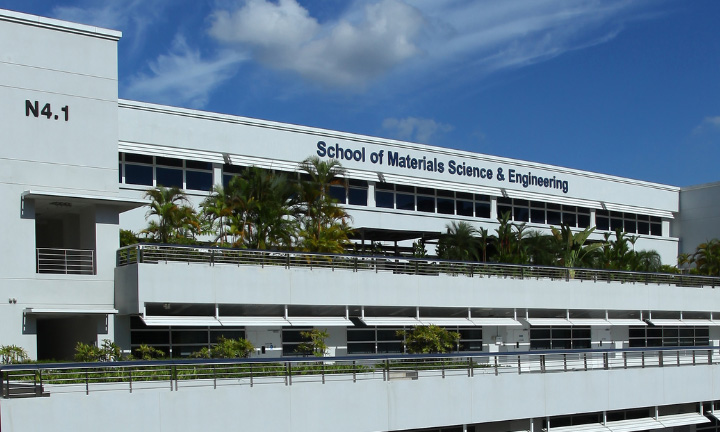
NTU MSE Seminar Hosted by Professor Cho Nam-Joon
Abstract
The surge in Artificial Intelligence (AI) applications has catalyzed an unprecedented demand for computational power, pushing conventional hardware capabilities to their limits. As AI algorithms continue to evolve in complexity and scale, the need for faster, more energy-efficient computing architectures becomes imperative. This talk explores the critical role of both materials science and polymer physics in addressing these challenges by advancing chip technologies and laying the groundwork for foundational AI models.The critical material requirements for interconnect structures based on polymeric dielectrics with embedded thin-film metal wiring will be presented, including considerations of adhesion, thermal stability, residual stress, and reduction of the dielectric constant through the introduction of nanoporosity. Moreover, the integration of new foundational models with automated experimentation across various length scales - spanning from synthetic efforts to device integration — will be critical for rapidly advancing new materials towards production and integration.
Biography

James L Hedrick
IBM Research, Almaden Research Center
James L. Hedrick is a Distinguished Research Staff Member at IBM’s Almaden Research Center, where he currently focuses his efforts in AI-assisted catalyst discovery for polymer synthesis. He is also a Visiting Scholar at Stanford University and maintains a long-standing affiliation with the Institute of Bioengineering and Nanotechnology (IBN) in Singapore. Over the course of his career, Jim has pioneered novel polymer-forming reactions, including the development of high-temperature interlayer dielectrics and block copolymers for low dielectric materials—foundational to block copolymer lithography. He introduced the polymer community to organic catalysis as an environmentally benign route to living polymerization, opening new avenues in nanomedicine, degradable polymers, and polymer recycling. These advances have fueled translational research addressing critical challenges such as antimicrobial resistance, gene delivery, sustained therapeutic release, and cancer therapies. His work has led to multiple spin-off companies focused on polymer recycling and nanoscale lithographic patterning. Jim is the author of over 570 publications and holds approximately 545 patents. He serves on numerous scientific advisory boards and has received many prestigious honors including: Member, National Academy of Engineering (2014); ACS Award in Cooperative Chemistry with IBN Singapore (2025); IBM Grand Challenge Award on Antibiotic Resistance (2017); ACS Herman Mark Senior Scholar Award (2017); President Obama’s EPA Green Chemistry Award (2012); ACS Polymer Fellow (2010); ACS Carl Marvel Award for Creative Polymer Chemistry (2003); ACS Award in Cooperative Chemistry with Stanford University (2009); IBM Master Inventor (2018). Currently, Jim is engaged in a diverse, multidisciplinary effort to accelerate the discovery of sustainable and high-performance materials using artificial intelligence.