
Understanding the Microscopic Origin of the Anomalous Capacitance in Nanoporous Carbons by Professor Mathieu Salanne
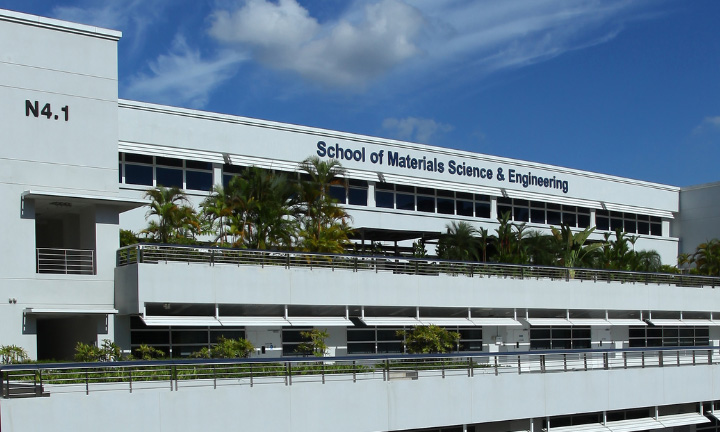
NTU MSE Seminar Hosted by Professor Li Shuzhou
Abstract
Supercapacitors are electrochemical devices that store charge at the electrode/electrolyte interface via reversible ion adsorption, offering high power density and long cycle life for energy storage. However, improving their energy density and charging speed requires a molecular-level understanding of how ions organize and move in strongly confined, electrified environments—a challenge that conventional continuum theories fail to address, and that demands both realistic electrode models and efficient simulation methods [1]. To understand the underlying molecular mechanisms, we developed a constant-potential molecular dynamics approach to simulate realistic microscopic models of supercapacitors under operation. Using a machine-learned interatomic potential, we simulate flexible carbon electrodes able to deform locally upon charging. Flexibility markedly accelerates ion diffusion within pores, cutting the characteristic charging time threefold, owing to more efficient co-ion expulsion and faster, more homogeneous charge redistribution [2]. Our most recent work addresses a long-standing debate on the origin of anomalous capacitance in nanoporous carbons—variously attributed to sub-nanometer ion confinement or to structural disorder. Using a machine-learning-driven "soft-templating" protocol to generate realistic disordered carbons with controlled pore size, we show that capacitance increases as pore size decreases below one nanometer at fixed disorder, reconciling both mechanisms within a unified, experimentally consistent framework [3].
[1] Salanne, Rotenberg, Naoi, Kaneko, Taberna, Grey, Dunn, Simon, Nature Energy, 1 (2016), 16070
[2] Waysenson, France-Lanord, Serva, Simon, Salanne, Saitta, ACS Nano, 19 (2025), 29462
[3] Waysenson, France-Lanord, Simon, Salanne, Saitta, ACS Nano, 20 (2026), 27363
Biography
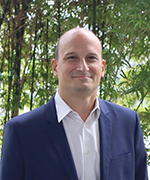
Sorbonne Université
Mathieu Salanne is professor of chemistry at Sorbonne University and visiting professor at CNRS@CREATE (Singapore). His research focuses on the simulation of the electrochemical systems at the molecular scale. To this end, his team has developed the molecular dynamics software MetalWalls, which is used for the study of supercapacitors, batteries and electrocatalytic devices. He currently serves as an executive editor for ACS Nano.