
From Computational Electronic Structures to Machine Learning Moment Tensor Potentials: Development and applications by Professor Xing-Qiu Chen
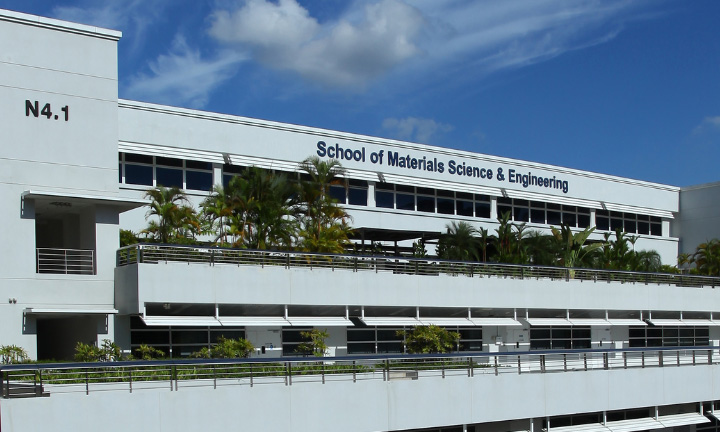
NTU MSE Seminar Hosted by Professor Li Shuzhou
Abstract
Machine learning (ML)-based regression techniques have emerged as a powerful and prominent tool for constructing accurate interatomic potentials in materials modeling and simulation. These techniques enable far faster and more comprehensive exploration of the configurational space compared with conventional methods, facilitating theoretical investigations that were virtually unattainable fifteen years ago. However, the development of reliable training datasets typically relies on time-consuming trial-and-error iterations heavily dependent on empirical intuition. The resulting training sets are usually oversized and may include redundant structural configurations beyond the target phase space, which ultimately degrades the accuracy of the constructed ML potentials. In this talk, I will present an efficient on-the-fly active learning framework built upon Bayesian linear regression. This framework enables the autonomous generation of training configurations during first-principles (FP) molecular dynamics (MD) simulations with no manual intervention, while preserving accuracy close to that of pure FP calculations. To further accelerate simulation efficiency, we optimize the moment tensor potential (MTP) originally proposed by Shapeev by refining its basis functions via generic algorithms and simulated annealing strategies. The optimized MTP achieves a nearly twofold speedup in computational speed while maintaining equivalent accuracy. On this basis, we have further developed an integrated code that unifies active learning-based structural sampling, ML model regression, and model validation. Leveraging this in-house code, I will demonstrate a series of representative applications, including temperature-induced martensitic phase transformation, ultrafast and reversible solid-solid phase transitions, coverage-dependent CO adsorption on the Rh (111) surface, water dissociation on the Ru (0001) surface, as well as the theoretical prediction and experimental validation of topological phonons.
Biography

Professor Xing-Qiu Chen
Shenyang National Laboratory for Materials Science
Institute of Metal Research, Chinese Academy of Sciences
Professor Xing-Qiu Chen currently serves as Deputy Director of the Institute of Metal Research (IMR), Chinese Academy of Sciences and the Director of the Shenyang National Laboratory for Materials Science. He is a recipient of the National Science Fund for Distinguished Young Scholars. He earned his BSc and MSc in Metallurgy from Northeastern University, and his PhD in Physical Chemistry from the University of Vienna in 2004. He subsequently conducted postdoctoral research at the Vienna Center for Computational Materials Science (CMS) and in the Materials Science and Technology Division at Oak Ridge National Laboratory (ORNL), USA. He joined IMR as a Research Staff Member under the CAS Hundred Talent Project in 2010. His main scientific interests are concerned with the computer modeling of materials properties and designs using quantum mechanical methodologies. Of primary interest is the application of advanced theories to gain insight into the fundamental and technologically relevant aspects of materials, focusing on the high-performance structural materials and topological materials. He has published more than 200 papers in journals including Nature, Science, Nature Materials, Physical Review Letters with over 20,000 citations. He also serves as an editorial board member or subject editor for several journals such as Science China-Materials, The Innovation Materials, and Journal of Materials Science and Technology.