
Aqueous Sodium-Ion Batteries and Beyond by Professor Zhenxing Feng
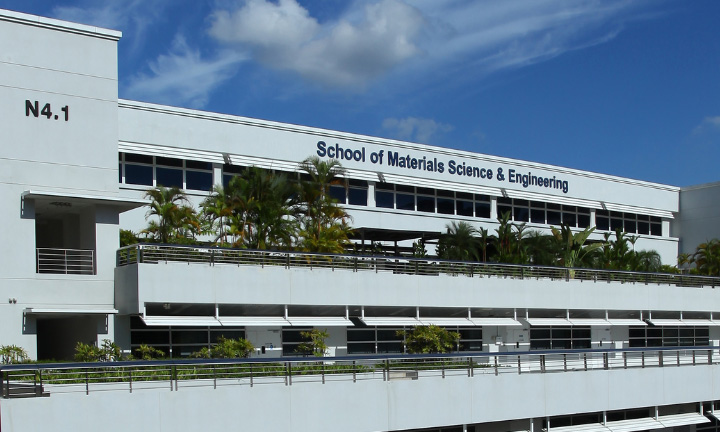
NTU MSE Seminar Hosted by Professor Xu Zhichuan Jason
Abstract
Aqueous metal-ion batteries are highly attractive alternatives for stationary energy storage due to their inherently low cost and exceptional safety profile. The commercial success of these systems relies heavily on the development of advanced, cost-effective electrode and electrolyte materials. In recent years, our group has investigated several iron phosphate-based oxides as promising anode alternatives, alongside Prussian blue materials as cathodes for aqueous sodium-ion batteries. These electrodes not only exhibit fast ionic diffusion—enabling ultra-fast charging rates (> 100C), super-long cycle lives (> 17,000 cycles), and high-capacity retention—but also demonstrate the ability to host both monovalent and multivalent cations.
However, pushing these electrodes to higher voltages to maximize energy density unfortunately results in rapid capacity decay. To understand this degradation mechanism, we employed a combination of multimodal characterizations and multiscale computational calculations. We identified that capacity fading in aqueous sodium-ion batteries is driven predominantly by cathode-intrinsic structural degradation during repeated Na⁺ intercalation and deintercalation, rather than by electrolyte side reactions. These findings address the ongoing debate regarding electrolyte- versus cathode-driven failure and establish actionable guidance for developing practical aqueous sodium-ion batteries with extended cycle lives and expanded operating voltage windows.
Beyond sodium-ion systems, we are also expanding into more complex multivalent-ion batteries. In these systems, we found that charge compensation in intercalation cathodes involves a dynamic competition among sluggish Mg²⁺ insertion, kinetically favored H⁺ transfer, and anion co-insertion. The final portion of this talk will illustrate our systematic studies on aqueous Mg batteries, highlighting our efforts to establish a molecular-level framework that directly connects electrolyte chemistry to electrochemical function.
Biography

Professor Zhenxing Feng
Oregon State University
Dr. Zhenxing Feng is a Professor and Endowed Stephen Slavens Faculty Scholar in the School of Chemical, Biological, and Environmental Engineering at Oregon State University, USA. Dr. Feng obtained a BS at Peking University, China and MS at McGill University, Canada. After completing his Ph.D. in Materials Science and Engineering at Northwestern University, USA, Dr. Feng worked as a postdoctoral scholar at Massachusetts Institute of Technology and the Joint Center for Energy Storage Research (JCESR) of Argonne National Laboratory. In 2016, Dr. Feng moved to Oregon State University to start his independent career. Dr. Feng received the Office of Navy Research (ONR) Summer Fellowship, Scialog Advanced Energy Storage Award, and was named as the highly cited researcher by Clarivate in 2022 and 2024. Dr. Feng is interested in finding design principles of various materials for energy harvesting, conversion, and storage applications.